This article's table of contents introduction:
- What is a 500°C Centrifugal Fan?
- Critical Construction & Materials
- Key Operational Considerations
- Common Applications (Where are they used?)
- How to Specify One (Key Parameters)
- Major Manufacturers (Examples)
- Important Safety & Sourcing Note
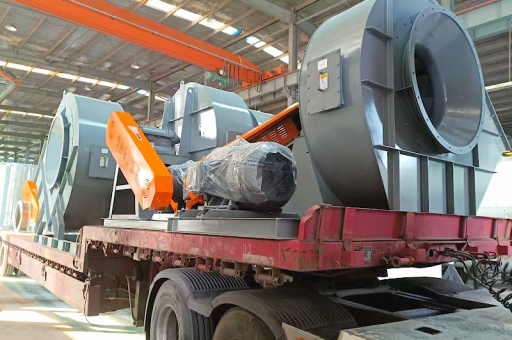
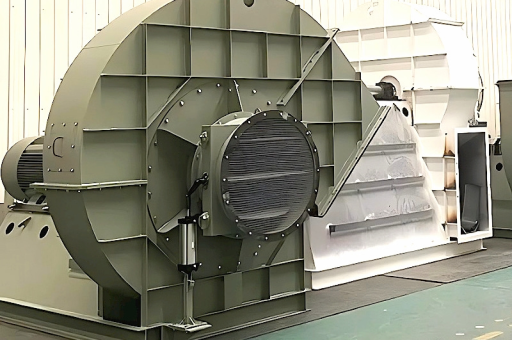
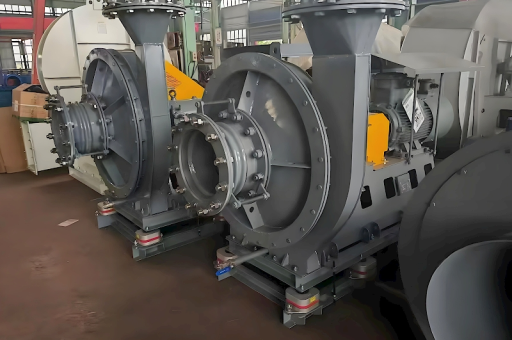
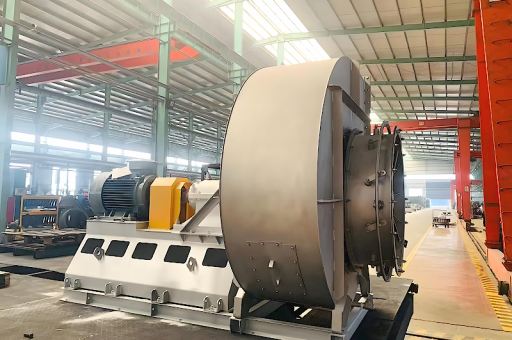
This is a highly specific and critical piece of industrial equipment. A 500°C High-Temperature Centrifugal Fan is not a standard fan; it is a specialized piece of machinery designed for extreme thermal environments. This temperature is well into the "red-hot" range (steel glows a dull red at around 500°C), requiring very specific engineering.
Here is a detailed breakdown of what this fan is, its construction, applications, and key specifications.
What is a 500°C Centrifugal Fan?
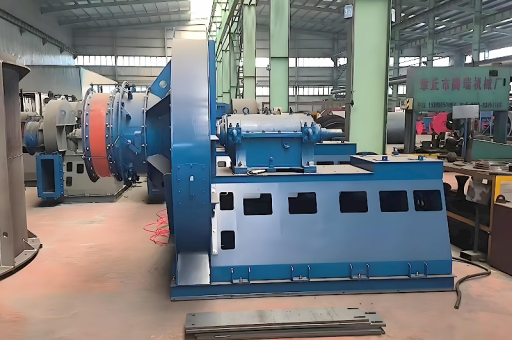
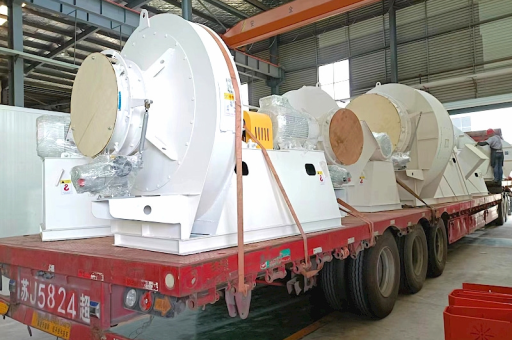
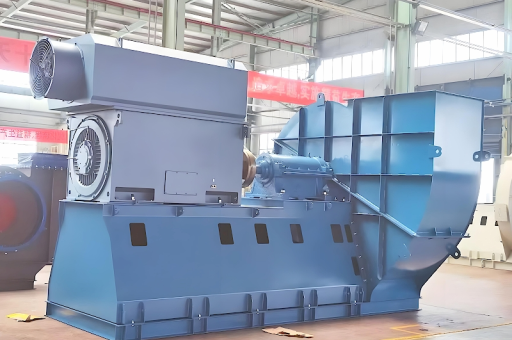
It is a fan designed to continuously handle gas streams with a temperature of 500°C (932°F) . At this temperature, standard carbon steel loses its strength and would quickly oxidize (scale). Therefore, these fans are constructed from advanced alloys and incorporate unique cooling systems.
They operate under the same principle as standard centrifugal fans: a rotating impeller draws air in axially and expels it radially at high velocity. However, everything from the materials to the shaft seal is designed for the extreme heat.
Critical Construction & Materials
This is the most important aspect. There is no room for error at 500°C.
-
Impeller (Wheel):
- Material: Must be manufactured from High-Temperature Alloys.
- Stainless Steel (SS 310/310S): The most common and cost-effective choice for up to 500°C-600°C. It has excellent oxidation resistance and creep strength.
- Inconel 600/601/625: Used in more corrosive or slightly higher temperature environments. More expensive but offers superior durability.
- Hastelloy: For extremely corrosive high-temperature gases (e.g., containing sulfur or chlorine).
- Design: The impeller is typically backward-curved for high efficiency and non-overloading characteristics. The blades and backplate need to be thicker to withstand thermal expansion and centrifugal stress at temperature.
- Wear Protection: Often includes replaceable wear liners or hard-facing on areas prone to erosion from particulate matter in the gas stream.
- Material: Must be manufactured from High-Temperature Alloys.
-
Housing (Volute):
- Material: Same high-temperature alloy as the impeller.
- Construction: Must include expansion joints to prevent thermal distortion and cracking as the housing expands from cold to 500°C.
- Insulation: The housing is almost always externally insulated to protect personnel and maintain process temperature.
-
Shaft:
- Material: Typically a high-strength alloy steel (e.g., 4140, 4340) with a thermal barrier coating or made entirely from stainless steel in smaller sizes.
- Cooling: The shaft that extends into the hot gas stream is the most vulnerable part.
-
Bearing System (The Critical Weak Point):
- Location: Bearings CANNOT be in the direct heat path. They are always mounted outside the fan housing.
- Cooling: This is non-negotiable. The shaft must be cooled to protect the bearings.
- Shaft Cooler Plate: A finned, often cast-iron, plate mounted on the shaft inside the housing. It radiates and convects heat away to prevent heat conduction down the shaft.
- Fan-Cooled: A dedicated cooling fan mounted on the shaft behind the main impeller, blowing air over the shaft and the inboard bearing housing.
- Water-Cooled (Essential for 500°C): A water jacket around the bearing housing and/or shaft seal. This is highly effective. Requires a continuous supply of clean, treated water.
- Bearing Type: Heavy-duty spherical roller bearings (split pillow blocks) or ball bearings, designed for high loads.
- Lubrication: High-temperature grease capable of handling the residual heat from the shaft.
-
Shaft Seal:
- Prevents hot gas from leaking out of the housing.
- At 500°C, standard lip seals will fail immediately.
- Solutions:
- Labyrinth Seal: A non-contact seal that uses a series of grooves and fins to create a pressure drop and prevent large leakages.
- Carbon Ring Seal: More effective for lower leakage.
- Air Purge Seal: Injects a small amount of cool, clean air into the seal area to push hot gases away.
Key Operational Considerations
- Pre-Start Warm-Up / Cool-Down: A 500°C fan must be brought up to temperature slowly and cooled down slowly to prevent thermal shock, which can crack the impeller or housing. A PID (Proportional-Integral-Derivative) controller is often used for the motor speed or cooling system.
- Vibration Monitoring: High temperature causes thermal expansion. Continuous vibration monitoring is essential to detect imbalance (from thermal distortion, erosion, or dust build-up) before catastrophic failure.
- Motor Sizing: The motor must be sized for the cold start condition. At 500°C, the air is much less dense, so the fan requires less power to move the same volume. The motor must not be oversized, or it will overload when the system is cold.
- Material Expansion: All parts are designed to operate at 500°C. When cold, they will be smaller. Proper clearances (e.g., between the impeller and inlet cone) are calculated for the hot state.
Common Applications (Where are they used?)
These fans are crucial for high-temperature industrial processes:
- Cement Industry: Induced draft (ID) fans for cement kilns.
- Steel Industry: Furnace exhaust, sintering plants, and dust collection from electric arc furnaces (EAF).
- Glass Industry: Exhaust from glass melting furnaces.
- Power Generation: Flue gas recirculation (FGR) fans in boilers.
- Waste-to-Energy (Incineration): Secondary combustion air fans and exhaust gas fans.
- Chemical & Petrochemical: Catalyst regeneration, drying processes, and hot gas re-circulation.
- Biomass & Wood Processing: Drying and combustion air for large-scale boilers.
How to Specify One (Key Parameters)
If you need to purchase or specify a 500°C centrifugal fan, you must provide:
- Required Airflow (CFM or m³/hr) at the actual operating condition.
- Static Pressure (in wg or Pa) at the operating temperature.
- Gas Temperature: 500°C (ensure specification is for continuous duty, not peak).
- Gas Composition: Is it clean air? Does it contain dust (abrasive)? What about corrosive chemicals (SOx, HCl, chlorine)?
- Altitude: Affects air density.
- Cooling Method Required: Water-cooled, fan-cooled, or a combination.
- Material of Construction: Typically SS 310/310S. Upgraded to Inconel if corrosive.
- Motor & Drive Type: Motor size, voltage, frequency, and type of drive (direct drive via coupling or via V-belt drive is rare at this temp due to safety and alignment).
Major Manufacturers (Examples)
- Chicago Blower
- New York Blower (NYB)
- Howden
- Twin City Fan & Blower
- Robinson Fans
- Cincinnati Fan
Important Safety & Sourcing Note
DO NOT attempt to modify a standard fan to operate at 500°C. It will fail catastrophically.
- Failures: Impeller creep (slow deformation), blade cracking, bearing seizure, shaft breakage, and possible fire.
- Quote: Ask for a "High-Temperature Induced Draft Fan suitable for 500°C continuous duty."
If you provide the specific application (e.g., "cement kiln exhaust" or "glass furnace") and the required CFM and pressure, I can help you further refine the requirements for a manufacturer.