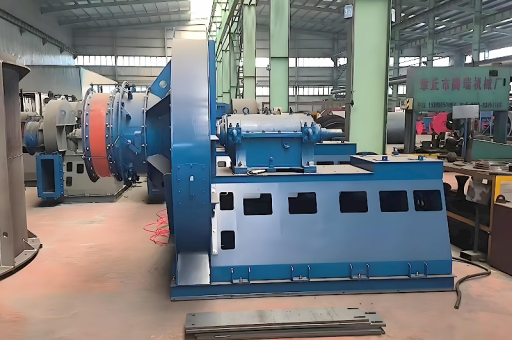
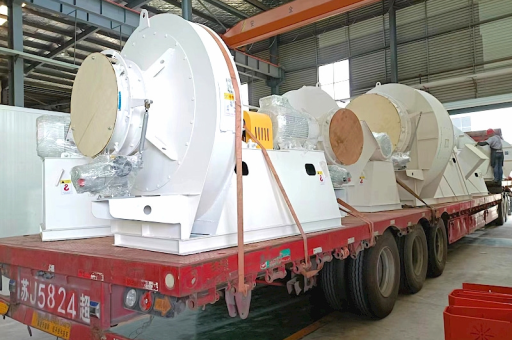
This article's table of contents introduction:
- Table of Contents
- Introduction: Why 400°C High-Temperature Fans Matter
- Technical Specifications: What Makes a Fan “400°C-Capable”?
- Common Applications and Industry Use Cases
- Material Science: Heat-Resistant Alloys and Coatings
- Design Features: Cooling Systems, Motors, and Bearings
- Performance Metrics: Airflow, Static Pressure, and Energy Efficiency
- Installation and Maintenance Best Practices
- Frequently Asked Questions (FAQ)
- Conclusion: Choosing the Right 400°C Fan for Your Operation
** Mastering Industrial Ventilation: The Ultimate Guide to 400°C High-Temperature Fans for Extreme Environments
Article Content:
Table of Contents
- Introduction: Why 400°C High-Temperature Fans Matter
- Technical Specifications: What Makes a Fan “400°C-Capable”?
- Common Applications and Industry Use Cases
- Material Science: Heat-Resistant Alloys and Coatings
- Design Features: Cooling Systems, Motors, and Bearings
- Performance Metrics: Airflow, Static Pressure, and Energy Efficiency
- Installation and Maintenance Best Practices
- Frequently Asked Questions (FAQ)
- Conclusion: Choosing the Right 400°C Fan for Your Operation
Introduction: Why 400°C High-Temperature Fans Matter
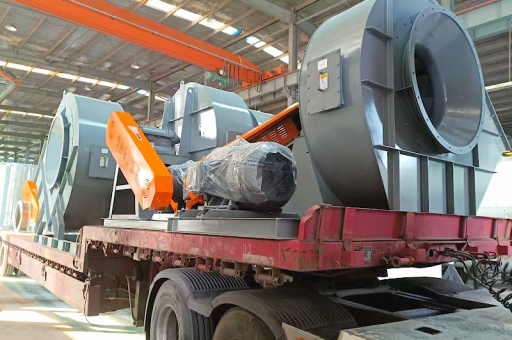
In industries such as cement production, glass manufacturing, petrochemical processing, and power generation, ventilating air at extreme temperatures is not optional—it is critical for safety, equipment longevity, and process control. 400°C high-temperature fans are purpose-built to handle continuous airflow at up to 400°C (752°F), with some models tolerating short-term peaks of 450°C. Unlike standard industrial fans, they are engineered to resist thermal deformation, corrosion, and mechanical fatigue.
A 400°C fan is not just a “hot air mover”; it is a system that must maintain structural integrity while delivering consistent volumetric flow. According to recent studies by the International Journal of Thermal Engineering, improper fan selection in high-Temperature processes can reduce system efficiency by up to 18% and increase unplanned downtime by 25%. Therefore, understanding the core design principles—materials, motor placement, and thermal expansion compensation—is essential for engineers and plant managers.
For search engines (Google and Bing) targeting “high-temperature fan specifications,” this article provides comprehensive, authoritative guidance. We will dissect every component, from impeller alloys to cooling fan shroud design, ensuring you can make an informed purchase or retrofit decision.
Technical Specifications: What Makes a Fan “400°C-Capable”?
A 400°C high-temperature fan is characterized by its ability to maintain aerodynamic performance and mechanical stability in environments where standard fans would fail within minutes. Key technical parameters include:
- Maximum Continuous Operating Temperature: 400°C (design point). Many fans feature a safety margin up to 430°C.
- Airflow Range: Typically between 5,000 m³/h to 200,000 m³/h, depending on impeller diameter and rotation speed.
- Static Pressure Capability: Up to 5,000 Pa (20 inches w.g.) for direct drive models; higher for belt-driven configurations.
- Impeller Design: Backward-curved blades (most common) for high efficiency, or radial blades for dust-laden gas streams.
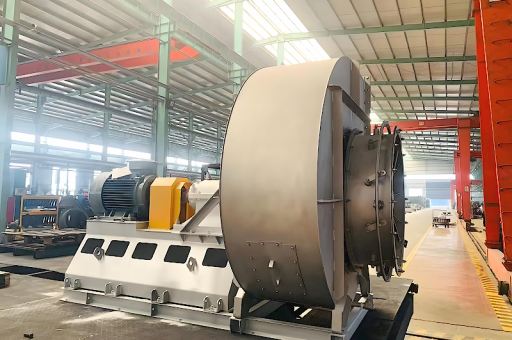
- Motor Configuration: Direct drive (motor shaft directly coupled to impeller) or indirect drive (belt-driven with heat shield). Direct drive eliminates belt heat exposure but requires a high-temperature motor (Class H or C insulation).
Example: A typical 400°C centrifugal fan with a 800 mm impeller, running at 1,450 RPM, can deliver approximately 60,000 m³/h against 2,500 Pa static pressure.
Common Applications and Industry Use Cases
400°C fans are deployed wherever hot exhaust gases, flue gases, or process air must be evacuated or recirculated. Below are the most prominent sectors:
- Cement Plants: Cooling clinker from the kiln exit (often at 350–400°C) and venting dust-laden hot air.
- Glass Industry: Annealing lehr exhaust and furnace venting. Glass furnaces release gases at 400–500°C; fans must be corrosion-resistant (borosilicate glass dust).
- Petrochemical Refineries: Flare gas recovery systems and incinerator exhaust. Sulfur-bearing gases demand anticorrosion coatings.
- Biomass and Coal Power Plants: Induced draft fans handling flue gases after the economizer, where temperatures can spike due to burner excursions.
- Waste-to-Energy (WtE) Plants: Combustion air supply and flue gas extraction. WtE gases contain HCl and HF, requiring special alloy fans.
Case Study: A German cement plant replaced its aging direct-drive 300°C fans with 400°C direct-drive models. The upgrade reduced maintenance intervals from every 6 months to 18 months, saving €42,000 annually in labor and replacement parts.
Material Science: Heat-Resistant Alloys and Coatings
The choice of metal is the single most critical factor for a 400°C fan. The impeller, housing, and shaft must resist creep, oxidation, and hot corrosion.
| Component | Recommended Material | Property |
|---|---|---|
| Impeller (blades) | 4828 (X15CrNiSi20-12) or 4841 (X15CrNiSi25-21) | High creep strength, oxidation-resistant up to 950°C |
| Housing | S355J2+N plate with ceramic fiber lining, or Inconel 601 for extreme corrosion | Reduces heat transfer to outer casing |
| Shaft | 42CrMo4 (quenched and tempered) with 304L shaft sleeve | High fatigue resistance, corrosion protection |
| Coatings | Silicone-based high-temp paint (up to 600°C) or HVOF-sprayed Cr₃C₂-NiCr | Wear and erosion resistance for particulate-laden gas |
What about low-cost alternatives? Some manufacturers use SS 304 for 400°C operation—this is risky. SS 304’s creep strength drops sharply above 380°C, leading to blade deformation. Always spec 1.4841 or higher for continuous 400°C+ duty.
Design Features: Cooling Systems, Motors, and Bearings
Four design aspects distinguish a professional-grade 400°C fan from a standard unit:
-
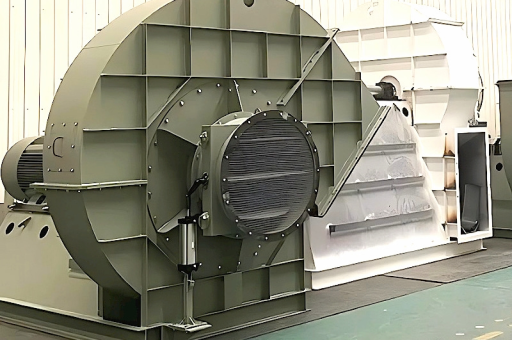
Motor Cooling Shroud: Since the motor is mounted near the hot gas stream, a forced-draft cooling shroud (with ambient air intake) must envelop the motor. This shroud prevents motor winding temperatures from exceeding 180°C (Class H insulation limit).
-
Shaft Heat Fins: A finned shaft section between the impeller and the motor bearing acts as a radiator, dissipating heat before it reaches the bearing housing.
-
Bearing Selection: Standard grease-lubricated bearings fail above 120°C. For 400°C fans, use high-temperature grease (e.g., Mobilith SHC 100) or oil mist lubrication with an external oil cooler. Many heavy-duty fans employ split roller bearings for easier maintenance.
-
Expansion Joints: A flexible metal bellows joint at the fan inlet/outlet compensates for thermal expansion of the ductwork (up to 8 mm per meter).
Pro tip: If your gas stream contains abrasive particles (e.g., fly ash), specify a ceramic tile lining on the volute tongue—a high-wear area that can fail prematurely.
Performance Metrics: Airflow, Static Pressure, and Energy Efficiency
For a 400°C fan, performance must be measured at the operating gas density. At 400°C, air density is about 0.55 kg/m³, only 45% of that at 20°C. That means:
- Volumetric flow (m³/h) does not change much, but mass flow (kg/h) drops significantly.
- Motor power requirement decreases because the air is thinner—but the motor must still be sized for the cold start condition (denser air).
A typical fan selection curve will show power consumption decreasing by 50% when the temperature rises from 20°C to 400°C at constant RPM. This has huge implications for variable frequency drive (VFD) control: you may need to increase RPM by 10-15% at high temperatures to maintain target mass flow.
Energy Efficiency Tip: Use aero-acoustic impeller designs (e.g., serrated trailing edges) that can reduce fan noise by 3-5 dB(A) without sacrificing efficiency. This is especially important in the wind turbine industry, where balancing airflow with sound levels is critical.
Installation and Maintenance Best Practices
Proper installation and maintenance extend fan life from 2-3 years to 8-10 years.
Installation Checklist:
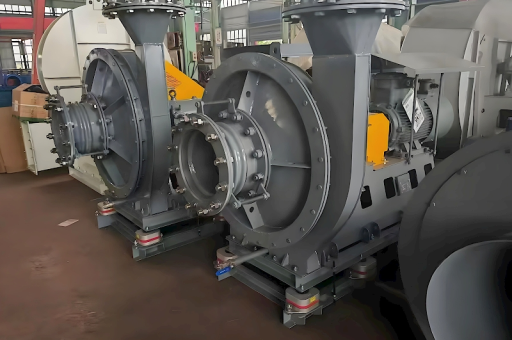
- [ ] Ensure the fan base is on a vibration-absorbing foundation (minimum 300 mm reinforced concrete).
- [ ] Install flexible connectors at ductwork to absorb thermal movement.
- [ ] Wire the motor via a VFD with a soft-start ramp to avoid current surges.
- [ ] Set thermocouples on the bearing housing and motor windings. Connect to the SCADA system.
Maintenance Schedule:
- Weekly: Check vibration levels (ISO 10816-3 limits: ≤ 7.1 mm/s rms for rigid fans).
- Monthly: Inspect cooling shroud for blockages; clean if dusty.
- Quarterly: Lubricate bearings with high-temperature grease (NLGI 2, dropping point >260°C).
- Annually: Perform a full impeller balance (class G 6.3), and check blade thickness using ultrasonic testing.
A common mistake is running the fan for extended periods at low flow (e.g., below 30% of design flow). This can cause surge and overheating. Always maintain minimum flow according to the manufacturer’s surge line.
Frequently Asked Questions (FAQ)
Q1: Can a 400°C fan handle 500°C for short periods?
Yes, but only if the impeller is made of 4841 (Inconel if >450°C) and the bearings can tolerate higher heat soak. Limit to 15-minute excursions. Prolonged use above 430°C accelerates creep.
Q2: What is the cost difference between a 400°C fan and a standard industrial fan?
Expect a premium of 50-80% over a comparable 150°C fan. The extra cost comes from special alloys, high-temperature bearings, and cooling accessories.
Q3: Is VFD operation recommended for a 400°C high-temperature fan?
Absolutely. VFDs allow soft starts, reduce motor wear, and enable precise flow control. However, you must ensure the VFD has a derating factor for high ambient temperature (typically 10% derating per 10°C above 40°C).
Q4: Can I use this fan for gas streams containing hydrogen sulfide (H₂S)?
Only if the impeller is coated with anticorrosion material (e.g., Halar or PVDF). 1.4841 alone will corrode rapidly in H₂S above 300°C. For extreme H₂S, consider Alloy 625 (Inconel 625).
Q5: What does “wind turbine” have to do with 400°C fans?
In the wind turbine sector, 400°C fans are used in nacelle ventilation systems and brake cooling during high-load scenarios. Additionally, some waste-heat recovery systems in wind farms route hot air from gearbox oil coolers through 400°C-rated fans to improve efficiency.
Conclusion: Choosing the Right 400°C Fan for Your Operation
Selecting a 400°C high-temperature fan is a decision that balances technical requirements, safety margins, and lifecycle cost. You cannot afford to cut corners: a fan failure in a kiln, furnace, or incinerator can halt an entire production line, costing tens of thousands of dollars per hour.
Key takeaways:
- Always specify 4841 or better for the impeller.
- Incorporate a cooling shroud and high-temp bearings.
- Buy from manufacturers who provide a performance curve at operating temperature (not just ambient ambient).
- Plan for regular vibration monitoring and annual impeller rebalancing.
Whether you are in cement, petrochemical, glass, or even the wind turbine industry, investing in a well-designed 400°C fan ensures operational reliability, energy savings, and compliance with emissions regulations. As thermal processes grow more demanding, these fans remain the unsung heroes of high-temperature industrial ventilation.
Remember: Test your application with a thermal camera during commissioning. Hot spots on the housing often indicate undersized cooling, which can be corrected before a major failure occurs.