This article's table of contents introduction:
- What are 600°C High-Temperature Fans?
- Typical Applications
- Critical Design & Material Features for 600°C
- Performance Challenges at 600°C
- Drive Configurations
- Key Selection Questions
- Major Manufacturers
- Summary Checklist for a 600°C Fan:
This is a request for information about 600°C (1112°F) high-temperature fans. These are specialized industrial fans used in extreme thermal environments where standard fans would fail.
Here is a comprehensive breakdown of what they are, where they are used, their key design features, and critical selection considerations.
What are 600°C High-Temperature Fans?
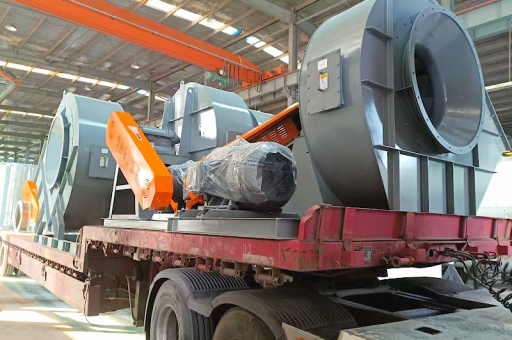
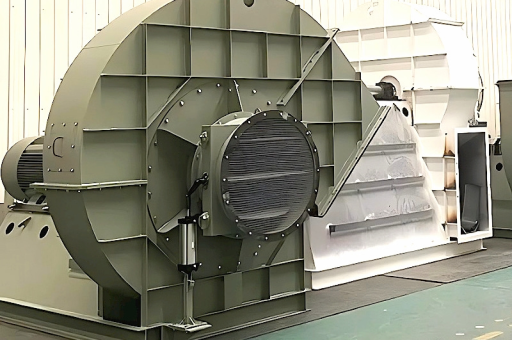
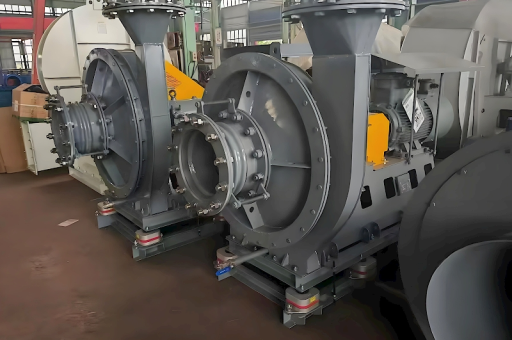
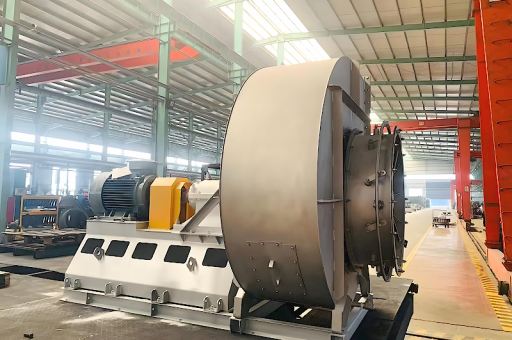
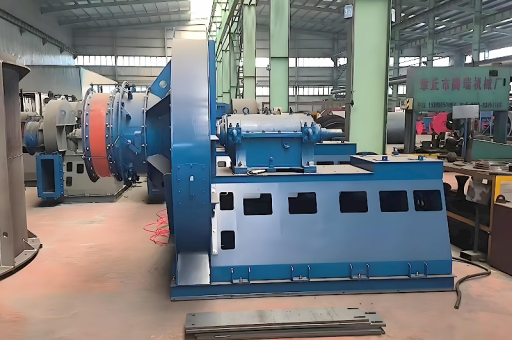
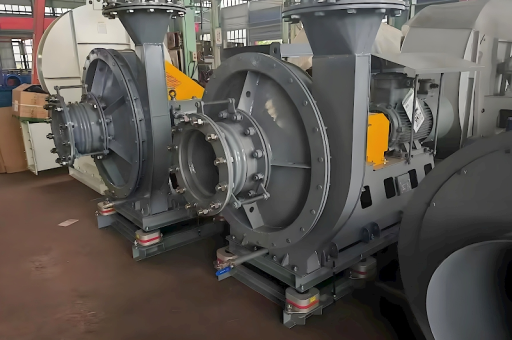
These are centrifugal or axial fans specifically engineered to handle continuous gas temperatures of 600°C (1112°F). At this temperature, standard steel loses its strength and structural integrity. Therefore, these fans are built with specialized high-temperature alloys and cooling technologies.
They are often referred to as "Recirculation Fans" or "Hot Gas Fans" .
Typical Applications
These fans are crucial in industries where high-temperature process gases must be moved, recirculated, or exhausted.
- Heat Treatment Furnaces: Recirculating hot air in annealing, hardening, or tempering furnaces to ensure uniform temperature distribution.
- Ceramic & Brick Manufacturing: Kiln exhaust and cooling air recirculation.
- Glass Industry: Moving hot gases in glass melting furnaces and lehrs (annealing ovens).
- Power Generation: In Circulating Fluidized Bed (CFB) Boilers for moving hot solids and gases, or in Flue Gas Desulfurization (FGD) systems (though 600°C is high for typical FGD).
- Cement & Lime Kilns: Exhaust fans for preheaters and kilns.
- Waste-to-Energy Plants: Moving corrosive and hot flue gases.
- Metal Processing: Fume extraction from smelting, forging, and rolling mills.
- Chemical & Petrochemical: High-temperature reactor off-gas systems.
Critical Design & Material Features for 600°C
A fan that operates at 600°C is fundamentally different from a standard fan.
| Component | Material & Design (for 600°C) | Why it's critical |
|---|---|---|
| Impeller (Wheel) | High-Nickel Alloys: (e.g., Inconel 600/625, Hastelloy X, or Stainless Steel 310S). The impeller is the most stressed part. It must resist creep (deformation under heat and stress) and thermal fatigue. | Standard carbon steel would fail in minutes. The alloy must maintain yield strength at 600°C. |
| Shaft | Heat-Resistant Steel (e.g., AISI 4140 with special heat treatment or higher-grade alloys). Often hollow to reduce heat transfer to bearings. | The shaft conducts heat from the impeller to the outside. It must not warp or lose strength. |
| Bearings | Externally Mounted with a Shaft Cooler (a finned heat exchanger on the shaft). Bearings are NOT inside the hot gas stream. | Bearings fail above ~100°C. The shaft cooler dissipates heat, keeping the bearing temperature safe. |
| Housing (Casing) | Insulated & Jacketed: The housing is typically double-walled or lined with a thick layer of ceramic fiber or calcium silicate insulation. The outer shell remains cool enough for personnel safety. | Prevents heat loss, protects structural integrity of the steel casing, and reduces external surface temperature. |
| Motor | TEFC (Totally Enclosed Fan Cooled) or Inverter Duty motor, mounted on a removable baseplate. Some direct-drive setups use a cooling disk between the fan and motor. | The motor must be protected from radiant heat. A "V-belt" drive is often preferred to physically separate the motor from the hot fan housing. |
| Shaft Seal | Labyrinth seals or purge seals (with filtered air or nitrogen injection). | Prevents hot gas leaking out and destroying the bearing assembly or creating a fire hazard. |
| Vibration Monitoring | Accelerometers mounted on the fan housing. | High-temperature operation puts extreme stress on the impeller. Imbalance or thermal cracking must be detected immediately. |
Performance Challenges at 600°C
- Lower Air Density: Hot air is much less dense than cold air.
- Impact: For the same fan speed, a 600°C fan will generate lower pressure and lower mass flow than a cold-air fan of the same size.
- Design Solution: The fan must be sized using "Hot Conditions" (actual operating temperature, pressure, and altitude). It will be physically larger and run at higher speeds than a cold fan.
- Thermal Expansion: All materials expand significantly. The fan casing and impeller must be designed with large clearances to avoid rubbing and seizing.
- Creep & Fatigue: Over time, the impeller material will slowly deform (creep) and crack (thermal fatigue) from repeated heating and cooling cycles.
- Corrosion: At 600°C, gases like sulfur dioxide (SO₂) or chlorine (Cl₂) become extremely corrosive. The impeller material (e.g., Hastelloy) must be chemically resistant.
Drive Configurations
- Direct Drive (Arrangement 4 or 8): Impeller is mounted directly on the motor shaft (or via a coupling). Rare for 600°C due to difficulty in cooling the motor. Used only if a special high-temp motor with a cooling fan is used.
- V-Belt Drive (Arrangement 1 or 9): Most common. The motor is mounted on the floor (or a separate frame) away from the hot fan housing. A long "C" face or "D" flange mounting is used. The belts absorb thermal expansion and isolate the motor from vibration and heat.
- Overhung with Cooling Disk (Arrangement 8): The impeller is mounted on a single shaft that extends out a bearing housing. A large, finned cooling disk is placed between the bearing housing and the fan housing to radiate heat.
Key Selection Questions
If you are looking to buy a 600°C fan, you must provide this data:
- Required Mass Flow: kg/hr or m³/hr (at actual 600°C conditions).
- Required Static Pressure: in mmWC (mm of water column) or Pa (Pascals).
- Gas Composition: (Air, flue gas, combustion products? Is it corrosive?).
- Dust Load: (Particle concentration in g/m³ or grains/ft³).
- Ambient Conditions: (Maximum ambient temperature around the fan).
- Installation Type: (Indoor, outdoor, explosion-proof?).
- Standards: (ATEX for Europe, NEC/CEC for North America, etc. for explosive environments).
Major Manufacturers
- Howden (UK) - A world leader in heavy-duty industrial fans.
- Greenheck (USA) - For moderate-duty industrial applications.
- New York Blower Company (NYB) (USA) - Custom high-temp fans.
- Cincinnati Fan (USA) - High-temperature axial fans.
- Ziehl-Abegg (Germany) - High-efficiency high-temp axial fans.
- Robinson Fans (USA) - Heavy-duty power and cement fans.
- Sodeca (Spain) - Industrial high-temp fans.
- WITT (Germany) - Specialized in high-temp recirculation fans for furnaces.
Summary Checklist for a 600°C Fan:
- Impeller: Inconel 600/625 or SS310S (minimum).
- Housing: Heavily insulated (Ceramic Fiber).
- Bearings: External, with shaft cooler.
- Drive: V-belt preferred.
- Seal: Purge seal (especially for explosive or toxic gas).
- Motor: TEFC or Inverter Duty, protected from radiant heat.
Warning: Attempting to use a standard fan at 600°C is extremely dangerous and will lead to catastrophic failure, including shaft breakage, impeller disintegration, fire, and serious injury. Always consult with a specialized industrial fan manufacturer.