This article's table of contents introduction:
- Why Stainless Steel? (Key Benefits)
- Typical Applications
- Common Stainless Steel Grades Used
- Key Design & Engineering Considerations
- Types of High-Temp Stainless Fans
- Typical Performance Parameters
- How to Choose / Key Questions to Ask a Supplier
- Summary: Pros & Cons
- Recommendation
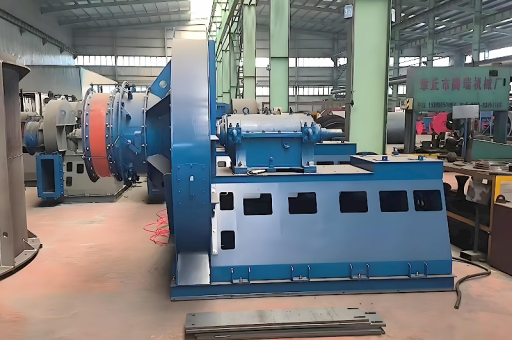
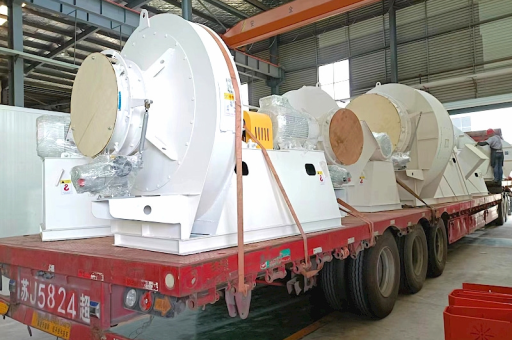
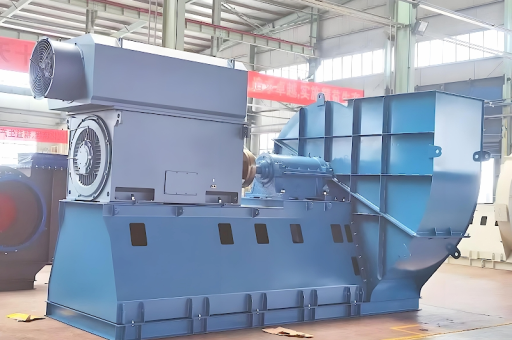
It appears you are looking for information about stainless steel fans designed for high-temperature applications.
These are specialized industrial fans used to move air or exhaust gases at elevated temperatures (typically 200°C to 1000°C+). The "stainless steel" construction is critical because it offers superior corrosion resistance and maintains structural integrity better than carbon steel at high temperatures.
Here is a comprehensive breakdown of what you need to know about Stainless Steel High Temperature Resistant Fans:
Why Stainless Steel? (Key Benefits)
- High-Temperature Strength: Stainless steel grades (like 304, 310S, 316L) maintain their tensile strength at temperatures where carbon steel would weaken and deform.
- Oxidation Resistance: They form a protective chromium oxide layer that prevents scaling and flaking at high temperatures. Stainless steel 310S, specifically, is designed for continuous service up to 1050°C.
- Corrosion Resistance: Essential for handling aggressive, acidic, or moist hot gases (e.g., in chemical plants, drying ovens, or exhaust systems).
- Hygienic & Clean: In food processing, pharmaceutical, or cleanroom environments, stainless steel is easier to clean and won't rust or contaminate the air.
Typical Applications
- Industrial Ovens & Kilns: Recirculating hot air for baking, curing, drying, or heat treatment.
- Exhaust Systems: Removing hot fumes, smoke, or steam from industrial processes.
- Dust Collection: Handling hot, potentially abrasive dust (e.g., from welding, foundries, or furnaces).
- Food Processing: Ovens, fryers, dryers, and autoclaves.
- Chemical & Petrochemical: Removing corrosive hot vapors.
- Glass & Ceramics: Removing hot air and gases from furnaces.
Common Stainless Steel Grades Used
| Grade | Max. Continuous Temp. (in air) | Key Properties |
|---|---|---|
| 304 SS | ~800°C (1472°F) | Excellent general corrosion resistance. Good for lower high-temp ranges. |
| 316L SS | ~600°C (1112°F) | Better corrosion resistance (especially against chlorides) than 304. Lower max temp. |
| 310S SS | ~1050°C (1922°F) | The gold standard for high-temp fans. Superior oxidation and scaling resistance. |
| Hastelloy (e.g., C276) | ~1000°C (1832°F) | Extremely high corrosion resistance against acids and chlorides at high temps. (More expensive). |
Key Design & Engineering Considerations
When selecting or specifying a high-temp stainless fan, look for these features:
- Impelter (Fan Wheel) Material: Must be the same (or higher) grade of stainless steel as the housing. The wheel is the most stressed part and will fail first.
- Motor Location:
- Direct Drive (Motor on shaft): The motor is out of the hot air stream, but must be protected from radiant heat.
- Belt Drive (Motor outside duct): The motor is completely isolated from the hot airflow. Highly recommended for temps > 200°C.
- Cooling Fan on Shaft: A secondary fan wheel on the motor side of the shaft pulls ambient air over the motor and bearing housing to keep them cool.
- Shaft & Bearings:
- Shaft material: Usually stainless steel (304 or 316) or hardened steel.
- Bearings: High-temperature grease (synthetic or silicone-based) or self-aligning bearings with thermal expansion slots.
- External bearing housings are common to keep bearings away from the hot zone.
- Thermal Expansion: The fan housing, wheel, and shaft must be designed with clearance to allow for significant thermal expansion without binding.
- Insulation & Shaft Seals: Housing may be externally insulated to reduce heat loss and protect personnel. Shaft seals prevent hot gas leakage.
Types of High-Temp Stainless Fans
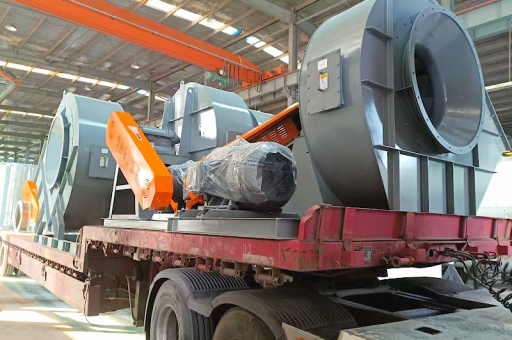
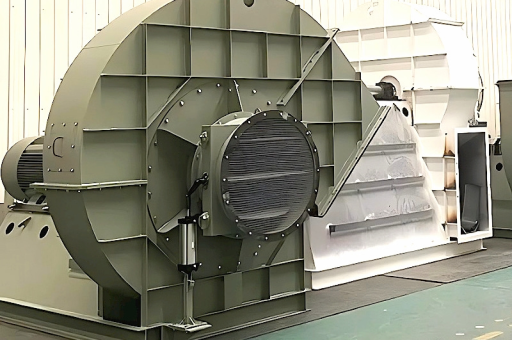
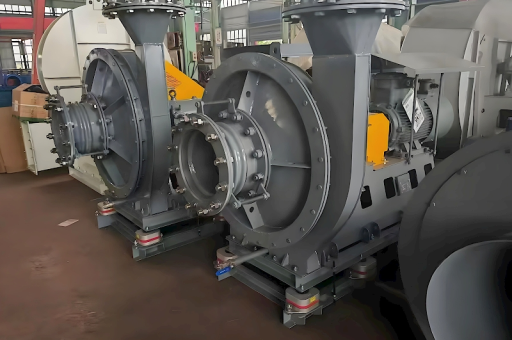
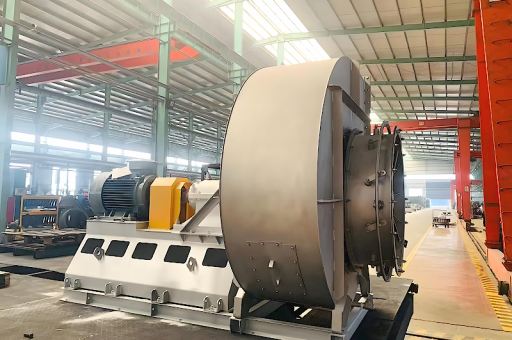
- Centrifugal Fans (Squirrel Cage / Radial): Most common for high static pressure applications (ducts, ovens). Radial blade (paddle wheel) types are highly durable for dirty/abrasive hot air.
- Axial Fans (Panel / Duct): Used for high airflow, low pressure applications (e.g., exhaust cooling).
- Inline Duct Fans: Inline centrifugal units for confined spaces.
Typical Performance Parameters
- Temperature Range: 150°C to 1000°C (standard), up to 1200°C with specialized alloys.
- Airflow: From a few CFM to hundreds of thousands of CFM.
- Static Pressure: High-pressure models for forced air circulation in ovens or kilns.
How to Choose / Key Questions to Ask a Supplier
- Maximum operating temperature: Continuous or peak?
- Gas composition: Is the air clean? Contains dust, moisture, acids, or solvents?
- Required airflow (CFM or m³/hr) and static pressure (in.WG or Pa).
- Duct size and configuration.
- Motor mounting preference: Direct drive vs. Belt drive?
- Noise constraints.
- Installation environment: Indoor, outdoor, hazardous location (Class/Division)?
Summary: Pros & Cons
Pros:
- Longevity: Much longer service life than carbon steel at high temps.
- Reliability: Less risk of catastrophic wheel failure due to corrosion or scaling.
- Hygiene: Suitable for clean environments.
- Versatility: Can handle hot, corrosive, and oily air.
Cons:
- High Initial Cost: Stainless steel, especially 310S, is significantly more expensive than carbon steel.
- Weight: Denser material, may require sturdier mounting.
- Special Fabrication: Requires skilled welding and handling.
Recommendation
If you need a fan for temperatures above 400°C (750°F) or for corrosive / hygienic environments, a Stainless Steel High Temperature Resistant Fan is the correct solution. For temperatures consistently above 650°C (1200°F), specifically request a fan made from Stainless Steel 310S or equivalent high-nickel alloy.
If you can provide the specific temperature, airflow, and gas composition you are dealing with, I can offer more precise advice.