This article's table of contents introduction:
- Table of Contents
- Introduction: Why Explosion-Proof Fans Matter
- What Are Stainless Steel Explosion-Proof Centrifugal Fans?
- Key Design Features and Materials
- How They Work: Centrifugal Airflow and Explosion Containment
- Industry Applications: Where You Need Them Most
- Comparison: Standard Fans vs. Explosion-Proof Fans
- Common Questions and Expert Answers (FAQ)
- Installation and Maintenance Best Practices
- Future Trends and Compliance Standards
- Conclusion: Choosing the Right Fan for Hazardous Environments
** The Ultimate Guide to Stainless Steel Explosion-Proof Centrifugal Fans: Safety, Design, and Industrial Applications
Table of Contents
- Introduction: Why Explosion-Proof Fans Matter
- What Are Stainless Steel Explosion-Proof Centrifugal Fans?
- Key Design Features and Materials
- How They Work: Centrifugal Airflow and Explosion Containment
- Industry Applications: Where You Need Them Most
- Comparison: Standard Fans vs. Explosion-Proof Fans
- Common Questions and Expert Answers (FAQ)
- Installation and Maintenance Best Practices
- Future Trends and Compliance Standards
- Conclusion: Choosing the Right Fan for Hazardous Environments
Introduction: Why Explosion-Proof Fans Matter
In industries where flammable gases, combustible dust, or volatile vapors are present, a standard fan can become a deadly ignition source. A single spark from a motor or blade impact can trigger a catastrophic explosion. This is where Stainless Steel Explosion-Proof Centrifugal Fans become indispensable. These specialized fans are engineered to operate safely in hazardous locations classified under ATEX, IECEx, or NEC/CEC standards. They not only move air efficiently but also contain any internal explosion, preventing it from spreading to the surrounding environment. For facilities like chemical plants, oil refineries, wind turbine cooling systems, or paint booths, choosing the right fan is not just about performance—it's about survival.
What Are Stainless Steel Explosion-Proof Centrifugal Fans?
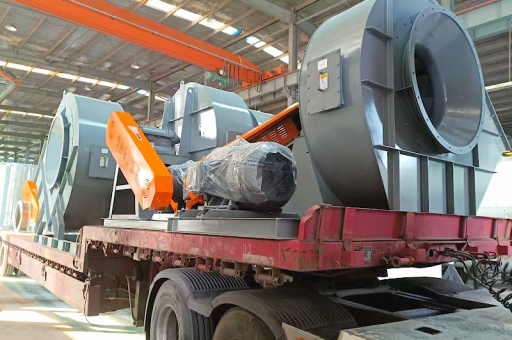
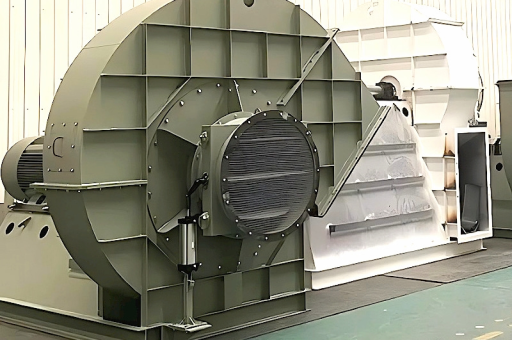
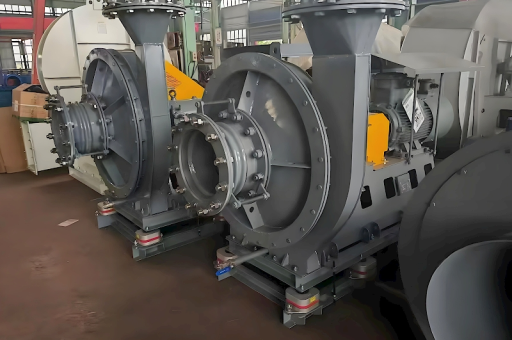
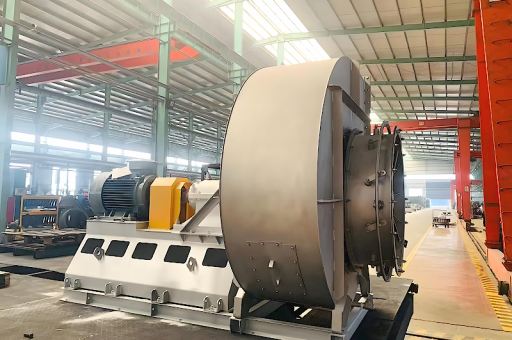
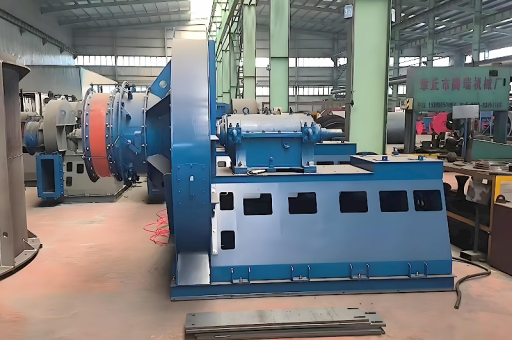
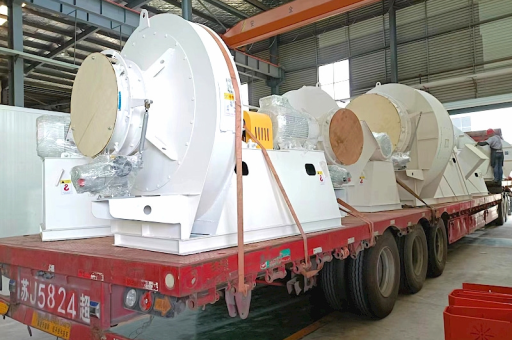
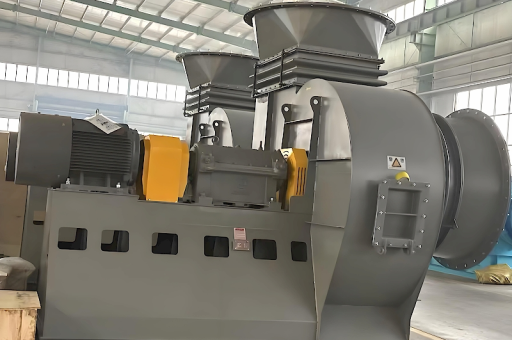
A Stainless Steel Explosion-Proof Centrifugal Fan is a mechanical device that uses a rotating impeller to increase the pressure and flow of air or gas, while being constructed entirely from non-sparking, corrosion-resistant materials—typically 304 or 316L stainless steel. "Explosion-proof" means the fan housing, motor enclosure, and electrical components are designed to contain an internal explosion without igniting the external atmosphere. These fans are often used in wind turbine cooling systems that operate in offshore or chemically aggressive environments, where salt spray and hydrogen gas may be present.
Key Design Features and Materials
- Stainless Steel Construction: The housing, impeller, and inlet cone are made from 304 or 316L stainless steel to resist rust and chemical corrosion.
- Non-Sparking Impeller: The fan blades are designed to avoid metal-to-metal contact. Some models use aluminum-bronze or plastic-coated impellers for additional safety.
- Explosion-Proof Motor: The motor is enclosed in a cast-iron or stainless steel housing with sealed leads, preventing sparks from reaching flammable environments.
- Spark-Resistant Seal: A labyrinth seal or carbon ring seal prevents gas leakage along the shaft.
- Grounding Connectors: To eliminate static electricity buildup, grounding lugs are standard.
- Certification Labels: Look for ATEX, IECEx, CSA, or UL marks to ensure compliance.
How They Work: Centrifugal Airflow and Explosion Containment
Centrifugal fans work by drawing air into the center of the rotating impeller and flinging it outward radially, increasing velocity and pressure. In an explosion-proof variant, the casing is built to withstand internal pressure (typically 10-15 psi) from a potential gas ignition. If an internal explosion occurs, the fan housing contains the blast, and any flames or hot gases are cooled as they pass through narrow gaps before exiting. This principle is known as "flame path" or "flameproof" containment. In a wind turbine application, these fans are often mounted on nacelles or towers to vent hydrogen buildup from battery storage or to cool electrical systems without risking ignition.
Industry Applications: Where You Need Them Most
- Chemical Processing: Moving corrosive fumes and volatile organic compounds.
- Oil & Gas: Ventilation of storage tanks, refineries, and drilling platforms.
- Pharmaceutical Manufacturing: Handling flammable solvents and dust.
- Mining & Tunnels: Forced ventilation in explosive methane environments.
- Wind Turbine Operations: Cooling electronics and battery banks in offshore wind turbines where hydrogen gas may accumulate.
- Paint Spray Booths: Extracting flammable solvent vapors.
- Wastewater Treatment: Managing methane and hydrogen sulfide gases.
Comparison: Standard Fans vs. Explosion-Proof Fans
| Feature | Standard Centrifugal Fan | Stainless Steel Explosion-Proof Fan |
|---|---|---|
| Material | Carbon steel, aluminum | 304/316L stainless steel, non-sparking alloys |
| Motor Type | Open drip-proof (ODP) | Totally enclosed, explosion-proof (TEFC) |
| Internal Explosion Containment | No | Yes, housing withstands blast |
| Certifications | None required | ATEX, IECEx, UL, CSA |
| Applications | General HVAC, clean air | Hazardous locations, flammable gases |
| Corrosion Resistance | Low to moderate | High (especially 316L) |
| Cost | Lower | Higher (due to materials and certifications) |
Common Questions and Expert Answers (FAQ)
Q1: Can I use a stainless steel explosion-proof fan for a wind turbine cooling system?
Yes. In fact, many modern wind turbines use these fans to cool frequency converters and battery storage. The stainless steel body resists salt corrosion, and the explosion-proof design protects against hydrogen gas from battery off-gassing.
Q2: What does “explosion-proof” actually mean?
It means the fan is built to contain an internal explosion without igniting the surrounding flammable atmosphere. It does not mean the fan cannot explode—it means it prevents the explosion from escalating.
Q3: What is the difference between 304 and 316L stainless steel for these fans?
304 is suitable for most chemical and industrial environments. 316L has added molybdenum, making it more resistant to chlorides, such as saltwater. Offshore wind turbine installations should always use 316L.
Q4: Do these fans require special maintenance?
Yes. Regular inspection of seals, grounding, and impeller integrity is critical. Any nick or scratch on the impeller can create a spark hazard. Also, check that all bolts are non-sparking (e.g., stainless steel or brass).
Q5: Are explosion-proof fans noisier than standard fans?
Not necessarily. Noise depends on impeller design and RPM. Belt-driven explosion-proof fans can be quieter than direct-drive models. However, some explosion-proof motors are slightly noisier due to heavier enclosures.
Installation and Maintenance Best Practices
- Mounting: Always install the fan on a non-combustible base. Ensure proper grounding.
- Ducting: Use conductive or anti-static ductwork to avoid static buildup.
- Motor Wiring: Use explosion-proof conduit and sealed fittings. Never use standard flexible metal conduit.
- Maintenance Schedule:
- Monthly: Inspect for vibration, unusual noise, and corrosion.
- Quarterly: Check seal integrity and grounding continuity.
- Annually: Replace seals, clean impeller, and verify certification labels.
- Sparks: Do NOT use steel tools on the fan blades. Use brass or stainless steel tools to avoid friction sparks.
Future Trends and Compliance Standards
The global market for explosion-proof fans is growing, driven by renewable energy (wind turbine farms), battery storage, and hydrogen infrastructure. Newer designs integrate smart sensors that monitor temperature, vibration, and gas levels in real-time. Standards like the IEC 60079 series and ATEX 2014/34/EU are continuously updated to cover emerging energy carriers like hydrogen. Expect to see more explosion-proof centrifugal fans made from lightweight, anti-static composites combined with stainless steel for extreme environments. The trend toward modular fans that can be serviced without entering hazardous zones is also gaining traction.
Conclusion: Choosing the Right Fan for Hazardous Environments
Selecting a Stainless Steel Explosion-Proof Centrifugal Fan is a critical decision that impacts safety, compliance, and operational efficiency. Always verify that the fan matches the specific gas group (e.g., Group IIC for hydrogen) and temperature class (T-class) of your application. Whether you are cooling a wind turbine nacelle or extracting fumes from a chemical reactor, invest in a fan from a certified manufacturer that uses 316L stainless steel, a non-sparking impeller, and an explosion-proof motor. Remember: In hazardous environments, there is no substitute for proper engineering. Safety is not an option—it’s a requirement.
For further guidance, consult the ATEX Directive or IEC 60079 standard for fan selection in your specific industry.