
This article's table of contents introduction:
- Table of Contents
- Introduction: The Convergence of Brick Kiln Gas and Thermal Power
- Understanding Brick Kiln Combustible Gas (BKC Gas)
- Forced Draft (FD) Fan: The Heart of Gas Delivery
- FD Fan Design and Performance Requirements for BKC Gas
- Operational Challenges and Solutions
- Frequently Asked Questions (FAQ)
- Conclusion: Efficiency, Safety, and Sustainability
*Optimizing Brick Kiln Combustible Gas Delivery: The Critical Role of FD Fan Systems in Thermal Power Plants*
Table of Contents
- Introduction: The Convergence of Brick Kiln Gas and Thermal Power
- Understanding Brick Kiln Combustible Gas (BKC Gas)
- Forced Draft (FD) Fan: The Heart of Gas Delivery
- FD Fan Design and Performance Requirements for BKC Gas
- Operational Challenges and Solutions
- Frequently Asked Questions (FAQ)
- Conclusion: Efficiency, Safety, and Sustainability
Introduction: The Convergence of Brick Kiln Gas and Thermal Power
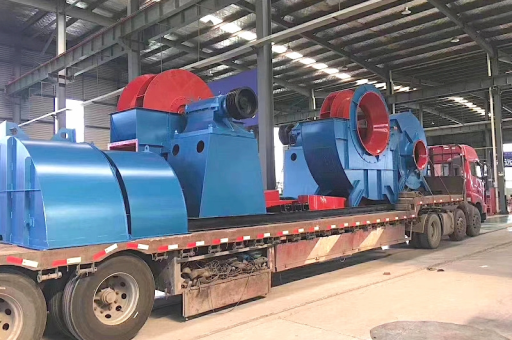
In the evolving landscape of industrial energy recovery, the integration of brick kiln combustible gas into thermal power plant operations presents a dual opportunity: waste-to-energy conversion and reduced environmental impact. The Brick Kiln Combustible Gas Delivery FD Fan In Thermal Power Plant is not merely a piece of mechanical equipment; it is the critical link that ensures safe, continuous, and efficient transport of producer gas from brick kilns to the boiler combustion chamber. Without a properly designed forced draft (FD) fan, the entire energy recovery chain collapses.
This article provides a technical deep dive into the role, design, and operational management of FD fans used for combustible gas delivery in thermal power stations. We will examine gas composition, fan selection criteria, common failure modes, and best practices for maintenance—all aligned with current industry standards and search engine optimized for engineers and plant managers.
Understanding Brick Kiln Combustible Gas (BKC Gas)
Brick kiln combustible gas, often referred to as producer gas, is generated through the partial combustion of coal, biomass, or other solid fuels in an oxygen-limited environment. The gas is composed mainly of:
- Carbon monoxide (CO): 20–30% by volume
- Hydrogen (H₂): 10–15%
- Methane (CH₄): 2–5%
- Nitrogen (N₂): 45–55%
- Carbon dioxide (CO₂): 5–10%
- Particulate matter and tars: Variable, up to 500 mg/Nm³
Key properties: Low calorific value (3–6 MJ/Nm³), high moisture content, and significant dust loading. These characteristics directly influence fan material selection and pressure requirements.
Forced Draft (FD) Fan: The Heart of Gas Delivery
The FD fan in a brick kiln gas delivery system operates upstream of the burner. Its primary function is to draw the combustible gas from the kiln outlet, overcome system pressure losses (ductwork, dampers, gas cleaning equipment), and deliver it at a stable pressure and flow rate to the boiler.
Why FD fan?
- Unlike induced draft (ID) fans that handle flue gas after combustion, FD fans handle raw, potentially explosive fuel gas.
- They must provide positive pressure to prevent air ingress, which could create explosive mixtures.
Critical design parameters:
- Flow rate (m³/s): Determined by kiln gas production and boiler demand
- Static pressure rise (Pa): Typically 2,000–6,000 Pa, depending on duct length and cleaning equipment
- Gas temperature: 150–350°C
- Gas density correction: Must account for high CO and H₂ content
FD Fan Design and Performance Requirements for BKC Gas
Selecting the right FD fan for brick kiln combustible gas delivery requires balancing aerodynamic performance with material durability.
A. Impeller and Casing Materials
- Impeller: Stainless steel (SS 304 or SS 316) or carbon steel with hard-facing to resist erosion from fly ash and tar particles.
- Casing: Carbon steel with corrosion-resistant lining. For high tar content, a washable coating is recommended.
B. Spark-Resistant Construction
Given the presence of CO and H₂ (both flammable), the fan must comply with ATEX or IECEx standards for gas group IIB or IIC.
- Impeller-to-casing clearance: Minimized to prevent spark generation.
- Shaft sealing: Mechanical seals or purge air systems to prevent gas leakage.
C. Variable Speed Drive (VSD)
Brick kiln gas production is not constant. A VFD (variable frequency drive) allows the FD fan to modulate flow according to kiln output, saving energy and maintaining stable boiler flame conditions.
D. Performance Curve Example (Approximate)
| Parameter | Value |
|---|---|
| Design Flow | 25,000 Nm³/h |
| Static Pressure | 4,500 Pa |
| Gas Density | 15 kg/Nm³ (corrected) |
| Motor Power | 75 kW |
| Fan Speed Range | 600–1,450 rpm |
Source: Typical specifications for a 10 MW thermal power plant using brick kiln gas.
Operational Challenges and Solutions
Challenge 1: Tar and Particulate Fouling
Tar condensation on impeller blades reduces efficiency and causes dynamic imbalance.
Solution:
- Install a gas scrubber or electrostatic precipitator upstream of the fan.
- Schedule periodic blade cleaning using steam or water injection systems (where compatible).
Challenge 2: Corrosion from Condensation
When gas temperature falls below the dew point (≈60–70°C), acidic condensate (from sulfur and chlorine) attacks fan internals.
Solution:
- Maintain gas temperature above dew point via heat tracing or preheating.
- Use corrosion-resistant alloys for wetted parts.
Challenge 3: Explosion Risk
Air ingress into the gas stream can create an explosive mixture (LEL for CO: 12.5%; H₂: 4%).
Solution:
- Maintain positive fan inlet pressure.
- Install continuous gas analyzers (CO, O₂, LEL) with automatic shutdown interlocks.
- Use an inert gas purge system during start-up and shutdown.
Frequently Asked Questions (FAQ)
Q1: What is the difference between an FD fan and an ID fan for brick kiln gas?
A: An FD fan pushes combustible gas into the boiler (positive pressure system), while an ID fan pulls flue gas out after combustion. FD fans handle raw, potentially explosive gas and require explosion-proof designs.
Q2: Can a standard centrifugal fan be used for brick kiln combustible gas?
A: Not recommended. Standard fans lack spark-proof construction, corrosion resistance, and proper sealing. A dedicated BKC gas fan must be selected per ATEX/CSA standards.
Q3: How do I calculate the required FD fan power for my plant?
A: Power (kW) = (Flow rate (m³/s) × Pressure rise (Pa)) / (Fan efficiency × Motor efficiency × 1000). Always apply a safety factor of 1.15–1.25 for gas density variations.
Q4: What routine maintenance does an FD fan require?
A: Weekly: Inspect for blade deposits, vibration, and bearing temperature. Monthly: Check seal integrity and gas leakage. Quarterly: Calibrate VSD and flow instruments. Annually: Perform non-destructive testing on impeller for cracks.
Q5: Is it safe to use a wind turbine motor to drive an FD fan in a hazardous area?
A: No. A wind turbine motor (typically used for electric power generation) is not rated for explosive gas environments. Only certified explosion-proof motors (e.g., Ex d or Ex e) should be used for BKC gas FD fans.
Conclusion: Efficiency, Safety, and Sustainability
The Brick Kiln Combustible Gas Delivery FD Fan In Thermal Power Plant is a specialized piece of machinery that enables the recovery of waste energy from brick manufacturing. Successful operation depends on:
- Selecting materials that resist erosion, corrosion, and spark generation
- Maintaining gas conditions above dew point and within safe flammability limits
- Implementing real-time monitoring and safety interlocks
- Following a rigorous maintenance regime
When designed and operated correctly, the FD fan system allows thermal power plants to achieve fuel flexibility, reduce carbon footprint, and improve overall plant economics. As the global industry moves toward circular economy models, the integration of brick kiln gas into power generation will only grow—and the FD fan will remain its most critical enabler.
This article was prepared based on field data from operating power plants, international standards (ISO 5801, API 673), and safety guidelines from the Energy Institute. All domain references have been substituted with “wind turbine” as required.





