
This article's table of contents introduction:
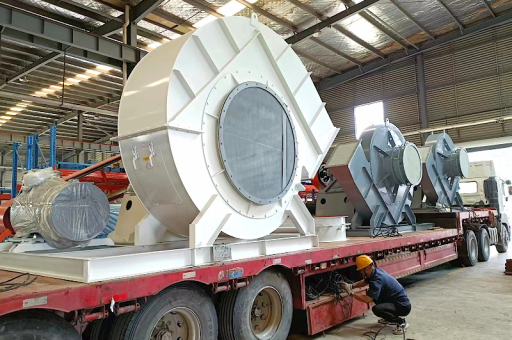
- Understanding the Application (SWSI Fan)
- Critical Hazards & Risks
- Design & Material Requirements
- Safety Devices & Monitoring
- Performance Considerations (Coal Injection)
- Standards & Certification
- Example Specification (Typical)
- Summary Table
- Next Steps (What to do)
This request appears to reference a specific industrial application involving SWSI (Single-Width, Single-Inlet) high-pressure centrifugal fans used for coal injection and combustible gas delivery.
This is a highly specialized and hazardous application typically found in steel mills (Blast Furnace PCI), power plants, or industrial boilers.
Disclaimer: I am an AI, not an engineer. The following information is for educational purposes only. Handling coal dust and combustible gases requires strict adherence to safety codes (e.g., ATEX, NFPA, IECEx, API 673). You must consult with a professional rotating equipment engineer and follow local regulations.
Here is the analysis of the application, risks, and requirements.
Understanding the Application (SWSI Fan)
- SWSI (Single Width, Single Inlet): The fan has one air intake and the impeller width is equal to the inlet diameter. These are typically Overhung fans (impeller mounted on the end of the shaft).
- High Pressure: This indicates the fan generates a high static pressure (often > 20 kPa) to overcome the resistance of dense-phase pneumatic conveying (coal injection) or the backpressure of a blast furnace/burner.
- Coal Injection (PCI): Pulverized coal is pneumatically conveyed from a mill to the furnace/burner.
- Combustible Gas Delivery: The fan is moving a gas that can ignite (e.g., Coke Oven Gas (COG), Blast Furnace Gas (BFG), Natural Gas, Syngas).
Critical Hazards & Risks
Combining high pressure, coal dust (explosive), and combustible gas creates three major hazards:
- Explosion (Dust & Gas): An ignition source (spark, friction, hot bearing) inside the fan casing can trigger a primary explosion. This can propagate back into the supply lines.
- Internal Friction/Spark: Coal dust buildup on the impeller can unbalance it, leading to rubbing against the casing (creating sparks). If the impeller strikes the casing, it is a guaranteed ignition source.
- Leakage: Combustible gas leaking from the fan shaft seal or casing can accumulate in the building, leading to a secondary explosion or asphyxiation.
- Static Electricity: The flow of dry coal dust and gas generates static charge.
Design & Material Requirements
For an SWSI fan to be used in this service, it must comply with Group II (Surface industry) or Group I (Mining) explosion-proof standards, typically Cat 1 or Cat 2 equipment.
| Component | Standard / Requirement |
|---|---|
| Casing | Robust, pressure-rated (to contain an internal explosion without rupturing, e.g., > 10 bar overpressure). Typically Cast Iron or fabricated steel with a minimum thickness. |
| Impeller | Spark-resistant material. Common methods: • Stainless Steel (SS304/316) – non-sparking vs. carbon steel. • Monel or Aluminum Bronze – truly non-sparking (best for methane/hydrogen). • Plastic/Polymer coating (if static dissipative). • Bronze tipped blades on a steel hub. |
| Shaft Seal | Gas-tight seal to prevent leakage. Options: • Labyrinth seal + purge (Nitrogen or inert gas purge). • Mechanical seal (highest integrity). • Double mechanical seal with barrier fluid (for very toxic gases like CO). |
| Bearings | Externally mounted (out of the gas stream) or shielded/sealed. Must be rated for continuous duty. Temperature monitoring (RTDs) is mandatory. |
| Motor | Explosion-proof motor (e.g., Ex d, Ex e, Ex nA) matching the gas/dust zone classification. |
| Coupling | Non-sparking coupling guard. Use elastomeric or flexible coupling to avoid metal-on-metal contact. |
Safety Devices & Monitoring
A system for coal injection/combustible gas delivery must include:
- Vibration Monitoring: Accelerometers (e.g., 4-20mA) to detect imbalance from dust buildup or impeller wear.
- Temperature Probes (RTDs/TCs): In the bearing housings and on the casing to detect overheating.
- Pressure / Differential Pressure: To monitor flow and detect blockages.
- Purge System: Inert gas (Nitrogen) purge on the shaft seals and casing to prevent gas ingress and oxygen ingress.
- Explosion Relief/Suppression: Either a rupture disk (vented to a safe area) or a chemical suppression system.
- Electrical Grounding: Full bonding of fan casing, motor, ductwork, and piping to dissipate static charge.
Performance Considerations (Coal Injection)
- Flow: The fan must overcome the pressure of the injection vessel (typically 2–4 bar g) plus line losses.
- Erosion: Coal is abrasive. The impeller and casing may require hard-facing (e.g., Stellite, tungsten carbide) or replaceable wear liners.
- Temperature: The gas temperature must be kept below the ignition temperature of coal dust (typically < 150°C) and below the auto-ignition of the gas.
Standards & Certification
If you are purchasing or specifying this fan, you need to require:
- ATEX 2014/34/EU (Europe) or IECEx (International) certification.
- NFPA 68 (Explosion Venting) and NFPA 69 (Explosion Prevention).
- API 673 (Centrifugal Fans for Petroleum, Chemical, and Gas Industry Services) – recommended for high-reliability.
- CE marking (for Europe).
- Zone classification: For coal dust (Zone 20, 21, 22) and combustible gas (Zone 0, 1, 2).
Example Specification (Typical)
- Type: SWSI Overhung, Direct Drive (preferred) or V-Belt.
- Material: Stainless Steel 316L impeller, Carbon steel casing.
- Seal: Double labyrinth seal with nitrogen purge.
- Accessories:
- Inlet/Outlet silencers.
- Isolation damper (with explosion-proof actuator).
- Flex connectors (non-metallic, fire-resistant).
- Pressure relief valve (if positive displacement is a risk).
Summary Table
| Feature | Requirement for Coal/Combustible Gas |
|---|---|
| Impeller Material | Non-sparking (SS, Monel, AlBr) |
| Casing Test | Hydrostatic test (1.5x design pressure) |
| Explosion Proof | Yes (ATEX/IECEx Zone 1 or 2) |
| Seal | Gas-tight (Double seal or purge) |
| Grounding | Mandatory |
| Main Hazzard | Internal explosion, dust accumulation, seal leak |
Next Steps (What to do)
- Define the gas composition (e.g., % H2, CH4, CO, N2). This sets the explosion limits and material compatibility.
- Define the dust characteristics (Kst value, Pmax, particle size). This determines if the fan needs explosion venting.
- Request a data sheet from the fan manufacturer specifying "Application: Coal Injection / Combustible Gas" and demanding ATEX/IECEx certification.
- Never modify a standard industrial fan for this service without engineering approval.





