
This article's table of contents introduction:
- Introduction: The Role of Large Centrifugal Fans in Modern Industry
- What is a Single Suction Heavy Duty Centrifugal Fan?
- The V-Belt Drive System: Efficiency and Flexibility
- Key Features of Large Capacity Heavy Duty Centrifugal Fans
- Applications Across Major Industries
- Performance Metrics: Airflow, Pressure, and Power Consumption
- Frequently Asked Questions (FAQ)
- Conclusion: Why Choose V-Belt Driven Single Suction Fans?
** The Industrial Powerhouse: V-Belt Large Capacity Heavy Duty Centrifugal Fans – Single Suction Design Explained
Table of Contents
- Introduction: The Role of Large Centrifugal Fans in Modern Industry
- What is a Single Suction Heavy Duty Centrifugal Fan?
- The V-Belt Drive System: Efficiency and Flexibility
- Key Features of Large Capacity Heavy Duty Centrifugal Fans
- Applications Across Major Industries
- Performance Metrics: Airflow, Pressure, and Power Consumption
- Frequently Asked Questions (FAQ)
- Conclusion: Why Choose V-Belt Driven Single Suction Fans?
Introduction: The Role of Large Centrifugal Fans in Modern Industry
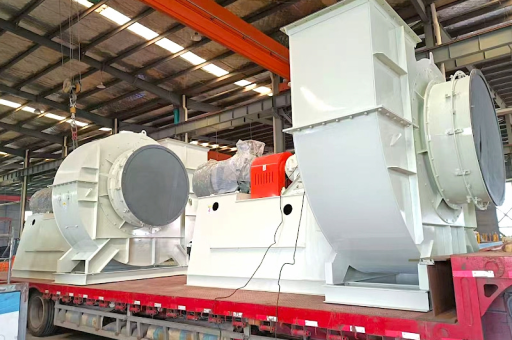
In the world of industrial ventilation, material handling, and air movement, few pieces of equipment are as fundamental as the heavy duty centrifugal fan. Among these, the V-Belt Large Capacity Heavy Duty Centrifugal Fans Single Suction design stands out as a workhorse solution. These fans are engineered to move massive volumes of air against high static pressures, making them indispensable in power plants, cement factories, steel mills, and wind turbine cooling systems.
But what makes this specific configuration – combining a single suction intake with a V-belt drive – so effective? The answer lies in a perfect balance between mechanical simplicity, torque efficiency, and operational flexibility. Whether you are designing a new facility or upgrading an existing ventilation system, understanding the technical nuances of these fans is critical for maximizing uptime and minimizing energy costs.
What is a Single Suction Heavy Duty Centrifugal Fan?
A single suction centrifugal fan, also known as an overhung or radial fan, draws air from one side of the impeller. This design contrasts with double suction fans, which pull air from both sides. For large capacity, heavy duty applications, the single suction configuration offers several distinct advantages:
- Simplified Ductwork: With only one inlet, duct connections are straightforward, reducing installation complexity and pressure losses.
- Compact Footprint: Single suction fans occupy less axial space, which is critical when retrofitting into existing wind turbine nacelles or industrial boiler rooms.
- Direct Access for Maintenance: The exposed shaft and bearing assembly on the non-drive side allow easier inspection and replacement.
In heavy duty variants, the impeller is typically constructed from high-strength steel or abrasion-resistant alloys. The housing is reinforced to withstand temperatures exceeding 400°C (752°F) and particulate-laden air streams.
The V-Belt Drive System: Efficiency and Flexibility
The V-belt is not a mere afterthought; it is a core mechanical component that defines the performance envelope of these fans. Unlike direct-drive (motor-to-shaft) systems, V-belt driven fans offer:
- Variable Speed Adjustment: By changing pulley diameters, operators can alter fan speed without replacing the motor or using expensive VFDs (Variable Frequency Drives). This is particularly useful in applications where airflow requirements change seasonally, such as in wind turbine generator cooling or greenhouse ventilation.
- Torque Absorption: V-belts act as mechanical fuses. During sudden load spikes (e.g., dust accumulation on blades), the belt can slip slightly, protecting both the motor and fan bearings from shock damage.
- Simplified Motor Selection: A single motor can drive different fan speeds across multiple units, reducing spare parts inventory.
In large capacity heavy duty fans, multiple V-belts (often 6–10 belts in parallel) are used to transmit high torque reliably. Modern kevlar-reinforced belts have dramatically reduced stretch and maintenance intervals.
Key Features of Large Capacity Heavy Duty Centrifugal Fans
When engineers specify a V-Belt Large Capacity Heavy Duty Centrifugal Fan Single Suction, they expect the following design characteristics:
A. High-Volume Impeller The impeller diameter often exceeds 2 meters (6.5 feet). Blades are usually backward-curved or radial-tipped to handle abrasive dust without clogging. For clean air applications (e.g., HVAC in wind turbine control rooms), forward-curved blades provide higher airflow at lower noise levels.
B. Reinforced Housing Heavy gauge steel (6–12 mm thickness) is standard. The housing is often split horizontally (casing halves) to allow impeller removal without dismantling ductwork. Internal liners of ceramic or Hardox steel are available for extremely abrasive environments like cement clinker transport.
C. Bearing and Shaft Assembly For high-load operations, bearings are typically pillow block or spherical roller type with self-aligning capabilities. Grease or oil lubrication systems include temperature sensors to predict failure. The shaft diameter is oversized to minimize deflection at maximum RPM.
D. Vibration Monitoring ISO 14694 Grade BV-3 or higher vibration limits are mandatory. Modern units include accelerometer ports for continuous monitoring, crucial for unmanned wind turbine or remote mining installations.
E. Inlet Box and Dampers Single suction fans often incorporate an inlet box (or a conical inlet bell) to ensure laminar flow into the impeller. Inlet vanes or variable inlet dampers control airflow without requiring speed changes, saving energy during partial loads.
Applications Across Major Industries
| Industry | Typical Application | Reason for Fan Selection |
|---|---|---|
| Wind Energy | Cooling of generators, gearboxes, and transformers in wind turbine nacelles. | V-belt drive allows RPM tuning; single suction fits narrow nacelle shape. |
| Cement & Mining | Induced draft (ID) for kilns; material conveying (pneumatic transport). | Heavy duty housing resists abrasion; large capacity handles dusty air. |
| Power Generation | Boiler forced draft (FD), primary air, and baghouse exhaust. | High static pressure capability; V-belt protects motor during coal dust surges. |
| Wastewater Treatment | Aeration blowers in oxidation ditches. | Large volume at moderate pressure; belt speed change adapts to seasonal load. |
| Steel & Metal | Fume extraction from electric arc furnaces; cooling of rolled products. | Single suction simplifies duct routing near hot surfaces. |
Performance Metrics: Airflow, Pressure, and Power Consumption
To evaluate a V-Belt Large Capacity Heavy Duty Centrifugal Fan Single Suction, focus on these critical parameters:
- Airflow (CFM or m³/h): Large capacity fans commonly deliver 50,000 to 500,000 CFM (85,000 to 850,000 m³/h).
- Static Pressure (in. w.g. or Pa): Heavy duty units produce 10 to 60 inches water gauge (2,500 to 15,000 Pa) at peak efficiency.
- Fan Curve: The performance curve must be steep enough to maintain stable flow even when system resistance changes (e.g., clogged filters).
- Power Rating: Motors from 50 HP up to 1,000 HP are common. The V-belt drive efficiency (typically 93–97%) should be factored into total energy cost.
- Noise Level: For indoor installations, sound attenuation (silencers) may be required. Backward-curved blades are quieter than radial blades.
Frequently Asked Questions (FAQ)
Q1: Why choose a V-belt drive instead of a direct drive for heavy duty fans? A1: V-belts offer speed flexibility, mechanical shock protection, and allow the motor to operate at its optimal RPM while the fan runs at a different speed. For large capacity fans requiring frequent speed adjustments (e.g., wind turbine cooling), belts are more cost-effective than VFDs.
Q2: Can a single suction fan handle dirty or abrasive air? A2: Yes, but with proper modifications. Use radial or backward-inclined blades, thick housing liners, and shaft seals to prevent abrasion. For extremely corrosive environments (e.g., flue gas desulfurization), stainless steel or coated impellers are available.
Q3: How do I calculate the required fan speed using the V-belt pulley ratio? A3: The ratio is Fan RPM = Motor RPM × (Motor Pulley Diameter / Fan Pulley Diameter). For example, a 1,800 RPM motor with a 6-inch motor pulley and a 12-inch fan pulley will drive the fan at 900 RPM.
Q4: What is the typical lifespan of V-belts in continuous heavy duty service? A4: With proper tension and alignment, standard industrial V-belts last 2–5 years. Aramid-fiber belts can exceed 8 years if operated within rated load and temperature (−40°C to +120°C).
Q5: Are there any energy-efficiency concerns with V-belt drives compared to direct drives? A5: V-belts have a small energy loss (3–7%) compared to direct coupling. However, this is offset by the ability to run the fan at its best efficiency point (BEP) by selecting the correct sheave ratio. For facilities running 24/7, cogged or synchronous belts further improve efficiency.
Q6: What maintenance does a V-belt heavy duty centrifugal fan require? A6: Critical tasks include: weekly belt tension checks (using a belt tension gauge), monthly bearing grease replenishment, quarterly vibration analysis, and annual alignment of motor and fan pulleys. Inspect impeller blades for wear at every major shutdown.
Conclusion: Why Choose V-Belt Driven Single Suction Fans?
The V-Belt Large Capacity Heavy Duty Centrifugal Fans Single Suction configuration remains a top choice for engineers who value mechanical reliability, serviceability, and adaptability. Its ability to handle extreme pressures and volumes, coupled with the flexibility of pulley-driven speed changes, makes it uniquely suited for industries ranging from wind turbine thermal management to cement kiln ventilation.
When sourcing such equipment, always verify that the fan complies with relevant standards (e.g., AMCA 210 for performance testing, ISO 1940 for rotor balancing). Whether you are modernizing a wind farm or building a new steel mill, selecting the right fan – with the correct material specifications and drive system – will directly impact your operational efficiency and maintenance budget for decades to come.
Keywords: V Belt Large Capacity Heavy Duty Centrifugal Fans Single Suction, single suction fan, heavy duty centrifugal fan, V-belt drive fan, wind turbine cooling, industrial ventilation, high static pressure fan, pulley driven fan.





