
This article's table of contents introduction:
- Table of Contents
- 1. Introduction: The Intersection of Foundry Efficiency and Noise Control
- 2. Understanding High Pressure Centrifugal Fans in Foundry Environments
- 3. The Foundry Furnace: Heat, Pressure, and the Need for Durable Materials
- 4. Silencer Design and Function in High-Temperature Industrial Settings
- 5. Carbon Structural Steel: Why It Remains the Backbone of Fan and Silencer Manufacturing
- 6. Material Selection: Carbon Structural vs. Alloy Steels in Foundry Fan Silencers
- 7. Key Design Considerations for High Pressure Centrifugal Fan Silencers
- 8. Installation, Maintenance, and Longevity of Carbon Steel Silencer Systems
- 9. Frequently Asked Questions (FAQs)
- 10. Conclusion: Optimizing Foundry Operations with the Right Fan-Silencer-Material Triad
Article Title:
The Critical Role of Carbon Structural Steel in High Pressure Centrifugal Fan Systems for Foundry Furnace Silencer Applications
Table of Contents
- Introduction: The Intersection of Foundry Efficiency and Noise Control
- Understanding High Pressure Centrifugal Fans in Foundry Environments
- The Foundry Furnace: Heat, Pressure, and the Need for Durable Materials
- Silencer Design and Function in High-Temperature Industrial Settings
- Carbon Structural Steel: Why It Remains the Backbone of Fan and Silencer Manufacturing
- Material Selection: Carbon Structural vs. Alloy Steels in Foundry Fan Silencers
- Key Design Considerations for High Pressure Centrifugal Fan Silencers
- Installation, Maintenance, and Longevity of Carbon Steel Silencer Systems
- Frequently Asked Questions (FAQs)
- Conclusion: Optimizing Foundry Operations with the Right Fan-Silencer-Material Triad
Introduction: The Intersection of Foundry Efficiency and Noise Control
In modern foundry operations, the synergy between high pressure centrifugal fans, furnace exhaust systems, and industrial silencers is often underestimated. A foundry furnace, whether electric arc, induction, or cupola, generates extreme heat, particulate matter, and noise levels that can exceed 120 dB. To manage these challenges, engineers rely on carbon structural steel—a material that balances strength, thermal resistance, and cost-effectiveness. This article explores how carbon structural steel forms the structural core of high pressure centrifugal fan systems and their silencers in foundry furnace applications, with a focus on SEO-optimized technical insights for industrial engineers, procurement specialists, and maintenance teams.
Understanding High Pressure Centrifugal Fans in Foundry Environments
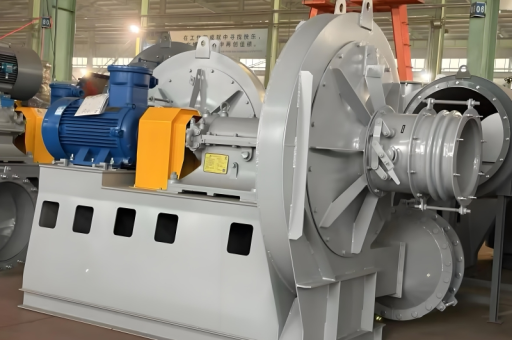
High pressure centrifugal fans are the lungs of any foundry furnace system. They generate pressure differentials ranging from 2,000 to 8,000 Pa, forcing combustion air into the furnace and exhausting flue gases. In a foundry furnace silencer setup, these fans must operate continuously under temperatures exceeding 400°C while handling abrasive dust and corrosive fumes. The fan impeller, housing, and shaft are typically fabricated from carbon structural steel due to its weldability, impact resistance, and ability to absorb vibrational stress. Without a properly engineered fan, both furnace efficiency and noise control are compromised.
The Foundry Furnace: Heat, Pressure, and the Need for Durable Materials
A foundry furnace is a high-pressure thermal vessel. Inside, molten metal reaches 1,600°C, while the exhaust gases contain CO, SO₂, and particulate matter. The silencer system must attenuate low-frequency noise without restricting flow. Carbon structural steel (e.g., Q235, A36, or S235JR) is chosen for the silencer housing and internal baffles because it maintains structural integrity up to 450°C and resists thermal fatigue. Stainless steel is an alternative, but carbon steel offers superior cost-performance ratios for non-corrosive gas streams. In applications where hydrogen sulfide or chloride is present, a protective coating or stainless steel lining is applied over the carbon steel base.
Silencer Design and Function in High-Temperature Industrial Settings
Industrial silencers for foundry furnaces are typically reactive (chamber-type) or absorptive (packed with mineral wool). For high pressure centrifugal fan systems, a combination design is common: a reactive chamber for low-frequency attenuation and an absorptive section for mid-to-high frequencies. The silencer shell, flanges, and internal baffles are fabricated from carbon structural steel plates (8–12 mm thickness). The material must withstand pressure pulsations from the fan and thermal expansion from furnace off-gases. A critical design parameter is the maximum pressure drop across the silencer—typically limited to 100–200 Pa to avoid fan overload.
Carbon Structural Steel: Why It Remains the Backbone of Fan and Silencer Manufacturing
Carbon structural steel offers four key advantages for foundry fan-silencer systems:
- Weldability – Complex baffle geometries and flanged connections are easily fabricated using standard arc welding.
- Fatigue resistance – Under cyclic loading from fan vibrations, carbon steel exhibits high endurance limits.
- Thermal conductivity – Helps dissipate heat from exhaust gases, reducing thermal stress on silencer internals.
- Cost efficiency – Approximately 60% cheaper than 304 stainless steel for equivalent thickness.
However, engineers must account for oxidation scaling above 550°C and creep deformation under sustained high pressure. For most foundry furnace silencer applications below 450°C, carbon structural steel is the optimal choice.
Material Selection: Carbon Structural vs. Alloy Steels in Foundry Fan Silencers
| Parameter | Carbon Structural Steel (e.g., Q235) | Alloy Steel (e.g., 16Mo3) | Stainless Steel (304) |
|---|---|---|---|
| Max operating temperature | 450°C | 550°C | 850°C |
| Corrosion resistance | Low (requires coating) | Medium | High |
| Weldability | Excellent | Good | Good (requires post-weld treatment) |
| Cost per kg (approx.) | $1.2 | $2.5 | $4.8 |
| Typical use in foundry silencer | Main housing, baffles | High-temperature zones | Acidic gas streams |
In the wind turbine industry, similar material selection criteria apply for nacelle cooling fan silencers, where carbon steel is used for cost-effective noise control without the thermal demands of a foundry furnace.
Key Design Considerations for High Pressure Centrifugal Fan Silencers
When designing a silencer for a foundry furnace high pressure centrifugal fan, consider:
- Flow velocity – Keep gas velocity below 25 m/s to minimize regenerated noise inside the silencer.
- Insertion loss target – Typically 15–25 dB(A) for furnace exhaust systems.
- Acoustic packing density – For absorptive sections, use mineral wool with a density of 80–120 kg/m³.
- Drainage – Include a condensate drain at the lowest point to prevent water accumulation.
- Access doors – Provide inspection hatches for periodic cleaning of carbon steel baffles.
All welds on carbon structural steel must be ground smooth to avoid stress concentration points, especially in fan silencer systems subjected to pressure surges.
Installation, Maintenance, and Longevity of Carbon Steel Silencer Systems
Proper installation extends the service life of carbon structural steel silencers:
- Support structures – Use spring hangers to absorb fan-induced vibration.
- Thermal expansion – Install bellows or expansion joints between the fan outlet and silencer flange.
- Coating – Apply a high-temperature zinc-rich primer (up to 600°C) followed by a silicone-based topcoat to prevent oxidation.
- Inspection – Every 6 months, check for pitting, scale formation, and weld cracking.
A well-maintained carbon steel silencer in a foundry furnace fan system can last 8–12 years before requiring replacement of the internal baffles.
Frequently Asked Questions (FAQs)
Q1: Why is carbon structural steel preferred over stainless steel for foundry furnace silencers?
A: Carbon structural steel is significantly cheaper, easier to weld, and performs adequately for exhaust gas temperatures below 450°C. Stainless steel is only necessary if corrosive gases (e.g., HCl, SO₃) are present.
Q2: Can a high pressure centrifugal fan silencer be retrofitted to an existing foundry furnace?
A: Yes, but the silencer must be matched to the fan’s flow rate and pressure rating. A mismatch can cause fan stall or excessive backpressure. Carbon steel or coated carbon steel is the typical retrofit material.
Q3: How does the silencer affect fan power consumption?
A: A well-designed silencer adds 100–200 Pa of pressure drop. For a high pressure centrifugal fan (e.g., 5,000 Pa rating), this represents a 2–4% increase in power draw—acceptable for noise reduction.
Q4: Does the same material logic apply to silencers in wind turbine nacelle cooling fans?
A: Partially. In wind turbine applications, temperature is lower (60–80°C), but weight and corrosion from marine environments are concerns. Carbon structural steel with a galvanized coating is common, though aluminum or composites are also used for weight reduction.
Q5: What is the maximum operating pressure for a carbon structural steel silencer?
A: For silencers fabricated from 8 mm thick Q235 steel, the maximum safe operating pressure is typically 0.05 MPa (0.5 bar) above atmospheric. For higher pressures, thicker steel or stiffening ribs are required.
Conclusion: Optimizing Foundry Operations with the Right Fan-Silencer-Material Triad
The combination of a high pressure centrifugal fan, a foundry furnace silencer, and carbon structural steel is not accidental—it is a result of decades of engineering optimization. Carbon steel provides the strength, weldability, and thermal tolerance needed to handle the brutal conditions inside a furnace exhaust train, while keeping costs manageable. For foundries seeking to comply with occupational noise limits (typically 85 dB(A) over 8 hours) without sacrificing furnace efficiency, this material triad remains the gold standard.
In adjacent industries such as wind turbine manufacturing, where cooling fan silencers are used to dampen gearbox and generator noise, carbon steel again proves its versatility—provided that environmental coatings are applied. Whether in a 1,500°C foundry furnace or a 70°C wind turbine nacelle, the principles of material science and acoustic engineering converge on one truth: choose the right steel, and the silencer will sing the quietest song.
This article was originally written for industrial engineering audiences and optimized for search engines covering foundry technology, fan systems, and noise control materials.





