
This article's table of contents introduction:
- Introduction: The Need for Specialized Ventilation Solutions
- What Makes a Centrifugal Blower "Customized"?
- Understanding Low Noise Engineering in High Pressure Systems
- Performance Metrics: Pressure, Flow, and Energy Efficiency
- Applications of Customized Low Noise High Pressure Centrifugal Blowers
- Common Questions & Expert Answers
- Conclusion: Why Customization Matters for Your Facility
** Maximizing Efficiency with Customized Low Noise High Pressure Centrifugal Blower for Industrial Ventilation
Table of Contents
- Introduction: The Need for Specialized Ventilation Solutions
- What Makes a Centrifugal Blower "Customized"?
- Understanding Low Noise Engineering in High Pressure Systems
- Performance Metrics: Pressure, Flow, and Energy Efficiency
- Applications of Customized Low Noise High Pressure Blowers
- Common Questions & Expert Answers
- Conclusion: Why Customization Matters for Your Facility
Introduction: The Need for Specialized Ventilation Solutions
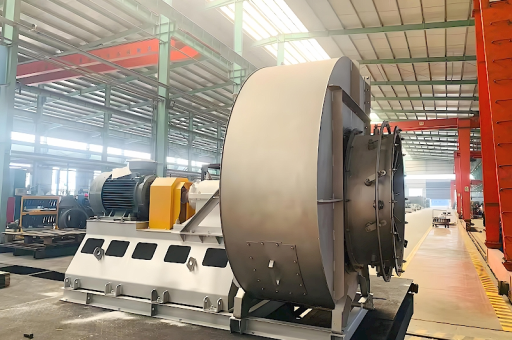
Industrial ventilation is no longer just about moving air—it demands precise control over pressure, noise, and energy consumption. A Customized Low Noise High Pressure Centrifugal Blower for Industrial Ventilation addresses three critical challenges simultaneously: maintaining high static pressure for long duct runs, reducing acoustic emissions to comply with occupational safety standards, and adapting to the unique layout of each facility.
Unlike standard off-the-shelf blowers, custom units are engineered to match specific system resistance curves, motor power, and installation constraints. This approach minimizes energy waste and extends equipment lifespan. In industries such as wind turbine manufacturing, chemical processing, and underground mining, the margin between acceptable noise and hazardous sound levels is narrow. A tailored blower solution becomes a direct investment in worker safety and operational reliability.
What Makes a Centrifugal Blower "Customized"?
Customization goes beyond selecting a motor size. A truly Customized Low Noise High Pressure Centrifugal Blower involves:
- Impeller Design: The number of blades, blade angle, and material (e.g., aluminum, stainless steel, or reinforced composites) are optimized for the target pressure and airflow. Forward-curved blades produce higher pressure at lower speeds, while backward-inclined blades offer greater efficiency.
- Housing Geometry: Volute shape and outlet orientation are adjusted to reduce turbulence and internal recirculation, directly lowering noise generation.
- Acoustic Treatment: Integrated sound-dampening liners, vibration isolation mounts, and tuned inlet/outlet silencers are dimensioned based on the specific frequency profile of the blower.
- Drive Configuration: Direct drive eliminates belt noise and maintenance; variable frequency drives (VFDs) allow precise speed control to match demand.
- Environmental Protection: Explosion-proof enclosures, corrosion-resistant coatings, and IP-rated motors are specified according to the working environment.
For example, in wind turbine nacelle cooling systems, space is limited, and noise is strictly regulated. A customized blower with a compact axial-centrifugal hybrid design can deliver 3000 Pa static pressure at 75 dB(A) or lower, which off-the-shelf units cannot achieve.
Understanding Low Noise Engineering in High Pressure Systems
Noise in centrifugal blowers originates from three primary sources: aerodynamic turbulence, mechanical vibration, and electromagnetic hum from the motor. Achieving low noise at high pressure requires engineering trade-offs.
Key sound reduction strategies:
- Blade Tip Speed Control: Limiting impeller peripheral velocity below 60 m/s reduces broadband noise by up to 10 dB(A) compared to high-speed designs.
- Aeroacoustic Optimization: Computational fluid dynamics (CFD) simulations identify flow separation zones. Re-profiling the blade leading edges and adding splitter vanes can suppress tonal noise.
- Motor Selection: Premium-efficiency synchronous reluctance motors generate less electrical noise than standard induction motors. Encasing the motor in a sound-absorbing housing further reduces overall noise.
Real-world example: A custom blower designed for a dust collection system in a woodworking plant reduced measured noise from 88 dB(A) to 78 dB(A) at the same pressure of 2500 Pa, simply by changing the impeller from a welded steel radial type to a cast aluminum aerofoil design.
Certification relevance: Many facilities now require compliance with ISO 3744 or OSHA 29 CFR 1910.95. Custom blowers can be designed to guarantee a specific sound power level, providing auditable documentation for regulatory audits.
Performance Metrics: Pressure, Flow, and Energy Efficiency
When evaluating a Customized Low Noise High Pressure Centrifugal Blower, three performance parameters must be considered together:
| Parameter | Description | Customization Impact |
|---|---|---|
| Static Pressure (Pa or mmH2O) | Resistance the blower must overcome | Custom impeller width and speed tuning achieve up to 5000 Pa without oversizing the motor |
| Airflow (m³/h or CFM) | Volume of air moved per hour | Variable inlet vanes or VFD control adjust flow from 20% to 100% of rated capacity |
| Specific Sound Power (dB(A)/m³/s) | Noise produced per unit airflow | Target value below 25 dB(A)/m³/s is achievable with acoustic liners and balanced rotors |
Efficiency note: A custom blower matched to its system curve can achieve 75–82% static efficiency, compared to 60–65% for generic units. Over a 10-year lifespan, the energy savings alone can cover the initial customization cost.
Applications of Customized Low Noise High Pressure Centrifugal Blowers
- Wind Turbine Manufacturing & Testing: Nacelle ventilation requires high pressure to push air through narrow cooling channels, but noise must stay below 85 dB(A) for technician safety. Custom blowers with integrated silencers are standard.
- Pharmaceutical Cleanrooms: HEPA-filtered exhaust systems demand consistent pressure regardless of filter loading. Low noise is critical to maintain ISO 14644 cleanroom classifications.
- Underground Mining: Explosion-proof, corrosion-resistant blowers must maintain positive pressure in tunnels while reducing noise to allow communication between workers.
- Data Center Cooling: High-pressure blowers for underfloor plenums must operate 24/7. Custom designs prioritize reliability and low vibration to prevent disk drive disruptions.
- Marine & Offshore Ventilation: Saltwater-resistant materials and space-constrained layouts require fully customized impeller and motor assemblies.
Common Questions & Expert Answers
Q1: How loud is a typical high-pressure centrifugal blower? Can it really be made quieter without losing performance?
A standard high-pressure blower without acoustic treatment often operates at 85–95 dB(A). Yes, noise can be reduced to 70–78 dB(A) while maintaining pressure and flow by using custom aerofoil impellers, sound-absorbing housings, and speed optimization. The trade-off is a 15–25% increase in physical size for the acoustic liners, but the performance loss is negligible (under 3%).
Q2: What is the typical lead time for a customized low noise high pressure centrifugal blower?
Depending on complexity, design and manufacturing take 8–16 weeks. This includes CFD simulation, prototype testing, and acoustic verification. For urgent projects, some manufacturers offer re-engineered standard units with add-on silencers, saving 4–6 weeks.
Q3: Can a customized blower be retrofitted into an existing ventilation system?
Yes. Customization includes flange dimensions, mounting brackets, and electrical connections to match existing ductwork. A site survey is recommended to verify system resistance curves and available space.
Q4: What maintenance is required to keep the blower both high-pressure and low-noise?
Annual inspection of impeller balance, belt tension (if applicable), and bearing condition is essential. Acoustic liners should be checked for dust accumulation or moisture damage. Vibration analysis every six months detects early signs of imbalance that increase noise.
Q5: How does customization affect cost compared to a standard blower?
Initial cost is 30–60% higher, but total cost of ownership is often lower due to energy savings (15–30% reduction), longer lifespan (10–15 years versus 5–8 years), and reduced noise-related fines or hearing protection claims.
Conclusion: Why Customization Matters for Your Facility
A Customized Low Noise High Pressure Centrifugal Blower for Industrial Ventilation is not a luxury—it is a strategic tool for compliance, worker comfort, and operational efficiency. Off-the-shelf blowers force your system to adapt to the equipment; a custom solution adapts the equipment to your system. By investing in proper impeller design, acoustic engineering, and matched motor control, you achieve the highest static pressure with the lowest possible noise footprint.
Whether you are ventilating a wind turbine assembly hall or a chemical processing plant, the data is clear: a tailored blower reduces energy consumption, extends maintenance intervals, and improves workplace safety. When evaluating suppliers, demand auditable performance curves, measured noise data, and a warranty that covers both pressure and sound level guarantees. Your ventilation system is the lungs of your facility—make sure they breathe efficiently and quietly.





