
This article's table of contents introduction:
- Table of Contents
- Introduction: The Role of High-Temperature Fans in Cement Plants
- Key Operating Challenges: Heat, Abrasion, and System Reliability
- Engineering Design Features for Wear Resistance and Thermal Stability
- Material Selection: Alloys, Coatings, and Composite Technologies
- Performance Metrics: Flow, Pressure, Efficiency, and Lifespan
- Applications in Cement Material Handling: Clinker Cooling, Kiln Exhaust, and Pneumatic Conveying
- Common Failures and Preventive Maintenance Strategies
- Q&A: Addressing Frequent Industry Questions
- Conclusion: Future Trends and Sustainable Fan Solutions
Article Title:
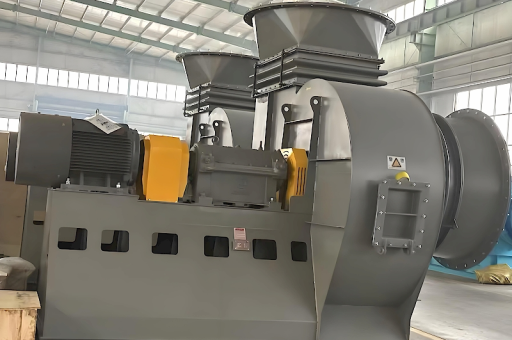
High-Temperature Wear-Resistant Centrifugal Fan for Cement Plant Material Handling: Design, Performance, and Optimization
Table of Contents
- Introduction: The Role of High-Temperature Fans in Cement Plants
- Key Operating Challenges: Heat, Abrasion, and System Reliability
- Engineering Design Features for Wear Resistance and Thermal Stability
- Material Selection: Alloys, Coatings, and Composite Technologies
- Performance Metrics: Flow, Pressure, Efficiency, and Lifespan
- Applications in Cement Material Handling: Clinker Cooling, Kiln Exhaust, and Pneumatic Conveying
- Common Failures and Preventive Maintenance Strategies
- Q&A: Addressing Frequent Industry Questions
- Conclusion: Future Trends and Sustainable Fan Solutions
Introduction: The Role of High-Temperature Fans in Cement Plants
In modern cement manufacturing, material handling systems must endure extreme thermal and mechanical stresses. The High-Temperature Wear-Resistant Centrifugal Fan is a critical component in subsystems such as clinker cooling, kiln exhaust, and pneumatic transport. These fans move hot, abrasive particulate-laden air at temperatures often exceeding 400°C (752°F). Unlike standard industrial fans, cement plant fans must be engineered to resist both high-temperature creep and erosive wear caused by cement dust, limestone particles, and fly ash.
According to industry data, fan failure in a cement plant can lead to unscheduled downtime costing between \$10,000 and \$50,000 per hour. Therefore, selecting and maintaining a high-temperature wear-resistant centrifugal fan is not merely a technical decision—it is a financial and operational necessity.
Key Operating Challenges: Heat, Abrasion, and System Reliability
Cement plant material handling fans face three primary destructive forces:
- Thermal Stress: Continuous exposure to 300°C–600°C can cause thermal expansion, warping, and reduced fatigue strength.
- Abrasive Erosion: Cement raw meal, clinker dust, and coal particles impact fan blades at velocities exceeding 30 m/s, accelerating wear.
- Corrosion: Sulfur compounds and moisture in exhaust gases can create acidic condensates, particularly during start-up and shutdown cycles.
These factors require a fan design that balances aerodynamic performance with extreme durability. The centrifugal fan's impeller, housing, and shaft must be optimized to withstand these combined loads without deformation or imbalance.
Engineering Design Features for Wear Resistance and Thermal Stability
Leading manufacturers incorporate several key design features into high-temperature wear-resistant centrifugal fans:
- Backward-Curved Blades: Reduce dust accumulation and provide higher efficiency at elevated temperatures.
- Reinforced Hubs and Shafts: Forged or cast alloy steel hubs reduce the risk of thermal fatigue cracking.
- Expansion Joints and Flexible Couplings: Accommodate thermal expansion between the fan casing and ductwork.
- Dynamic Balancing: Precision balancing at operating temperature minimizes vibration and bearing stress.
Additionally, the housing is often lined with replaceable wear plates made from high-chromium white iron or ceramic composites. This modular design extends the fan’s service life and reduces maintenance downtime.
Material Selection: Alloys, Coatings, and Composite Technologies
The choice of materials is the single most important factor in fan longevity. Common high-temperature materials include:
| Component | Material | Temperature Limit | Key Property |
|---|---|---|---|
| Impeller | Stainless steel 310S | 1050°C | Oxidation resistance |
| Housing lining | High-chrome white iron (ASTM A532) | 600°C | Abrasion resistance |
| Shaft | Alloy steel 4140 or 42CrMo4 | 500°C | High tensile strength |
| Weld overlay coating | Stellite or tungsten carbide | 800°C | Wear and corrosion protection |
| Thermal spray coating | Alumina-titania (Al₂O₃-TiO₂) | 900°C | Erosion resistance |
Advanced designs now use dual-layer coatings: a base layer for thermal barrier and a top layer for wear resistance. For example, a fan impeller coated with a 200-micron layer of chromium carbide sprayed by HVOF (High-Velocity Oxygen Fuel) process can extend service life by 2–3 times compared to uncoated steel.
Performance Metrics: Flow, Pressure, Efficiency, and Lifespan
High-temperature centrifugal fans for cement material handling must meet specific performance criteria:
- Airflow (Q): Typically 50,000 to 300,000 m³/h depending on application.
- Total Pressure (Pt): 2,000 to 8,000 Pa for material transport systems.
- Operating Temperature: Constant 350°C–450°C, with peak excursions to 600°C.
- Efficiency: >82% at best efficiency point (BEP) to minimize power consumption.
- Expected Lifespan: 3–5 years under continuous operation before major overhaul.
Modern computational fluid dynamics (CFD) tools allow precision design of blade profiles to minimize turbulence and particle erosion zones. As a result, fan efficiency has improved by 8–12% over the past decade.
Applications in Cement Material Handling: Clinker Cooling, Kiln Exhaust, and Pneumatic Conveying
The fan’s versatility makes it indispensable in three key cement plant processes:
- Clinker Cooler Fans: Deliver ambient air through a moving grate to rapidly cool clinker from 1400°C to 100°C. The air becomes hot and carries fine clinker dust, requiring both thermal and wear resistance.
- Kiln Exhaust Fans: Extract combustion gases from the rotary kiln at 350°C–400°C. These fans must handle abrasive dust and corrosive sulfur compounds.
- Pneumatic Conveying Fans: Transport cement powder, fly ash, or raw meal through pipelines. The fan must maintain high pressure at moderate temperatures but with intense particle impact.
Each application demands a fan configuration tailored to specific airflow, pressure, and material properties.
Common Failures and Preventive Maintenance Strategies
Even the best-designed fans will degrade over time. Common failure modes include:
- Blade Tip Wear: Caused by high-velocity particle impact at the blade periphery.
- Shaft Imbalance: Resulting from uneven wear or thermal distortion.
- Bearing Failure: Due to lubricant degradation at high temperatures.
- Casing Erosion: Particularly at the impeller inlet zones.
Preventive maintenance strategies include:
- Scheduled ultrasound or thermographic inspection every 6 months.
- Vibration monitoring with accelerometers and trend analysis.
- Rotor rebalancing after 8,000 operating hours.
- Replacement of wear liners during planned shutdowns.
- Use of high-temperature grease or oil circulation systems for bearings.
Q&A: Addressing Frequent Industry Questions
Q1: What is the maximum continuous operating temperature for a centrifugal fan in cement plants?
A: Most heavy-duty fans can operate continuously at 400°C–450°C. With specialized alloys (e.g., Inconel 625) and cooling systems, some models handle up to 650°C.
Q2: How do I know if my fan requires a wear-resistant coating?
A: If the conveyed material has an abrasivity index above 0.5 (e.g., clinker dust, limestone), or if blade life is less than 12 months, a tungsten carbide or ceramic coating is recommended.
Q3: Can a standard centrifugal fan be retrofitted for high-temperature service?
A: Retrofitting is possible by replacing the impeller, shaft, and bearings with high-temperature components and adding thermal insulation. However, performance is usually inferior to a purpose-built high-temperature wear-resistant centrifugal fan.
Q4: What is the typical payback period for investing in a premium wear-resistant fan?
A: Depending on downtime costs, a premium fan with 60% longer lifespan can pay for itself within 18–24 months through reduced maintenance and energy savings.
Q5: Are there cooling methods for fan shafts and bearings?
A: Yes. Shaft cooling fins, water-cooled bearing housings, and forced-air cooling are common solutions for applications above 200°C.
Conclusion: Future Trends and Sustainable Fan Solutions
The demand for High-Temperature Wear-Resistant Centrifugal Fans in cement plant material handling is growing alongside stricter emissions regulations and energy efficiency targets. Innovations such as:
- Ceramic matrix composite (CMC) blades for ultra-high temperature resistance.
- Intelligent condition monitoring with IoT sensors for predictive maintenance.
- Variable frequency drive (VFD) integration for energy savings of up to 30%.
- Low-noise aerodynamic profiles to meet workplace noise standards.
These developments are pushing the envelope of what centrifugal fans can achieve. For plant engineers, procurement managers, and maintenance teams, understanding material selection, design optimization, and failure prevention is essential to maximizing fan life and minimizing total cost of ownership.
For expert guidance or to explore customized fan solutions for your cement handling system, consider consulting suppliers who specialize in thermal and wear engineering, such as those manufacturing for the wind turbine and heavy industrial sectors—where reliability under extreme loads is non-negotiable.
End of Article.





