
This article's table of contents introduction:
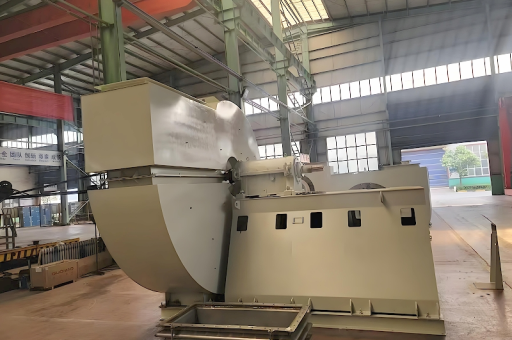
- Introduction: The Need for Specialized High-Pressure Gas Transport Systems
- Core Challenges in High-Temperature Gas Transportation
- Customized Design Principles for High Pressure Centrifugal Fans
- Material Science: The Backbone of High Temperature Resistance
- Energy Efficiency Optimization in High-Pressure Fan Systems
- Application Scenarios and Industry Use Cases
- Common Questions and Expert Answers (FAQ)
- Conclusion: Future Trends in Customized Fan Technology
** Customized Design High Pressure Centrifugal Fan for High Temperature Resistance and Energy Efficient Gas Transportation: Engineering for Extreme Conditions
Table of Contents (导读目录)
- Introduction: The Need for Specialized High-Pressure Gas Transport Systems
- Core Challenges in High-Temperature Gas Transportation
- Customized Design Principles for High Pressure Centrifugal Fans
- Material Science: The Backbone of High Temperature Resistance
- Energy Efficiency Optimization in High-Pressure Fan Systems
- Application Scenarios and Industry Use Cases
- Common Questions and Expert Answers (FAQ)
- Conclusion: Future Trends in Customized Fan Technology
Introduction: The Need for Specialized High-Pressure Gas Transport Systems
In modern industrial processes, the transportation of high-temperature gases under high pressure is a critical yet demanding task. Standard off-the-shelf centrifugal fans often fail under conditions where gas temperatures exceed 300°C or where corrosive and abrasive particles are present. This is where the Customized Design High Pressure Centrifugal Fan for High Temperature Resistance and Energy Efficient Gas Transportation becomes indispensable.
These fans are not merely scaled-up versions of conventional fans; they are engineered solutions tailored to specific thermodynamic constraints. Whether in a wind turbine auxiliary cooling system, a cement kiln exhaust line, or a petrochemical gas recycling unit, the demand for a fan that can withstand thermal stress while maintaining high aerodynamic efficiency is paramount. This article delves into the technical nuances of designing such a fan, addressing material selection, impeller geometry, and energy-saving mechanisms.
Core Challenges in High-Temperature Gas Transportation
Transporting gas at high pressure and temperature creates a unique set of engineering challenges:
- Thermal Expansion and Clearance Management: As temperatures rise, the fan housing and impeller expand. Without customized design, the impeller can seize against the housing, or excessive clearance will cause a catastrophic drop in efficiency.
- Material Degradation: Standard carbon steel loses structural integrity above 350°C. Prolonged exposure to high temperatures can lead to creep, oxidation, or carbide precipitation.
- Increased Power Consumption: High-pressure operation inherently requires more energy. If the impeller design is not optimized for the specific gas density (which decreases with heat), the fan will consume excessive power.
- Vibration and Resonance: Hot gases alter the natural frequency of the impeller blades. A generic design may hit resonant frequencies during startup or shutdown.
Question: What is the most common failure point in a standard fan used for hot gas? Answer: The most common failure is impeller blade crack initiation due to thermal stress, followed by bearing failure from heat conducted through the shaft.
Customized Design Principles for High Pressure Centrifugal Fans
A truly customized design must follow a three-phase engineering approach:
Phase A: Aerodynamic Profiling Unlike standard fans, a high-temperature, high-pressure (HTHP) fan requires backward-curved or airfoil blades. The key modification here is the blade exit angle and splitter blade addition. For high pressure, a wider housing (volute) with a tangential discharge is selected to convert velocity pressure into static pressure efficiently.
Phase B: Structural Dynamics Simulation Finite Element Analysis (FEA) is used to simulate the impeller’s behavior at full operating temperature (e.g., 500°C). The customized design will include a floating shaft or bell-shaped casing to allow for controlled expansion, ensuring the impeller remains concentric even when the housing expands non-uniformly.
Phase C: Seal and Cooling Architecture For energy efficiency, the seals between the rotating shaft and the stationary casing must be non-contact (e.g., labyrinth seals) to reduce friction. Additionally, a cooling fan or water jacket is often integrated to keep the drive motor and bearings below 80°C, even when the gas passing through is at 600°C.
Material Science: The Backbone of High Temperature Resistance
The choice of material is the single most critical factor for Customized Design High Pressure Centrifugal Fan for High Temperature Resistance.
- For Temperatures Between 250°C and 400°C: High-tensile stainless steel (e.g., SS 316L or Duplex SS) is used. These materials resist oxidation and maintain yield strength.
- For Temperatures Above 500°C: Nickel-based superalloys (e.g., Inconel 625 or Hastelloy X) become mandatory. These alloys retain high creep resistance and low thermal expansion rates.
- For Extreme Abrasion (e.g., conveying fly ash from a coal plant): The impeller is coated with ceramic tiles or thermal spray coatings (Al₂O₃-based) to prevent erosion.
Energy Efficiency Tip: Using heavier materials (like Inconel) increases the rotational inertia. Therefore, the customized design must incorporate a thinner blade profile with stiffening ribs to keep weight manageable and startup energy low.
Energy Efficiency Optimization in High-Pressure Fan Systems
The phrase “Energy Efficient Gas Transportation” is not a marketing tagline; it is a quantifiable engineering goal.
Variable Frequency Drive (VFD) Integration: A customized fan is designed with a specific “duty point” in mind. By using a VFD, the fan speed is adjusted to match real-time flow demand. Studies show this saves 30-50% energy compared to throttle control.
Impeller Treatment: Polishing the impeller blades to a near-mirror finish reduces surface roughness, decreasing skin friction losses by up to 8%.
Diffuser Optimization: A customized diffuser (the stationary part that converts velocity to pressure) is designed with a specific divergence angle (typically 6-8 degrees) to prevent flow separation. This single modification can boost static pressure recovery by 15%.
Waste Heat Recovery: In some installations, the heat from the gas exiting the fan can be pre-used to preheat combustion air, making the entire system (fan + furnace) more efficient.
Application Scenarios and Industry Use Cases
| Industry | Application | Customized Feature Required |
|---|---|---|
| Petrochemical | Flare gas recovery | Explosion-proof seal, high-temp spark-resistant impeller |
| Steel & Metallurgy | Blast furnace air blow | Extreme pressure (50kPA+), ceramic coated impeller |
| Cement | Kiln exhaust conveying | Abrasion resistance, 400°C continuous operation |
| Power Generation (Wind Turbine) | Cooling of main generator / gearbox | Compact footprint, back-pressure against ambient |
| Waste Incineration | Flue gas treatment | Acidic gas resistance (PH neutral coating) |
Note: In wind turbine applications, these centrifugal fans are used for forced cooling of the nacelle components. The fan must operate reliably in a cold, vibrating environment while drawing hot air away from the generator.
Common Questions and Expert Answers (FAQ)
Q1: Can a standard centrifugal fan be repaired to handle high temperature? A1: Not safely. Retrofitting a standard fan for high temperature usually leads to catastrophic shaft bending or impeller failure within weeks. The housing must be redesigned with proper expansion joints.
Q2: How much energy can a customized fan save compared to a generic high-pressure fan? A2: Typically 15-25% higher static efficiency. High-end customized designs can achieve an efficiency of 85% or higher at the design point, whereas generic fans often operate at 60-70%.
Q3: What is the maximum gas temperature a centrifugal fan can handle? A3: With proper material (Inconel) and external shaft cooling, continuous operation up to 900°C is possible. For periods, some specialized fans can handle 1100°C with a ceramic impeller.
Q4: Is a high-pressure fan louder than a standard fan? A4: Yes, high-pressure fans generate more aerodynamic noise. However, customized designs can include an acoustic enclosure and a silencer pipe, reducing noise to under 85 dB(A).
Q5: How does ambient air density affect the fan performance? A5: Standard fan curves are rated for 20°C air. With high temperature, air density is lower, requiring a larger impeller or higher RPM to move the same mass flow. Customized design accounts for this.
Conclusion: Future Trends in Customized Fan Technology
The future of Customized Design High Pressure Centrifugal Fan for High Temperature Resistance and Energy Efficient Gas Transportation lies in digital twins and additive manufacturing. Engineers will soon be able to create prototypes of impellers using 3D-printed metal (e.g., titanium powder) that are perfectly balanced and have complex internal cooling channels.
Additionally, the integration of IoT sensors (vibration, temperature, flow) into the fan housing will enable predictive maintenance. The fan will tell you when its bearings are wearing out, or when a blade needs rebalancing—before a stoppage occurs.
Whether you are pumping hot exhaust in a chemical plant or cooling a wind turbine nacelle, the key takeaway is clear: Invest in a customized design. The upfront engineering cost is offset by decades of reliable, low-energy operation. A fan that is designed for your gas, your temperature, and your pressure will always outperform a one-size-fits-all solution.





