
This article's table of contents introduction:
- The Core Challenge: The "Triple Threat"
- Critical Customizable Design Features
- Mechanical Design Specifications (Typical Customizable Range)
- Recommended Configuration for a Waste Heat Boiler
- Common Failure Points & Solutions
- Suggested Material Selection Matrix (by Temperature & Gas)
- Final Recommendation & Next Steps
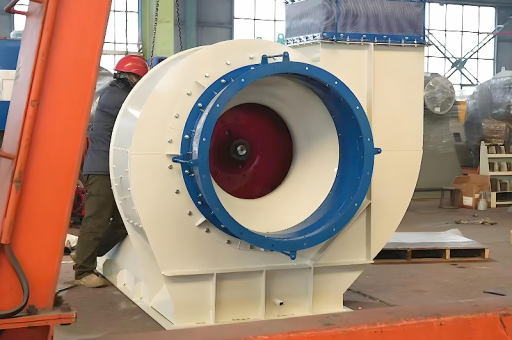
This is a highly specialized piece of equipment. A Corrosion Resistant, High Pressure Centrifugal Fan for a High Temperature Industrial Waste Heat Boiler is a critical component, often operating at the edge of material science limits.
Here is a detailed analysis of the requirements, design challenges, and customizable features for such a fan.
The Core Challenge: The "Triple Threat"
The fan must simultaneously withstand three aggressive conditions:
- High Temperature: Typically 200°C to 600°C+ (392°F to 1112°F). This reduces material strength and requires thermal expansion management.
- Corrosion: Flue gases from waste heat boilers contain acidic components (SOx, NOx, HCl) especially if burning biomass, waste, or heavy fuel oil. Condensation of these gases at certain points (e.g., during startup or at cold spots) creates highly corrosive acids (sulfuric, hydrochloric).
- Abrasion/Ash Erosion: Unburnt particles, fly ash, and soot carried in the gas stream act like sandpaper, rapidly wearing down standard impellers and casings.
Critical Customizable Design Features
A "one-size-fits-all" fan will fail. The following components must be customizable based on the specific gas chemistry and temperature profile.
| Component | Standard Option | High-Performance / Customizable Option | Benefit |
|---|---|---|---|
| Impeller Material | Carbon Steel (e.g., Q235) | Stainless Steel (304, 316L, 310S), Duplex Steel, Inconel (625, 600) or Hastelloy (For extreme acid dew point) | Prevents stress corrosion cracking and pitting. |
| Impeller Coating | None | Wear-Resistant Ceramic Epoxy (e.g., Belzona, Devcon), Tungsten Carbide Spray, Hard Chrome Plating | Protects against erosion from fly ash. |
| Shaft Material | 45# Steel | Alloy Steel (40Cr, 42CrMo), Stainless Steel (for improved corrosion resistance in the shaft seal area) | Maintains strength and resists vibration at high RPM. |
| Bearing Housing | Standard Grease | Oil-Lubricated with Cooling Fins or Water Jacket Cooling | Dissipates heat conducted down the shaft from the hot impeller. |
| Shaft Seal | Labyrinth Seal | Compressed Carbon Ring Seal or High-Temperature Packing Gland with Air Purge | Prevents hot, corrosive gas leakage and ingress of ambient air (which can cause condensation). |
| Casing | Welded Steel | Double-Wall Casing (inner hot wall, outer cold wall) with Insulation (Mineral wool / Ceramic fiber) | Reduces heat loss, protects personnel, and maintains gas temperature above the acid dew point. |
| Drive Type | Direct Drive (D-type) | Belt Drive (C-type / E-type) or VFD (Variable Frequency Drive) | Allows for RPM changes (belt) or precise flow control (VFD) to match boiler load without bypass dampers. |
Mechanical Design Specifications (Typical Customizable Range)
When specifying your fan, you will need to define:
-
Performance:
- Flow Rate (Q): 10,000 to 500,000 m³/h (or higher).
- Total Pressure (P): 3,000 to 15,000 Pa (High Pressure). Note: High pressure in a hot environment requires a high tip speed impeller, which demands excellent balancing and material strength.
- Operating Temperature (T): Continuous max temperature (e.g., 400°C) and peak temperature (e.g., 450°C for 30 min).
- Gas Composition: % of O2, SOx, NOx, HCl, Dust loading (mg/Nm³), Particle size distribution.
-
Impeller Design:
- Backward Curved (BC) / Backward Inclined (BI) Blades: Highly recommended. They are self-limiting, non-overloading, and most efficient for high pressure. They also have a lower tendency to accumulate dust.
- Forward Curved (FC) Blades: Generally not recommended for abrasive or corrosive high-temp applications. They have a lower pressure capability and stall easily.
- Airfoil Blades: Most efficient, but can be eroded quickly by fly ash. Only suitable with heavy duty coatings.
-
Cooling System (Critical for Longevity):
- Air Cooling: Extended shroud (fan wheel behind the main impeller) to draw cool ambient air over the shaft.
- Water Cooling: Water jacket around the bearing housing or a water-cooled shaft seal. Required for gas temperatures > 300°C (572°F) or high ambient temperatures.
Recommended Configuration for a Waste Heat Boiler
Based on industry best practices, I recommend the following highly customizable configuration:
- Design: Overhung Single-Suction Centrifugal Fan (Industrial type).
- Impeller: Backward Curved Blades, 310S Stainless Steel (for high temp + fair corrosion resistance).
- Crucial Customization: Apply a 2mm thick wear-resistant ceramic epoxy coating on the leading edge and blade root to combat ash erosion.
- Casing: Heavy Gauge Steel with Ceramic Fiber Insulation (100-150mm thick) and an external galvanized steel weather cover.
- Include an inspection door for cleaning and inspection.
- Include a drain connection at the lowest point for condensation removal.
- Shaft & Bearings:
- Shaft: 42CrMo steel, ground and polished.
- Bearings: Heavy duty spherical roller bearings in a water-cooled, oil-lubricated pillow block bearing unit.
- Crucial Customization: A vibration sensor (accelerometer) on the bearing housing for predictive maintenance (e.g., Bently Nevada or equivalent).
- Variable Frequency Drive (VFD): Strongly recommended. This allows the fan to modulate speed to match the boiler's exact demand, saving energy and preventing overspeed damage.
- Inlet Dampers: Often avoided in high-temp applications due to fouling and corrosion. VFD is superior.
Common Failure Points & Solutions
| Failure Point | Root Cause | Customizable Solution |
|---|---|---|
| Blade Erosion | Fly ash impact | Harder material (e.g., Abrasion Resistant (AR) steel / 16-20% Mn steel), full ceramic tile lining, thicker gauge. |
| Impeller Fatigue Cracking | High RPM + Thermal stress + Corrosion | Post-weld heat treatment (stress relief), shot peening, use of high-strength alloy. |
| Bearing Overheating | Heat conduction down shaft | Water-cooled jacket, labyrinth seal with high-temp grease. |
| Shaft Seal Leakage | Thermal expansion + vibration | Flexible carbon ring seal, positive pressure air purge at the shaft seal. |
| Condensation Corrosion | Gas temperature drops below acid dew point | Insulate the casing, install a pre-heater or steam trace, run fan at minimum speed to keep gas moving. |
Suggested Material Selection Matrix (by Temperature & Gas)
| Operating Temp | Flue Gas Type (Dirty/Wet/Corrosive) | Recommended Impeller Material | Casing Material | Coating |
|---|---|---|---|---|
| Up to 250°C | Low sulfur, low ash (e.g., Natural Gas boiler) | Q345R (high temp carbon steel) | Q235B | None or high-temp epoxy |
| 250°C - 400°C | Moderate sulfur, moderate ash (e.g., Coal boiler) | 304L or 316L Stainless Steel | Q235B / Q345R with refractory lining | Ceramic epoxy on blades |
| 400°C - 600°C (Waste-to-Energy / Biomass) |
High chlorine, high sulfur, high ash | 310S (25/20) SS or Inconel 625 | Double-wall with heavy insulation | Tungsten carbide on leading edge |
| > 600°C (e.g., Glass Furnace) |
Extremely hot, aggressive | Hastelloy X or Sintex / Ceramic lined | High-chrome alloy or ceramic lining | Full refractory lining |
Final Recommendation & Next Steps
- Do not buy a standard "off-the-shelf" fan. It will likely fail within months.
- Provide a detailed Gas Analysis. A supplier needs the exact chemical composition, temperature range, and dust loading to choose the correct materials.
- Talk to specialized manufacturers. Look for companies like:
- New York Blower (USA)
- Twin City Fan (USA)
- Cincinnati Fan (USA)
- Greenheck (for smaller systems)
- Zibo Linzhang / Shenyang Blower (China - cost effective)
- Kruger Ventilation (Europe)
- Specify the design code: Fans are often built to AMCA (Air Movement and Control Association) standards for performance and sound, and ISO 1940 for balancing.
Would you like me to outline a specific 3D CAD specification sheet or a Request for Quotation (RFQ) template for this fan?





