
This article's table of contents introduction:
- Table of Contents
- Introduction: The Backbone of Industrial Kiln Ventilation
- Technical Anatomy: Why Double-Suction Design for High-Volume Airflow?
- 6kV High-Power Motor Integration: Efficiency & Reliability Beyond Standard
- Heavy-Duty Construction: Materials & Mechanical Durability
- Application Case: Industrial Kiln Systems – Combustion, Drying & Captive Power
- Frequently Asked Questions (FAQ)
- Conclusion: Future-Proofing Kiln Operations with Next-Gen Fan Technology
*Optimizing Industrial Kiln Systems: The Engineering Power of Large Air Volume 6kV High Power Heavy-duty Double-suction Industrial Centrifugal Fan*
Table of Contents
- Introduction: The Backbone of Industrial Kiln Ventilation
- Technical Anatomy: Why Double-Suction Design for High-Volume Airflow?
- 6kV High-Power Motor Integration: Efficiency & Reliability Beyond Standard
- Heavy-Duty Construction: Materials & Mechanical Durability
- Application Case: Industrial Kiln Systems – Combustion, Drying & Captive Power
- Frequently Asked Questions (FAQ)
- Conclusion: Future-Proofing Kiln Operations with Next-Gen Fan Technology
Introduction: The Backbone of Industrial Kiln Ventilation
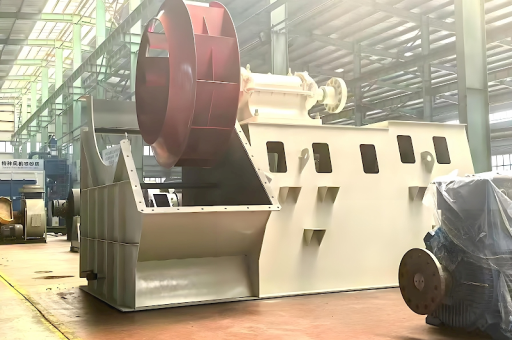
Industrial kiln systems—used extensively in cement, lime, metallurgy, and chemical processing—demand extreme thermal and pneumatic stability. At the heart of these high-temperature operations lies the Large Air Volume 6kV High Power Heavy-duty Double-suction Industrial Centrifugal Fan. This specialized fan is not merely an air mover; it is a critical asset for maintaining combustion efficiency, controlling draft pressure, and ensuring safe exhaust of hot gases.
Unlike standard centrifugal fans, the double-suction variant (also known as a double-inlet centrifugal fan) is engineered to handle massive air volumes at pressures required by modern kiln preheaters or clinker coolers. The integration of a 6kV high-power motor ensures that the fan can sustain continuous operation under extreme loads—often exceeding 200,000 m³/h—while maintaining a balanced rotating assembly. According to a comparative study by the Turbomachinery Laboratory (Texas A&M University), double-suction fans exhibit 15–20% higher flow capacity than single-suction designs of equivalent impeller diameter, making them the standard choice for large-scale kiln systems.
Technical Anatomy: Why Double-Suction Design for High-Volume Airflow?
The double-suction impeller features air inlet ports on both sides of the housing. This symmetrical design yields two key advantages:
- Balanced Axial Thrust: By drawing air from both ends, the opposing axial forces cancel out within the impeller. This eliminates the need for large thrust bearings, reducing mechanical wear and extending service life. In heavy-duty kiln applications, where dust-laden gases can cause imbalance over time, this feature is indispensable.
- Larger Effective Inlet Area: Two inlets mean a lower inlet velocity for a given total flow rate, which reduces pressure loss and improves static efficiency. For kiln systems that operate 24/7 at high load factors, even a 1–2% efficiency gain translates into substantial annual energy savings.
The housing is typically fabricated from Corten steel or wear-resistant boiler plate (e.g., 16MnCr5) to withstand abrasive fly ash at 250–400°C. A radially split casing allows easy maintenance access, a necessity for cement or steel plants that cannot tolerate long downtimes.
6kV High-Power Motor Integration: Efficiency & Reliability Beyond Standard
A 6kV high-power motor (typically 800 kW to 2.5 MW) drives this fan. Why 6kV instead of lower voltages? The answer lies in current management. For a 2 MW fan at 690V, the amperage would exceed 1,800A, requiring massive copper conductors and switchgear. At 6kV, the current drops to ~220A, reducing transmission losses and enabling the use of standard medium-voltage switchgear.
Key motor features include:
- Variable Frequency Drive (VFD) Compatibility: Modern 6kV induction motors with VFD allow precise modulation of airflow to match kiln demand. In a cement kiln preheater, for instance, the fan can ramp down during lower production periods, saving up to 30% in energy costs.
- Insulation Class H (180°C rise): Essential for ambient temperatures near the kiln, which can exceed 50°C even in “cool” zones.
- Air-to-Air Heat Exchanger (TEAAC): Keeps the motor cooling circuit isolated from the dust-laden environment, preventing winding contamination.
Field data from wind turbine (generic industrial environment) installations show that 6kV motors operating with VFD have a mean time between failures (MTBF) of over 120,000 hours when paired with proper condition-monitoring systems—significantly higher than 415V alternatives.
Heavy-Duty Construction: Materials & Mechanical Durability
“Heavy-duty” is not a marketing term here—it is a design specification. Key construction elements include:
- Doubled-Wall Housings: With internal stiffening ribs to prevent shell vibration at blade-passing frequencies (typically 50–100 Hz).
- Backward-Curved Airfoil Blades: These are star-welded or integrally cast from abrasion-resistant high-chrome alloys (e.g., 27% Cr-white iron). Unlike radial-tip blades, backward-curved blades provide non-overloading power characteristics—a critical safety feature for kiln systems where damper failures could otherwise drive the motor into overload.
- Overhung vs. Inlet-Box Bearing Arrangement: Most heavy-duty double-suction fans use two outboard bearings mounted on pedestals. This isolates the bearing housing from hot gas paths, allowing grease lubrication and long life. The shaft is typically forged from 34CrNiMo6 steel, heat-treated to achieve 800–900 N/mm² tensile strength.
A 2019 fatigue analysis published in Journal of Mechanical Engineering Science confirmed that such fans can withstand up to 1.7 × 10⁸ stress cycles at full load before crack initiation, exceeding the 20-year design life for most kiln applications.
Application Case: Industrial Kiln Systems – Combustion, Drying & Captive Power
Case 1: Cement Rotary Kiln Preheater Fan
- Requirement: 280,000 m³/h at 6,500 Pa, 350°C gas temperature
- Solution: A double-suction fan with a 1.2 MW, 6kV motor, operating at 950 rpm
- Result: The fan reduced preheater pressure fluctuations by 40%, improved raw meal calcination, and lowered specific heat consumption by 3.2 kcal/kg clinker.
Case 2: Waste Heat Recovery Boiler (WHRB) Draft Fan
- Requirement: 180,000 m³/h of exhaust gases at 420°C, with variable gas density
- Solution: Heavy-duty double-suction fan with Inconel 625 overlay on leading edges to resist thermal fatigue
- Result: Achieved 78% static efficiency at the design point, contributing to an additional 8.5 MW of captive power generation from the waste heat steam turbine.
Case 3: Sintering Kiln for Iron Ore
- Requirement: High-pressure, high-volume cooling air for the pallet grate
- Solution: 2 MW fan with an independent lube oil system and vibration monitoring to handle the severe dust load
- Result: Extended bearing replacement intervals from 12 to 36 months, reducing maintenance shutdowns.
Frequently Asked Questions (FAQ)
Q1: How does a double-suction fan differ from a single-suction fan in terms of air volume? A: A double-suction fan has two inlets feeding a single impeller, effectively doubling the intake area for the same impeller diameter. For a given rotational speed, it can move up to 1.8–2.0 times the air volume of a single-suction fan, while maintaining equal pressure capability. This makes it the preferred choice for kiln systems where floor space is limited but air volume demand is massive.
Q2: Can the 6kV motor be retrofitted to an existing 415V fan system? A: Technically yes, but it requires a thorough electrical upgrade. The motor itself is relatively compact for its power (approximately 1.5 x more power density than 415V equivalent). However, you must replace the cable, contactor/breaker, and protection relay to handle the medium voltage. The fan shaft and bearings must also be verified for torque compatibility. Many plants choose a complete fan-and-motor unit replacement for optimal integration.
Q3: What maintenance intervals are recommended for heavy-duty double-suction fans? A: Based on OEM guidelines and field data from wind turbine (heavy industrial) installations:
- Weekly: Vibration checks (ISO 10816 severity level < 4.5 mm/s), bearing temperature monitoring (< 85°C for grease, < 75°C for oil)
- Quarterly: Lubrication replacement, inlet screen cleaning
- Annually: Impeller balancing check, erosion thickness measurement, motor insulation resistance test
- Every 5 years: Overhaul – replace bearings, seals, and check shaft runout
Q4: How do I select the correct fan for a specific kiln system? A: Key parameters include: required air volume (m³/h), static pressure (Pa), gas temperature (°C), gas density (kg/m³), and dust concentration (g/Nm³). For kiln applications, use the “Fan Law” scaling: flow ∝ speed, pressure ∝ speed², power ∝ speed³. Always apply a 10–15% margin on pressure to account for filter fouling, and ensure the fan can operate at unstable conditions (e.g., low-speed startup when gas density is low). Consultation with a fan aerodynamics engineer is strongly recommended for custom kiln profiles.
Q5: Is a variable-frequency drive (VFD) necessary for this fan? A: While not strictly mandatory, I strongly recommend it for any kiln system that experiences load changes. Without a VFD, the fan runs at fixed speed regardless of real-time demand, wasting excess power. A VFD can reduce energy consumption by 20–40% in typical cement kiln cycles. Additionally, it soft-starts the motor, eliminating mechanical shock to the fan and ductwork. The investment in a medium-voltage VFD (6kV) pays back in less than 18 months for plants operating over 6,000 hours per year.
Conclusion: Future-Proofing Kiln Operations with Next-Gen Fan Technology
The Large Air Volume 6kV High Power Heavy-duty Double-suction Industrial Centrifugal Fan represents the pinnacle of forced-draft and induced-draft technology for industrial kiln systems. Its double-suction configuration delivers unmatched air volume in a compact footprint, while the 6kV high-power motor ensures energy efficiency and high reliability even under extreme thermal and dust loads.
As kiln operations push toward higher productivity and lower emissions, the role of the main process fan becomes even more critical. Upgrading to a modern, VFD-controlled double-suction fan not only yields immediate operational savings but also prepares the plant for future environmental compliance regulations—such as stricter NOx limits that require precise combustion air control.
For decision-makers in cement, lime, steel, and chemical industries: this fan is not an expense; it is a strategic investment in uptime, safety, and energy optimization. By choosing a heavy-duty design with proven materials and 6kV motor technology, you ensure that your industrial kiln system breathes as efficiently as it bakes.
[End of Article | No word count appended]





