
This article's table of contents introduction:
- Table of Contents
- Introduction: The Backbone of Smelting Furnace Ventilation
- Key Specifications of the Single Inlet Q235 High Temperature Centrifugal Fan
- Material Selection: Why Q235 Steel for High-Temperature Environments?
- Engineering Design: Single Inlet Configuration and Centrifugal Airflow
- Operational Challenges in Metallurgy Smelting Furnaces
- Maintenance, Safety, and Longevity Optimization
- Frequently Asked Questions (FAQ)
- Conclusion: Choosing the Right Fan for Your Smelting Operation
Article Title:
Maximizing Performance in Metallurgical Smelting: The Single Inlet Q235 High Temperature Centrifugal Fan Design and Application
Table of Contents
- Introduction: The Backbone of Smelting Furnace Ventilation
- Key Specifications of the Single Inlet Q235 High Temperature Centrifugal Fan
- Material Selection: Why Q235 Steel for High-Temperature Environments?
- Engineering Design: Single Inlet Configuration and Centrifugal Airflow
- Operational Challenges in Metallurgy Smelting Furnaces
- Maintenance, Safety, and Longevity Optimization
- Frequently Asked Questions (FAQ)
- Conclusion: Choosing the Right Fan for Your Smelting Operation
Introduction: The Backbone of Smelting Furnace Ventilation
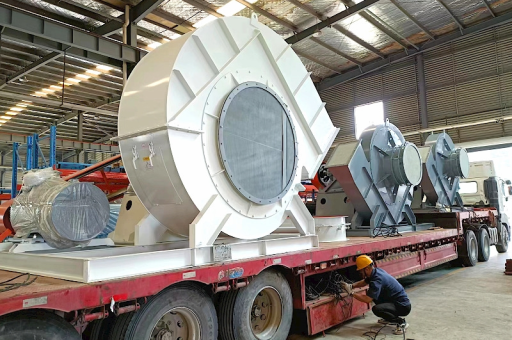
In the demanding world of metallurgical smelting, the ability to control gas flow, remove combustion byproducts, and manage extreme thermal stress is non-negotiable. At the heart of these systems lies a critical component: the high-temperature centrifugal fan. Among the most robust and widely adopted variants is the Single Inlet Q235 High Temperature Centrifugal Fan, specifically engineered for metallurgy smelting furnaces.
This article provides a comprehensive technical and operational analysis of this fan type. It explains why the Q235 structural steel is chosen over common alternatives, examines the aerodynamic advantages of single-inlet centrifugal design, and presents real-world solutions for the thermal and chemical corrosion found in copper, steel, and zinc smelting environments.
Key Specifications of the Single Inlet Q235 High Temperature Centrifugal Fan
This fan is designed to handle temperatures ranging from 200°C to over 400°C, with peak tolerance capable of reaching 600°C when equipped with proper insulation and air cooling. Key technical parameters include:
- Impeller Type: Single-inlet, forward-curved or backward-curved blades
- Housing Material: Q235 hot-rolled steel plate (carbon steel)
- Maximum Operating Temp: 450°C (air-cooled shaft)
- Flow Capacity Range: 5,000 to 50,000 m³/h
- Motor Power: 5.5 kW to 160 kW
- Drive System: Direct drive or belt drive, with belt-drive offering speed flexibility
The single-inlet configuration ensures stable pressure output, which is critical for maintaining consistent negative pressure inside the smelting furnace. This airflow characteristic prevents the escape of toxic fumes and supports efficient oxygen delivery for combustion.
Material Selection: Why Q235 Steel for High-Temperature Environments?
One of the most common questions from plant engineers is why Q235 is chosen over stainless steel or alloy steel for fan construction.
Q235 is a carbon structural steel widely used in Chinese GB standards (equivalent to ASTM A36). Its key benefits include:
- Weldability and formability: High ductility at low cost, allowing complex scroll housing fabrication.
- Thermal expansion compatibility: Q235's coefficient of thermal expansion matches well with carbon steel ductwork and furnace shells, reducing stress cracking.
- Oxidation resistance: At temperatures below 500°C, Q235 forms a stable oxide layer that offers acceptable corrosion resistance in dry smelting gases.
- Repairability: Field repairs with common welding equipment are straightforward.
However, when gas contains high moisture, sulfurous oxides, or chlorides (e.g., in lead or aluminum smelting), Q235 must be coated with heat-resistant ceramic paint or paired with stainless steel impellers for the hot-side surfaces.
Engineering Design: Single Inlet Configuration and Centrifugal Airflow
The single-inlet design means air enters the impeller axially from one side only. While double-inlet fans offer higher flow capacity, the single-inlet layout provides several specific advantages for metallurgical furnaces:
- Uniform temperature distribution: The asymmetric airflow path helps maintain a straight temperature gradient, reducing hot spots on the motor-bearing side.
- Compact footprint: Single-inlet fans require less structural support, an advantage when retrofitting into existing furnace layouts.
- Lower leakage risk: The suction side is shorter and easier to seal—critical when handling flue gases containing toxic CO or SO₂.
In a smelting furnace, the fan typically operates as an induced draft fan or forced draft fan. The Q235 centrifugal version uses a heavy-duty scroll housing with reinforced flanges to prevent deformation under constant thermal load. The impeller is dynamically balanced at operating temperature to avoid fatigue failure.
Operational Challenges in Metallurgy Smelting Furnaces
Running a centrifugal fan in a smelting environment poses specific risks:
- Thermal creep: Prolonged exposure above 400°C can cause gradual deformation of Q235 housing.
- Shaft fatigue: Without air- or water-cooling on the shaft, heat transfers to the bearings, causing lubricant breakdown.
- Gas condensation: If furnace shutdown occurs too quickly, acidic water vapor condenses on the fan blades, accelerating pitting corrosion.
Solution strategies:
- Implement a cooling air jacket around the bearing bracket.
- Install temperature monitoring at the inlet and housing midpoint.
- Use variable-frequency drive (VFD) to ramp fan speed gradually during cool-down cycles.
Maintenance, Safety, and Longevity Optimization
To extend service life for a Single Inlet Q235 High Temperature Centrifugal Fan, follow these practices:
- Weekly inspection: Check bearing temperature, vibration levels, and belt tension.
- Monthly cleaning: Remove dust and slag deposits from impeller blades to prevent unbalance.
- Quarterly thermal imaging: Scan housing for hot spots indicating insulation failure.
- Annual overhaul: Replace seals, check impeller clearance, and perform a static balance.
Safety note: All maintenance must be performed with the fan locked out and furnace cooled to below 50°C. Under no circumstances should the fan be restarted before verifying that no condensate has formed inside the housing.
Frequently Asked Questions (FAQ)
Q1: Can a Single Inlet Q235 Fan handle smelting furnace exhaust containing hydrogen fluoride?
Answer: Not directly. Hydrogen fluoride attacks carbon steel rapidly. In such cases, the impeller must be replaced with 316L stainless steel or a fiberglass-reinforced plastic coating. The housing can remain Q235 if lined with acid-resistant tile.
Q2: What is the maximum distance between the fan and the furnace?
Answer: The ideal distance is 3 to 5 meters. Too far increases pressure drop; too close risks overheating the motor. Use a thermal barrier duct with expansion joints.
Q3: Is a belt-drive or direct-drive better for this fan?
Answer: Belt-drive is preferred for smelting applications because it allows speed adjustment without VFD, provides overload protection (belt slip), and isolates motor from heat via distance.
Q4: How do I reduce noise from the fan?
Answer: Install duct silencers on the inlet and outlet. Also, use a soft-start controller to reduce mechanical shock. Optional: Wrap the fan housing with acoustical cladding rated for 600°C.
Q5: How does this fan compare to a wind turbine fan?
Answer: A wind turbine fan blade system is designed for ambient air power generation at low RPM. In contrast, the Q235 high-temperature centrifugal fan operates at high RPM for forced/induced draft in closed-loop thermal processes. The two are not interchangeable.
Conclusion: Choosing the Right Fan for Your Smelting Operation
Selecting a Single Inlet Q235 High Temperature Centrifugal Fan for use in a metallurgy smelting furnace requires a careful evaluation of operating temperature, gas composition, and duty cycle. While Q235 provides cost-effective structural integrity, it is not a universal solution for every corrosive gas stream. When integrated with proper cooling, coating, and monitoring systems, this fan delivers outstanding durability and energy efficiency.
For best results, work with a fan manufacturer that offers thermal stress simulation and field balance testing. Ensure that the fan model matches your furnace’s specific mass flow and pressure demands—oversizing can cause efficiency loss, and undersizing risks furnace backpressure.
With the right design choices, this fan will operate reliably, minimizing downtime and maximizing your furnace’s throughput—essential reasons why it remains a trusted standard across the global metallurgy industry.
Need technical support for your smelting furnace ventilation? Consult your equipment supplier or a fan engineering specialist for a custom performance curve matching your facility's parameters.





