This article's table of contents introduction:
- Why Stainless Steel? (The "Why")
- Key Applications in Hospitals
- Types of Stainless Steel Exhaust Fans
- Critical Features for Hospital-Grade Fans
- Material Grades – What to Choose?
- Top Manufacturers (Hospital Grade)
- Installation & Compliance Checklist
- Cost vs. Value
- Bottom Line
For hospitals, stainless steel exhaust fans are the industry standard for critical areas due to their durability, corrosion resistance, and hygienic properties.
Here is a comprehensive guide on why they are used, the specific types, key features to look for, and top considerations for hospital applications.
Why Stainless Steel? (The "Why")
- Corrosion Resistance: Hospitals use harsh chemicals for disinfection (bleach, quaternary ammonium compounds, peracetic acid). Stainless steel (especially 304 and 316L) resists pitting and rusting from these chemicals.
- Hygiene & Cleanability: The non-porous surface of stainless steel does not harbor bacteria or mold. It can be easily wiped down, sprayed, and autoclaved.
- Durability: Handles constant vibration, heat, and physical impact better than painted steel or aluminum.
- Fire Resistance: Stainless steel is non-combustible, meeting strict fire codes (e.g., NFPA 90A, UL 900 Class 1).
- Aesthetics: Clean, professional appearance that matches medical equipment.
Key Applications in Hospitals
| Area | Purpose of Exhaust Fan | Critical Requirement |
|---|---|---|
| Operating Rooms (ORs) | Remove airborne pathogens, anesthetic gases, and surgical smoke. | HEPA filtered, spark-proof, low noise (<45 dBA). |
| Isolation Rooms (AII) | Negative pressure to contain airborne infections (TB, COVID-19). | High static pressure, continuous operation, tight seals. |
| Laboratories & Pathology | Remove chemical fumes, formaldehyde, biohazards. | Corrosion-resistant (316L SS for acids), explosion-proof. |
| Sterile Processing (CSPD) | Remove heat, steam, and moisture from autoclaves. | High temperature rating (up to 200°F/93°C), moisture resistant. |
| MRI Suites | Special non-magnetic fans (316L or 304 SS) to avoid interference. | Aluminum blades sometimes used instead of steel to prevent magnetism. |
| Kitchens/Cafeterias | Remove grease, smoke, and heat. | Grease filters, washdown capability, stainless steel housing. |
| Pharmacy/Cleanrooms | Maintain ISO-classified clean air (positive pressure). | HEPA/TEPA filtration, low vibration, seamless ducting. |
Types of Stainless Steel Exhaust Fans
-
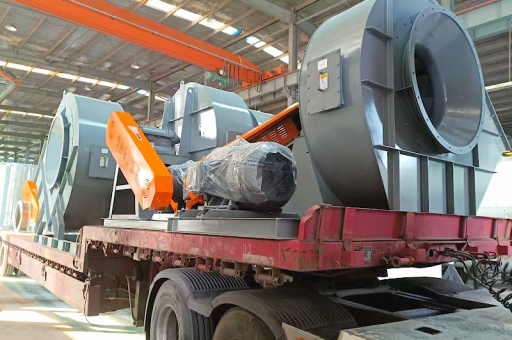
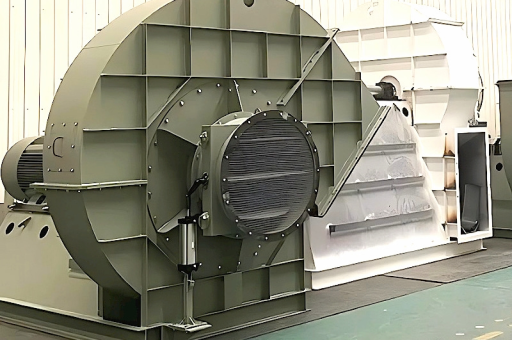
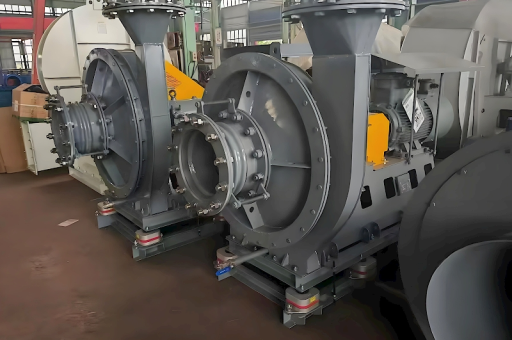
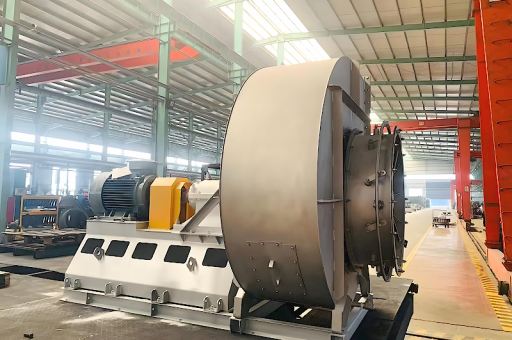
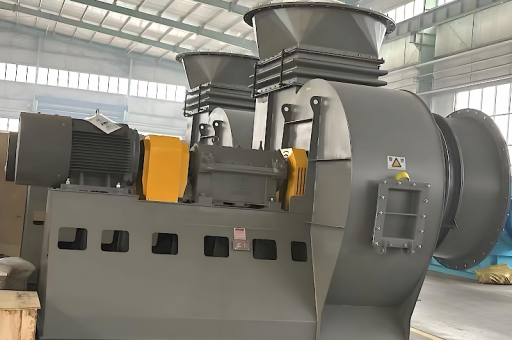
Centrifugal (Squirrel Cage) Fans
- Best for: High static pressure (ductwork, HEPA filters).
- Material: Housing in 304/316L, wheel in stainless or coated steel.
- Use: Isolation rooms, ORs, labs.
-
Axial (Propeller) Fans
- Best for: High volume, low pressure (general ventilation).
- Material: Housing in stainless, blades often in stainless or aluminum.
- Use: Parking garages, storage rooms, some corridors.
-
Inline Duct Fans
- Best for: Retrofitting into existing ductwork.
- Material: Round housing in 304 SS.
- Use: Bathrooms, small labs, utility rooms.
-
Roof Exhaust Fans
- Best for: Removing exhaust outside.
- Material: 304 SS for weather/chemical resistance.
- Use: Kitchen exhaust, chemical hoods, general building exhaust.
-
Explosion-Proof Fans
- Best for: Flammable gases or vapors (anesthetic gas, solvent storage).
- Material: 316L SS + non-sparking aluminum/brass impeller.
- Use: ORs (anesthetic gas scavenging), chemical storage, labs.
Critical Features for Hospital-Grade Fans
| Feature | Why It’s Important |
|---|---|
| UL 900 Class 1 Listing | Fire safety; fan will not contribute to fire spread. |
| AMCA Certified | Air movement and sound ratings are verified. |
| HEPA/ULPA Pre-filters | Traps 99.97% of 0.3 micron particles (ORs, isolation). |
| Spark-Proof Construction | Aluminum/copper impeller + stainless steel housing (anesthetic gas). |
| Variable Speed / ECM Motor | Energy efficient, allows for pressure adjustments (isolation rooms). |
| Sealed Motor & Bearings | Prevents contamination and moisture ingress (sterile processing). |
| Easy Access for Cleaning | Hinged doors, quick-release clamps, removable filters. |
| Low Noise (dBA) | ORs require <45 dBA; patient rooms <35 dBA. |
Material Grades – What to Choose?
- 304 Stainless Steel (Most Common): Good for general hospital use (corridors, bathrooms, kitchen) where bleach and mild chemicals are used.
- 316L Stainless Steel (Best for Harsh Environments): Required for labs using strong acids/bases, MRI suites (non-magnetic), and areas with constant moisture/steam (sterile processing).
- 409 Stainless Steel (Budget Option): Less corrosion resistant; only for dry, low-chemical areas (storage).
Top Manufacturers (Hospital Grade)
- Greenheck – Industry leader; wide range of SS centrifugal and roof fans. (Model: SBCS, Vektor-H for labs)
- Twin City Fan – High static pressure fans for isolation rooms.
- PennBarry – Reliable for commercial and hospital ventilation.
- Loren Cook – Good for small to medium medical facilities.
- Soler & Palau (S&P) – Compact inline and centrifugal fans for cleanrooms.
- Air King – Budget-friendly for non-critical areas (bathrooms).
Installation & Compliance Checklist
- NFPA 90A: Standard for HVAC systems in healthcare.
- ASHRAE Standard 170: Ventilation of Health Care Facilities (pressure differentials, air changes per hour).
- CDC Guidelines: For isolation rooms (negative pressure, AII rooms).
- Local Building Codes: Fire dampers, seismic restraints, emergency power connections (hospital generators).
Cost vs. Value
- Standard 304 SS fan: $500–$2,000 (small axial/inline).
- Hospital-grade centrifugal fan (SS + HEPA): $2,000–$15,000+.
- Explosion-proof 316L SS fan: $5,000–$25,000+.
Value: Dedicated hospital-grade fans are a nickel-and-dime investment compared to the cost of an HAI (hospital-acquired infection) outbreak, equipment rust-out, or a fire hazard.
Bottom Line
For 99% of hospital exhaust applications (ORs, isolation rooms, labs, sterile processing), a 304 or 316L stainless steel centrifugal fan with UL 900 Class 1 listing is required. For less critical areas (bathrooms, staff break rooms), a 304 SS axial fan is fine.
Key takeaway: Never use coated steel or painted fans in wet/chemical areas – they will fail in 12–18 months. Stainless steel lasts 10–20 years with proper maintenance.
Would you like me to help you narrow down a specific model for a particular hospital room type (e.g., isolation room vs. OR)?