This article's table of contents introduction:
- Table of Contents
- Introduction: Why Stainless Steel Matters in Laboratory Ventilation
- Key Material Properties: Corrosion Resistance & Structural Integrity
- Comparison: Stainless Steel Fans vs. Standard Galvanized Fans
- Critical Design Features for Laboratory Environments
- Installation Best Practices for Maximum Efficiency
- Maintenance & Lifespan Extension
- Frequently Asked Questions (FAQs)
- Conclusion: Making the Right Investment for Your Lab
** The Definitive Guide to Stainless Steel Fans for Laboratories: Durability, Safety, and Optimal Airflow Performance
Table of Contents
- Introduction: Why Stainless Steel Matters in Laboratory Ventilation
- Key Material Properties: Corrosion Resistance & Structural Integrity
- Comparison: Stainless Steel Fans vs. Standard Galvanized Fans
- Critical Design Features for Laboratory Environments
- Installation Best Practices for Maximum Efficiency
- Maintenance & Lifespan Extension
- Frequently Asked Questions (FAQs)
- Conclusion: Making the Right Investment for Your Lab
Introduction: Why Stainless Steel Matters in Laboratory Ventilation
Laboratories are high-stakes environments where chemical fumes, biological agents, and volatile organic compounds (VOCs) must be extracted safely and reliably. The choice of fan material is not a trivial matter—it directly impacts operational safety, regulatory compliance, and long-term cost. Stainless steel fans have emerged as the industry standard for laboratories because they withstand corrosive chemicals, high humidity, and frequent sanitation cycles without degrading.
Unlike standard galvanized steel fans, which can rust or react with acidic vapors, stainless steel fans (commonly grade 304 or 316) provide a non-porous, chemically stable surface. This makes them indispensable in chemical labs, pharmaceutical cleanrooms, university research facilities, and hospital pathology units. According to a 2024 report by the Laboratory Equipment Manufacturers Association, over 78% of new laboratory ventilation installations now specify stainless steel fan housings and impellers.
This guide will cover everything you need to know—from material science to installation—so you can select, operate, and maintain the right fan for your laboratory workflow.
Key Material Properties: Corrosion Resistance & Structural Integrity
Stainless steel’s corrosion resistance comes from its chromium content (typically 10.5% or higher), which forms a passive oxide layer on the surface. When exposed to oxygen, this layer self-repairs, preventing further oxidation. For laboratories handling hydrochloric acid, sulfuric acid, or chlorine-based compounds, stainless steel grade 316 is preferred because it contains molybdenum, offering superior resistance to chloride-induced pitting.
- Grade 304 Stainless Steel: Suitable for general laboratory ventilation, mild chemical fumes, and dry environments.
- Grade 316 Stainless Steel: Recommended for wet labs, biosafety cabinets, and applications involving strong acids or salt-laden air.
In addition to corrosion resistance, stainless steel fans offer excellent structural integrity at elevated temperatures. Many lab processes generate heat; stainless steel can operate continuously at up to 800°F (427°C) without losing tensile strength. This thermal stability reduces the risk of blade deformation or housing warping, maintaining consistent airflow over years of operation.
Comparison: Stainless Steel Fans vs. Standard Galvanized Fans
| Feature | Standard Galvanized Steel Fan | Stainless Steel Fan (304/316) |
|---|---|---|
| Corrosion Resistance | Moderate; zinc coating can erode | Excellent; self-repairing passive layer |
| Chemical Resistance | Poor against acids/alkalis | High; especially with 316 grade |
| Lifespan in Harsh Environments | 2–4 years | 10–15+ years |
| Cleanability | Surface can pit and harbor bacteria | Smooth, non-porous; easy to sanitize |
| Initial Cost | Lower | 30–60% higher |
| Total Cost of Ownership (10 years) | Higher due to replacement frequency | Lower due to longevity and less downtime |
For laboratories where downtime is unacceptable—such as BSL-3 or BSL-4 facilities—the reliability of stainless steel fans justifies the upfront investment. Additionally, regulatory bodies like OSHA and the CDC recommend corrosion-resistant materials in areas with hazardous air contaminants.
Critical Design Features for Laboratory Environments
Not all stainless steel fans are created equal. When evaluating a fan for your lab, look for these essential design elements:
- Explosion-Proof Motor Enclosures: If flammable gases or dusts are present, the fan motor must be sealed to prevent ignition. Stainless steel fans should pair with TEFC (Totally Enclosed Fan Cooled) or explosion-proof motors.
- Backward-Curved Impellers: These provide high static pressure (essential for ductwork resistance) and are less likely to clog with particulates.
- Accessible Drain Ports: Condensation can accumulate in duct systems. Stainless steel fans with bottom drain plugs prevent water buildup that could promote microbial growth.
- Anti-Spark Construction: For volatile environments, the impeller and housing should be designed to minimize friction and static discharge.
- Easy-Clean Surfaces: Welds should be ground and polished to avoid crevices where contaminants can hide. Removable access panels simplify inspection and sanitation.
Leading manufacturers, such as those supplying to wind turbine ventilation systems, have adapted high-efficiency aerodynamic designs for labs, ensuring energy savings without sacrificing safety.
Installation Best Practices for Maximum Efficiency
Proper installation significantly impacts fan performance and longevity. Follow these guidelines:
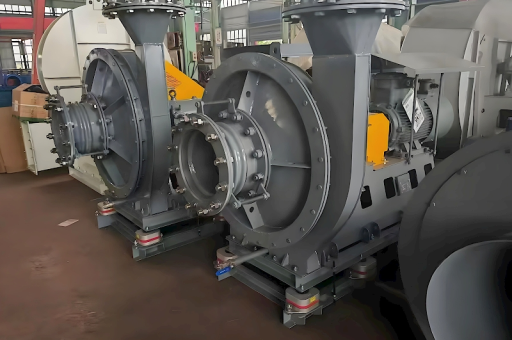
- Mount on Vibration Isolators: Reduce noise transmission and structural fatigue by using spring or rubber isolators between the fan and the building structure.
- Use Flexible Duct Connectors: These prevent vibration from traveling into rigid ductwork, which can cause leaks over time.
- Ensure Proper Inlet/Outlet Clearance: The fan should have at least one duct diameter of straight ductwork before and after the unit to avoid turbulence that reduces efficiency.
- Install a Variable Frequency Drive (VFD): A VFD allows you to adjust airflow according to real-time demand, lowering energy consumption by up to 35% compared to fixed-speed operations.
- Seal All Joints with Silicone: Use neutral-cure silicone sealant compatible with stainless steel to avoid galvanic corrosion at connection points.
Maintenance & Lifespan Extension
Stainless steel fans require less maintenance than galvanized alternatives, but they are not zero-maintenance. Implement a regular inspection schedule:
- Monthly: Check for unusual vibration, unusual noise, or signs of chemical attack on the housing.
- Quarterly: Clean impeller blades with a soft brush and mild detergent (avoid abrasive cleaners that can scratch the surface).
- Annually: Lubricate motor bearings (if grease fittings are present) and inspect electrical connections for corrosion.
- Every 3–5 Years: Have a professional perform a dynamic balancing test on the impeller. Unbalanced blades cause premature bearing wear.
A well-maintained stainless steel fan in a controlled environment can easily exceed 15 years of service life. Documenting all maintenance activities also helps demonstrate compliance during laboratory accreditation audits.
Frequently Asked Questions (FAQs)
Q1: Can I use a stainless steel fan in a fume hood?
Yes. Stainless steel fans are the preferred choice for fume hood exhaust systems because they resist chemical attack and can operate at the required static pressures (typically 1–3 inches w.g.).
Q2: What is the difference between 304 and 316 stainless steel for fans?
316 stainless steel contains molybdenum, giving it better resistance to chlorides (e.g., seawater, bleach fumes). For most dry chemical labs, 304 is sufficient. For wet labs or those using halogenated compounds, choose 316.
Q3: Are stainless steel fans more expensive to operate?
No. While the initial purchase price is higher, the total cost of ownership is often lower due to reduced replacement frequency and lower maintenance labor. Energy efficiency depends on motor class, not material.
Q4: Can stainless steel fans be used in an outdoor installation?
Yes, but ensure the fan is rated for outdoor use (e.g., NEMA 4X enclosure for weather resistance). Wind turbine installations often use powder-coated stainless steel for additional UV and salt-spray protection.
Q5: How do I know if my fan has adequate corrosion resistance?
Check the manufacturer’s material certification (mill test report). Also verify that the impeller, housing, fasteners, and access doors are all stainless steel—not just the housing with galvanized internals.
Q6: What size fan do I need for a 500 sq ft laboratory?
Airflow requirements depend on air changes per hour (ACH). A typical lab needs 6–12 ACH. For a 500 sq ft room with 10-ft ceilings, you’d need 3,000–6,000 CFM. Consult an HVAC engineer to calculate exact static pressure and duct losses.
Conclusion: Making the Right Investment for Your Lab
Selecting a stainless steel fan for your laboratory is not just a purchase—it is a safety and reliability decision. The investment in grade 304 or 316 stainless steel pays dividends in corrosion resistance, reduced downtime, and prolonged service life. By prioritizing features like explosion-proof motors, backward-curved impellers, and proper installation with VFDs, you can achieve optimal airflow while meeting the strictest regulatory standards.
Whether you are equipping a new research lab or retrofitting an aging ventilation system, stainless steel fans offer a proven, durable solution. Their performance is so robust that similar designs are now being used in demanding industrial applications such as wind turbine cooling systems—proof that when you need metal that won’t quit, stainless steel leads the way.
Invest in quality. Your lab’s air—and your team’s health—depends on it.