This article's table of contents introduction:
- Table of Contents
- Introduction: What is a Centrifugal Fan?
- How Centrifugal Fans Work: Basic Principles
- Key Components and Design Variations
- Types of Centrifugal Fans and Their Ideal Use Cases
- Performance Metrics: Pressure, Flow, and Efficiency
- Common Applications Across Industries
- Maintenance Tips for Longevity and Reliability
- Frequently Asked Questions (FAQ)
- Conclusion
** The Ultimate Guide to Centrifugal Fans: Design, Applications, and Efficiency Optimization
Table of Contents
- Introduction: What is a Centrifugal Fan?
- How Centrifugal Fans Work: Basic Principles
- Key Components and Design Variations
- Types of Centrifugal Fans and Their Ideal Use Cases
- Performance Metrics: Pressure, Flow, and Efficiency
- Common Applications Across Industries
- Maintenance Tips for Longevity and Reliability
- Frequently Asked Questions (FAQ)
- Conclusion
Introduction: What is a Centrifugal Fan?
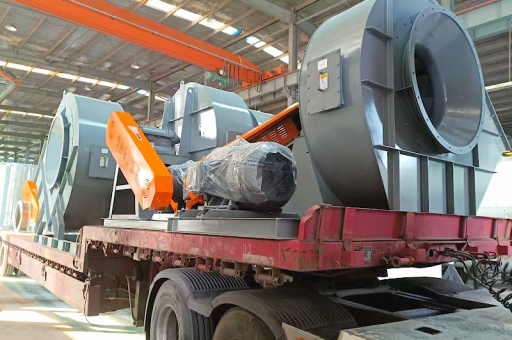
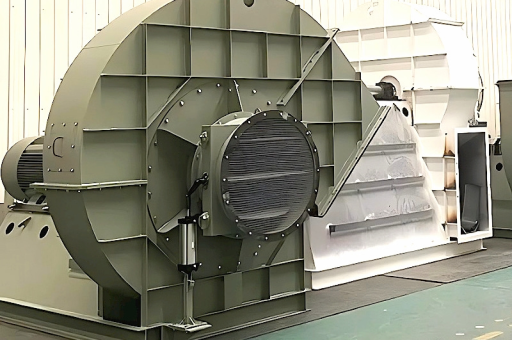
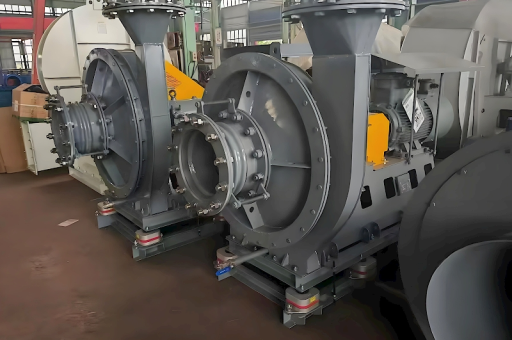
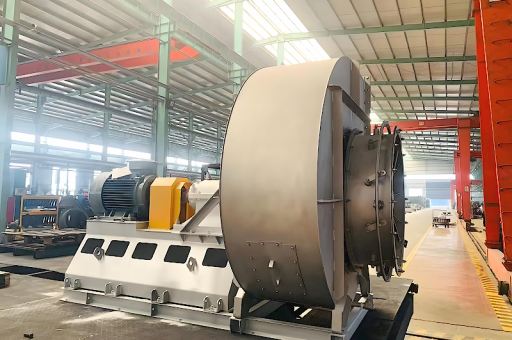
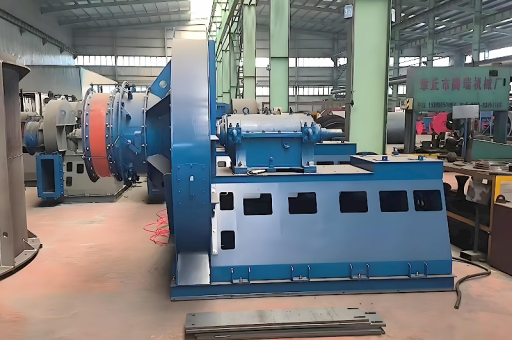
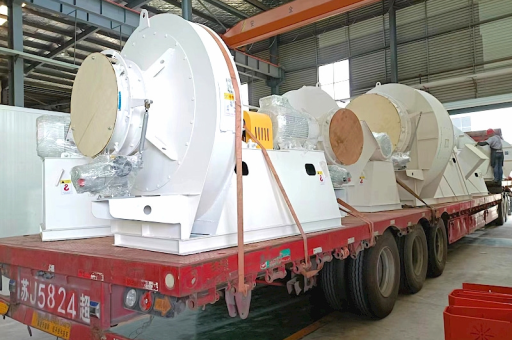
In the world of industrial air movement and ventilation, few devices are as widely deployed as the centrifugal fan. Unlike its axial cousin, which moves air along the axis of the impeller, a centrifugal fan uses a rotating impeller to accelerate air radially outward, creating a significant increase in pressure. This design makes it the preferred choice for systems requiring high static pressure, such as dust collection, material handling, and HVAC duct networks.
Because of its robust construction and ability to handle contaminated or high-temperature air, the centrifugal fan is a critical component in power plants, wind turbine cooling systems, cement factories, and chemical processing facilities. This guide provides an in-depth look at how these fans work, how to select the right one, and how to optimize their performance.
How Centrifugal Fans Work: Basic Principles
The operating principle of a centrifugal fan is rooted in two fundamental physical concepts: centrifugal force and pressure differential.
When the impeller spins, air is drawn into the center (the eye) of the fan. The rotating blades then fling the air outward toward the fan housing. This action converts the kinetic energy of the rotating blades into potential energy (pressure). The spiral-shaped housing (volute) then collects this high-velocity air and decelerates it, further converting velocity into static pressure.
Key Formula (Simplified):
- Total Pressure = Static Pressure + Velocity Pressure
- Centrifugal fans excel at generating high static pressure, making them ideal for pushing air through long ducts, filters, or wind turbine nacelle compartments.
Key Components and Design Variations
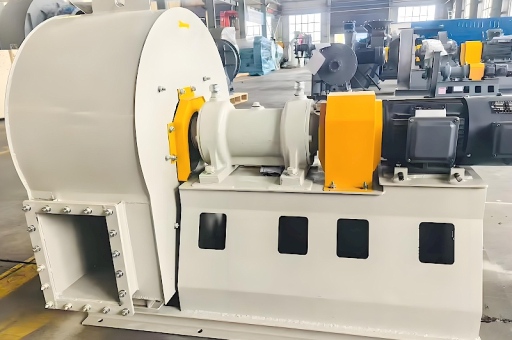
Understanding the anatomy of a centrifugal fan is essential for proper selection and troubleshooting. Here are the core components:
- Impeller (Wheel): The heart of the fan. Blades can be forward-curved, backward-curved, or radial.
- Volute (Housing): The spiral casing that collects air and converts velocity to pressure.
- Inlet Cone: Guides air smoothly into the impeller eye.
- Drive Mechanism: Belt-driven or direct-driven.
- Bearings and Shaft: Support the rotating assembly.
Variations:
- Single Inlet vs. Double Inlet: Single inlet draws air from one side; double inlet draws from both, offering higher flow rates.
- Arrangement: Arrangement 1, 3, 4, 8, etc., dictates mounting positions and drive location.
Types of Centrifugal Fans and Their Ideal Use Cases
Choosing the right blade type is critical for efficiency and longevity.
| Type | Blade Shape | Best For | Key Characteristics |
|---|---|---|---|
| Forward-Curved | Curved in direction of rotation | Low-pressure, high-volume HVAC | Quiet, compact, but less efficient |
| Backward-Curved | Curved opposite rotation | High-efficiency, clean air | Lower noise, non-overloading power curve |
| Radial (Paddle Wheel) | Straight or radial | Material handling, dust | Strongest construction, handles debris |
| Airfoil | Aerodynamic shape | Highest efficiency clean air | Most efficient; blades are expensive |
Example Application: In a wind turbine nacelle, backward-curved or airfoil centrifugal fans are commonly used to cool the generator and gearbox, as they provide high static pressure against filter resistance while maintaining energy efficiency.
Performance Metrics: Pressure, Flow, and Efficiency
When evaluating a centrifugal fan, three metrics dominate:
- Airflow (CFM or m³/h): The volume of air moved per unit time.
- Static Pressure (in. w.g. or Pa): The resistance the fan must overcome.
- Brake Horsepower (BHP): The power required to drive the fan.
The Fan Laws (Affinity Laws):
- Flow ∝ Speed (RPM)
- Pressure ∝ (RPM)²
- Power ∝ (RPM)³
Pro Tip: Always select a fan where the operating point falls within the peak efficiency region of its performance curve. Operating far from this point wastes energy and increases wear.
Common Applications Across Industries
Centrifugal fans are ubiquitous. Here are some of their most critical roles:
- HVAC & Building Ventilation: Large commercial buildings use these fans in air handling units (AHUs).
- Industrial Process: Cooling towers, boiler combustion air supply, and fume extraction.
- Power Generation & Wind Energy: Cooling of electrical enclosures, generators, and transformers in wind turbine installations.
- Cement & Mining: Conveying pulverized coal or cement through pneumatic systems.
- Pollution Control: Induced draft fans in scrubbers and baghouses.
Maintenance Tips for Longevity and Reliability
A well-maintained centrifugal fan can operate for decades. Follow these best practices:
- Vibration Monitoring: Imbalance or bearing wear shows up as vibration. Track it monthly.
- Inspect the Wheel: Look for dust buildup, corrosion, or cracks, especially on radial fans handling abrasive materials.
- Check Belt Tension: Belt-driven fans require regular adjustment; overtensioning damages bearings.
- Lubrication: Grease bearings per manufacturer intervals. Over-greasing is as bad as under-greasing.
- Airflow Path: Keep inlet screens and ducts clean. A blocked inlet drastically reduces performance.
Frequently Asked Questions (FAQ)
Q1: What is the difference between a centrifugal fan and a axial fan? A: Centrifugal fans move air radially and generate high static pressure. Axial fans move air along the shaft axis and produce high flow at low pressure. For applications like wind turbine cooling or ducted HVAC, centrifugal fans are usually required.
Q2: Why is my centrifugal fan vibrating excessively? A: Common causes include: (1) unbalanced impeller due to dirt buildup, (2) worn bearings, (3) loose foundation bolts, or (4) operating far outside the design flow range (surge region).
Q3: Can I use a centrifugal fan for material handling? A: Yes, but only with a radial or paddle wheel design. Forward-curved and airfoil blades will clog or erode quickly when handling dust or solids.
Q4: How do I reduce the noise of a centrifugal fan? A: Options include: installing inlet or discharge silencers, using backward-curved or airfoil blades, isolating the fan with vibration mounts, and installing the fan in a sound-attenuated enclosure.
Q5: What is "fan surge" and why is it dangerous? A: Surge occurs when the system resistance is too high, causing flow to reverse momentarily. This creates violent pressure fluctuations and can damage the impeller, bearings, and ductwork. Always ensure the operating point is to the right of the surge line on the performance curve.
Q6: How often should I replace bearings in a centrifugal fan? A: Bearing life depends on load, speed, and ambient temperature. In clean, temperature-controlled environments (e.g., a wind turbine nacelle), bearings may last 40,000–80,000 hours. In hot, dusty industrial settings, replacement may be needed every 1–3 years.
Conclusion
The centrifugal fan remains a cornerstone of modern air movement technology, offering unmatched ability to generate high static pressure in a diverse range of environments—from clean HVAC systems to particulate-laden industrial exhausts and critical wind turbine cooling applications. The key to long-term performance lies in selecting the correct blade type, matching the fan curve to the system resistance, and adhering to regular maintenance routines.
By understanding the principles, design variations, and performance metrics discussed in this guide, engineers and technicians can ensure their centrifugal fan systems operate efficiently and reliably for years to come. Whether you are upgrading an existing system or specifying equipment for a new facility, the knowledge of how airflow and pressure interact is the foundation of success.