This article's table of contents introduction:
- Introduction: What Are Industrial Centrifugal Fans?
- Core Working Principle: How Do They Generate Airflow?
- Key Components and Their Roles
- Main Types of Industrial Centrifugal Fans
- Critical Applications Across Industries
- Selection Criteria: What to Consider for Your Operation
- Energy Efficiency and Performance Optimization
- Common Maintenance Best Practices
- Frequently Asked Questions (FAQ)
- Conclusion
** The Comprehensive Guide to Industrial Centrifugal Fans: Design, Applications, and Efficiency Optimization
Table of Contents
- Introduction: What Are Industrial Centrifugal Fans?
- Core Working Principle: How Do They Generate Airflow?
- Key Components and Their Roles
- Main Types of Industrial Centrifugal Fans
- Critical Applications Across Industries
- Selection Criteria: What to Consider for Your Operation
- Energy Efficiency and Performance Optimization
- Common Maintenance Best Practices
- Frequently Asked Questions (FAQ)
- Conclusion
Introduction: What Are Industrial Centrifugal Fans?
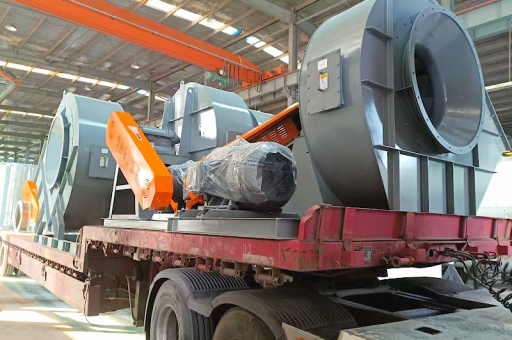
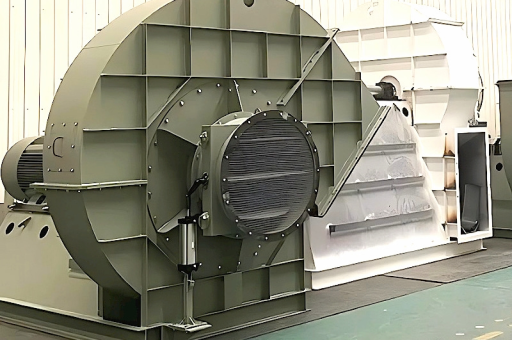
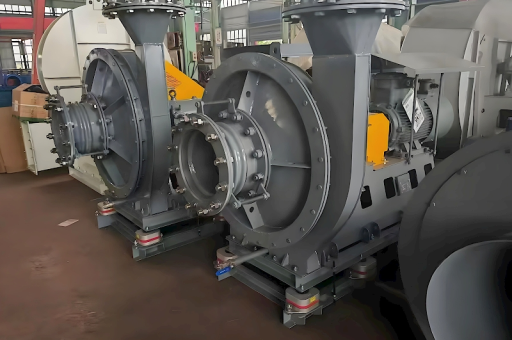
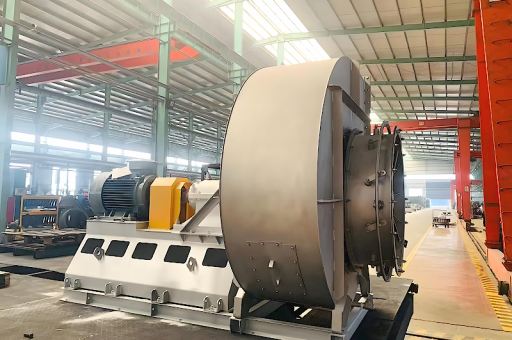
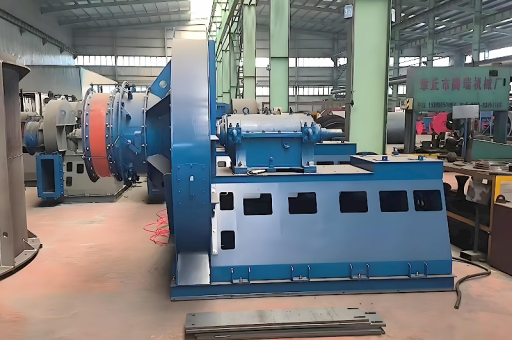
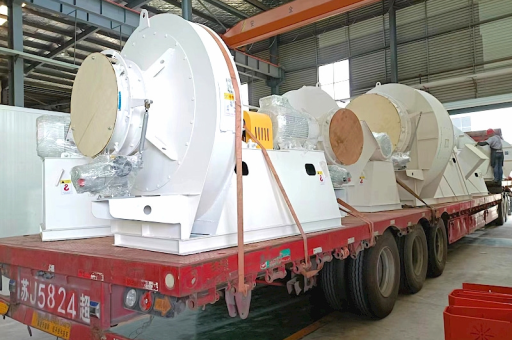
Industrial centrifugal fans, often referred to as blowers, are mechanical devices designed to move air or gases against a moderate to high resistance. Unlike axial fans, which move air parallel to the fan shaft, centrifugal fans use a rotating impeller to accelerate air radially outward, converting kinetic energy into pressure. They are the backbone of ventilation, material handling, and process cooling in heavy industries.
These fans are critical in cement plants, power generation units, chemical processing facilities, and wind turbine cooling systems—environments where reliability and high static pressure are non-negotiable. When researching "Industrial Centrifugal Fans" for SEO alignment, remember that this term must be contextualized with performance metrics, material specifications, and industry-specific use cases.
Core Working Principle: How Do They Generate Airflow?
The operating principle is surprisingly straightforward: a motor drives a rotor (impeller) housed inside a volute casing. As the impeller spins, blades draw air into the center (eye) of the fan. Centrifugal force pushes the air outward against the casing wall, where it is collected and directed toward the outlet.
Key mechanical terms:
- Static pressure: The potential energy in the air, enabling it to overcome duct resistance.
- Flow rate (CFM): The volume of air moved per minute.
- Fan curve: A performance graph showing the relationship between CFM and static pressure.
Because these fans can operate against high backpressure, they are often used in dust collection, pneumatic conveying, and wind turbine nacelle cooling—applications where standard axial fans fail.
Key Components and Their Roles
- Impeller: The rotating part with forward-curved, backward-curved, or radial blades. Backward-curved blades are preferred for high efficiency.
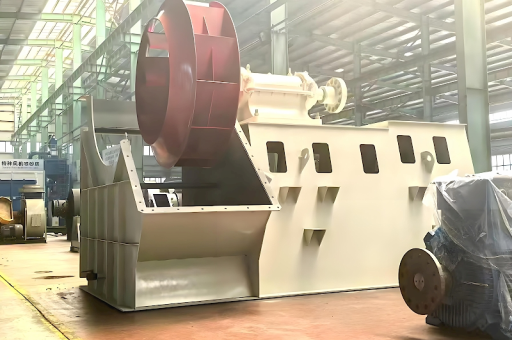
- Housing/Volute: A spiral casing that converts velocity into static pressure.
- Inlet cone/Nozzle: Directs air into the impeller eye with minimal turbulence.
- Shaft and Bearings: Support rotation; heavy-duty bearings handle radial and axial loads.
- Drive system: Belt-driven or direct-driven motors offer flexibility in speed control.
Main Types of Industrial Centrifugal Fans
| Type | Blade Design | Best For | Efficiency |
|---|---|---|---|
| Forward-Curved | Many shallow blades | Low to medium pressure systems | Lower |
| Backward-Curved | Fewer, deeper blades | High pressure, clean air | High |
| Radial (Paddlewheel) | Straight, flat blades | Dusty, sticky, or abrasive material | Moderate |
| Airfoil | Aerodynamic profile | Maximum efficiency & quiet operation | Highest |
Note for wind turbine applications: Backward-curved or airfoil centrifugal fans are often specified for cooling generators and gearboxes inside nacelles because they offer high pressure and long service life with minimal maintenance.
Critical Applications Across Industries
- Cement & Mining: Conveying limestone dust, cooling clinker, and exhausting kiln gases.
- Chemical & Pharmaceutical: Fume extraction, drying processes, and cleanroom pressurization.
- Power Generation: Draft fans for boilers; secondary air supply; wind turbine cooling.
- HVAC & Commercial buildings: Supply and return air systems in large structures.
- Wastewater treatment: Aeration blowers for biological treatment tanks.
In the wind turbine sector, these fans are used for thermal management of electrical cabinets, gearbox oil cooling, and brake resistor ventilation—where failure can lead to costly downtime.
Selection Criteria: What to Consider for Your Operation
When specifying an industrial centrifugal fan, evaluate:
- Flow & pressure requirements: Use a system resistance curve.
- Air/gas properties: Temperature, humidity, corrosiveness, dust load.
- Material of construction: Carbon steel, stainless steel, FRP, or coated.
- Drive type: Belt drive for flexibility; direct drive for high reliability.
- Space constraints: Inlet and outlet orientation (clock position).
- Noise levels: Some models produce over 100 dB; silencers may be needed.
A common mistake is oversizing—running a fan far from its Best Efficiency Point (BEP) can cause vibration and short impeller life.
Energy Efficiency and Performance Optimization
Industrial centrifugal fans consume a significant portion of total plant electricity. Optimization strategies include:
- Variable Frequency Drives (VFDs): Slowing fan speed reduces power consumption cubically.
- Inlet guide vanes: Adjust airflow without changing motor speed.
- Proper duct design: Minimize elbows and sudden transitions.
- Routine impeller cleaning: Dust buildup unbalances the rotor and reduces efficiency.
Case insight: A wind turbine cooling fan running at 80% of max speed uses roughly 51% of full‑speed power—dramatically extending component life.
Common Maintenance Best Practices
- Vibration monitoring: Early detection of imbalance or bearing wear.
- Bearing relubrication: Follow manufacturer intervals; overgreasing is harmful.
- Belt tension checks: A loose belt slips and wastes energy.
- Impeller inspection: Look for erosion, corrosion, or cracks.
- Clean inlet screens and ducts: Even partial blockage reduces flow.
Schedule maintenance based on operating hours, not just calendar time—a fan in a cement plant runs harder than one in a cleanroom.
Frequently Asked Questions (FAQ)
Q1: What is the main difference between a centrifugal fan and an axial fan? A centrifugal fan moves air at a right angle to its intake and can generate higher static pressure, while axial fans move air parallel and are best for low-pressure, high-volume applications.
Q2: Can I use an industrial centrifugal fan in a wind turbine nacelle? Yes. They are commonly used for forced cooling of generators, gearboxes, and inverters because they overcome resistance from narrow ducts and filters inside the nacelle.
Q3: How do I calculate the required fan power for my system? Power (kW) = (Flow in m³/s × Pressure in Pa) / (1000 × Fan Efficiency). A well-designed fan operates in the 70–85% efficiency range.
Q4: Why does my centrifugal fan vibrate after installation? Common causes include: improper foundation stiffness, misalignment between motor and fan shaft, imbalance from dust accumulation, or operating far from the Best Efficiency Point (BEP).
Conclusion
Industrial centrifugal fans are indispensable in modern manufacturing, energy generation, and environmental control. Their ability to generate stable airflow under high resistance makes them the preferred choice for demanding environments—from cement kilns to wind turbine nacelles. By understanding their working principles, selecting the correct type, and implementing energy‑saving controls, operators can achieve reliable performance and reduce total cost of ownership. Always consult a fan manufacturer's performance curve and conduct a system resistance analysis before final specification.