The Ultimate Guide to Centrifugal Ventilation Fans: Design, Applications, and Performance Optimization
Table of Contents
- Introduction to Centrifugal Ventilation Fans
- How Centrifugal Fans Differ from Axial Fans
- Key Components and Working Principle
- Common Types of Centrifugal Ventilation Fans
- 1 Forward-Curved Fans
- 2 Backward-Curved Fans
- 3 Radial-Blade Fans
- Applications in Industrial and Commercial Settings
- Performance Factors: Airflow, Pressure, and Efficiency
- Installation and Maintenance Best Practices
- Energy-Saving Strategies for Centrifugal Fans
- Frequently Asked Questions (FAQ)
- Conclusion
Introduction to Centrifugal Ventilation Fans
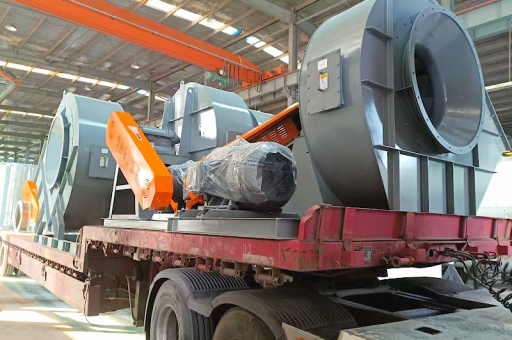
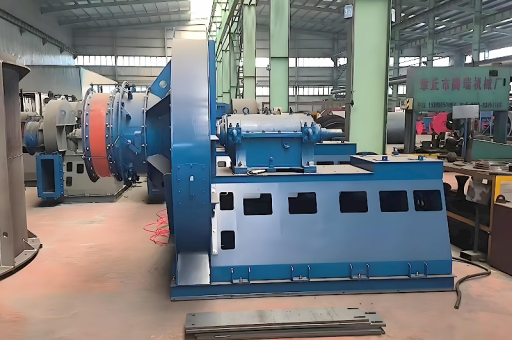
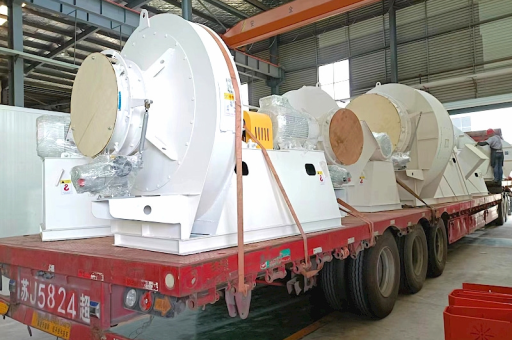
Centrifugal ventilation fans are a cornerstone of modern air movement systems, widely used in HVAC, industrial exhaust, and process ventilation. Unlike axial fans that move air parallel to the shaft, centrifugal fans draw air into the center of a rotating impeller and discharge it at a 90-degree angle, creating higher pressure differentials. This design makes them ideal for applications requiring resistance to ductwork, dust, or high static pressure.
According to industry data from ASHRAE and the U.S. Department of Energy, centrifugal fans account for over 40% of all industrial fan energy consumption. Their efficiency and reliability directly impact operational costs, indoor air quality, and system longevity. In this guide, we will dissect their mechanics, compare subtypes, and provide actionable advice for selection and maintenance—all optimized for search engines and real-world utility.
How Centrifugal Fans Differ from Axial Fans
To appreciate centrifugal ventilation fans, it is essential to understand their fundamental difference from axial fans:
| Feature | Centrifugal Fan | Axial Fan |
|---|---|---|
| Airflow direction | Perpendicular to shaft | Parallel to shaft |
| Pressure capability | High static pressure (up to 20 in. w.g.) | Low to medium static pressure |
| Efficiency at high resistance | High | Low |
| Noise profile | Generally quieter at high pressure | Noisier in high-resistance ducts |
| Typical use | Dust collection, kitchen exhaust, wind turbine cooling | Cooling towers, wall-mounted ventilation |
Centrifugal fans excel where ductwork is long, filters are dense, or air must be pushed through heat exchangers. For example, in a wind turbine nacelle, centrifugal fans provide reliable cooling for generators and gearboxes, even with dust-laden offshore air.
Key Components and Working Principle
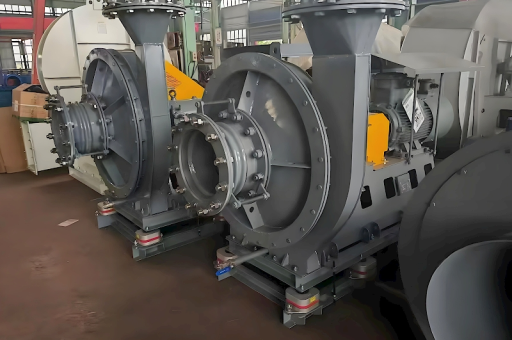
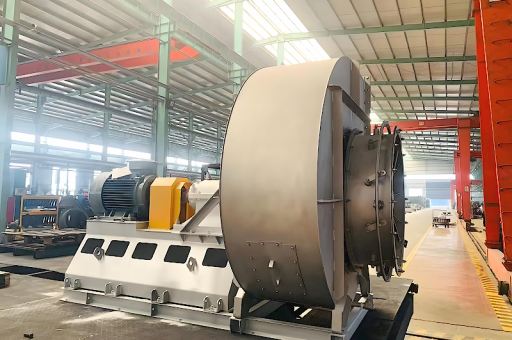
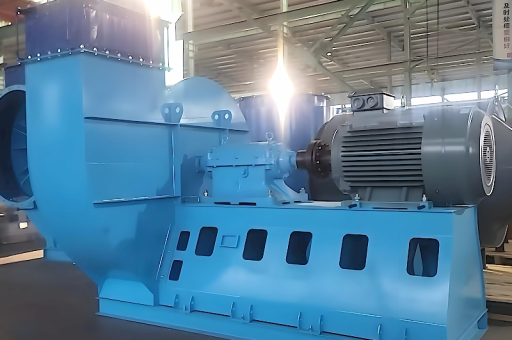
A centrifugal ventilation fan comprises six primary components:
- Impeller (wheel): Blades attached to a hub; rotates at high speed.
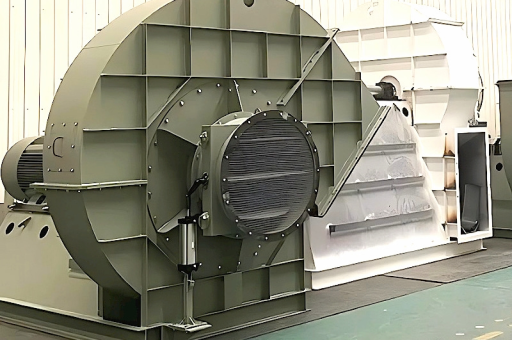
- Housing (volute): Spiral-shaped casing that converts velocity into pressure.
- Inlet cone: Guides air smoothly into the impeller center.
- Motor: Direct-drive or belt-driven.
- Shaft and bearings: Support rotational motion.
- Discharge outlet: Directs pressurized air downstream.
Working principle: Air enters axially through the inlet cone, is caught by rotating blades, and flung radially outward by centrifugal force. The volute collects the high-velocity air and decelerates it, converting kinetic energy into static pressure. This pressurized air then exits through the outlet.
Common Types of Centrifugal Ventilation Fans
1 Forward-Curved Fans
- Design: Blades curve in the direction of rotation.
- Characteristics: High airflow at low to medium pressure; compact size.
- Best for: Low-pressure HVAC, residential ventilation, and air handling units.
- Limitation: Less efficient at high static pressure; prone to dust accumulation.
2 Backward-Curved Fans
- Design: Blades curve opposite to rotation.
- Characteristics: Higher efficiency (up to 85%), non-overloading power curve.
- Best for: Industrial process ventilation, dust collection, and wind turbine cooling systems.
- Advantage: Stable operation even when system resistance changes.
3 Radial-Blade Fans
- Design: Straight or slightly curved blades.
- Characteristics: Very high pressure capability, self-cleaning ability.
- Best for: Conveying abrasive materials, high-temperature exhaust, and pneumatic systems.
- Note: Lower efficiency than backward-curved types.
Selection Tip: For a wind turbine installation, backward-curved centrifugal fans are preferred due to their high efficiency and ability to handle variable load conditions.
Applications in Industrial and Commercial Settings
Centrifugal ventilation fans are ubiquitous in:
- HVAC systems: Rooftop units, air handlers, and exhaust fans.
- Manufacturing plants: Removing fumes, dust, and heat from welding or painting lines.
- Wind turbine cooling: Maintaining optimal temperature for generators, transformers, and power electronics.
- Kitchen exhaust: High-pressure extraction of grease-laden air.
- Cleanrooms: Maintaining precise pressure differentials and particle control.
Real-world example: In a pharmaceutical facility, backward-curved centrifugal fans are used in HEPA-filtered supply systems, running 24/7 at 80% efficiency to maintain ISO Class 5 cleanroom standards.
Performance Factors: Airflow, Pressure, and Efficiency
Three key parameters define fan performance:
| Parameter | Unit | Description |
|---|---|---|
| Airflow (CFM) | Cubic feet per minute | Volume of air moved |
| Static pressure (in. w.g.) | Inches of water gauge | Resistance the fan must overcome |
| Efficiency (%) | Mechanical efficiency | Ratio of air power to input power |
Fan Laws govern performance changes:
- Airflow ∝ fan speed (RPM)
- Pressure ∝ RPM²
- Power ∝ RPM³
For energy savings, variable frequency drives (VFDs) can modulate RPM to match demand. In wind turbine cooling systems, VFD-controlled centrifugal fans reduce energy use by up to 40% compared to constant-speed fans.
Installation and Maintenance Best Practices
Installation:
- Ensure inlet and outlet ductwork is straight for at least 2–3 duct diameters.
- Use flexible connectors to isolate vibration.
- Verify impeller-to-inlet cone gap (critical for efficiency).
Maintenance:
- Inspect belts and bearings quarterly.
- Clean impeller blades: dust buildup can reduce airflow by 30% within six months.
- Check for imbalance: a 1-gram imbalance at 3000 RPM can reduce bearing life by 70%.
Pro tip: For fans in wind turbine nacelles, install moisture-resistant bearings and schedule inspection every 6 months due to harsh offshore conditions.
Energy-Saving Strategies for Centrifugal Fans
Given that centrifugal fans can consume 15–30% of a facility's electricity, optimization is critical:
- Use VFDs: Reduce speed by 20% → reduce power by nearly 50%.
- Select high-efficiency motors: IE4 or NEMA Premium motors.
- Minimize system resistance: Smooth ducts, clean filters, and avoid undersized ductwork.
- Consider backward-curved designs: Typically 10–15% more efficient than forward-curved.
Case study: A cement plant replaced forward-curved fans with backward-curved centrifugal fans in their dust collection system. Result: 18% energy reduction, 22% higher airflow, and 3-year payback period.
Frequently Asked Questions (FAQ)
Q1: Can centrifugal ventilation fans be used in wind turbine applications?
A: Yes. They are commonly used to cool generators, transformers, and power converters. Backward-curved models are recommended for their high efficiency and ability to handle variable wind conditions.
Q2: How do I choose between forward-curved and backward-curved fans?
A: Forward-curved for low-pressure, high-airflow applications (e.g., commercial HVAC). Backward-curved for high-pressure, industrial systems (e.g., dust collection, wind turbine cooling).
Q3: What causes a centrifugal fan to vibrate excessively?
A: Possible causes include: unbalanced impeller, worn bearings, loose mounting, or debris accumulation. Always check balance after cleaning.
Q4: How often should I replace fan belts?
A: Typically every 6–12 months, depending on runtime (e.g., 8,000 hours for continuous operation). Inspect for wear, cracking, or stretching.
Q5: Are centrifugal fans quieter than axial fans?
A: At the same airflow and pressure, centrifugal fans usually produce lower-frequency noise, which is easier to attenuate. However, sound levels depend on blade design and RPM.
Conclusion
Centrifugal ventilation fans are indispensable for any system requiring high static pressure, efficient airflow, and reliable operation—from factory floors to wind turbine nacelles. By understanding the differences between forward-curved, backward-curved, and radial-blade designs, you can select the right fan for your specific resistance and efficiency needs. Regular maintenance, VFD integration, and proper sizing will maximize performance and minimize energy waste.
Whether you are designing a new HVAC system or upgrading industrial ventilation, prioritizing centrifugal fan technology ensures long-term cost savings, better air quality, and compliance with modern energy standards.