This article's table of contents introduction:
- What is a Centrifugal Exhaust Fan?
- Key Components
- Types of Centrifugal Fan Blades
- Key Performance Advantages
- Common Applications
- Important Selection Criteria
- Maintenance Considerations
- Summary
This is a comprehensive overview of Centrifugal Exhaust Fans, covering their basic principles, design, advantages, and common applications.
What is a Centrifugal Exhaust Fan?
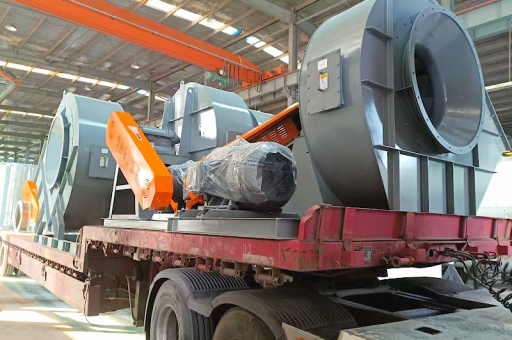
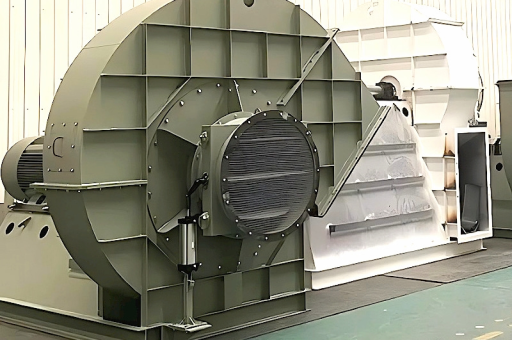
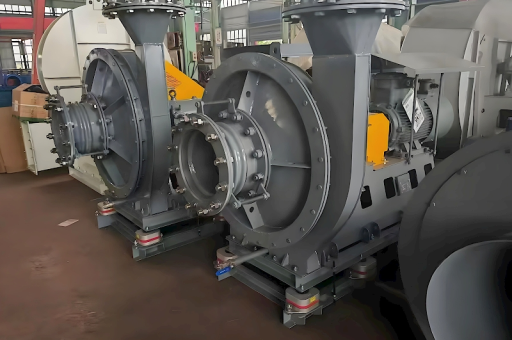
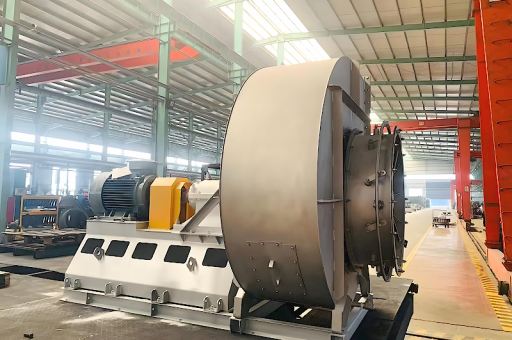
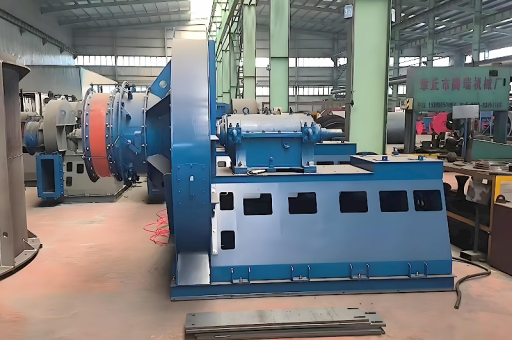
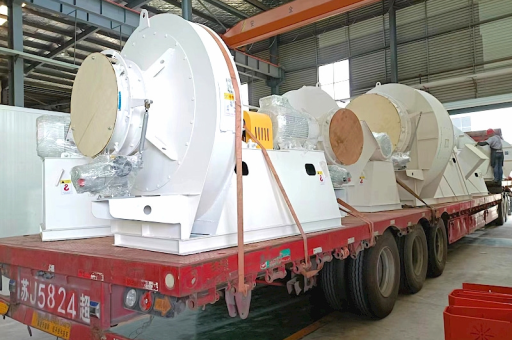
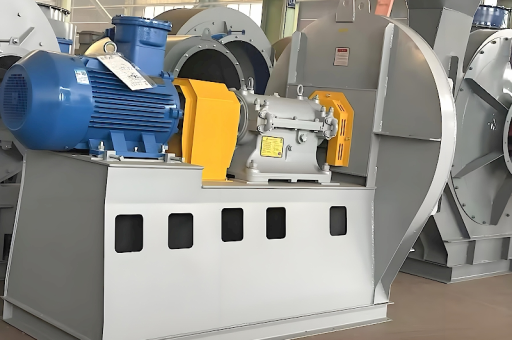
A centrifugal exhaust fan (often called a "squirrel cage" or "scroll" fan) is a mechanical device designed to move air or gases against a resistance (static pressure). Unlike axial fans (like a propeller fan) that move air parallel to the fan's axis, a centrifugal fan moves air radially outward by centrifugal force.
The Core Principle: The fan wheel (impeller) rotates, flinging air outward from its center. This action:
- Increases the air's velocity.
- Creates a partial vacuum at the center (the inlet), drawing more air in.
- The high-velocity air collects in the fan housing (the scroll/volute), which converts its velocity energy into pressure energy before it exits the discharge outlet.
Key Components
- Impeller (Wheel): The rotating component with blades. Its design is the primary factor determining the fan's performance (see "Blade Types" below).
- Housing (Scroll/Volute): The spiral-shaped casing that collects the discharged air and directs it to the outlet. The increasing cross-sectional area of the volute converts high velocity into static pressure.
- Inlet (Cone/Nozzle): The opening through which air is drawn into the center of the impeller. An efficient inlet design is critical for optimal airflow.
- Shaft & Bearings: Support the impeller and allow it to rotate smoothly.
- Drive System: The motor and connection (direct drive – impeller on the motor shaft; or belt drive – motor connected via pulleys and belts).
Types of Centrifugal Fan Blades
The blade shape is the most important design feature, dictating the fan's suitability for a specific application.
| Blade Type | Characteristics | Efficiency | Pressure Capability | Common Applications |
|---|---|---|---|---|
| Forward Curved | Blades curve in the direction of rotation. Many shallow blades. | Lower (55-70%) | Low to Medium | HVAC residential/commercial systems, low-pressure exhaust, clean air. (Quiet, compact, "squirrel cage" look) |
| Backward Inclined | Blades curve away from the direction of rotation. Deeper, fewer blades. | Higher (75-85%) | Medium to High | Industrial ventilation, clean air/dust-free exhaust, HVAC. (More efficient, non-overloading horsepower) |
| Airfoil | Similar to backward inclined but with blades shaped like airplane wings. | Highest (80-90%) | Medium to High | High-efficiency industrial applications, clean air, large HVAC systems. |
| Radial (or Paddle Wheel) | Straight, radial blades (pointing directly outward). | Very Low (<60%) | Very High | Material handling (conveying dust, wood chips, heavy particulates), harsh environments. (Rugged, self-cleaning, but noisy) |
| Radial Tip | Backward inclined blade with a radial tip at the outer edge. | Moderate | High | Moderate particulate handling, where efficiency and durability are both needed. |
Key Performance Advantages
- High Pressure Capability: Centrifugal fans excel at moving air through long duct runs, filters, coils, dampers, and other restrictive components.
- Stable Operation: They provide more consistent airflow when faced with changes in system pressure (compared to axial fans).
- Efficiency (with proper blade type): Modern airfoil and backward-inclined designs are highly energy efficient.
- Durability: The design, especially with radial blades, can handle harsh, dirty, and high-temperature environments.
- Flexible Airflow Architecture: The inlet and outlet can be oriented in multiple directions (e.g., top horizontal, top vertical, side horizontal) to fit ductwork layouts.
Common Applications
- HVAC: Exhausting air from bathrooms, kitchens, or entire buildings; supply air systems.
- Industrial & Lab: Fume hood exhaust, dust collection, paint booth ventilation, general industrial process exhaust.
- Material Handling: Pneumatic conveying systems (moving grains, cement, paper clippings, sawdust).
- Marine & Mining: Ventilation of tight, hazardous, or high-velocity spaces.
- Power Generation: Induced draft or forced draft fans for boiler combustion air.
Important Selection Criteria
When selecting a centrifugal exhaust fan, consider:
- Airflow (CFM/CMM): Required volume of air to move.
- Static Pressure (in.wg/Pa): The resistance the fan must overcome (duct friction, filters, dampers).
- Air/Gas Characteristics: Temperature, humidity, presence of corrosive chemicals or sticky/high-dust-loading particulates.
- Noise Constraints: Forward-curved and airfoil fans are quieter; radial and paddle-wheel fans are louder.
- Space and Orientation: Inlet/outlet direction, footprint, and mounting options.
- Efficiency and Energy Cost: For continuous operation, higher-efficiency (backward-inclined or airfoil) designs save energy.
Maintenance Considerations
- Belt Tension (Belt Drive): Check and adjust belt tension periodically.
- Bearings: Grease (or replace) bearings as per manufacturer specifications.
- Impeller Balance: An unbalanced impeller causes vibration, noise, and premature bearing failure. Clean the blades to prevent dust buildup.
- Component Inspection: Regularly inspect for wear (especially on radial/paddle-wheel fans handling abrasive material), corrosion, and inlet clearance.
Summary
Centrifugal exhaust fans are the workhorses of air movement in systems requiring medium to high pressure. Their ability to efficiently push air through restrictive ductwork and their adaptability to various environmental conditions (clean, dirty, high-temp) make them a top choice for a huge range of commercial, industrial, and HVAC applications. The correct blade type is the most critical decision for balancing efficiency, noise, and durability against the specific demands of the system.