This article's table of contents introduction:
- Table of Contents
- Introduction: What Defines a High-Pressure Centrifugal Fan?
- Core Design Principles and Aerodynamic Mechanics
- Key Performance Metrics: Pressure, Flow, and Efficiency
- Critical Industrial Applications and Case Studies
- Material Selection and Durability Under Stress
- Common Troubleshooting and Maintenance Questions (Q&A)
- Future Trends: Smart Controls and Energy Optimization
- Conclusion: Why Industrial Engineers Rely on These Fans
** The Critical Role and Operational Mastery of High-Pressure Centrifugal Fans in Modern Industrial Systems
Table of Contents
- Introduction: What Defines a High-Pressure Centrifugal Fan?
- Core Design Principles and Aerodynamic Mechanics
- Key Performance Metrics: Pressure, Flow, and Efficiency
- Critical Industrial Applications and Case Studies
- Material Selection and Durability Under Stress
- Common Troubleshooting and Maintenance Questions (Q&A)
- Future Trends: Smart Controls and Energy Optimization
- Conclusion: Why Industrial Engineers Rely on These Fans
Introduction: What Defines a High-Pressure Centrifugal Fan?
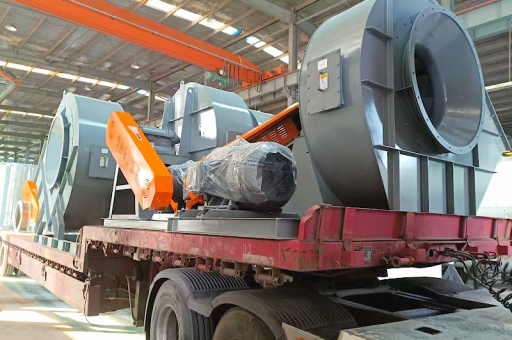
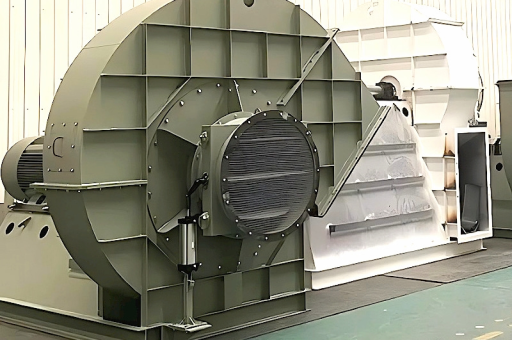
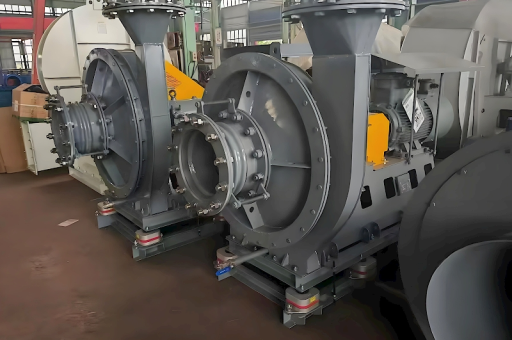
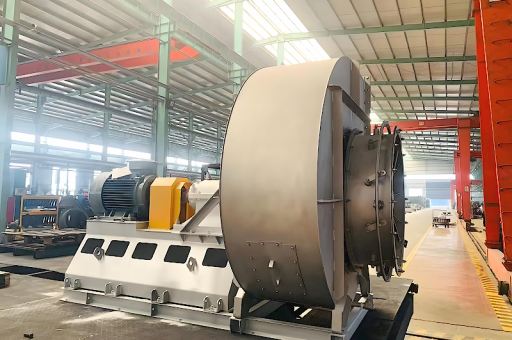
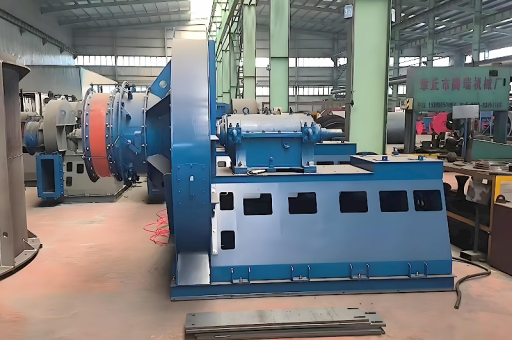
In the world of industrial air movement, the high-pressure centrifugal fan stands as a workhorse designed to overcome significant system resistance. Unlike standard axial fans that move large volumes of air against low resistance, high-pressure centrifugal fans generate static pressures typically exceeding 2,000 Pa (8 inches of water gauge) and can reach up to 15,000 Pa or more in specialized configurations.
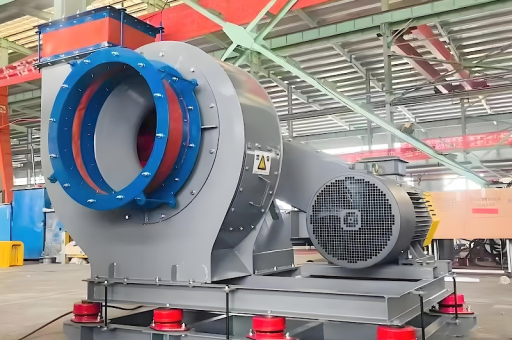
These fans operate by accelerating air radially outward through an impeller, converting kinetic energy into pressure energy via a scroll housing or volute. The result is a compact, robust unit capable of conveying materials, ventilating deep mines, or supplying combustion air to large boilers. According to a 2023 market analysis by Grand View Research, the global industrial fan market—dominated by centrifugal designs—is projected to exceed $12 billion by 2028, driven largely by demand for high-efficiency, high-pressure units in cement, steel, and power generation sectors.
Core Design Principles and Aerodynamic Mechanics
The performance of a high-pressure centrifugal fan is governed by three fundamental design elements: impeller geometry, housing shape, and drive arrangement.
- Impeller Design: Backward-curved blades are the most common choice for high-pressure applications because they offer a non-overloading power curve, meaning the motor will not draw excessive power if the system pressure drops unexpectedly. Radial or straight blades, while simpler, are typically reserved for abrasive material handling due to their robust profile but lower efficiency.
- Volute Casing: The spiral housing gradually expands in cross-sectional area, converting the high-velocity air leaving the impeller into static pressure. A well-designed volute minimizes turbulence and recirculation losses.
- Drive Configurations: Direct-drive (shaft-mounted) is preferred for precise speed control, while belt-drive allows flexible adjustments in pressure and flow. The latest integrated motor-impeller designs reduce energy losses by eliminating belt friction and misalignment.
Key Aerodynamic Insight: The pressure produced is proportional to the square of the impeller tip speed. Therefore, increasing the rotational speed (RPM) drastically boosts pressure capability but also imposes stringent demands on bearing quality and rotor balancing.
Key Performance Metrics: Pressure, Flow, and Efficiency
To evaluate a high-pressure centrifugal fan, engineers focus on three interrelated curves defined by the fan laws:
- Static Pressure (Ps): The resistance the fan must overcome to move air through ducts, filters, or material conveying lines.
- Airflow (Q): Typically measured in cubic meters per hour (m³/h) or cubic feet per minute (CFM). High-pressure fans usually operate at lower CFM compared to axial fans of similar size.
- Efficiency (η): Modern high-pressure centrifugal fans achieve peak efficiencies between 75% and 85% when properly matched to their operating point. Off-design operation (e.g., running against a closed damper) wastes energy and risks overheating the impeller.
Energy Optimization Tip: Using variable frequency drives (VFDs) on high-pressure fans in ducted systems can reduce energy consumption by 30%–50% compared to inlet damper control, as VFDs adjust speed to match actual demand without throttling losses.
Critical Industrial Applications and Case Studies
High-pressure centrifugal fans are not "one-size-fits-all." They are customized for extreme environments:
- Cement Industry: Fans provide pressurized air to fluidize pulverized coal in vertical roller mills. A single 1,200 kW fan on a 5,000-ton-per-day kiln line must deliver 400,000 m³/h at 10,000 Pa while resisting dust erosion.
- Wastewater Treatment: In aeration basins, high-pressure centrifugal blowers (commonly called "positive displacement" alternatives) supply air at 50–80 kPa to drive biological treatment. One facility in Singapore reduced its aeration energy bill by 22% after retrofitting with high-efficiency centrifugal blowers with automated stator adjustments.
- Wind Turbine Cooling: Inside a modern wind turbine’s nacelle, heat from the generator and gearbox must be dissipated. Compact, high-pressure centrifugal fans—often made of aluminum alloy and protected by filters—pull ambient air through heat exchangers. These fans withstand fluctuating voltages and dust ingress in offshore environments. Note: While wind turbines generate power, they rely on auxiliary centrifugal fans for cooling and ventilation; a 3 MW turbine may contain up to six such fans.
Material Selection and Durability Under Stress
Given the high tip speeds (often exceeding 100 m/s) and the presence of abrasive particles or corrosive gases, material choice is critical:
- Carbon Steel: Adequate for clean air and up to 200°C. Prone to rust in humid conditions.
- Stainless Steel (304/316): Used in chemical plants, food processing, or offshore wind turbine cooling where salty mist accelerates corrosion.
- Aluminum Alloys: Lightweight, non-sparking, and thermally conductive. Ideal for explosive environments (ATEX zones) and low-inertia VFD applications.
- Coated Impellers: Hard chrome or ceramic coatings extend wear life tenfold when handling abrasive dust (e.g., fly ash in coal-fired power plants).
Maintenance Reality: A study by the European Rotor Equipment Manufacturers Association found that 60% of premature fan failures stem from imbalance caused by dust buildup. Therefore, routine cleaning and dynamic balancing (ISO 1940 G6.3 grade) are non-negotiable.
Common Troubleshooting and Maintenance Questions (Q&A)
Q1: Why does my high-pressure centrifugal fan vibrate excessively? A: Possible causes include: (a) unbalanced impeller due to dust accumulation, (b) worn bearings (check grease intervals—often every 2,000 hours for temperature <70°C), or (c) a misaligned belt drive. Perform a vibration analysis—accelerations above 7 mm/s RMS indicate urgent maintenance.
Q2: Can I run the fan at full speed even if the duct system has a partially closed damper? A: Not recommended. Running a backward-curved fan against a high system resistance forces it into a low-flow, high-pressure region, causing recirculation, heat buildup, and potential impeller failure. Always operate near the manufacturer’s recommended point.
Q3: What is the difference between a "high-pressure centrifugal fan" and a "blower"? A: In industrial terminology, "fan" typically covers pressure up to 30 kPa (4 psi). Above that (30–200 kPa), devices are called "blowers" or "compressors." However, many industries use the terms loosely. Check the static pressure specification—if it exceeds 50 kPa, you likely need a positive displacement blower.
Q4: How often should I replace filters on a centrifugal fan used in a wind turbine cooling system? A: For turbines operating in dusty or coastal areas, inspect filters every 500 operating hours. Replace when differential pressure across the filter exceeds 250 Pa (1 inch w.g.). Clogged filters reduce cooling airflow and can cause the generator to derate.
Future Trends: Smart Controls and Energy Optimization
The next decade will see three major shifts in high-pressure centrifugal fan technology:
- IoT-Enabled Condition Monitoring: Sensors measuring vibration, temperature, and pressure pulsation will link to cloud platforms, enabling predictive maintenance. For example, a 0.5 mm erosion wear on impeller tips can be detected early before catastrophic failure.
- Digital Twin Optimization: Operators can simulate fan performance under varying loads—including up to 100% ramp-up scenarios—to optimize VFD settings and reduce energy waste. This is especially valuable for wind turbine cooling systems, where nacelle temperature fluctuates with wind speed and power output.
- High-Speed Direct-Drive Motors: Permanent magnet synchronous motors (PMSMs) running at 15,000–30,000 RPM eliminate gearboxes and belts, achieving 95%+ motor efficiency. These are already deployed in high-pressure applications for pneumatic conveying and vacuum systems.
Conclusion: Why Industrial Engineers Rely on These Fans
High-pressure centrifugal fans are not merely components—they are enablers of critical processes. From moving pulverized coal in a cement kiln to safeguarding a wind turbine’s gearbox from thermal overload, their reliability determines uptime and energy costs. Choosing the right fan requires balancing pressure requirements, airflow demand, material compatibility, and maintenance accessibility.
As global industries push for both higher production capacity and lower carbon footprints, the evolution of intelligent, high-efficiency centrifugal fans will remain a cornerstone of mechanical engineering. Remember: A fan that runs 2% more efficiently may not sound dramatic, but over a 20-year service life, it can save an operator more than the fan’s initial purchase price in electricity alone.
Final Advice: Always consult your fan manufacturer’s performance curves and consider conducting a field trial with a VFD. In the world of high-pressure air movement, precision beats brute force every time.