This article's table of contents introduction:
- What is an Explosion-Proof Centrifugal Fan?
- How It Works: The Core Principles
- Key Design & Construction Features
- Key Definitions & Classifications
- Common Applications
- How to Select an Explosion-Proof Centrifugal Fan
- Summary Table: Key Differences vs. Standard Centrifugal Fan
- Maintenance & Safety
Here is a comprehensive overview of Explosion-Proof Centrifugal Fans, covering what they are, how they work, their key features, common applications, and selection criteria.
What is an Explosion-Proof Centrifugal Fan?
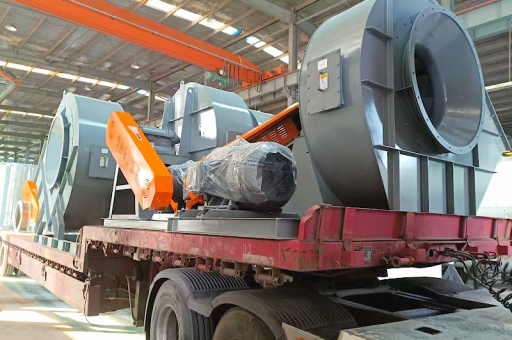
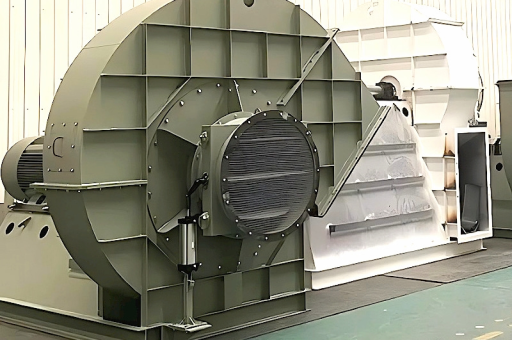
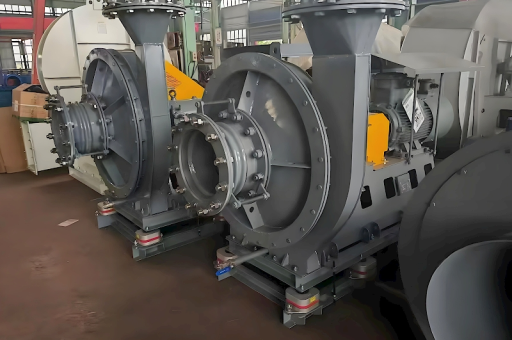
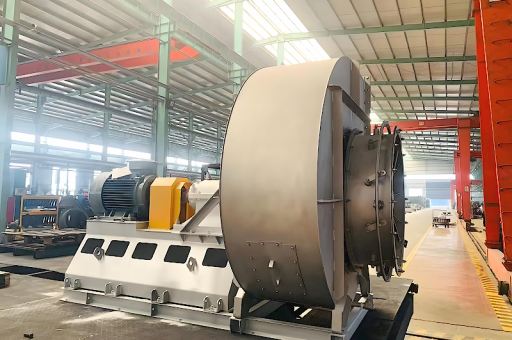
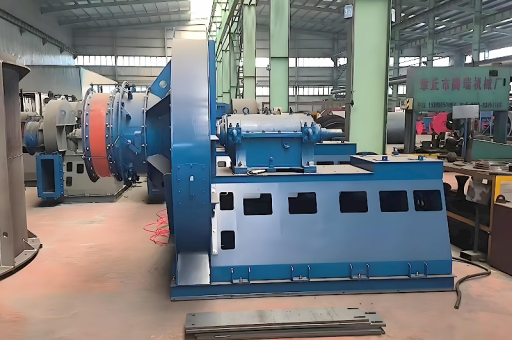
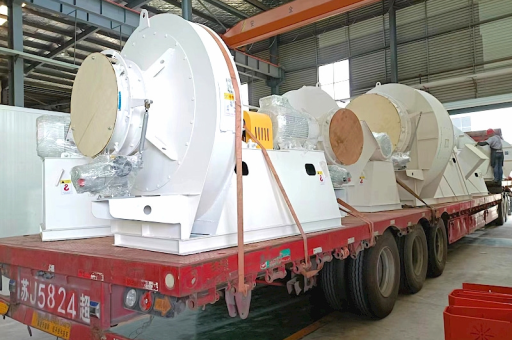
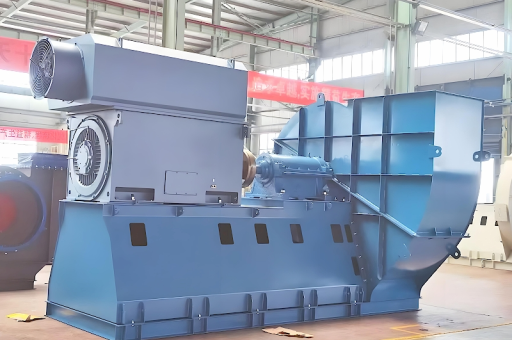
An Explosion-Proof Centrifugal Fan is a specialized type of industrial fan designed to safely handle air or gas mixtures that contain flammable dusts, vapors, or gases. Its primary purpose is to prevent the ignition of a potentially explosive atmosphere, both inside the fan housing and in the surrounding environment.
These fans are not designed to "contain" an explosion (though some are built to do so), but rather to prevent any source of ignition from occurring in the first place. They are a critical component of safety systems in hazardous locations.
How It Works: The Core Principles
Like all centrifugal fans, they use a rotating impeller to increase the velocity and pressure of an air stream. The key difference lies in the materials of construction and design modifications to eliminate ignition sources.
The three main threats they mitigate are:
- Mechanical Sparks: Caused by the rotor rubbing against the housing (due to bearing failure, misalignment, or debris) or by foreign objects striking the impeller.
- Electrical Sparks: Caused by arcing from the motor, wiring, or electrical components.
- Hot Surface Ignition: Caused by heat buildup from friction or by the motor itself.
Key Design & Construction Features
To address these threats, explosion-proof fans incorporate several critical features:
| Feature | Purpose & Description |
|---|---|
| Non-Sparking Materials | The most critical feature. The impeller and the fan housing (especially the inlet cone) are made from non-ferrous materials to prevent sparks if they touch. Common materials include: • Aluminum (most common for impellers) • Stainless Steel (for corrosion resistance and lower spark risk) • Copper-Beryllium Alloys (for extremely high-risk environments) |
| Housing & Shaft Design | • Wider Clearances: The gap between the impeller and the housing inlet is larger than in standard fans to prevent contact from thermal expansion or minor shaft deflection. • Shaft Seal: A seal (e.g., a labyrinth or carbon ring seal) prevents process gases from leaking along the shaft into the bearing housing, where they could be ignited. |
| Explosion-Proof Motor | The motor is always a TEFC (Totally Enclosed Fan Cooled) explosion-proof motor. It is rated for the specific hazardous location (e.g., Class I, Division 1). This motor is built with a robust, sealed enclosure that can contain any internal gas explosion and prevent flames from escaping. |
| Bearing Protection | • Bearing Isolators: These prevent process contaminants and moisture from entering the bearing housing. • External Grease Lines: Allow for re-lubrication without opening the hazardous enclosure. • Temperature Monitoring: In critical applications, bearing temperature probes (RTDs or thermocouples) are used to detect overheating. |
| Grounding & Bonding | The entire fan assembly is designed to be securely grounded to prevent the buildup of static electricity, a potential ignition source. A visible grounding lug is standard. |
| Nameplate & Certification | The fan has a permanent nameplate that lists its specific hazardous location classification (e.g., Class I, Div. 1, Groups C & D, T3). This is a legal requirement for installation. |
Key Definitions & Classifications
Understanding the hazard classification is essential for selecting the right fan.
-
Class I: Flammable gases or vapors (e.g., propane, hydrogen, solvent fumes).
-
Class II: Combustible dusts (e.g., coal dust, grain dust, metal powders).
-
Class III: Ignitable fibers or flyings (e.g., cotton dust, textile fibers).
-
Division 1: The hazard is normally present (during regular operation, maintenance, or repair).
-
Division 2: The hazard is not normally present but could be under abnormal conditions (e.g., a leak from a tank).
-
Groups: Sub-classifications based on the specific explosive substance (e.g., Group D for propane, Group C for ethylene, Group B for hydrogen).
-
Temperature Code (T-Code): Indicates the maximum surface temperature the fan can reach under fault conditions. This must be lower than the auto-ignition temperature of the hazardous substance. Common codes: T1 (450°C), T2 (300°C), T3 (200°C), T4 (135°C), T5 (100°C), T6 (85°C).
Common Applications
Explosion-proof centrifugal fans are used wherever flammable materials are present:
- Chemical Processing: Ventilation of reactors, storage tanks, and process areas.
- Oil & Gas: Ventilation of refineries, drilling platforms, and fuel handling facilities.
- Pharmaceuticals: Handling of solvent vapors and flammable dusts.
- Mining: Ventilation of tunnels and mine shafts (often using special fiberglass reinforced plastic fans).
- Grain Handling & Storage: Ventilation of silos and grain elevators to prevent dust explosions.
- Painting & Finishing: Exhaust systems for paint booths and spray rooms.
- Wastewater Treatment: Ventilation of digesters and treatment areas with methane gas.
- Laboratories: Exhaust of flammable chemicals.
How to Select an Explosion-Proof Centrifugal Fan
-
Identify the Hazard:
- What substance is being handled? (Gas, vapor, dust?)
- What is its chemical composition and concentration?
- What is the Auto-Ignition Temperature (AIT) ?
- What is the LEL (Lower Explosive Limit) ?
-
Determine the Location Classification:
- Class (I, II, or III)
- Division (1 or 2)
- Group (A, B, C, D, E, F, G) Note: Group B (Hydrogen) is one of the most demanding.
- Temperature Code (T1-T6)
-
Specify Performance Requirements:
- Airflow (CFM or m³/h)
- Static Pressure (in. w.g. or Pa)
- Operating Temperature
-
Choose Construction & Materials:
- Impeller material (Aluminum, SS, Copper-alloy)
- Housing material (Mild steel, Stainless Steel, FRP)
- Motor type (Explosion-proof, TEFC, etc.)
- Shaft seal type (if needed)
- Coating (e.g., epoxy for corrosion resistance)
-
Verify Certifications:
- North America: UL (Underwriters Laboratories), CSA (Canadian Standards Association), or ETL (Intertek) listing. Look for the UL 705 and UL 1004-9 standards.
- Europe: ATEX (Atmosphères Explosibles) certification and CE marking.
- International: IECEx (International Electrotechnical Commission System for Explosive Atmospheres).
Summary Table: Key Differences vs. Standard Centrifugal Fan
| Feature | Standard Centrifugal Fan | Explosion-Proof Centrifugal Fan |
|---|---|---|
| Impeller | Steel, aluminum, or plastic | Non-sparking (Aluminum, SS, Copper-beryllium) |
| Housing | Steel, aluminum, or plastic | Non-sparking, wider clearances |
| Motor | ODP (Open Drip Proof) or TEFC | TEFC Explosion-Proof (Listed for Hazardous Location) |
| Bearing Seals | Standard lip seals | Labyrinth seals, bearing isolators |
| Electrical | Standard wiring, no special grounding | Explosion-proof conduit, dedicated grounding |
| Certification | Not required | Mandatory (UL, CSA, ATEX, IECEx) |
Maintenance & Safety
- Test Grounding: Regularly verify continuity.
- Inspect for Corrosion: Especially important in chemical environments.
- Check Bearing Temperature: Overheating can be a sign of failure.
- Never Modify: Do not change the impeller, housing, or motor to non-approved parts.
- Follow Manufacturer's Manual: All servicing of explosive atmosphere equipment must follow strict lock-out/tag-out (LOTO) procedures.
Disclaimer: This information is for general educational purposes. The selection, installation, and maintenance of explosion-proof equipment must always be performed by qualified professionals who are thoroughly familiar with local electrical codes (like NEC in the US) and the specific requirements of the hazardous location.