This article's table of contents introduction:
- What Are They?
- How They Differ from Standard Fans
- Core Design & Construction Features
- Key Performance Characteristics
- Common Applications
- Selection Criteria (How to Choose)
- Typical Fan Types Used for High Temp
- A Critical Note on Corrosion
- Summary Table
- Key Manufacturers (Examples)
Here is a comprehensive overview of High-Temperature Resistant Centrifugal Fans, including their design, applications, key features, and considerations for selection.
What Are They?
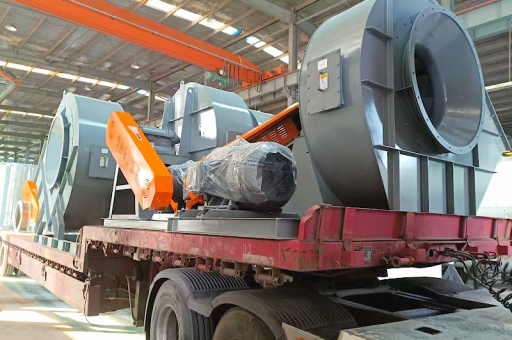
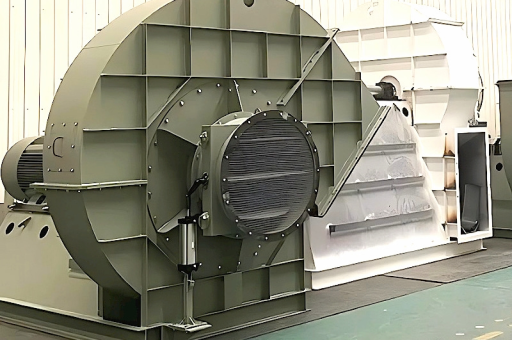
High-temperature resistant centrifugal fans (also known as industrial exhaust fans or high-temp blowers) are specialized air-moving devices designed to continuously handle gas streams with temperatures significantly higher than standard HVAC fans (typically above 150°C / 300°F). They can reliably operate in environments ranging from 200°C (400°F) to over 1000°C (1800°F) depending on the construction.
How They Differ from Standard Fans
Standard fans fail at high temperatures because:
- Lubrication breaks down.
- Bearings seize from heat transfer.
- Impellers warp due to thermal expansion.
- Motors overheat without cooling.
High-temp fans are engineered to overcome these failures through specialized materials, cooling methods, and mechanical design.
Core Design & Construction Features
-
Materials of Construction:
- Housings: Carbon steel (up to ~400°C), Corten steel, or Stainless Steel (304/316L) for higher temps and corrosive exhaust. For extreme heat, Inconel or Hastelloy alloys are used.
- Impellers: Welded steel (mild for low-temp, alloy for high-temp). For the highest temperatures, cast stainless steel or fabricated Inconel is used to resist creep (slow deformation under heat and stress).
-
Bearing & Shaft Cooling:
- This is the most critical design element. Heat from the airstream conducts along the shaft to the bearings.
- Heat Slingers / Cooling Discs: Metal discs on the shaft between the housing and bearing block to radiate and deflect heat.
- Ventilated Bearings: A separate, sealed bearing housing with a small fan attached to the shaft to create airflow over the bearings.
- Water-Cooled Bearings: A jacket around the bearing housing with circulating water to remove heat (common for temperatures > 300°C / 570°F).
- Shaft Cooling Fans: A dedicated fan blade mounted on the shaft (outside the airstream) that pulls ambient air over the shaft.
-
Motor Placement & Isolation:
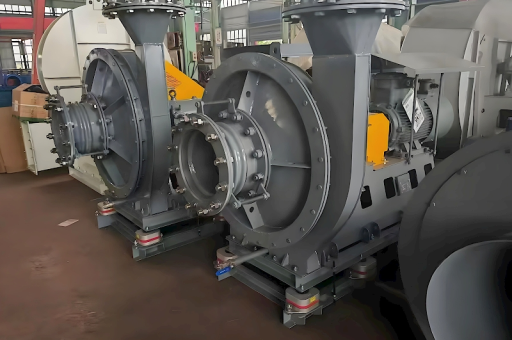
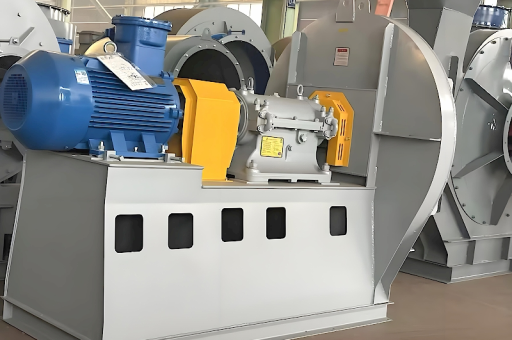
- Direct Drive: The motor is mounted on a separate baseplate or cradle, connected to the fan by a flexible coupling, and the fan's shaft is supported by its own bearings. The motor never touches the hot air.
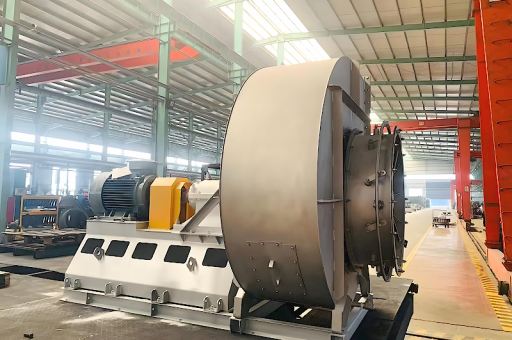
- Belt Drive: The motor is mounted remotely, and power is transmitted via V-belts. This completely isolates the motor from heat and vibration. The fan bearings are the only components near the heat.
-
Expansion Joints & Shaft Seals:
- Expansion Joints: Flexible connectors (e.g., Teflon, fiberglass, or metal bellows) are used at the fan inlet and outlet to allow the fan housing to expand as it heats up without stressing the ductwork.
- Shaft Seals: Carbon rings, labyrinth seals, or purge air seals prevent hot gas from leaking out of the housing where the shaft passes through the wall.
Key Performance Characteristics
- Flow Rate: High volume (m³/hr or CFM).
- Pressure: High static pressure (kPa or inches w.g.) - they must overcome the resistance of ducts, filters, and the system's backpressure.
- Temperature Range: Clearly defined by the manufacturer (e.g., "Continuous duty at 350°C").
- Efficiency: Varies; specialized high-temp fans often have a lower efficiency than standard fans due to the robust design, but high-efficiency aerofoils are available.
- Noise: Can be substantial; may require acoustic enclosures or silencers.
Common Applications
- Industrial Ovens & Furnaces: Exhaust for drying, curing, baking, and heat-treating processes.
- Boilers & Thermal Oxidizers: Induced draft (ID) fans pulling hot combustion gases.
- Cement & Lime Kilns: Cooling and exhausting hot air from the process.
- Glass Manufacturing: Handling hot air from melting furnaces.
- Steel & Metal Processing: Exhaust from annealing, forging, and galvanizing lines.
- Cogeneration & Power Plants: Hot gas exhaust from gas turbines or waste heat recovery systems.
- Fire Testing & Simulation: Forced airflow in test chambers.
- Waste Incineration: Handling high-temperature, often corrosive flue gas.
- Drying Systems (Textile, Paper, Food): Removing moisture from products at high temperatures.
Selection Criteria (How to Choose)
When specifying a high-temperature centrifugal fan, you MUST provide:
- Gas Temperature: Maximum continuous operating temperature, peak temperature, and any temperature fluctuations.
- Gas Composition: Is it clean? Dusty? Corrosive (acids, chlorides, alkalis)? Carrying moisture?
- Required Airflow: Volume (CFM or m³/h) at operating temperature and density.
- Required Static Pressure: Total system resistance (ductwork, filters, process) at the operating temperature. Important: Air density changes with temperature; calculations must be corrected for hot air.
- Speed & Power: Determine RPM and motor kW based on the fan curve. Belt drives allow speed changes.
- Mounting & Space: Location, orientation (horizontal/vertical), and available space for cooling arrangements.
- Safety & Standards: Compliance with ATEX (Europe), IECEx, or local electrical codes.
Typical Fan Types Used for High Temp
- Radial Blade (Paddle Wheel): Simple, robust, excellent for dusty gases. Less efficient but very durable.
- Backward-Inclined / Backward Curved: Higher efficiency, less robust, better for clean air. Often used with cooling discs.
- Airfoil (Backward Curved): Highest efficiency, most complex, for clean, hot air.
A Critical Note on Corrosion
High temperature often accelerates chemical reactions. Hot gases containing sulfur, chlorine, or moisture can form highly corrosive acids (e.g., sulfuric, hydrochloric) as they cool. This requires careful material selection (stainless steel, high-nickel alloys, ceramic coatings, or fiberglass-reinforced plastic (FRP) for lower temp ranges with severe corrosion).
Summary Table
| Feature | Standard Fan | High-Temp Fan |
|---|---|---|
| Temp Limit | ~80°C (175°F) | 200°C to 1000°C+ |
| Bearings | Sealed, in airstream | Vented, water-cooled, remote |
| Motor | Often mounted on fan | Remote, belt-driven |
| Materials | Aluminum / Light steel | Carbon steel, SS, Inconel |
| Primary Cost | Low | High (2-10x standard) |
| Applications | HVAC, general ventilation | Ovens, furnaces, kilns |
Key Manufacturers (Examples)
- New York Blower (N.Y.B.) - Wide range of high-temp industrial fans.
- Howden - Large-scale fans for power and heavy industry.
- Greenheck - Industrial and commercial high-temp models.
- Cincinnati Fan - Many high-temp models with cooling options.
- AirPro Fan & Blower - Custom-engineered high-temp solutions.
- Robinson Fans - Heavy-duty industrial fans for extreme environments.
In short: A high-temperature centrifugal fan is a specialized, robust piece of equipment essential for processes that generate or handle hot gases. Proper selection requires careful consideration of temperature, gas chemistry, cooling methods, and material compatibility.