This article's table of contents introduction:
- Introduction to Centrifugal Fans
- How Centrifugal Fans Work: Key Principles
- Main Types of Centrifugal Fans
- Key Performance Parameters
- Critical Applications Across Industries
- Selection Guide: How to Choose the Right Centrifugal Fan
- Installation and Maintenance Best Practices
- Energy Efficiency and Noise Reduction
- Frequently Asked Questions (FAQ)
- Conclusion
** The Comprehensive Guide to Centrifugal Fans: Principles, Applications, and Optimization for Modern Ventilation Systems
Table of Contents
- Introduction to Centrifugal Fans
- How Centrifugal Fans Work: Key Principles
- Main Types of Centrifugal Fans
- Key Performance Parameters
- Critical Applications Across Industries
- Selection Guide: How to Choose the Right Centrifugal Fan
- Installation and Maintenance Best Practices
- Energy Efficiency and Noise Reduction
- Frequently Asked Questions (FAQ)
- Conclusion
Introduction to Centrifugal Fans
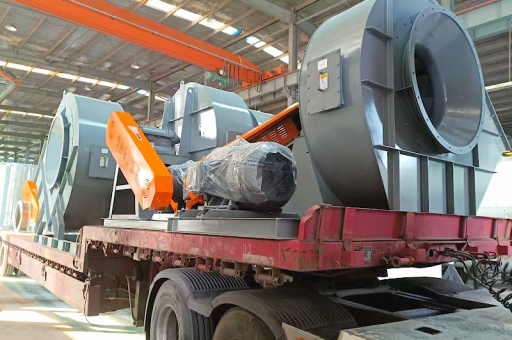
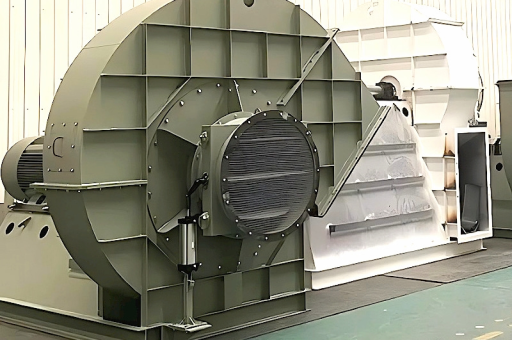
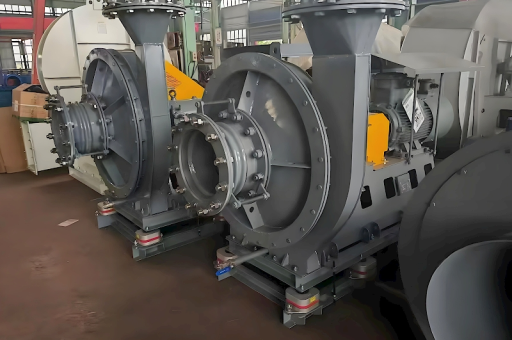
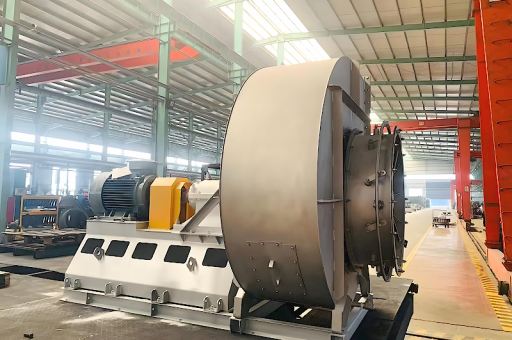
Centrifugal fans represent one of the most essential mechanical components in modern industrial, commercial, and residential ventilation systems. Unlike axial fans that move air parallel to the impeller shaft, centrifugal fans draw air into the center of a rotating impeller and expel it at a right angle to the intake, generating higher static pressure. According to recent industry data from the U.S. Department of Energy and European HVAC standards, properly designed centrifugal fans can achieve efficiency levels above 85%, making them indispensable for applications requiring consistent airflow against system resistance.
The global market for centrifugal fans has grown steadily, driven by demand in wind turbine cooling systems, HVAC upgrades, and manufacturing plants. In many wind farm installations, centrifugal fans are used to cool turbine nacelles and generator components, ensuring reliable operation under high thermal loads.
How Centrifugal Fans Work: Key Principles
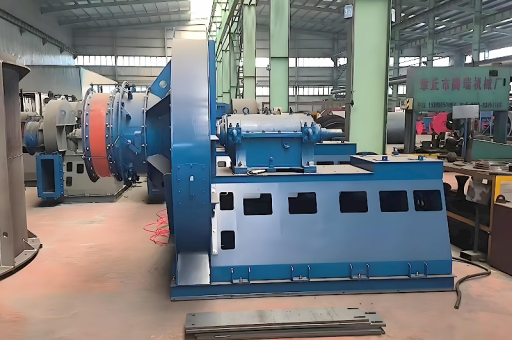
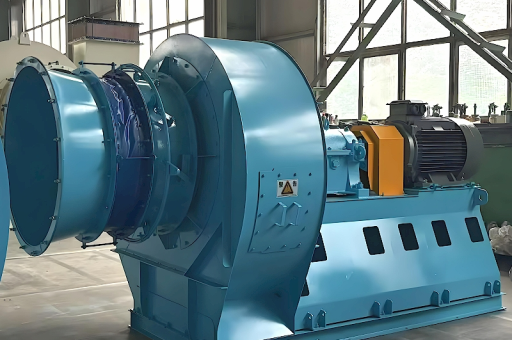
A centrifugal fan operates on the principle of converting rotational kinetic energy into increased static pressure and airflow. The core components include:
- Impeller (wheel): Rotating blades that accelerate air.
- Housing (scroll): Directs airflow outward.
- Inlet and outlet: Control air entry and exit paths.
When the impeller spins, air enters axially near the hub, is caught by the blades, and is flung radially outward by centrifugal force. The housing gradually expands, slowing the air and converting velocity energy into pressure. This pressure rise is the primary distinction from axial fans.
A common question is: How does a centrifugal fan differ from a wind turbine? While both rely on rotating blades, a wind turbine extracts energy from wind to generate electricity, whereas a centrifugal fan consumes electricity to move air. However, centrifugal fans are often integrated into wind turbine systems for cooling control cabinets, gearboxes, and generators.
Main Types of Centrifugal Fans
Based on blade design and airflow characteristics, centrifugal fans fall into three primary categories:
| Type | Blade Shape | Typical Application | Efficiency Range |
|---|---|---|---|
| Forward-curved | Blades curve in direction of rotation | Low-pressure HVAC, residential units | 60–75% |
| Backward-curved | Blades curve opposite to rotation | Industrial ventilation, dust collection | 75–85% |
| Radial (paddlewheel) | Straight blades | High-temperature, material handling | 55–65% |
Forward-curved fans have many shallow blades and produce high airflow at low pressure. Backward-curved units are more efficient and self-limiting in power consumption—a key advantage in wind turbine cooling systems where variable loads occur. Radial fans handle dirty air or particulate-laden streams, making them common in grinding mills and woodworking facilities.
Key Performance Parameters
Understanding fan performance requires familiarity with:
- Airflow volume (Q): Measured in CFM or m³/s.
- Static pressure (Ps): The resistance the fan must overcome.
- Total pressure (Pt): Static pressure plus velocity pressure.
- Power (P): Typically measured in kW or horsepower.
- Fan efficiency (η): Ratio of air power to shaft power.
The fan laws govern behavior across operating points:
- Flow ∝ RPM
- Pressure ∝ RPM²
- Power ∝ RPM³
For example, if a centrifugal fan runs at 1200 RPM delivering 10,000 CFM at 4 inches w.g., reducing speed to 1000 RPM reduces flow to ~8,333 CFM and pressure to ~2.78 in. w.g. This cubic power relationship is critical when designing variable-speed systems for energy savings.
Critical Applications Across Industries
Centrifugal fans serve vital roles in numerous sectors:
- HVAC and Building Ventilation: Large commercial buildings use backward-curved fans in air handling units to maintain indoor air quality.
- Industrial Process Systems: Cement plants, chemical reactors, and steel mills rely on high-pressure centrifugal fans for pneumatic conveying.
- Power Generation and Wind Turbines: In a wind turbine, centrifugal fans cool transformer compartments, frequency converters, and brake resistors. They must operate reliably in extreme temperatures and vibration environments.
- Mining and Tunnels: Explosion-proof fans with spark-resistant impellers are standard.
- Pollution Control: Baghouses and scrubbers use centrifugal fans to draw contaminated air through filtration media.
Selection Guide: How to Choose the Right Centrifugal Fan
Selecting the correct fan involves several critical steps:
- Define system resistance: Calculate total static pressure including duct losses, filters, coils, and diffusers.
- Determine required airflow: Based on ventilation standards (e.g., ASHRAE 62.1) or process requirements.
- Choose blade type: Forward-curved for low pressure; backward-curved for efficiency; radial for dirty air.
- Consider drive configuration: Direct drive offers reliability and less maintenance; belt drive allows speed changes.
- Evaluate material compatibility: Stainless steel for corrosive environments; aluminum for spark resistance.
A common question: Can a centrifugal fan be used for a wind turbine cooling system? Yes—and it often is. The selected fan must handle variable frequency drive (VFD) control, high ambient temperatures, and low maintenance intervals typical of remote wind farm locations.
Installation and Maintenance Best Practices
Improper installation is a leading cause of premature fan failure. Key practices include:
- Foundation rigidity: Use vibration isolators and anchor bolts to prevent resonance.
- Inlet ductwork: Allow at least 1.5× impeller diameter of straight duct before the inlet nozzle.
- Outlet conditions: Avoid abrupt turns; use smooth transitions to minimize turbulence.
Maintenance schedules should include:
- Monthly: Check bearing temperature and vibration levels.
- Quarterly: Inspect belt tension and alignment.
- Annually: Clean impeller blades (especially if handling dust) and verify VFD parameters.
For wind turbine applications, remote monitoring via IoT sensors is recommended. A sudden rise in motor current often signals blocked filters or failing bearings.
Energy Efficiency and Noise Reduction
Centrifugal fans can consume significant energy—up to 15% of a facility’s total electricity in heavy industrial settings. Energy efficiency measures include:
- Variable speed drives (VFDs): Reduce power draw dramatically at partial loads.
- High-efficiency motors: IE4 or NEMA Premium motors reduce losses.
- Improved duct design: Lower system resistance saves kW.
- Blade refinements: Backward-curved airfoil blades can achieve 88% static efficiency.
Noise is another concern. Techniques include:
- Sound attenuators in ductwork.
- Isolation housings.
- Lower tip speed (reducing RPM while keeping flow via larger impellers).
For wind turbine applications, noise constraints near residential areas require careful fan selection with acoustic enclosures.
Frequently Asked Questions (FAQ)
Q1: What is the difference between a centrifugal fan and an axial fan?
A centrifugal fan moves air radially and produces higher static pressure, making it suitable for ducted systems. An axial fan moves air parallel to its shaft and is better for low-resistance, high-flow applications.
Q2: Why do centrifugal fans sometimes vibrate excessively?
Common causes include unbalanced impellers, loose foundation bolts, worn bearings, or debris accumulation on blades. Field balancing and regular inspection are recommended.
Q3: How does a centrifugal fan help in a wind turbine?
It cools critical components like the gearbox, generator, and power converters. Without reliable centrifugal fan cooling, a wind turbine would overheat and shut down, reducing energy production.
Q4: Can I use a centrifugal fan for a cleanroom application?
Yes, but choose a HEPA-compatible fan with low particle shedding and EC motor technology for precise airflow control.
Q5: What is the typical lifespan of a centrifugal fan?
With proper maintenance, industrial centrifugal fans can last 15–25 years. Harsh environments like foundries or outdoor wind turbines may reduce this to 10–15 years.
Q6: How do I calculate the required motor power for a centrifugal fan?
Use the formula: Power (kW) = (CFM × Static Pressure in inches w.g.) / (6356 × Fan Efficiency × Drive Efficiency). Always add a 10–15% safety margin.
Conclusion
Centrifugal fans are the workhorses of modern air movement systems. Their ability to generate high static pressure, handle diverse air streams, and operate reliably under demanding conditions makes them indispensable across HVAC, industrial processing, and even renewable energy applications such as wind turbine cooling. By understanding the fundamentals—blade types, performance laws, selection criteria, and maintenance—engineers and facility managers can optimize system performance, reduce energy costs, and extend equipment life.
Whether you are designing a new ventilation system, retrofitting an existing facility, or specifying components for a wind turbine, selecting the right centrifugal fan is a decision that directly impacts operational reliability and efficiency. Always consult current standards and manufacturer data, and consider working with a professional engineer for complex installations.
This guide is based on industry standards and manufacturer specifications from leading organizations including AMCA, ASHRAE, and ISO. For further reading, explore technical papers on fan efficiency optimization and wind turbine auxiliary systems.