This article's table of contents introduction:
- What is a Single Inlet Centrifugal Fan?
- How It Works
- Key Components (Diagram Reference)
- Common Blade Types & Their Characteristics
- Advantages of Single Inlet vs. Double Inlet
- Common Applications
- Pros and Cons
- Selection Criteria (How to Choose)
- Summary
Here is a comprehensive overview of Single Inlet Centrifugal Fans (also known as SISW - Single Inlet, Single Width fans).
What is a Single Inlet Centrifugal Fan?
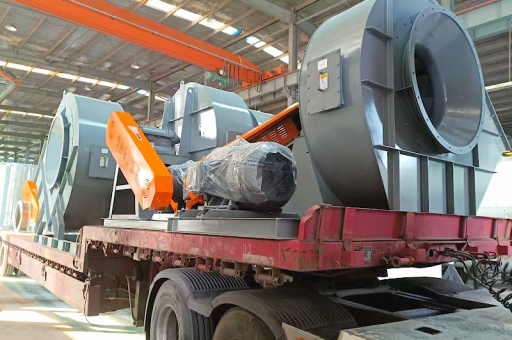
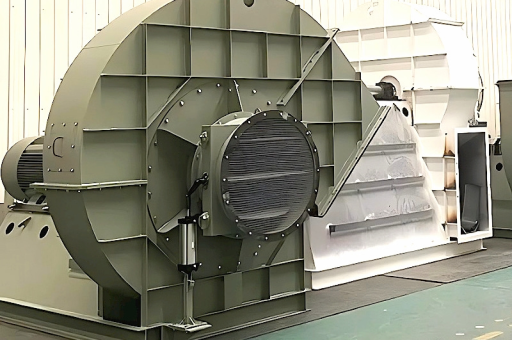
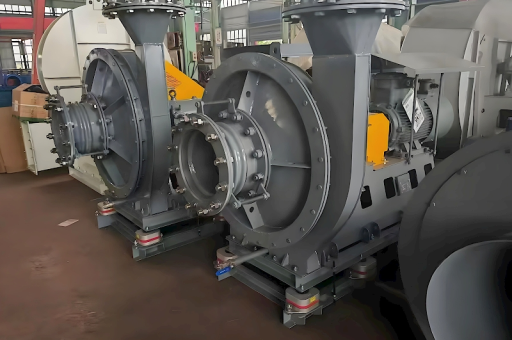
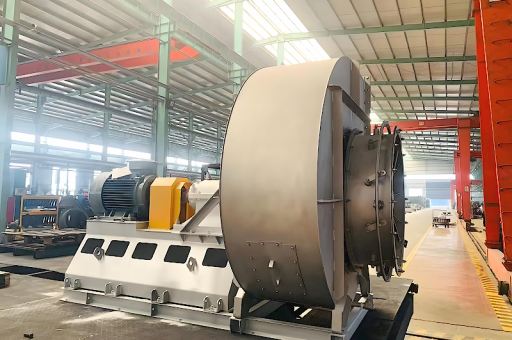
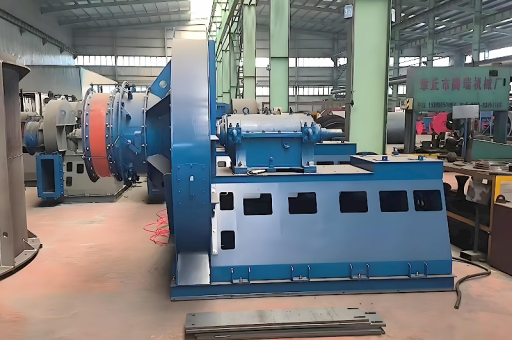
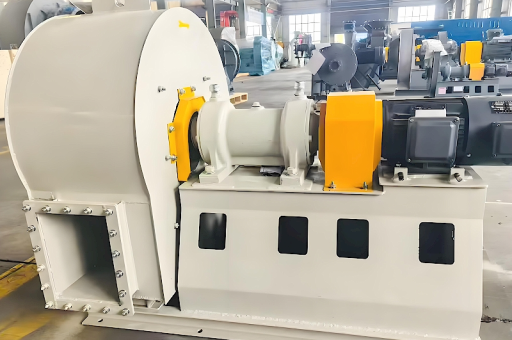
A single inlet centrifugal fan is a type of air-moving device where air enters the impeller (wheel) from only one side (the inlet). The air then turns 90 degrees and is expelled radially outward by centrifugal force. This is the most common and standard design for most industrial and commercial ventilation applications.
The opposite of this is a Double Inlet (DIDW) fan, which draws air from both sides of the wheel.
How It Works
- Inlet: Air is drawn into the center of the fan wheel (the eye) from one side of the housing.
- Rotation: The rotating impeller (with forward-curved, backward-curved, or radial blades) throws the air outward using centrifugal force.
- Collection: The air is collected in the spiral-shaped fan housing (volute).
- Exit: The volute converts the high-velocity radial air into a more controlled, lower-velocity, and higher-pressure stream that exits the fan outlet.
Key Components (Diagram Reference)
- Impeller (Wheel): The rotating part with blades. The blade design defines the fan's performance curve.
- Housing (Volute): The stationary casing that captures and directs the air.
- Inlet Cone (Inlet Ring/Nozzle): The funnel-shaped piece on one side that guides air smoothly into the impeller eye.
- Drive Shaft: Connects the impeller to the motor.
- Bearings: Support the shaft.
- Drive System: Either direct drive (motor mounted on the fan shaft) or belt drive (motor separate, connected by belts and pulleys).
Common Blade Types & Their Characteristics
The blade design on the single inlet wheel determines the fan's performance:
-
Backward-Curved (BC) / Backward-Inclined (BI):
- Efficiency: High (non-overloading horsepower).
- Noise: Low to moderate.
- Application: Clean air, HVAC systems, industrial ventilation, high-pressure systems.
- Key Feature: Most energy-efficient. The motor won't burn out if the duct is blocked (non-overloading).
-
Forward-Curved (FC) / Squirrel Cage:
- Efficiency: Moderate to low.
- Noise: Moderate to high (can be noisy at high speeds).
- Application: Low to medium pressure, high volume (e.g., residential furnaces, exhaust hoods, low-cost commercial HVAC).
- Key Feature: Low cost, compact, but power draw increases if duct is blocked (overloading).
-
Radial / Paddlewheel:
- Efficiency: Low.
- Noise: Very high.
- Application: Material handling (dust, chips, granular materials), harsh environments, high static pressure.
- Key Feature: Rugged blades are resistant to wear and clogging.
Advantages of Single Inlet vs. Double Inlet
| Feature | Single Inlet | Double Inlet |
|---|---|---|
| Airflow | Lower to moderate | Higher (two inlets) |
| Width | Narrower, more compact | Wider |
| Cost | Generally lower per fan | Higher |
| Motor Location | On one side (outside housing) | Often inside the housing (for direct drive) or external |
| Ease of Installation | Easier (fewer duct connections) | Harder (needs space for both inlets) |
| Typical Use | Industrial, high pressure, tight spaces | Large HVAC, clean rooms, high-volume applications |
Common Applications
Single inlet fans are the workhorses of industry. You'll find them in:
- HVAC Systems: Commercial buildings, schools, hospitals (supply and exhaust).
- Industrial Ventilation: Factories, warehouses, paint booths, fume extraction.
- Material Handling: Conveying dust, sawdust, grain, fibers (using radial blade type).
- Process Air: Drying, cooling, combustion air for boilers and furnaces.
- Mining & Tunnels: Providing fresh air or exhausting fumes.
- Agriculture: Grain drying, barn ventilation.
Pros and Cons
Pros:
- High Pressure Capability: Excellent for overcoming ductwork resistance.
- Efficient: Especially with backward-curved blades.
- Robust: Durable for industrial environments.
- Compact Width: Fits into smaller spaces than double inlet fans.
- Easy Motor Access: The motor/external bearings are easy to service.
Cons:
- Lower Airflow: For the same impeller diameter, a double inlet fan moves more air.
- Potential for Overloading: (Only with forward-curved blades) if the system resistance drops unexpectedly.
- Space Flexibility: Requires axial space for the inlet duct.
Selection Criteria (How to Choose)
When specifying a single inlet centrifugal fan, you must define:
- Airflow (CFM or m³/h): How much air needs to be moved.
- Static Pressure (in. w.g. or Pa): The resistance the fan must overcome (ductwork, filters, coils).
- Air Density / Temperature: Standard or high-temperature air?
- Gas Characteristics: Is the air clean, moist, or contains particulates? (Defines blade type).
- Drive Type: Belt drive (for speed adjustability) vs. Direct drive (for constant speed, less maintenance).
- Installation Location: Indoor/outdoor, mounting orientation (horizontal/vertical).
Summary
Single inlet centrifugal fans are a reliable, versatile, and highly efficient solution for moving air against significant pressure. They dominate industrial, commercial, and process applications where controlled airflow and pressure are critical. While not the best choice for extremely high-volume, low-pressure needs (where an axial fan might be better), they are the go-to choice for high-pressure, efficient, and demanding air-moving tasks.
Would you like a deep dive into a specific blade type (e.g., backward-curved vs. forward-curved) or help calculating the required fan power?