This article's table of contents introduction:
- What is a Factory Exhaust Centrifugal Fan?
- How It Works (The "Centrifugal" Principle)
- Key Components & Materials for Factory Use
- Features for Factory Applications
- Common Factory Applications
- Selection Criteria (What to Specify)
- Reputable Manufacturers (Examples)
- Summary
This is a highly specific piece of industrial equipment. Here is a comprehensive breakdown of Factory Exhaust Centrifugal Fans, covering what they are, how they work, their key features, common applications, and selection criteria.
What is a Factory Exhaust Centrifugal Fan?
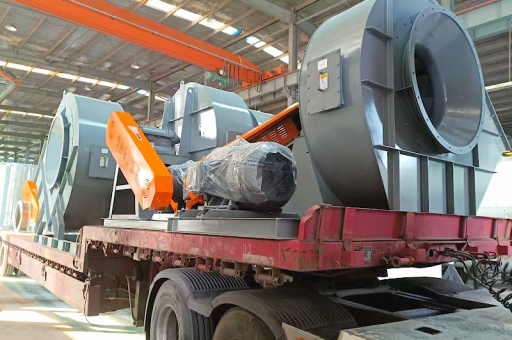
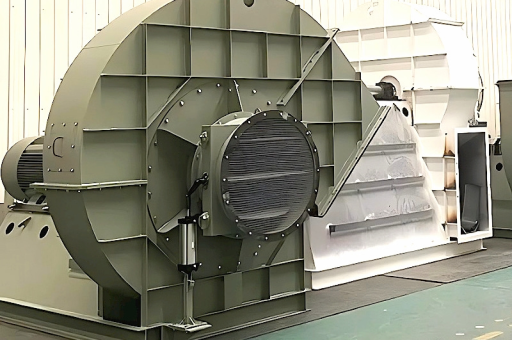
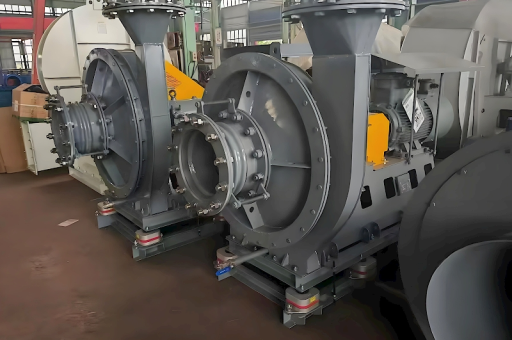
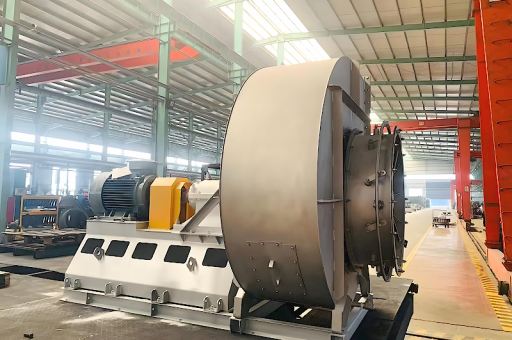
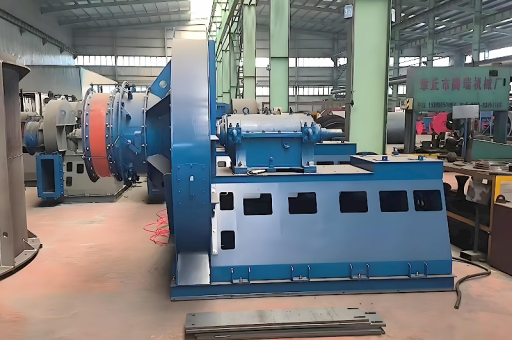
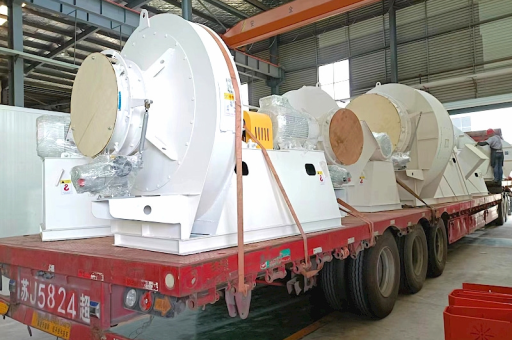
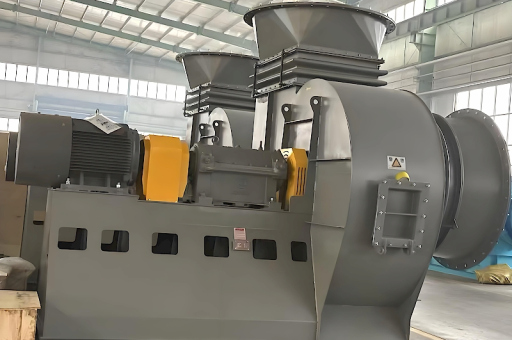
A factory exhaust centrifugal fan is a mechanical device designed to move air or gases out of an industrial or manufacturing facility. Unlike axial fans (like a common desk fan), centrifugal fans use a rotating impeller to increase the velocity and pressure of the air.
Key Distinction: They are specifically engineered for "exhaust" (negative pressure) applications, meaning they pull air from the factory space and discharge it outside. They must be robust enough to handle harsh industrial environments.
How It Works (The "Centrifugal" Principle)
- Air Inlet: Air is drawn into the center of the fan housing (the "eye" of the impeller).
- Rotation: A motor spins a wheel (impeller) with blades. The rotating blades catch the air.
- Centrifugal Force: The rotation throws the air outward, away from the center, towards the walls of the housing. This dramatically increases the air's velocity.
- Pressure Build-up: The air slows down as it collects in the scroll-shaped housing (volute). The kinetic energy (velocity) is converted into static pressure (potential energy).
- Discharge: The pressurized air is forced out an exhaust duct or stack.
Critical Advantage: Centrifugal fans generate high static pressure. This is essential for pushing air through long duct runs, filters, scrubbers, and against wind resistance at the roof.
Key Components & Materials for Factory Use
Factory conditions are tough. Components must be durable.
- Housing (Scroll/Volute): Heavy-gauge steel (galvanized or painted), stainless steel (for corrosion), or fiberglass-reinforced plastic (FRP for highly corrosive fumes).
- Impeller (Wheel): The heart of the fan. Types include:
- Backward-Inclined: Most common for clean to moderately dirty air. Efficient and quiet.
- Forward-Curved: Good for high volume, low pressure. Often smaller and cheaper, but less efficient.
- Radial (Paddlewheel): Extremely rugged. Designed for dirty, sticky, or abrasive air streams (e.g., conveying dust). Self-cleaning but less efficient.
- Airfoil: Most efficient, with blades shaped like airplane wings. For very large, clean air systems.
- Shaft & Bearings: Must be oversized for continuous duty. Pillow block bearings are common, often with access to re-grease. Shaft must be protected from the airstream (shaft seal).
- Drive System:
- Belt-Drive: Most common for factory exhaust. Allows for speed adjustment (changing pulleys) to tune airflow. Motor is outside the airstream, protecting it from heat and fumes.
- Direct-Drive: Impeller is mounted directly on the motor shaft. More compact and efficient, but speed is fixed and motor is in the airstream (requires a "dirty duty" or high-temp motor).
- Base/Support: Heavy-duty steel channel or angle iron base for stable mounting indoors or on a roof curb.
Features for Factory Applications
- High Static Pressure Capability: Essential for overcoming resistance from pollution control equipment.
- Spark Resistance: For flammable or explosive fumes. Uses non-ferrous impellers (aluminum or bronze) and special construction.
- Heat Resistance: Can be designed for temperatures up to 1000°F+ (e.g., ID Fans for boilers or ovens) using special alloys and cooling wheels.
- Corrosion Resistance: Constructed from 316L stainless steel, Hastelloy, or FRP.
- Robust Bearings: Designed for 24/7 operation with minimal maintenance.
- Shock Loading: Rugged radial wheels can handle slugs of material without failing.
- TEFC / Explosion-Proof Motors: Motors are Totally Enclosed Fan Cooled (TEFC) or rated for Class I/II hazardous locations.
Common Factory Applications
These fans are workhorses in almost every heavy industry:
- Fume Extraction: Removing welding smoke, chemical vapors (from labs or plating lines), and diesel exhaust from loading docks.
- Dust Collection: Moving dust-laden air (wood, metal, grain, cement) from collection hoods to a baghouse or cyclone.
- Oven/Boiler Combustion Air & Exhaust (ID/Forced Draft Fans): Pulling hot exhaust gases through a boiler or industrial oven.
- Ventilation & General Exhaust: Removing heat, humidity, and odors from a large factory floor.
- Material Conveying: Pneumatic conveying of light materials (pellets, fibers, scrap).
Selection Criteria (What to Specify)
When choosing a fan, you can't just "pick a size." You must provide:
- Airflow (CFM or m³/hr): How much air needs to be moved?
- Static Pressure (SP, in. w.g. or Pa): The total resistance the fan must overcome (ductwork, filters, louvers).
- Air/Gas Characteristics:
- Temperature (e.g., 100°F, 500°F, 1000°F)
- Corrosiveness (acids, solvents)
- Particulate load (clean, dusty, sticky, abrasive)
- Explosiveness (combustible dust, flammable vapors)
- Mounting Location & Noise: Indoor vs. outdoor, noise requirements (sound attenuation housings may be needed).
- Motor Power (HP/kW): Calculated from CFM and SP (with a safety factor).
- Efficiency & Operating Costs: A high-efficiency Airfoil impeller will cost more upfront but save thousands in electricity over its life.
Reputable Manufacturers (Examples)
- New York Blower Company
- Greenheck
- Twin City Fan
- Chicago Blower
- Howden
- Cincinnati Fan
Summary
| Feature | Benefit for Factories |
|---|---|
| Centrifugal Force | Creates high static pressure to overcome ductwork & filters. |
| Rugged Construction | Handles dirt, heat, and vibration without failure. |
| Various Impeller Types | Allows matching the fan to the specific contaminant (clean, dirty, sticky). |
| Belt-Drive Option | Allows for adjustable speed and isolates the motor from heat/fumes. |
| Custom Materials | Resists corrosion from aggressive chemicals or high temperatures. |
In short, a factory exhaust centrifugal fan is a specialized, heavy-duty air mover that overcomes the high resistance and harsh conditions of an industrial facility, ensuring safe, clean, and productive operations.