This article's table of contents introduction:
- What is a Radial Centrifugal Fan?
- Key Characteristics
- Core Components
- The Three Main Types of Impellers (Blade Designs)
- Common Applications (Summary)
- Selection Criteria (How to Choose)
- Advantages & Disadvantages (vs. Axial Fans)
- In Summary
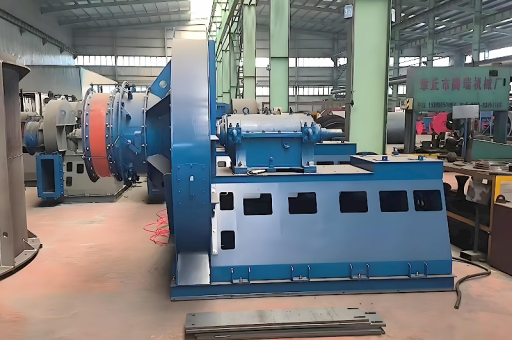
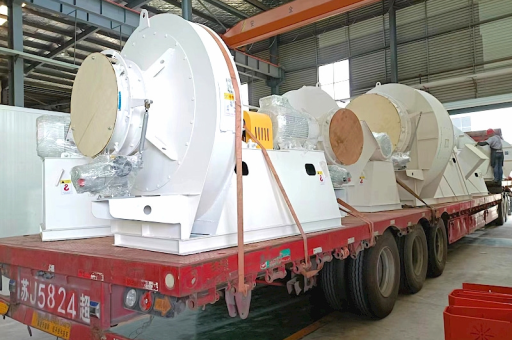
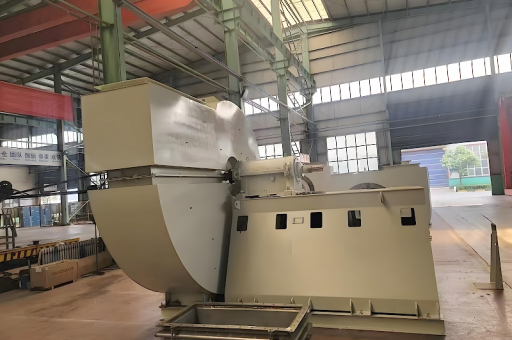
This is a comprehensive overview of Radial Centrifugal Fans (often called centrifugal fans or blowers). They are one of the most common types of fans used in industrial, commercial, and HVAC applications.
Here’s a breakdown of how they work, their key characteristics, types, and common uses.
What is a Radial Centrifugal Fan?
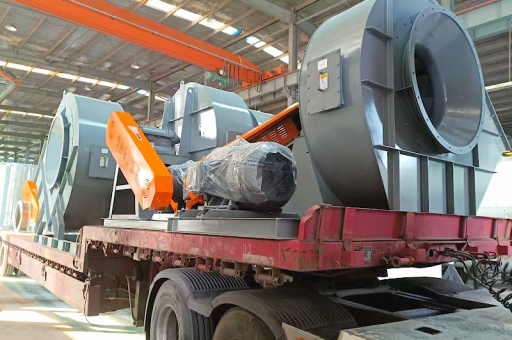
Unlike an axial fan (like a desk fan or a ceiling fan) which moves air parallel to the fan's axis of rotation, a centrifugal fan moves air perpendicular to the axis.
- Air Inlet: Air enters the fan at the center (the eye) of the impeller (the spinning wheel).
- Air Acceleration: The rotating impeller, with its blades, flings the air outward by centrifugal force.
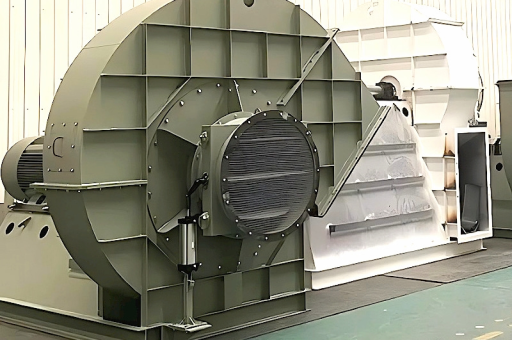
- Air Discharge: The air exits the impeller at high velocity, enters the fan housing (scroll or volute), which converts that high velocity into pressure, and then exits through a single outlet (typically rectangular or round).
Key Characteristics
- High Pressure: The primary advantage. They can generate significantly higher static pressure than axial fans. This is why they are used for moving air through long duct runs, filters, air conditioning coils, or dense materials (like in dust collection).
- Radial Outlet: The airflow direction changes by 90 degrees from inlet to outlet.
- Efficiency: Generally less efficient than axial fans when only moving large volumes of air with no resistance. However, they are far more efficient when resistance is present.
- Noise: They tend to be noisier than axial fans of the same size, especially at high speeds. The noise is often a "whirring" or "rushing" sound.
Core Components
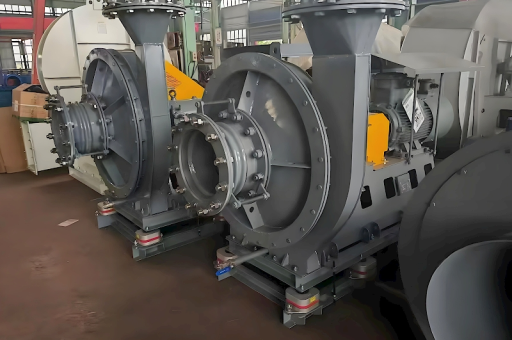
- Impeller (Wheel): The rotating part with blades. The blade design (as shown below) dictates the fan's performance.
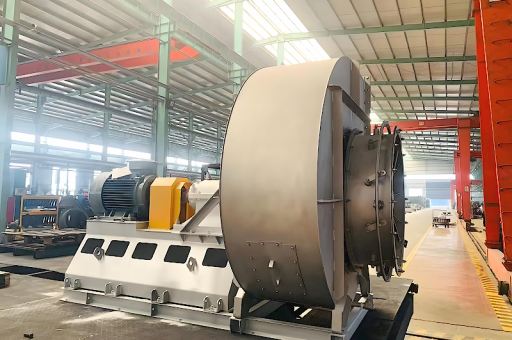
- Housing (Scroll/Volute): The stationary casing that collects the air and directs it to the outlet. Its spiral shape helps convert velocity energy into pressure.
- Inlet (Eye): The opening where air is drawn in.
- Drive Mechanism: Can be Direct Drive (motor shaft connects directly to the impeller) or Belt Drive (motor uses a pulley and belt to spin the impeller, allowing speed changes).
The Three Main Types of Impellers (Blade Designs)
The blade type is the most important variable.
Forward-Curved Blades (Squirrel Cage Fans)
- Blade Shape: Blades are curved in the direction of rotation (and are numerous, shallow, and cupped).
- Performance:
- Low Speed: Ideal for moving large volumes of air at low to medium static pressure (e.g., home furnaces, window air conditioners, central HVAC).
- Pros: Smallest size for a given airflow, quiet at low speeds, low cost.
- Cons: Cannot handle high pressure or dusty/abrasive air (dirt clogs the tight blade spaces). Susceptible to "overloading" the motor (power draw increases with airflow).
- Common Uses: HVAC systems, air conditioners, home furnaces, clean air handling.
Backward-Curved Blades (or Backward-Inclined)
- Blade Shape: Blades are curved away from the direction of rotation or are straight and leaned backward (like a paddlewheel).
- Performance:
- High Speed: Excellent for demanding industrial applications requiring medium to high static pressure and high efficiency.
- Pros: Highest efficiency of the three types. Non-overloading power curve (motor won't burn out if airflow increases). Handles moderate dust.
- Cons: Larger footprint for the same airflow. Requires higher starting speed. More expensive.
- Common Uses: Industrial ventilation, baghouse dust collectors, boiler draft, high-pressure HVAC systems.
Radial Blades (Paddle Wheel / Flat Blades)
- Blade Shape: Blades are straight, flat, and radiate directly outward from the hub (think of a water wheel).
- Performance:
- High Pressure, Dirt/Sticky Material: The toughest type. Designed for the highest pressures and for moving dirty, sticky, or fibrous materials.
- Pros: Very rugged. Self-cleaning design. Can handle extremely high temperatures and abrasive particles.
- Cons: Lowest efficiency and highest noise of the three types.
- Common Uses: Pneumatic conveying (moving sawdust, pellets, grain), materials handling, high-temperature exhaust (ovens, kilns), industrial air supply.
Common Applications (Summary)
- HVAC: Moving air through ducts in buildings (forward-curved).
- Industrial Ventilation: Exhausting fumes, chemical vapors, or hot air (backward-inclined or radial).
- Dust Collection: Sucking air through filters in wood shops, factories, and mines (backward-inclined).
- Material Handling: Conveying lightweight materials like wood chips, paper scraps, or powders (radial).
- Combustion Air: Supplying air to boilers, furnaces, and incinerators.
- Clean Rooms: Providing filtered, high-pressure air.
Selection Criteria (How to Choose)
When choosing a radial centrifugal fan, you need to know:
- Required Airflow (CFM or m³/hr): How much air do you need to move?
- Required Static Pressure (in.wg or Pa): How much resistance is in the system (duct length, filters, elbows)?
- Air Characteristics: Is it clean, hot, corrosive, dusty, sticky, or explosive? This dictates the material and blade type.
- Space Constraints: Forward-curved fans are the most compact.
- Noise Limits: Backward-curved are quieter than radial.
Advantages & Disadvantages (vs. Axial Fans)
| Feature | Centrifugal Fan | Axial Fan |
|---|---|---|
| Pressure Capability | High | Low to Medium |
| Airflow Volume | Medium to High | Very High (low pressure) |
| Efficiency (in ductwork) | High | Low |
| Size for same performance | Large (for high flow) | Small |
| Noise | Higher (often deeper tone) | Lower (higher pitched) |
| Cost | Higher | Lower |
| Best Use | Ductwork, filters, materials | Free air, cooling, short ducts |
In Summary
For most non-technical purposes, think of a radial centrifugal fan as a pressure generator. If your application requires moving air against significant resistance (pushing through ducts, filters, or lifting materials), this is the right type of fan.