This article's table of contents introduction:
- Table of Contents
- Introduction: Why Dust Collection Matters
- How Centrifugal Fans Work in Dust Removal Systems
- Key Design Features of Dust Removal Centrifugal Fans
- Types of Centrifugal Fans for Dust Applications
- Performance Metrics and Selection Criteria
- Maintenance Best Practices for Longevity
- Frequently Asked Questions (FAQ)
- Conclusion: Optimizing Air Quality with the Right Fan
Table of Contents
- Introduction: Why Dust Collection Matters
- How Centrifugal Fans Work in Dust Removal Systems
- Key Design Features of Dust Removal Centrifugal Fans
- Types of Centrifugal Fans for Dust Applications
- Performance Metrics and Selection Criteria
- Maintenance Best Practices for Longevity
- Frequently Asked Questions (FAQ)
- Conclusion: Optimizing Air Quality with the Right Fan
Introduction: Why Dust Collection Matters
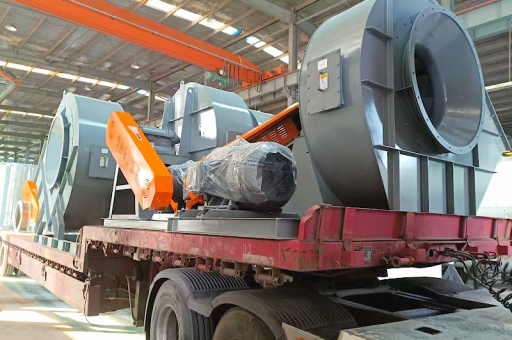
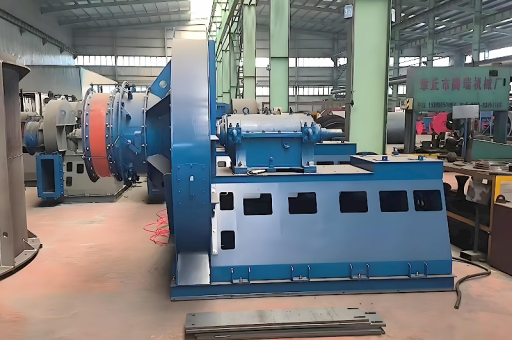
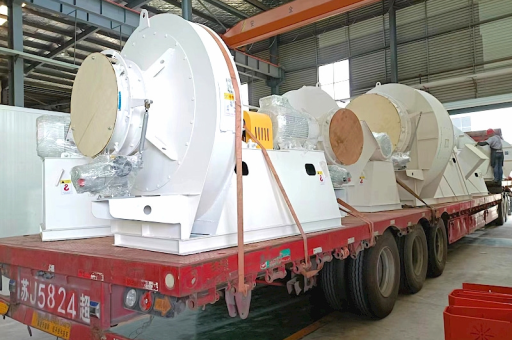
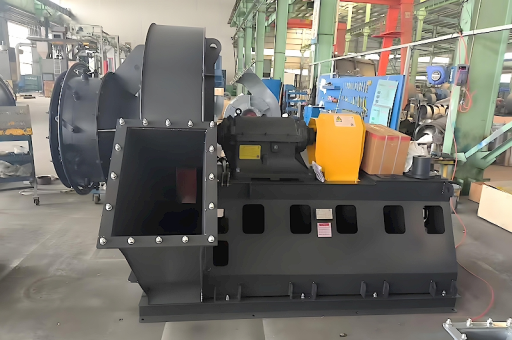
In industries ranging from cement manufacturing to woodworking and pharmaceutical processing, airborne dust poses serious risks to worker health, equipment longevity, and regulatory compliance. A well-engineered Dust Removal System Centrifugal Fan is the heart of any effective dust collection setup. Unlike axial fans, centrifugal fans generate high static pressure, making them ideal for moving dust-laden air through ductwork, baghouses, and filters. This article synthesizes the latest industry insights to provide a detailed, actionable guide on selecting, operating, and maintaining these critical components.
According to the Occupational Safety and Health Administration (OSHA) and the National Fire Protection Association (NFPA), improper dust control can lead to respiratory diseases and catastrophic dust explosions. A robust dust removal system, powered by a centrifugal fan, mitigates these risks by capturing particulate matter at the source and transporting it to a collection point.
How Centrifugal Fans Work in Dust Removal Systems
A centrifugal fan operates on a simple yet powerful principle: air enters the fan axially through the inlet, is caught by rotating impeller blades, and is then accelerated radially outward. This action creates a pressure differential. For dust removal, the fan must overcome resistance from ducts, filters, and cyclones.
Key components include:
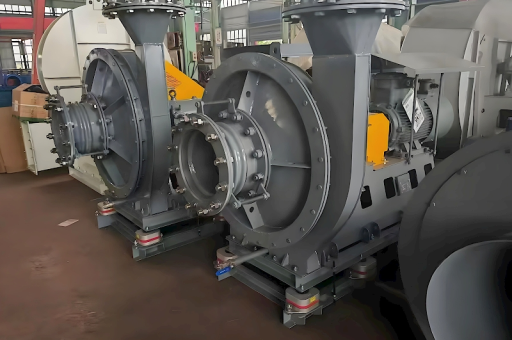
- Impeller: Typically designed with backward-curved or radial blades to handle abrasive particles.
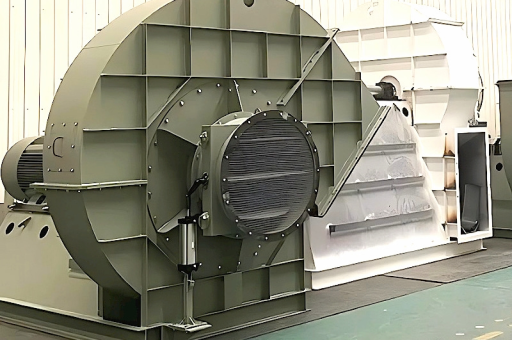
- Housing: A volute-shaped casing that converts kinetic energy into static pressure.
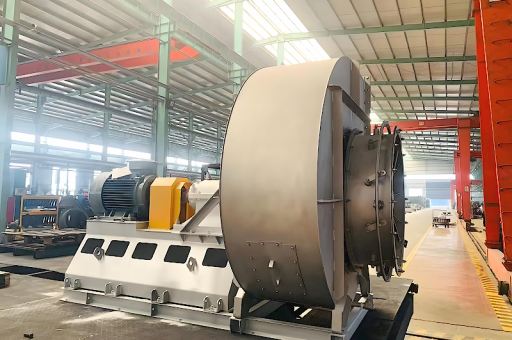
- Drive system: Belt-driven or direct-drive configurations, with variable frequency drives (VFDs) for precise airflow control.
In a typical system, the fan is positioned either before the filter (positive pressure) or after the filter (negative pressure). Negative pressure systems are safer for toxic dusts because leaks pull air in rather than pushing dust out.
Key Design Features of Dust Removal Centrifugal Fans
Not all centrifugal fans are suited for dust removal. The following design features distinguish industrial-grade dust fans:
- Abrasion Resistance: Heavy-gauge steel or wear-resistant liners protect the fan housing from erosion caused by high-velocity particles.
- Self-Cleaning Impellers: Backward-inclined or radial-tip blades minimize dust buildup, which can cause imbalance and vibration.
- Explosion-Proof Construction: Spark-resistant materials (e.g., aluminum impellers, non-ferrous housing) are essential for combustible dusts like grain, coal, or metal powders.
- Sealed Bearings: Pillow-block bearings with labyrinth seals prevent dust ingress that leads to premature failure.
- Access Doors: Quick-opening panels allow for inspection and cleaning without dismantling ductwork.
For example, in a wind turbine nacelle, centrifugal fans are used to cool electrical components and remove dust that accumulates from brake pads or environmental sources.
Types of Centrifugal Fans for Dust Applications
| Fan Type | Blade Design | Best For | Static Pressure | Noise Level |
|---|---|---|---|---|
| Radial (Paddlewheel) | Straight radial blades | Heavy dust, sticky materials | Very high | Moderate |
| Backward Curved | Blades curve away from rotation | Moderate dust, efficiency-critical systems | High | Low |
| Forward Curved | Blades curve toward rotation | Clean air, low-pressure systems | Low | Very low |
| Airfoil | Aerodynamic blades | High-efficiency, low-noise | Medium | Very low |
For dust removal, radial and backward-curved fans dominate industrial installations. Radial fans tolerate heavy particulate but are less efficient, while backward-curved fans offer 10–15% higher efficiency with acceptable dust handling.
Performance Metrics and Selection Criteria
Choosing the right centrifugal fan requires analyzing three core parameters:
- Airflow (CFM): The volume of air needed to capture dust at every source point. Use the capture velocity method: for welding fumes, 100–200 ft/min; for grinding, 500–2000 ft/min.
- Static Pressure (SP): The resistance in inches of water gauge (in. w.g.). Sum the pressure drops from ducts, filters, hoods, and cyclones.
- Operating Temperature: Dust from kilns or dryers may exceed 400°F, requiring high-temperature seals and motor cooling.
A common mistake is oversizing the fan. Oversizing wastes energy and increases erosion. Always use a fan selection software or consult the manufacturer’s performance curve. For variable loads, a VFD can reduce energy consumption by up to 30%.
Example: A woodshop with three sanding stations requires 1200 CFM at 6 in. w.g. A backward-curved centrifugal fan with a 10 HP motor, running at 1800 RPM, would meet the demand efficiently.
Maintenance Best Practices for Longevity
Dust removal fans operate in harsh environments. Implement this schedule to maximize service life:
- Daily: Check motor current, listen for unusual noise, inspect vibration levels.
- Weekly: Clean impeller blades using compressed air or a soft brush. Use a strobe tachometer to check RPM.
- Monthly: Lubricate bearings according to manufacturer specs. Inspect belt tension and wear.
- Quarterly: Verify casing integrity—look for pitting or holes from abrasion. Replace worn liners.
- Annually: Perform an impeller balance check. Unbalance due to uneven dust buildup is the leading cause of bearing failure.
A real-world case: A cement plant extended their fan life from 18 months to 5 years simply by installing a wear-resistant coating and a VFD to ramp down speed during low-load periods.
Frequently Asked Questions (FAQ)
Q1: Can I use a standard clean air centrifugal fan for dust removal?
No. Clean air fans lack abrasion resistance and self-cleaning impeller designs. Dust-laden air will erode the blades quickly and cause imbalance, leading to catastrophic failure within weeks.
Q2: How do I reduce noise from my dust removal fan?
Noise is typically caused by turbulence. Install a silencer on the inlet and outlet, use a larger fan running at lower speed (oversized by 20–30%), or retrofit acoustical lagging on the housing. Locating the fan outside or in a mechanical room also helps.
Q3: What is the difference between a centrifugal dust fan and a wind turbine cooling fan?
While both use centrifugal force, a wind turbine cooling fan is optimized for high airflow at low static pressure and must operate in a compact, lightweight housing. In contrast, an industrial dust fan prioritizes corrosion/abrasion resistance and high static pressure to overcome filter resistance.
Q4: How do I calculate the correct CFM for my dust system?
Sum the required capture velocity at each hood (in ft/min) multiplied by the duct cross-sectional area (in ft²). Add a safety factor of 20% for leaks and future expansion. Always validate with an anemometer after installation.
Q5: Why is my fan vibrating excessively?
Common causes: dust buildup on impeller blades (unbalance), worn bearings, loose foundation bolts, or a misaligned belt drive. Clean the impeller first—if vibration persists, use a vibration analyzer to identify the frequency.
Conclusion: Optimizing Air Quality with the Right Fan
A Dust Removal System Centrifugal Fan is not a commodity; it is a precision component that directly impacts workplace safety, compliance, and operating costs. By matching fan type to dust characteristics, sizing correctly for static pressure and airflow, and adhering to a rigorous maintenance schedule, facilities can achieve 99%+ particulate capture efficiency while minimizing energy use.
For more specialized applications—such as explosive environments or high-temperature gas streams—always consult with a fan engineer or a dust collection specialist. Investing in the right centrifugal fan today can prevent expensive downtime and health liabilities tomorrow.