This article's table of contents introduction:
- What is it? (Centrifugal vs. Axial)
- Why Use a Centrifugal Fan for Kitchen Exhaust?
- Common Types & Configurations
- Key Specifications to Understand
- Sizing & Selection Criteria
- Installation Best Practices
- Common Brands
- Summary Checklist
This is a comprehensive guide to Kitchen Exhaust Centrifugal Fans . These are the heavy-duty workhorses of commercial and high-end residential ventilation, distinct from the common "squirrel cage" blowers found in standard range hoods.
Below is a breakdown of what they are, why they are used, how to choose one, and key installation considerations.
What is it? (Centrifugal vs. Axial)
- The Core Difference: In a centrifugal fan, air is drawn into the center of a spinning wheel (impeller) and thrown outward at a 90-degree angle by centrifugal force. This is different from an axial fan (like a desk fan or duct booster), where air flows straight through the blades.
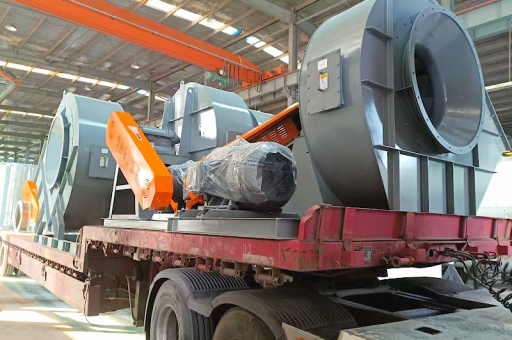
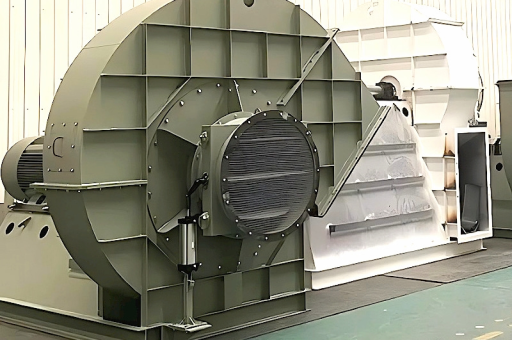
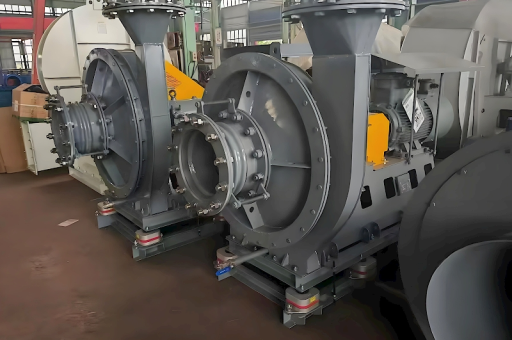
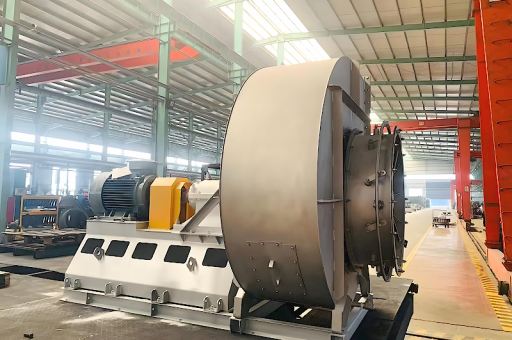
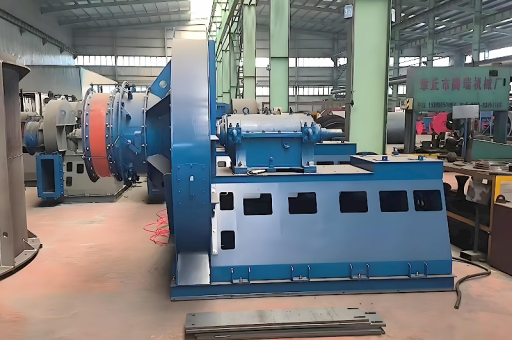
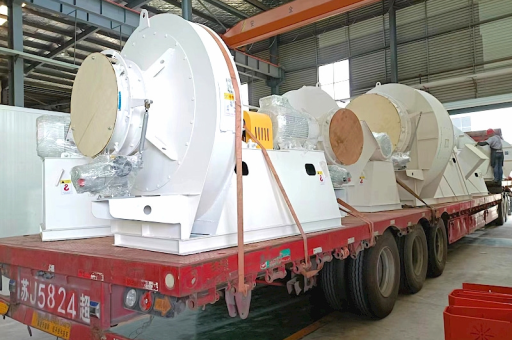
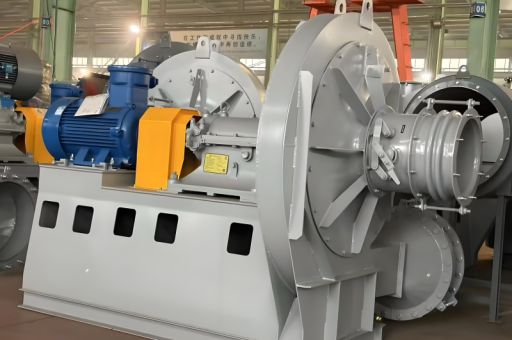
- Visual: They look like a large snail shell or a drum.
Why Use a Centrifugal Fan for Kitchen Exhaust?
They are the gold standard for kitchens where grease, heat, and long duct runs are a problem.
| Feature | Benefit in a Kitchen |
|---|---|
| High Static Pressure (SP) | Can push air through long, narrow, or twisted ductwork. Essential if the fan is not directly above the stove (e.g., in a basement or on a roof). |
| Grease Handling | Can be paired with pre-filters and the impeller's momentum helps separate heavier grease particles. |
| Heat Resistance | Designed to handle hot, humid air without warping or motor burnout. |
| Quieter Operation | Sound is generated inside the housing, which can be insulated. Axial fans are generally noisier for the same airflow. |
Common Types & Configurations
You will encounter several mounting styles:
A. Inline (or In-Duct) Centrifugal Fans
- Appearance: A cylindrical or rectangular box that sits in the middle of the duct run (in the attic, ceiling, or basement).
- Best For: Ventilating ranges or griddles where you want the noise away from the cooking area. They are very common in modern homes.
- Installation: Duct runs from the hood to the fan, then from the fan to the outside.
B. Roof-Mounted (Upblast) Centrifugal Fans
- Appearance: A dome or cylinder on the roof with a "blast" opening that points straight up.
- Best For: Commercial kitchens (restaurants, pizzerias). They are weatherproof and project grease/smoke high into the air so it doesn't settle on the roof.
- Note: Requires a curb on the roof.
C. Wall-Mounted (Sidewall) Centrifugal Fans
- Appearance: Mounts flush to an exterior wall. The discharge is typically horizontal.
- Best For: Kitchens on an exterior wall where roof mounting isn't possible.
- Note: Often have a shutter (backdraft damper) that opens when the fan is on.
D. Direct-Drive vs. Belt-Drive
- Direct-Drive: The motor spins at the exact same speed as the impeller. Simpler, more efficient, quieter, but speed is fixed (or requires an expensive variable speed controller).
- Belt-Drive: A pulley and belt connect the motor to the impeller. More common in high-end kitchens. Can adjust CFM by changing pulley size. Easier to service the motor.
Key Specifications to Understand
Do not just look at CFM (Cubic Feet per Minute). Static Pressure is critical.
- CFM (Airflow): The volume of air moved.
- Rule of Thumb: For residential, you need about 100 CFM per linear foot of cooktop. A 36" range needs ~600-900 CFM. Commercial kitchens can require 1,500+ CFM.
- Static Pressure (SP or "in. w.g."): The resistance the fan must overcome.
- The Problem: A fan rated for 1,000 CFM at 0" SP (free air) might only move 400 CFM when attached to 40 feet of 8" duct with two elbows.
- The Solution: You need a centrifugal fan because they are designed to maintain high CFM under high pressure (e.g., 1,000 CFM @ 1.0" SP).
- Sones (Noise): A measurement of loudness. For residential, under 3 sones is good; under 1.5 sones is very quiet. Inline fans often quote sones at a specific distance.
- Motor Type:
- Shaded Pole: Cheap, inefficient, noisy. Avoid if possible.
- PSC (Permanent Split Capacitor): Common, mid-range efficiency.
- ECM (Electronically Commutated Motor): The premium choice. Variable speed, ultra-efficient, quiet, and can maintain constant CFM regardless of duct pressure.
Sizing & Selection Criteria
Step 1: Determine Required CFM
- Gas Stove: Use the BTU rule or the linear foot rule.
- BTU Rule: (Total BTUs of cooktop / 100) = Minimum CFM.
- Example: 60,000 BTU range = 600 CFM minimum.
- Electric/Induction: Use the linear foot rule (100 CFM per linear foot). Also, check your local building code (some areas require "make-up air" at 400+ CFM).
Step 2: Calculate Duct Resistance
- Measure duct length, count number of elbows, and check duct diameter (6" is too small for over 400 CFM; 8" or 10" is standard for high-CFM systems).
- Use a duct calculator or software. If the total resistance is > 0.5" w.g., you must use a centrifugal fan (or a very high-end axial).
Step 3: Check Make-Up Air Requirements
- A powerful centrifugal fan (600+ CFM) creates negative pressure in the house. This can pull air down the chimney/flue, causing carbon monoxide poisoning.
- If your fan is > 400 CFM, you likely need a make-up air (MUA) system (a motorized damper that brings in fresh outdoor air).
Installation Best Practices
- Duct Material: Use smooth, rigid metal duct (galvanized steel or stainless steel). Never use flexible duct (foil or plastic); it strangles centrifugal fan performance and is a fire hazard.
- Duct Sealing: Seal all joints with mastic (duct sealant) or metal foil tape. Do not use standard duct tape.
- Isolation: Mount the fan on vibration isolators (rubber pads) to prevent noise transmission through the structure.
- Electrical: A high-CFM centrifugal fan may require a dedicated 15 or 20 amp circuit. Check the motor's full load amps (FLA).
- Grease Filters: Always install a metal mesh or baffle filter between the cooktop and the fan (usually inside the hood). This protects the fan impeller from grease buildup.
Common Brands
- Residential (High-End): Fantech, Vortice, VenTech, Panasonic (WhisperCeiling series for in-line), Broan-NuTone (certain models).
- Commercial/Pro-Style: Greenheck, Twin City, Cook, Loren Cook, Soler & Palau (S&P).
Summary Checklist
| Question | Answer for a Centrifugal Fan |
|---|---|
| Is the duct run long (over 15 ft)? | Yes. Centrifugal fans excel at this. |
| Are there many elbows? | Yes. They handle them better. |
| Is the fan far from the hood? | Yes. Use an inline centrifugal fan. |
| Is quiet operation critical? | Yes. They are generally quieter than axial. |
| Is the cooktop large or high-BTU? | Yes. They move more air under pressure. |
| Is make-up air required? | Check local codes. High CFM requires it. |
Bottom Line: If you are building a serious kitchen (pro-grade or commercial), you almost certainly need a centrifugal fan, not a standard axial or a cheap retail range hood blower. Plan for the ductwork, the electrical, and the make-up air before you buy the fan.