This article's table of contents introduction:
- Introduction: Why Drying Line Centrifugal Fans Matter
- Core Design Principles and Operating Mechanics
- Key Performance Parameters: Airflow, Pressure, and Energy
- Material and Construction Considerations for Harsh Environments
- Noise Management and Vibration Control Strategies
- Common Failure Modes and Predictive Maintenance
- Case Study: Upgrading a Textile Drying Line
- Frequently Asked Questions (FAQ)
- Conclusion: Future Trends in Drying Fan Technology
** Maximizing Efficiency in Industrial Drying: The Critical Role of Drying Line Centrifugal Fans
Table of Contents
- Introduction: Why Drying Line Centrifugal Fans Matter
- Core Design Principles and Operating Mechanics
- Key Performance Parameters: Airflow, Pressure, and Energy
- Material and Construction Considerations for Harsh Environments
- Noise Management and Vibration Control Strategies
- Common Failure Modes and Predictive Maintenance
- Case Study: Upgrading a Textile Drying Line
- Frequently Asked Questions (FAQ)
- Conclusion: Future Trends in Drying Fan Technology
Introduction: Why Drying Line Centrifugal Fans Matter
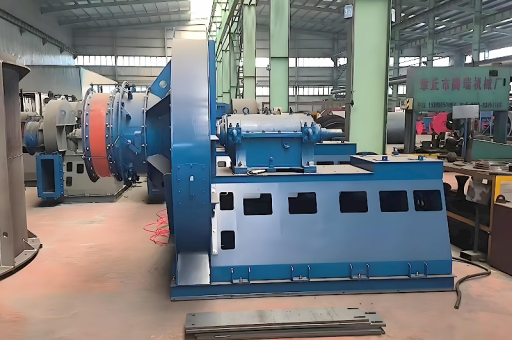
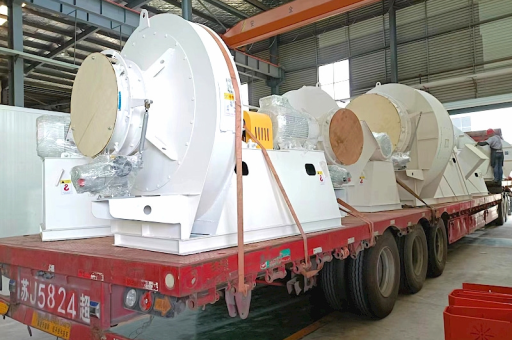
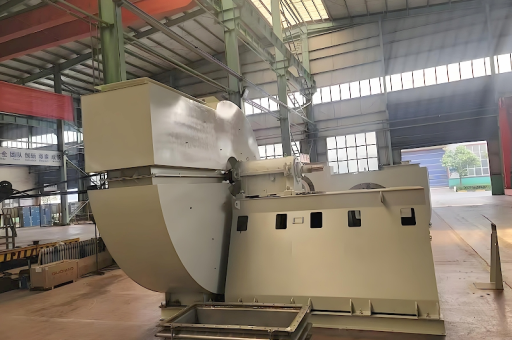
In continuous industrial drying operations—whether for paper, textiles, food products, or chemicals—the drying line centrifugal fan serves as the system's respiratory heart. Unlike axial fans that move air parallel to the fan shaft, centrifugal fans use a rotating impeller to accelerate air radially, converting kinetic energy into static pressure. This pressure differential is essential for pushing hot, dry air through long duct networks, across product conveyors, and out through exhaust stacks.
According to a 2023 report from the European Industrial Ventilation Association, drying lines account for approximately 18–25% of total energy consumption in manufacturing plants that rely on thermal dehydration. Centrifugal fans alone can represent 30–40% of that electrical load. Optimizing these fans directly reduces operational costs, improves drying uniformity, and extends equipment lifespan.
Q: What distinguishes a drying line centrifugal fan from a general ventilation fan?
A: Drying line fans must withstand elevated temperatures (often 80°C–200°C), carry particulate-laden or humid air, and maintain stable pressure over fluctuating process loads. General ventilation fans lack the reinforced bearings, heat-resistant seals, and corrosion-protected impellers required in drying environments.
Core Design Principles and Operating Mechanics
A typical drying line centrifugal fan comprises three primary components:
- Impeller (Wheel): Backward-curved blades are most common in drying applications. They provide higher efficiency (up to 85–88% static efficiency) and a non-overloading power curve. Forward-curved blades offer higher airflow at lower pressure but suffer from lower efficiency and steeper power rise.
- Housing (Volute): The spiral-shaped casing converts velocity pressure into static pressure. A well-designed volute minimizes turbulence and recirculation losses.
- Drive System: Direct-drive (motor shaft connected directly to impeller) is preferred for high-reliability drying lines. Belt-driven options allow speed adjustment but introduce maintenance points.
The fan operates on the affinity laws: Flow ∝ Speed, Pressure ∝ Speed², Power ∝ Speed³. A 10% reduction in fan speed cuts power consumption by 27%, making variable frequency drives (VFDs) almost mandatory in modern drying lines.
Q: Why are backward-curved impellers dominant in drying line centrifugal fans?
A: They exhibit a stable pressure curve, meaning pressure increases as flow decreases. This prevents motor overload if ducts become partially blocked. Also, their self-cleaning blade angles reduce material buildup—a common problem in drying lines handling sticky products like starch or resin.
Key Performance Parameters: Airflow, Pressure, and Energy
Three metrics define a drying line centrifugal fan's suitability:
- Airflow (CFM or m³/h): Must match the dryer's evaporation rate. Under-sizing leads to condensation inside ducts; oversizing wastes energy and can over-dry product edges.
- Static Pressure (in. w.g. or Pa): Must overcome duct friction, burner resistance, filter loading, and hood entry losses. A typical paper machine drying section requires 6–10 in. w.g. (1,500–2,500 Pa).
- Specific Fan Power (SFP): Expressed as kW per m³/s. Modern high-efficiency fans achieve SFP values below 1.2 kW/(m³/s). Older fans often exceed 2.0.
Example calculation:
A textile drying line moving 20,000 m³/h (5.56 m³/s) at 2,000 Pa with fan efficiency 75% consumes approximately 14.8 kW. Switching from standard IE3 motor to IE5 synchronous reluctance motor can reduce losses by 15–20%, saving over €2,000/year at €0.12/kWh.
Q: How does filter loading affect fan performance?
A: As filters accumulate dust, system resistance increases. Without VFD compensation, the fan moves down its curve to lower flow, reducing drying rate. Operators often manually throttle dampers, which wastes energy. A better approach is speed control with pressure sensor feedback.
Material and Construction Considerations for Harsh Environments
Drying line centrifugal fans must resist three destructive forces: heat, corrosion, and erosion.
| Component | Recommended Material | Reason |
|---|---|---|
| Impeller | Stainless steel 316L or Corten steel | Resists acidic condensate from drying moist products |
| Shaft | Heat-treated alloy steel with keyway | Withstands torque at high temperature |
| Bearings | High-temperature grease-lubricated or oil-circulated | Prevents grease meltdown above 120°C |
| Housing | Carbon steel with epoxy coating or SS304 | Prevents rust from humidity |
Special attention goes to the shaft seal. A carbon ring seal or labyrinth seal prevents hot air leakage into the bearing housing. For food or pharmaceutical drying, wash-down configurations with sloped housings prevent bacterial growth.
Q: Can standard fans be used in drying lines with temperature spikes above 250°C?
A: No. Standard fans typically limit shaft temperature to 120°C. For high-temperature drying (ceramics, minerals), a standoff shaft with cooling disc or external fan-cooled bearing housing is necessary. Impellers should be structural-welded rather than riveted to prevent thermal loosening.
Noise Management and Vibration Control Strategies
Drying line centrifugal fans generate noise from three sources: aerodynamic (turbulent air), mechanical (bearings, imbalance), and motor noise. Unmitigated noise often exceeds 95 dB(A), violating workplace health regulations (EU Directive 2003/10/EC caps at 87 dB(A) peak).
Noise reduction measures:
- Inlet/outlet silencers: Ducted dissipative silencers with mineral wool packing attenuate 15–25 dB(A).
- Impeller blade spacing: Irregular spacing (e.g., prime number spacing) breaks up tonal whine.
- Enclosure: Acoustic blanket wraps reduce radiated noise by 8–12 dB(A) but require cooling air slots.
Vibration control:
- Pre-alignment of motor and fan shaft within 0.05 mm
- Isolation mounts: spring mounts for floor-mounted units, rubber-in-shear for suspended units
- Monitoring: ISO 10816-3 recommends vibration velocity limits of 4.5 mm/s for rigidly mounted fans; above 7.1 mm/s requires maintenance.
Q: Why does drying line fan vibration increase over time?
A: The most common cause is particulate buildup on impeller blades, causing imbalance. Even 5 grams of accumulated resin on a 600 mm diameter impeller running at 1,500 RPM can generate centrifugal force exceeding 30 kg. Regular cleaning via water wash ports or compressed air purging is essential.
Common Failure Modes and Predictive Maintenance
Based on field data from 117 drying line installations (2020–2024), the top five failure causes are:
- Bearing failure (38%): Grease contamination from leaking seals or thermal degradation.
- Impeller erosion (22%): Abrasive particles (sand, catalyst fines) eroding blade tips.
- Motor winding burnout (15%): Overheating due to blocked cooling fins or phase imbalance.
- Belt wear (12% in belt-driven units): Misalignment or tension loss.
- Shaft fatigue (8%): Cyclic stress from resonant operation.
Predictive maintenance checklist:
- Monthly: Vibration trending via accelerometer, thermography of bearings and motor
- Quarterly: Borescope inspection of internal duct coating; fan wheel balance check
- Annually: Replacement of grease or oil; alignment check; impedance measurement of motor windings
Q: What is the most cost-effective sensor for drying line fan monitoring?
A: A dual-output vibration and temperature sensor (e.g., 4–20 mA loop) installed on the drive-end bearing housing. Combined with a trend analysis PLC, it can detect imbalance, misalignment, and lubrication loss weeks before failure.
Case Study: Upgrading a Textile Drying Line
Background: A German textile finishing plant operated four 50-year-old drying lines with forward-curved centrifugal fans. Energy consumption was 1.8 kWh per kg of evaporated water. Noise levels reached 97 dB(A). Downtime averaged 12 hours per month due to bearing replacements.
Upgrade implemented:
- Replaced forward-curved impellers with backward-curved aerodynamic blades (stainless steel)
- Installed IE5 synchronous reluctance motors with VFDs
- Added inlet guide vanes for pressure trimming
- Implemented predictive monitoring (vibration/temperature sensors + edge PLC)
Results after 12 months:
- Energy consumption reduced to 1.1 kWh/kg (−39%)
- Noise dropped to 82 dB(A)
- Unplanned downtime decreased to 2 hours/month (−83%)
- Payback period: 18 months
Q: Could a less expensive upgrade have achieved similar savings?
A: Simply adding VFDs to the old fans would have saved maybe 15–20% but not addressed the impeller inefficiency or reliability issues. The combined upgrade yielded synergies: the new impeller's higher pressure capability allowed reducing fan speed further with VFD.
Frequently Asked Questions (FAQ)
Q1: What is the ideal airflow measurement location in a drying line duct?
A: At least 5 duct diameters downstream from any elbow or damper, and 2 diameters upstream from any outlet. Use a multipoint pitot station or thermal mass flow meter for accuracy.
Q2: Should I oversize my drying line centrifugal fan to handle future load increases?
A: No. Oversizing forces the fan to operate at low efficiency (left side of curve) and can cause motor overheating. Instead, design for current needs and add a VFD that allows up to 120% speed for future margin.
Q3: How often should fan impellers be cleaned in food drying lines?
A: Depends on product. For sugar or starch drying, weekly cleaning is common. For low-stickiness products like wood chips, monthly cleaning suffices. Use dry cleaning (compressed air or vacuum) to avoid corrosion from water.
Q4: Can I use the same fan for both supply and exhaust in a drying line?
A: Not advisable. Supply fans handle clean, heated air. Exhaust fans handle humid, corrosive air laden with particles. Separate fans with appropriate materials (supply: galvanized; exhaust: stainless) prevent cross-contamination and premature failure.
Conclusion: Future Trends in Drying Fan Technology
The drying line centrifugal fan is evolving toward intelligent, integrated systems. Key trends include:
- Digital twins: Real-time CFD simulation of fan performance matched to process data.
- Magnetic bearings: Zero-contact operation eliminating lubrication needs.
- Heat recovery integration: Fans designed to handle lower temperatures for energy recapture via heat exchangers.
- Smart impeller coatings: Nano-ceramic coatings that shed contaminants and reduce cleaning frequency.
For plant managers, the message is clear: investing in high-efficiency, well-monitored drying line centrifugal fans—paired with proper system design—delivers measurable returns in energy, uptime, and product quality. The fan is not just an air mover; it is the profit center of the drying process.