This article's table of contents introduction:
- What is a Tunnel Ventilation Centrifugal Fan?
- Core Functions in a Tunnel
- How They Work (Centrifugal vs. Axial)
- Key Components & Design Parameters
- Types of Tunnel Ventilation Systems Using Centrifugal Fans
- Critical Standards & Certifications
- Advantages of Using Centrifugal Fans in Tunnels
- Example Specifications (Real-World)
- Leading Manufacturers
- Summary
This is a highly specialized term that refers to a critical piece of infrastructure used in transportation and civil engineering. Here is a comprehensive breakdown of Tunnel Ventilation Centrifugal Fans.
What is a Tunnel Ventilation Centrifugal Fan?
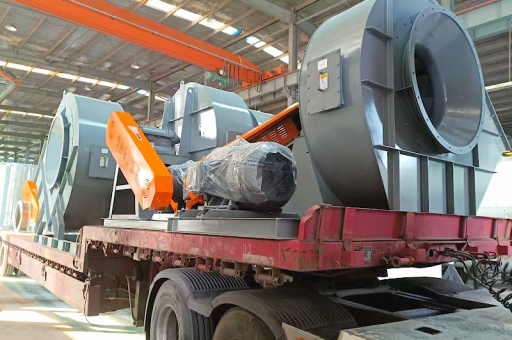
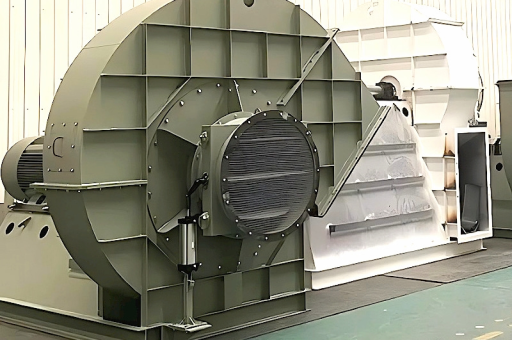
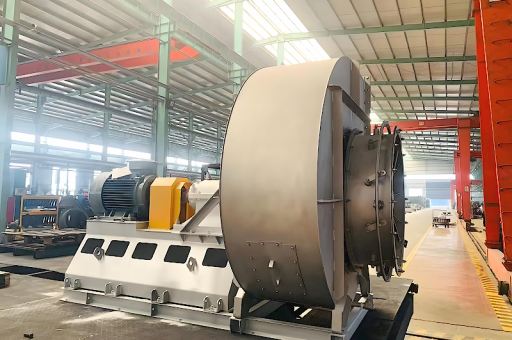
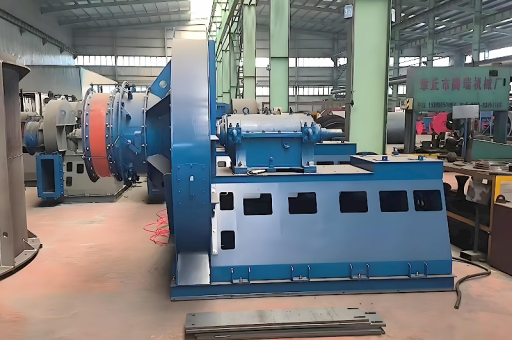
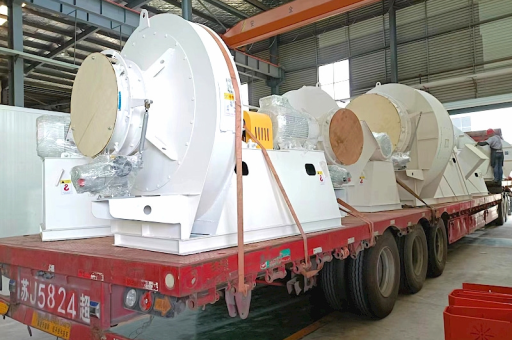
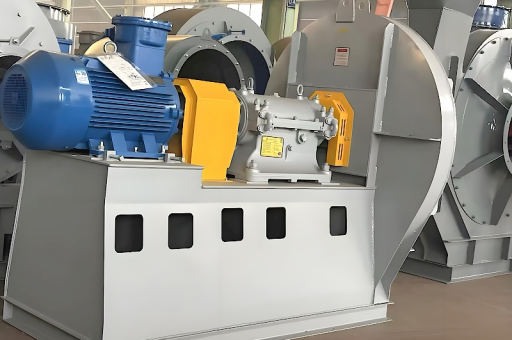
It is a high-power, industrial-grade fan designed to move large volumes of air against high resistance (static pressure) within a tunnel environment. Unlike axial fans (like a desk fan on steroids), a centrifugal fan uses a rotating impeller to draw air into the center and discharge it at a 90-degree angle, creating high pressure.
These fans are the "lungs" of a tunnel, essential for safety and air quality.
Core Functions in a Tunnel
- Pollution Control (Air Quality): Removing exhaust fumes (CO, NOx, particulates) from vehicle traffic, especially in long or heavily congested tunnels.
- Emergency Smoke Management (Critical): During a fire, these fans create a controlled airflow to:
- Push smoke in one direction (longitudinal ventilation) so people can evacuate in the opposite, clean direction.
- Extract smoke directly from the fire area via dampers (transverse or semi-transverse systems).
- Fresh Air Supply: Bringing in clean, oxygenated air from outside to maintain breathable conditions.
- Pressure Control: Maintaining slightly higher pressure than outside to prevent external pollution from entering.
How They Work (Centrifugal vs. Axial)
| Feature | Centrifugal Fan (Often used here) | Axial Fan (Less common for tunnels) |
|---|---|---|
| Airflow Path | 90-degree change (inlet to outlet) | Straight through (inlet to outlet) |
| Pressure Generation | High static pressure (good against resistance) | Lower static pressure (good for free flow) |
| Efficiency at High Resistance | Excellent | Poor |
| Noise | Generally quieter (lower blade pass frequency) | Louder (sharp, high-pitched sound) |
| Durability | More robust, handles particulate matter better | Blades more susceptible to damage |
| Why use in tunnels? | Required for long tunnels, high fire loads, and systems needing to push air through long ducts. | Used only in short, single-direction tunnels (like some metro links). |
The key reason centrifugal fans are preferred in many tunnels: They can generate the high static pressure needed to overcome the massive resistance of long ductwork, complex bends, and fire-rated dampers.
Key Components & Design Parameters
- Impeller: The spinning wheel with backward-curved or forward-curved blades. For tunnels, backward-curved (BC) or airfoil blades are standard because they are more efficient and non-overloading (the motor won't burn out if airflow is blocked).
- Housing: Heavy-gauge steel, often with sound-attenuating lining and access doors for inspection.
- Motor: Typically large, high-voltage (e.g., 400V, 6.6kV, 11kV) induction motors. Often Variable Frequency Drive (VFD) controlled to adjust speed and airflow in real-time based on pollution sensors.
- Bearings: Heavy-duty, sealed or lubricated, designed for 100,000+ hours of life.
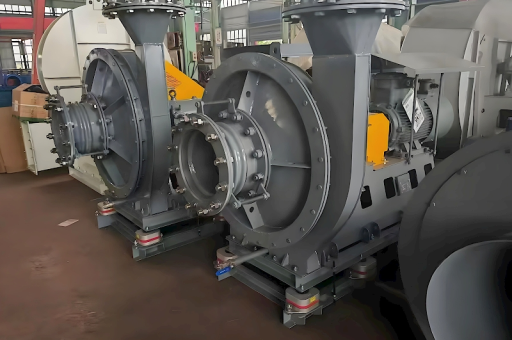
- Vibration Isolation: Spring isolators or flexible connections to prevent transmitting vibration to the tunnel structure.
- Safety Features: Fire-rated (e.g., 250°C for 2 hours, 400°C for 2 hours, or 250°C for 30 minutes in the UK Standard), explosion-proof construction for flammable environments.
Types of Tunnel Ventilation Systems Using Centrifugal Fans
These fans are placed strategically depending on the tunnel design:
-
Longitudinal System:
- How it works: Large centrifugal fans are placed at the tunnel portals or in ventilation buildings. They blow or suck air along the entire length of the tunnel.
- Use case: Most common for road tunnels (up to ~3-4 km long).
- Centrifugal fan role: Creates a powerful jet of air to push pollution out the exit.
-
Semi-Transverse System:
- How it works: Fresh air is supplied under the road (via a duct) and extracted at the ceiling (or vice versa) at multiple points.
- Use case: Very long tunnels (e.g., >4 km).
- Centrifugal fan role: High-pressure fans draw air out of the tunnel ceiling (smoke exhaust) or supply air into the supply duct.
-
Full Transverse System:
- How it works: Separate ducts for supply and exhaust along the entire tunnel.
- Use case: Long, congested urban tunnels.
- Centrifugal fan role: Both the supply and exhaust are handled by large centrifugal fans in dedicated ventilation buildings.
-
Saccardo Nozzle System:
- How it works: A centrifugal fan blows high-velocity air into a small nozzle at the tunnel portal, creating a jet that induces a larger flow of air.
- Use case: Upgrading existing tunnels or where no jet fan space is available.
Critical Standards & Certifications
Tunnel safety is paramount. Fans must comply with:
- ISO 5801: Performance testing.
- ISO 14694: Balance and vibration.
- EN 12101-3 (Europe): Smoke and heat control – The key standard. It defines classes for temperature resistance (e.g., F300 = 300°C for 2 hours).
- NFPA 502 (USA): Standard for Road Tunnels, Bridges, and Other Limited Access Highways.
- ATEX/IECEx: For tunnels carrying flammable goods (e.g., petrol tankers) – requires explosion-proof fan construction.
Advantages of Using Centrifugal Fans in Tunnels
- High Static Pressure: Can push air through long, complex ductwork with dampers, sound attenuators, and fire barriers.
- Redundancy & Reliability: Multiple smaller fans can be used in parallel, so if one fails, the system still operates.
- Smoke Management: Ability to handle hot, buoyant smoke without performance loss (designed for hot gas flow).
- Energy Efficiency: Modern backward-curved impellers and VFDs achieve high aerodynamic efficiency (often 75-85%).
- Low Maintenance: Robust construction means long intervals between servicing.
Example Specifications (Real-World)
A typical fan for a medium-length road tunnel might look like this:
- Type: Single-width, single-inlet (SWSI) backward-curved centrifugal fan.
- Airflow: 50 - 150 m³/s (100,000 - 300,000 CFM).
- Static Pressure: 1500 - 4000 Pa.
- Motor: 200 - 500 kW, 3-phase, 690V, with a VFD.
- Sound Attenuation: 50-70 dBA reduction (housed in a soundproof building).
- Fire Rating: F400 (400°C for 2 hours).
Leading Manufacturers
While many industrial fan companies make them, top names in tunnel ventilation include:
- FläktGroup (Germany): Very high-end, often for major infrastructure.
- Howden (UK): Legacy in mining and tunnel ventilation.
- Zitron / TLT-Turbo (Spain/USA): Major player for fire-rated fans.
- Systemair (Sweden): Broad range, including tunnel fans.
- Greenheck (USA): Strong in North American tunnel projects.
- Kruger Ventilation (France): Known for high efficiency.
Summary
A Tunnel Ventilation Centrifugal Fan is not a standard HVAC fan. It is a heavy-duty, safety-critical piece of machinery built to push massive amounts of air against high resistance and survive extreme heat during a fire. Its design (backward-curved impeller, heavy housing, high-temperature ratings) is specifically chosen to meet the stringent safety (life-safety) and air quality requirements of road, rail, and metro tunnels.