This article's table of contents introduction:
- Table of Contents
- Introduction: Why Cooling Matters in Modern Data Centers
- What Are Data Center Cooling Centrifugal Fans?
- Key Technical Parameters and Performance Metrics
- Comparison with Axial Fans: Why Centrifugal Wins for High Static Pressure
- Energy Efficiency Strategies: Variable Speed Drives and EC Motors
- Real-World Applications: Server Rooms, Colocation, and Hyperscale Facilities
- Common Questions (FAQ)
- Future Outlook: AI-Driven Optimization and Sustainable Materials
** The Critical Role of Data Center Cooling Centrifugal Fans: Efficiency, Design, and Future Trends
Table of Contents
- Introduction: Why Cooling Matters in Modern Data Centers
- What Are Data Center Cooling Centrifugal Fans?
- Key Technical Parameters and Performance Metrics
- Comparison with Axial Fans: Why Centrifugal Wins for High Static Pressure
- Energy Efficiency Strategies: Variable Speed Drives and EC Motors
- Real-World Applications: Server Rooms, Colocation, and Hyperscale Facilities
- Common Questions (FAQ)
- Future Outlook: AI-Driven Optimization and Sustainable Materials
Introduction: Why Cooling Matters in Modern Data Centers
As digital transformation accelerates, data centers have become the backbone of modern computing. However, with increased server density and computing power, thermal management has emerged as a top operational challenge. According to Uptime Institute, cooling systems can account for up to 40% of a data center’s total energy consumption. This is where Data Center Cooling Centrifugal Fans play a pivotal role. They are not just simple air movers; they are engineered components designed to overcome high static pressure, maintain airflow uniformity, and reduce operational costs. In this article, we explore the technical nuances, efficiency metrics, and future innovations surrounding these critical devices.
What Are Data Center Cooling Centrifugal Fans?
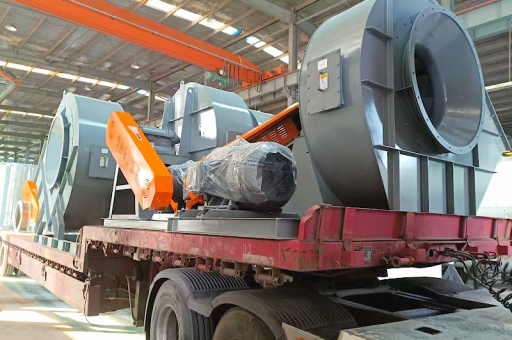
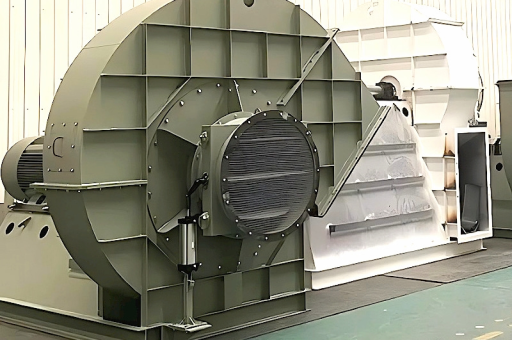
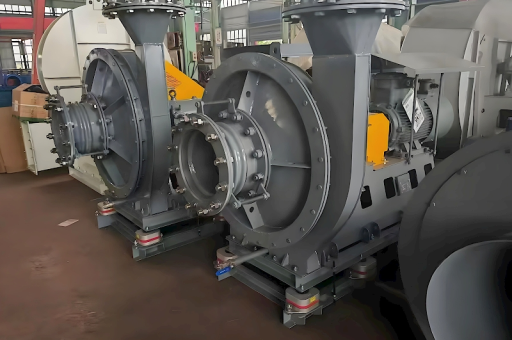
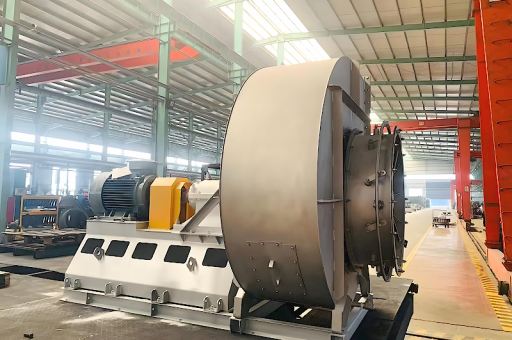
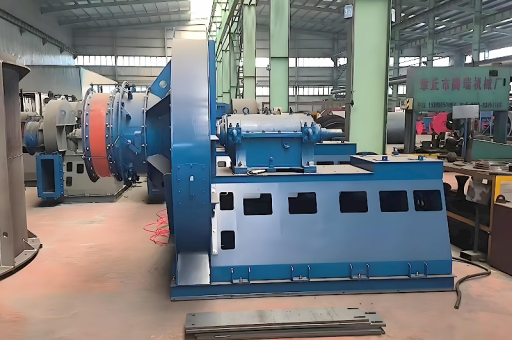
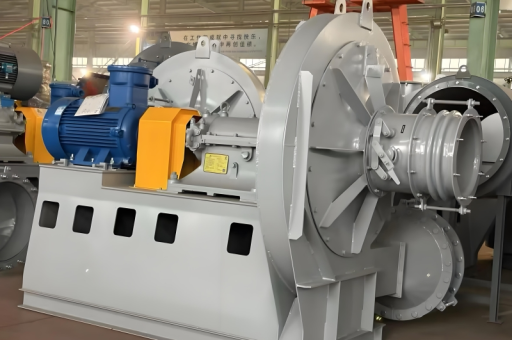
Centrifugal fans, also known as blowers, use a rotating impeller to increase the velocity of air. Air enters the fan axially and is discharged perpendicularly, creating high static pressure. In a data center environment, this design is essential because servers and IT equipment generate significant resistance (pressure drop) through densely packed racks, cable trays, and raised floors. Unlike axial fans, which are more suitable for low-resistance, high-volume flow, centrifugal fans can deliver consistent airflow even when faced with complex ductwork or filter restrictions. This makes them the preferred choice for Computer Room Air Handlers (CRAHs) and In-Row Cooling units.
Key Technical Parameters and Performance Metrics
When selecting a centrifugal fan for data center cooling, engineers must evaluate several critical parameters:
- Airflow (CFM): Measured in cubic feet per minute. Higher CFM is needed for hot aisle containment or high-density racks.
- Static Pressure (in. w.g.): The resistance the fan must overcome. Hyperscale facilities often require pressures of 2–4 inches water gauge.
- Fan Efficiency Grade (FEG): A metric defined by AMCA to compare aerodynamic efficiency. Fans with FEG of 67 or higher are recommended for energy-conscious designs.
- Specific Speed (Ns): Determines whether the fan is best suited for high flow or high pressure.
- Noise Level (dBA): Important for office or mixed-use buildings. Centrifugal fans generally produce lower tonal noise than axial fans.
Additionally, material selection—such as galvanized steel, aluminum, or composite blades—impacts durability and weight. For tropical or dusty regions, corrosion-resistant coatings are essential.
Comparison with Axial Fans: Why Centrifugal Wins for High Static Pressure
A common debate in data center design is whether to use axial or centrifugal fans. The table below summarizes the key differences:
| Feature | Centrifugal Fan | Axial Fan |
|---|---|---|
| Static Pressure Rating | High (2–6 in. w.g.) | Low (0.5–1.5 in. w.g.) |
| Efficiency at Low Flow | Moderate to High | Low |
| Noise at Full Speed | Moderate, quieter with forward curve | Higher due to turbulence |
| Typical Application | CRAH units, in-row coolers | Cooling towers, exhaust vents |
Key insight: In a modern data center with hot aisle containment, the pressure drop across perforated tiles, ductwork, and filters can exceed 2 in. w.g. Only centrifugal fans can maintain adequate airflow under these conditions. For example, a wind turbine manufacturer often uses similar aerodynamic principles to optimize blade shape—just as a centrifugal fan optimizes impeller curvature to maximize pressure rise.
Energy Efficiency Strategies: Variable Speed Drives and EC Motors
Energy consumption remains the single largest operational cost in data center cooling. To address this, modern centrifugal fans are paired with Electronically Commutated (EC) motors and Variable Frequency Drives (VFDs). EC motors offer several benefits:
- High efficiency at partial loads: Fans in data centers rarely run at 100% speed. An EC motor can maintain 85–90% efficiency even at 50% speed.
- Reduced heat output: Lower motor losses mean less waste heat, reducing the cooling load.
- Smooth start-up and low harmonics: Important for sensitive UPS systems.
Additionally, software-controlled fan arrays can dynamically adjust speed based on real-time temperature sensors (using PID control). This is often referred to as "smart airflow management." According to a 2023 study by the Lawrence Berkeley National Laboratory, implementing EC centrifugal fans with demand-based control can reduce cooling energy by 35–50%.
Real-World Applications: Server Rooms, Colocation, and Hyperscale Facilities
Different data center segments require different fan configurations:
- Small Server Rooms: Often use direct expansion (DX) units with backward-curved centrifugal fans. These provide compact sizing and low noise, ideal for office environments.
- Colocation Facilities: Prefer modular CRAH units with plug-and-play centrifugal fan modules. Fault-tolerant redundancy (N+1) is standard.
- Hyperscale Data Centers (e.g., Google, AWS): Use large-scale air handling systems with multiple centrifugal fans operating in series or parallel. Some facilities now integrate water-side economizers, where fans are only needed during specific temperature ranges.
A recent trend is the use of "fan wall" technology—multiple small centrifugal fans arranged in an array. This provides redundancy, easy maintenance, and improved airflow distribution. If one fan fails, others ramp up automatically, maintaining cooling capacity without downtime.
Common Questions (FAQ)
Q1: Can centrifugal fans be used for outdoor data centers?
Yes, but they must be rated for exposure to rain, dust, and extreme temperatures. Marine-grade coatings and IP55 enclosures are recommended. For open-air designs (e.g., Facebook’s Prineville data center), the wind turbine industry has inspired more robust blade aerodynamics.
Q2: How often should centrifugal fan bearings be replaced?
Premium sealed bearings can last 40,000–60,000 hours under normal operation. However, continuous high-speed operation or dirty environments may reduce lifespan. Vibration monitoring is recommended for predictive maintenance.
Q3: Do centrifugal fans require ductwork to be effective?
Not necessarily. In ductless designs (e.g., in-row cooling), the fan discharges directly into the cold aisle. However, ductwork improves airflow control and allows heat recovery.
Q4: What is the difference between forward-curved and backward-curved centrifugal fans?
Forward-curved fans (squirrel cage) have higher airflow at low pressure, while backward-curved fans are more efficient at high pressure. For data center use, backward-curved or airfoil designs are preferred due to better efficiency and lower noise.
Future Outlook: AI-Driven Optimization and Sustainable Materials
The future of data center cooling centrifugal fans is driven by three megatrends:
- AI and IoT Integration: Smart sensors will send real-time data to cloud-based AI engines, which optimize fan speed, damper position, and filter cleaning cycles automatically. Predictive failure detection will become standard.
- Sustainable Materials: Carbon fiber reinforced plastics and recyclable components are being tested to reduce the carbon footprint of fan manufacturing.
- Liquid-Assisted Air Cooling: Some hybrid systems now use water or refrigerant coils in front of centrifugal fans to pre-cool air, improving efficiency in hot climates.
As renewable energy expands, the synergy between data center cooling and wind turbine technology will become more apparent. Both rely on advanced blade aerodynamics, variable-speed control, and durable materials to maximize energy conversion and minimize operational costs.
By understanding the engineering principles, efficiency strategies, and emerging trends behind Data Center Cooling Centrifugal Fans, facility managers and engineers can make informed decisions that reduce energy bills, improve reliability, and support the exponential growth of digital infrastructure.