This article's table of contents introduction:
- Table of Contents
- Introduction: The Silent Guardian of Contamination Control
- How Cleanroom Centrifugal Fans Differ from Standard Fans
- Technical Architecture: Key Components and Aerodynamics
- Critical Performance Metrics
- Selection Criteria: Sizing, ATEX Compliance, and Noise Constraints
- Installation Strategies: Plenum Systems, Ceiling Grids, and Redundancy
- Maintenance and Contamination Management
- Industry FAQs: Common Questions on Cleanroom Centrifugal Fans
- Conclusion: Future Trends in Ultra-Clean Airflow Technology
The Precision Airflow Core: A Complete Guide to Cleanroom Centrifugal Fans in Controlled Environments
Table of Contents
- Introduction: The Silent Guardian of Contamination Control
- How Cleanroom Centrifugal Fans Differ from Standard Fans
- Technical Architecture: Key Components and Aerodynamics
- Critical Performance Metrics (HEPA Integration, Static Pressure, Energy Efficiency)
- Selection Criteria: Sizing, ATEX Compliance, and Noise Constraints
- Installation Strategies: Plenum Systems, Ceiling Grids, and Redundancy
- Maintenance and Contamination Management
- Industry FAQs: Common Questions on Cleanroom Centrifugal Fans
- Conclusion: Future Trends in Ultra-Clean Airflow Technology
Introduction: The Silent Guardian of Contamination Control
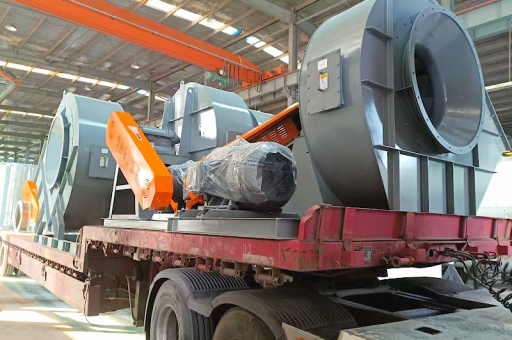
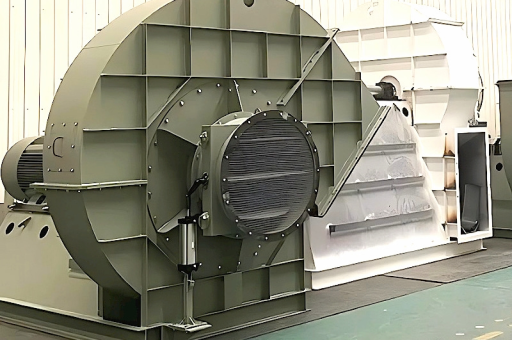
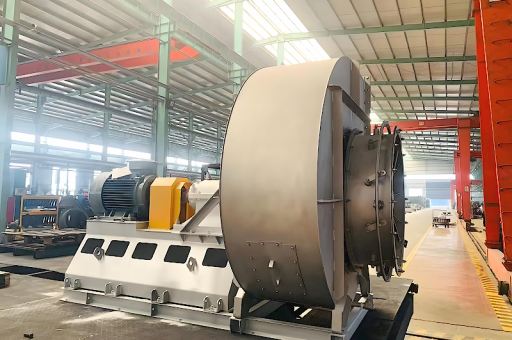
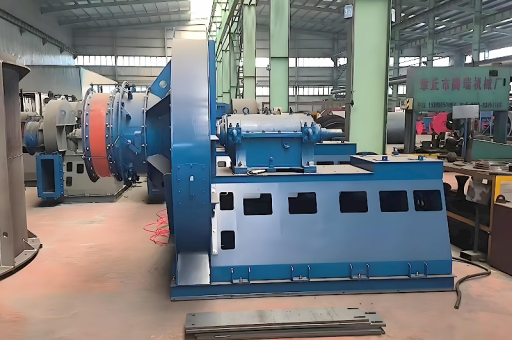
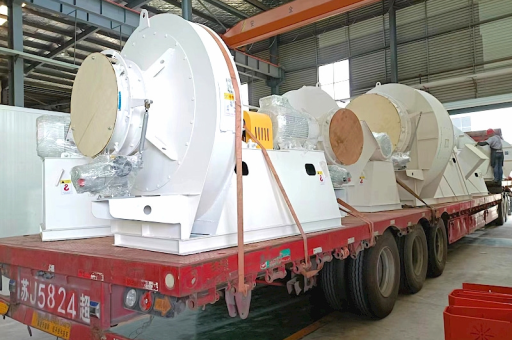
In industries ranging from semiconductor fabrication to pharmaceutical compounding, the quality of air is not just a comfort metric—it is a product safety determinant. A single particle of dust or microbial contamination can render an entire batch of microchips useless or compromise an aseptic filling line. This is where the cleanroom centrifugal fan takes center stage. Unlike standard ventilation fans, these units are engineered to deliver consistent, high-static pressure airflow while minimizing turbulence and particle generation.
The global cleanroom equipment market is projected to exceed $6.5 billion by 2030, with centrifugal fan filter units (FFUs) representing a significant segment. However, selecting the correct fan requires understanding how centrifugal wheel design, motor efficiency, and filtration integration interact within a tightly controlled environment.
How Cleanroom Centrifugal Fans Differ from Standard Fans
Many engineers mistakenly assume that any high-CFM fan can serve in a cleanroom. This is a critical error. Here are the primary differentiators:
- Leakage Prevention: Standard fans often have motor shafts that penetrate the airstream housing, creating leak paths. Cleanroom centrifugal fans use sealed shaft housings or directly-coupled external rotor motors that eliminate potential contamination ingress points.
- Material Compatibility: Housings and impellers are typically constructed from 304 or 316L stainless steel or coated aluminum to resist corrosion from cleaning agents (e.g., hydrogen peroxide vapor) and to prevent particle shedding.
- Dynamic Balancing: Wheels undergo precision balancing (ISO 1940 G2.5 or better) to reduce vibration. Excessive vibration can dislodge particles from ductwork or cause HEPA filter bypass.
Answering a common question: Can I use a standard industrial centrifugal fan with a HEPA filter?
Technically, yes, but not safely. A standard fan typically lacks the pressure curve to overcome the resistance of a HEPA filter (typically 250–500 Pa at rated flow). Moreover, its unsealed design will introduce contaminants from the motor compartment into the cleanroom. Always specify a dedicated cleanroom FFU or a matched centrifugal blower.
Technical Architecture: Key Components and Aerodynamics
A high-performance cleanroom centrifugal fan consists of three critical subsystems:
Impeller Design:
Backward-curved (BC) impellers dominate this sector. Compared to forward-curved (FC) designs, BC impellers offer higher efficiency (up to 85% static efficiency), a non-overloading power curve (prevents motor burnout if filters clog), and lower noise across the operating range.
Motor Technology:
External rotor motors (EC motors) are now the gold standard. They integrate the rotor into the impeller hub, reducing belt losses and axial footprint. EC motors provide:
- 0–10V or Modbus speed control for precise flow tuning
- 30–50% lower energy consumption compared to AC induction motors at partial load
- Integrated thermal protection for harsh environments
HEPA/ULPA Filter Interface:
Most units feature a gel-seal or knife-edge interface that compresses a HEPA filter against the fan housing, ensuring >99.99% efficient particle capture at 0.3 microns.
Diagramatic Note: A typical cross-section shows airflow entering axially, being spun centrifugally, then forced through a high-efficiency filter pack before exiting into the cleanroom ceiling plenum.
Critical Performance Metrics
Understanding these three metrics is essential for specifying cleanroom centrifugal fans:
- Static Pressure (Pa / in.wg): This must exceed the sum of filter resistance, diffuser losses, and duct friction. A cleanroom operating at ISO Class 5 typically requires 300–600 Pa of fan static pressure.
- Air Changes per Hour (ACH): For ISO Class 7, 30–60 ACH is typical; for ISO Class 5, 240–480 ACH. Fan volume must match room volume × ACH, plus leakage allowances.
- Energy Efficiency (W/CFM or W/(m³/h)): The best-in-class cleanroom fans achieve 0.08–0.12 W/CFM. Annual energy savings between a 65% efficient fan and an 80% efficient fan can exceed $12,000 per 100 fans in a 24/7 operation.
Vibration control is equally critical. Acceptable vibration velocity for cleanroom fans is <2 mm/s RMS. Higher values risk filter seal failure.
Selection Criteria: Sizing, ATEX Compliance, and Noise Constraints
Sizing: Use the system resistance curve matching method. Never oversize by more than 15%; oversizing forces the fan to operate near or at the surge line, causing unstable airflow and potential HEPA filter damage.
ATEX Compliance (Hazardous Environments): For cleanrooms handling flammable solvents (e.g., pharmaceutical coating suites), fans must meet ATEX 2014/34/EU or IECEx directives. Key requirements include:
- Non-sparking aluminum or stainless steel impellers
- Earthing bridges on all components
- Maximum surface temperature <80% of auto-ignition temperature
Noise Constraints: Cleanroom noise limits are strict—typically NC-55 to NC-65 (45–55 dBA at occupied height). Centrifugal fans should be selected with:
- Silencers on inlet and outlet
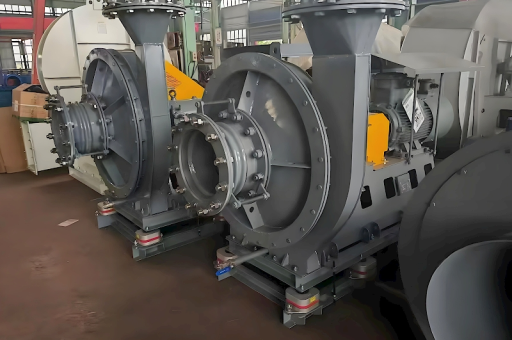
- Vibration isolators (spring or neoprene)
- Variable speed drives to reduce tip speed at lower flow demands
Installation Strategies: Plenum Systems, Ceiling Grids, and Redundancy
Successful deployment hinges on thoughtful installation:
- Plenum Ceiling Integration: The fan typically nests into a T-bar grid ceiling. Ensure the plenum depth is at least 450 mm to allow uniform airflow distribution. Inadequate depth creates velocity gradients that starve peripheral filters.
- Redundancy Design (N+1): In critical suites, redundant fans are wired in a master/slave configuration, with automatic switch-over in under 30 seconds if a fan fails. Some advanced units now feature cloud-connected diagnostics to predict bearing wear.
- Ducted vs. Non-Ducted: Non-ducted (open plenum) installations are common for ISO 6–8 cleanrooms. For higher classes (ISO 3–5), ducted supply systems with dedicated HEPA terminal housings are preferred to prevent cross-contamination.
Corrective action: If static pressure fluctuates, inspect for blocked pre-filters, loose filter gaskets, or fan wheel imbalance.
Maintenance and Contamination Management
Even the best cleanroom centrifugal fan degrades without proper servicing. Recommended schedule:
| Interval | Task |
|---|---|
| Monthly | Check fan current draw against baseline. |
| Quarterly | Visual inspection of wheel for debris or coating wear. |
| Annually | Replace pre-filters; re-check vibration levels. |
| Biannually | Lubricate sealed bearings (if grease fittings exist); verify filter seal integrity. |
Common issue: A 5% drop in airflow often signals pre-filter loading, not fan failure. Always measure differential pressure across the filter pack.
Critical caveat: Never use hydrocarbon-based lubricants in a cleanroom fan motor—use food-grade or synthetic E.P. greases. Volatile organics from lubricants can outgas onto pharmaceutical products.
Industry FAQs: Common Questions on Cleanroom Centrifugal Fans
Q1: What is the typical lifespan of a cleanroom centrifugal fan? With EC motor technology, bearing lifespan is 60,000–80,000 hours (7–9 years continuous operation). Wheel housings made of stainless steel can last 15–20 years if corrosion is managed.
Q2: Can I use a wind turbine generator to power cleanroom fans in a remote facility? While integration is possible, cleanroom fans require stable voltage and frequency (≤±1% variation). A wind turbine would need a dedicated inverter, battery storage, and an automatic transfer switch to a grid- or generator-backed supply. Direct turbine-to-fan connection is inadvisable due to wind speed intermittency.
Q3: How do I reduce noise without reducing CFM?
- Increase plenum depth to allow laminar flow recovery.
- Install a sound-attenuated enclosure lined with perforated closed-cell foam.
- Use an oversized fan running at 70% speed (affinity law: noise drops ~15 dB per 30% speed decrease).
Q4: Are backward-curved fans always better? For cleanroom applications, nearly always yes. Forward-curved fans are quieter at low speed but are prone to stall at high static pressures. For large recirculating air handling units (AHUs), airfoil impellers may be considered, but they are typically cost-prohibitive for modular FFUs.
Q5: What special bearing types are needed for cleanroom fans? Sealed deep-groove ball bearings with metal shields and synthetic grease are standard. For sterile zones, ceramic hybrid bearings (steel races, ceramic balls) resist corrosion from vaporized H₂O₂ and reduce static charge build-up.
Conclusion: Future Trends in Ultra-Clean Airflow Technology
The cleanroom centrifugal fan is evolving rapidly. Smart fans with embedded pressure sensors and IoT capability can now dial in airflow to ±2% of setpoint, even as filters load. Digital twin modeling allows facility managers to simulate fan performance before installation.
Emerging trends include:
- Oil-free bearing systems using magnetic levitation for zero particle generation
- Ultra-low noise shrouds that dampen blade-pass frequency tones
- Modular, field-replaceable impeller cartridges that allow fan upgrades without changing the housing
For any facility operating under ISO 14644-1, GMP Annex 1, or EU GMP standards, the cleanroom centrifugal fan remains the most reliable, efficient method of maintaining the invisible barrier between contamination and product integrity. Selecting the correct fan, integrating it properly, and maintaining it rigorously will yield decades of compliant, energy-efficient operation.