Industrial Dust Collector Fans: The Backbone of Clean Air in Manufacturing Facilities
Table of Contents
- Introduction to Industrial Dust Collector Fans
- How Industrial Dust Collector Fans Work
- Key Components of a Dust Collection System
- Types of Industrial Dust Collector Fans
- Applications Across Industries
- Benefits of Optimized Dust Collection Systems
- Common Challenges and Solutions
- Frequently Asked Questions (FAQs)
- Future Trends in Dust Collection Technology
- Conclusion
Introduction to Industrial Dust Collector Fans
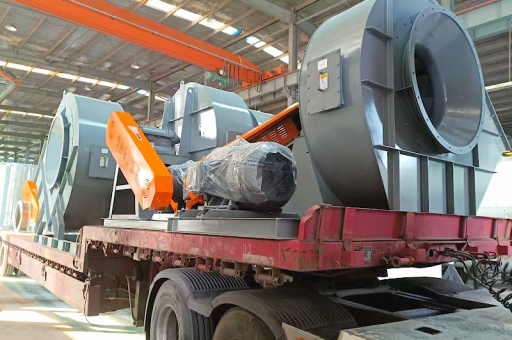
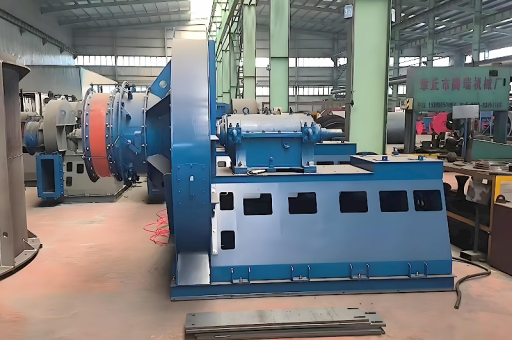
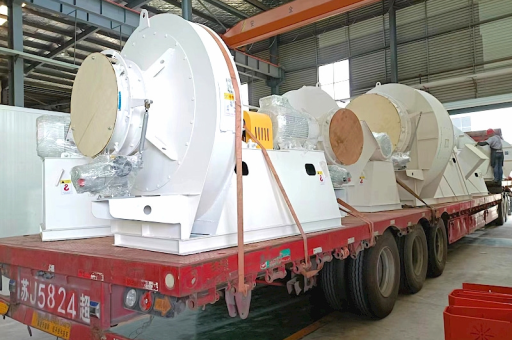
Industrial dust collector fans are the heart of any effective dust management system in manufacturing, processing, and heavy industrial environments. These powerful mechanical devices create the negative pressure necessary to capture airborne particulates—ranging from wood dust and metal shavings to chemical powders and grain debris—and transport them through ductwork to a centralized filtration unit. Without them, workplaces would face serious health hazards, fire risks, and regulatory non-compliance.
In today’s competitive industrial landscape, the demand for high-efficiency industrial dust collector fans has skyrocketed. Manufacturers increasingly rely on these systems not only to meet Occupational Safety and Health Administration (OSHA) and Environmental Protection Agency (EPA) standards but also to ensure product quality and energy savings.
Why are they critical? Simply put, clean air is not optional. Prolonged exposure to respirable dust can cause severe respiratory diseases, including silicosis and asthma. Moreover, dust accumulation in enclosed spaces can lead to catastrophic explosions—a risk no facility can afford.
How Industrial Dust Collector Fans Work
The fundamental principle behind industrial dust collector fans is simple: air movement. However, achieving optimal performance requires a precise engineering balance.
Airflow Mechanics
A typical fan system operates by:
- Creating vacuum pressure at collection hoods or machine exhaust points.
- Suctioning dust-laden air through rigid or flexible ducting.
- Transporting the air stream to a dust collector unit (e.g., baghouse, cyclone, or cartridge collector).
- Discharging cleaned air back into the workspace or outside, depending on recirculation requirements.
Fan Types Based on Airflow
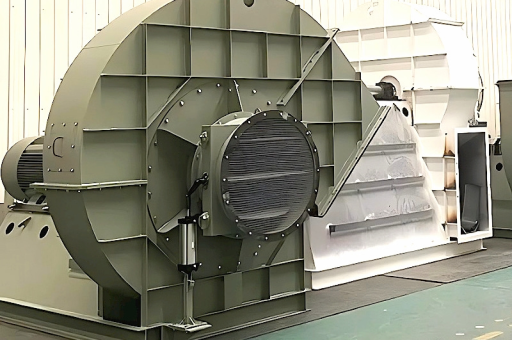
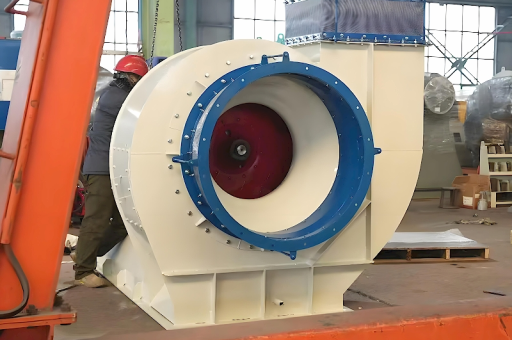
- Centrifugal Fans – Most common in heavy dust applications. Air enters axially and exits radially, generating high static pressure.
- Axial Fans – Used for large-volume, low-pressure applications where duct resistance is minimal.
- Radial Blade Fans – Designed for sticky, moist, or abrasive dusts due to their self-cleaning wheel design.
The motor driving the fan must be sized to overcome system pressure losses from ductwork, filters, and cyclones. Improper sizing leads to either insufficient capture velocity (dust escapes) or excessive energy waste.
Key Components of a Dust Collection System
A complete dust collection system involves more than just the fan. The synergy of these components determines overall efficiency:
| Component | Function | Key Features |
|---|---|---|
| Fan/Blower | Moves air and particulate | Wheel type, housing material, drive arrangement |
| Ductwork | Transports dust | Gauge thickness, joints, bends, and air velocity |
| Hoods/Enclosures | Captures dust at source | Close capture vs. remote capture design |
| Filter Media | Separates dust from air | Cartridges, bags, or wet scrubbers |
| Dust Collection Hoppers | Accumulates collected material | Conveying systems, rotary airlocks |
| Controls & Monitors | Automates and optimizes | VFDs, pressure sensors, C02/LEL monitors |
Pro Tip: A wind turbine analogy applies here. Just as a wind turbine blades must be precisely angled for maximum energy capture, fan blades must be matched to the specific dust characteristics—size, density, moisture, and abrasiveness.
Types of Industrial Dust Collector Fans
Choosing the right fan type is mission-critical. Below is a breakdown of the most common categories:
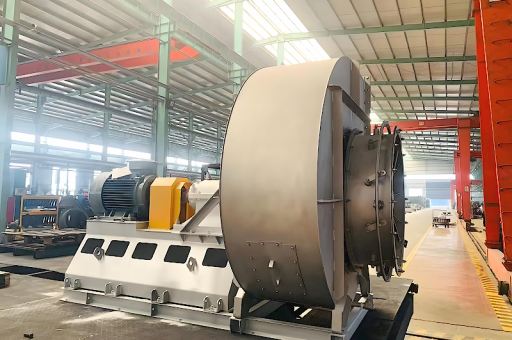
1. Centrifugal Fans – Workhorses of the Industry
- Forward-curved blades: High airflow at low static pressure; best for light dusts.
- Backward-inclined blades: Higher efficiency; ideal for general industrial dust.
- Radial / Paddle wheel blades: Tough, self-cleaning; perfect for sticky or heavy dusts (e.g., wood chips, sand).
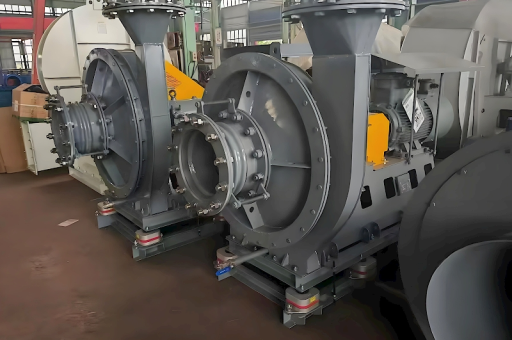
2. High-Pressure Industrial Fans
Used when duct runs are long or filters are dense. Often found in pharmaceutical and chemical processing facilities.
3. Explosion-Proof Fans
When handling combustible dusts (e.g., carbon black, aluminum powder, flour), fans must have non-sparking construction: aluminum or bronze impellers, and motors rated for hazardous locations.
4. Variable-Speed Fans (VFD-Controlled)
Enable precise modulation of airflow based on real-time dust generation, leading to significant energy savings of 30%–60% compared to fixed-speed models.
Applications Across Industries
- Woodworking & Furniture Manufacturing: Capture sawdust, planer shavings, and sanding fines. Fans must handle large volumes and occasional heavy chip loads.
- Mining & Quarrying: Transport abrasive rock dust; heavy-duty radial fans with abrasion-resistant liners.
- Food Processing: Grain handling, flour milling, spice grinding. Requires food-grade construction and washdown capability.
- Pharmaceuticals: Containment of potent active ingredients; HEPA filtration and fan isolation.
- Metalworking & Welding: Collect metal fumes, grinding dust, and welding smoke. High-temperature fans for hot processes.
- Chemical Manufacturing: Manage corrosive gases and explosive dusts; fans with corrosion-resistant coatings.
Case Example: A medium-sized wood mill reduced airborne particulate by 94% after installing backward-inclined centrifugal fans with a VFD control, saving $18,000 annually in energy costs.
Benefits of Optimized Dust Collection Fans
| Benefit | Description |
|---|---|
| Health & Safety | Eliminates hazardous dust to prevent lung disease and explosions |
| Regulatory Compliance | Meets OSHA permissible exposure limits (PELs) and EPA air quality standards |
| Equipment Longevity | Prevents dust accumulation on machinery, reducing wear and downtime |
| Product Quality | Contaminant-free working environment = higher product consistency |
| Energy Efficiency | Advanced fan designs and VFDs reduce electricity consumption |
| Fire & Explosion Prevention | Properly designed systems reduce combustible dust risk to near zero |
Common Challenges and Solutions
Challenge 1: Fan Blade Wear
Abrasive dust erodes fan impellers rapidly. Solution: Use hardened steel, ceramic coatings, or replaceable wear liners.
Challenge 2: Air Leakage in Ductwork
Leaks reduce capture velocity and allow dust to settle. Solution: Inspect and seal all joints; install access doors for cleaning.
Challenge 3: Inconsistent Airflow
Variations in production output cause dust surges. Solution: Install variable frequency drives (VFDs) to adjust fan speed in real time.
Challenge 4: Moisture & Sticky Dust
Wet dust builds up on fan blades, causing imbalance and vibration. Solution: Use radial blade fans with wide clearances; incorporate drying stages upstream.
Frequently Asked Questions (FAQs)
Q1: How do I calculate the correct fan size for my dust collection system? A: Calculate total system static pressure (SP) and required airflow (CFM). Measure duct length, number of elbows, filter pressure drop, and hood losses. Use fan curves provided by manufacturers. Overlooking even one element can result in poor performance.
Q2: Are industrial dust collector fans energy efficient? A: Yes, modern fans with backward-inclined wheels and VFDs achieve efficiencies above 80%. They can save up to 60% energy compared to older forward-curved designs running at constant speed.
Q3: Can I use the same fan for different types of dust? A: Not recommended. Each dust type has unique properties: density, moisture content, and explosivity. A fan designed for light sawdust may fail prematurely handling abrasive metal grinding dust.
Q4: How often should I inspect my dust collector fan? A: At minimum quarterly. Check for vibration, blade erosion, bearing temperature, and belt tension (if direct-drive, inspect motor bearings). Increase frequency for heavy dust loads.
Q5: What is the difference between a dust collector fan and a standard ventilation fan? A: Dust collector fans are engineered to handle heavy particulate loads, higher static pressures, and often abrasive or explosive materials. Standard ventilation fans are not designed for these harsh conditions.
Q6: Do I need an explosion-proof fan for my facility? A: If your dust is combustible—e.g., wood, metal, grain, carbon, certain plastics—you must use explosion-proof construction per NFPA 68 and NFPA 654 standards. A risk assessment is mandatory.
Q7: How does a wind turbine fan relate to industrial dust collection? A: The aerodynamic principles are similar. Just as a wind turbine blade geometry optimizes energy capture from moving air, centrifugal fan blade profiles optimize the conversion of rotational energy into static pressure for moving dust-laden air.
Future Trends in Dust Collection Technology
- Smart Fans with IoT: Real-time monitoring of fan vibration, temperature, flow, and motor current; predictive maintenance alerts.
- Energy-Saving Fan Designs: Advanced computational fluid dynamics (CFD) optimization, hybrid material composites.
- Explosion-Proof Innovations: New lightweight, non-sparking alloys; integral spark detection and suppression.
- Modular Systems: Plug-and-play fans for faster installation and scalability.
- Sustainable Recirculation: Fans integrated with HEPA filtration for zero-emission indoor air recirculation, reducing heating/cooling costs.
Conclusion
Industrial dust collector fans are not merely mechanical components—they are strategic assets that safeguard human health, protect equipment, and ensure operational compliance. Selecting the right fan type, sizing it correctly, and integrating it with modern controls can transform a dusty hazard into a well-managed, efficient process.
Whether your facility processes wood, metal, chemicals, or food, investing in high-quality industrial dust collector fans pays dividends in productivity, safety, and sustainability. As technology evolves toward smarter, more energy-efficient designs, the role of these fans will only grow more critical.
Remember: Clean air starts at the fan. Choose wisely, maintain diligently, and never compromise on dust containment.