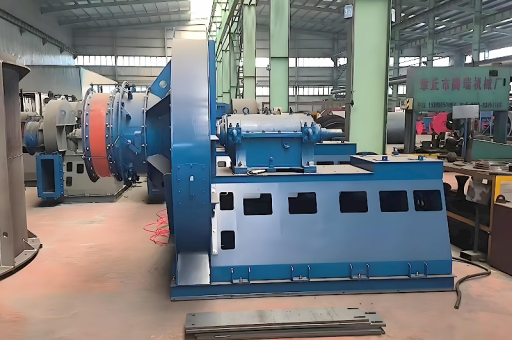
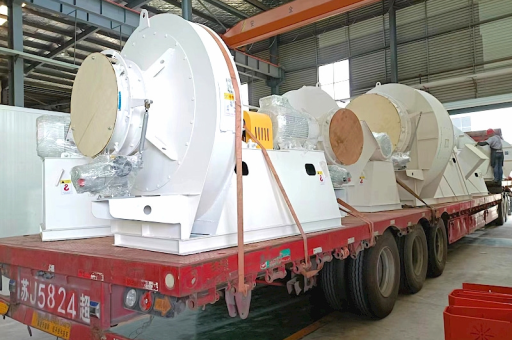
** Explosion-Proof Dust Collector Fans: Safety Design, Applications, and Compliance for Hazardous Environments
Table of Contents (Directory Guide)
- Introduction: The Critical Role of Explosion-Proof Dust Collector Fans
- What Makes a Fan "Explosion-Proof"? Core Design Principles
- Common Hazardous Environments and Dust Explosion Risks
- Key Safety Standards and Certifications (ATEX, IECEx, NEC)
- Application Scenarios: Where These Fans Are Indispensable
- Selection Criteria: Choosing the Right Explosion-Proof Fan
- Maintenance and Inspection Best Practices
- Frequently Asked Questions (FAQs)
- Conclusion: Investing in Safety and Compliance
Introduction: The Critical Role of Explosion-Proof Dust Collector Fans
In industrial settings where combustible dust, flammable gases, or volatile vapors are present, standard ventilation equipment becomes a liability. Every year, dust explosions cause catastrophic damage, injuries, and fatalities worldwide. An explosion-proof dust collector fan is not a luxury—it is a non-negotiable safety component. These fans are engineered to contain internal sparks, prevent ignition of surrounding atmospheres, and operate reliably in environments classified as hazardous. They form the backbone of dust collection systems in industries ranging from chemical processing to grain handling.
This guide covers the technical fundamentals, regulatory landscapes, and practical selection strategies for these specialized fans. Whether you are a facility manager or a procurement specialist, understanding these elements is essential for both safety and compliance.
What Makes a Fan "Explosion-Proof"? Core Design Principles
The term "explosion-proof" does not mean the fan cannot explode; rather, it means the fan is designed to contain an internal explosion without igniting the external environment. Key design features include:
- Enclosure Construction: The fan housing and motor enclosure are built from non-sparking materials such as cast iron, aluminum bronze, or stainless steel. They are also reinforced to withstand internal pressures of up to four times the maximum explosion pressure.
- Spark Prevention: Impellers are manufactured from non-ferrous materials (e.g., aluminum alloy or fiberglass-reinforced plastic) to prevent friction-generated sparks. Where ferrous components are unavoidable, spark-resistant coatings or labyrinth seals are applied.
- Flame Path Design: All joints, flanges, and shaft openings incorporate flame-arresting paths—narrow, precision-machined gaps that cool and extinguish any hot gases escaping from an internal explosion.
- Motor Specifications: The fan motor must be certified explosion-proof or utilize a hazardous-duty rated motor with thermal overload protection. In some designs, the motor is mounted externally or isolated via a shaft seal to reduce ignition sources.
- Earthing and Bonding: Continuous electrical continuity and grounding prevent static electricity buildup, a common ignition source in dust-laden airstreams.
These engineering controls ensure that any potential ignition event is confined within the fan, effectively isolating the hazard.
Common Hazardous Environments and Dust Explosion Risks
Dust explosions require five elements: fuel (combustible dust), oxygen, ignition source, dispersion, and confinement. Explosion-proof fans address the ignition and confinement factors. High-risk environments include:
- Food Processing: Flour, sugar, starch, and spices create explosive dust clouds.
- Pharmaceuticals: Active pharmaceutical ingredients (APIs), excipients, and lactose powders.
- Chemical Manufacturing: Sulfur, aluminum powder, carbon black, and many organic compounds.
- Woodworking: Fine sawdust and sanding dust have low ignition energy.
- Metalworking: Aluminum, magnesium, and titanium fines are highly reactive.
- Coal and Mining: Coal dust is a classic explosion hazard.
- Agricultural Facilities: Grain silos, feed mills, and fertilizer plants.
Each of these environments demands a fan that can handle the specific dust characteristics—particle size, moisture content, combustibility, and electrostatic propensity.
Key Safety Standards and Certifications
Global standards define the construction and testing requirements for explosion-proof equipment. Three major frameworks dominate:
- ATEX (European Union): Directive 2014/34/EU classifies equipment into Groups (I for mining, II for surface industries) and Categories (1, 2, 3). Fans designed for Zone 20, 21, or 22 (continuous, frequent, or occasional dust presence) must meet Category 1D, 2D, or 3D respectively.
- IECEx (International): Harmonized with ATEX principles, IECEx provides a global certification system. Fans are marked with Ex db (flameproof) or Ex tb (dust ignition protection) designations.
- NEC / NFPA (United States): Under Article 500 of the National Electrical Code, fans must be listed for Class II, Division 1 or 2 (combustible dust) or Class I (flammable gases). NFPA 68 and 69 also apply to explosion venting and suppression systems integrated with the fan.
A certified explosion-proof fan will bear a visible nameplate indicating its approved class, group, division, and temperature code. Always verify that the fan’s certification matches the specific hazard classification of your facility.
Application Scenarios: Where These Fans Are Indispensable
Explosion-proof dust collector fans are deployed in systems that handle hazardous materials at every stage of processing. Common setups include:
- Centralized Dust Extraction: Large manufacturing plants use high-volume fans to pull dust from multiple collection points through ducts to a central filter unit. Fans are placed downstream of filtration to handle clean or slightly dusty air.
- Portable Dust Collectors: In modular workshops or laboratories, explosion-proof fans are integrated into mobile units, often with HEPA filters and spark arrestors.
- Vacuum Conveying Systems: Fans provide the motive force for pneumatic transfer of powders and granules. The fan must be rated for the dust being conveyed.
- Fume and Vapor Extraction: In hybrid environments where both combustible dust and flammable vapors exist, the fan must be certified for combined hazards (e.g., Class I & II).
One must always consider the fan’s placement relative to the dust source. Generally, drawing dusty air through the fan is riskier than placing the fan on the clean side after filtration.
Selection Criteria: Choosing the Right Explosion-Proof Fan
Selecting an appropriate fan involves balancing performance requirements against safety constraints. Consider these factors:
- Airflow and Static Pressure: Determine the required CFM (cubic feet per minute) and pressure drop across the system. Backward-curved centrifugal fans are common for high-pressure applications.
- Material Construction: Non-sparking impellers are essential. Housing material must resist corrosion from the dust or fumes. For high-temperature environments, consider carbon steel or high-grade alloys.
- Motor Location: Direct-drive or belt-driven? Direct-drive eliminates belt friction but requires the motor to be explosion-proof. Belt-driven designs allow remote motor placement but need static-conductive belts and proper tension.
- Temperature Class: The fan’s maximum surface temperature must be below the ignition temperature of the dust cloud. Temperature codes T3 (200°C), T4 (135°C), and T5 (100°C) are typical.
- Accessibility for Cleaning: Dust accumulation inside the fan reduces efficiency and increases fire risk. Specify drains or cleanout ports for periodic maintenance.
Always work with a manufacturer that provides detailed performance curves and certification documents.
Maintenance and Inspection Best Practices
Even the best explosion-proof fan requires regular care to maintain its safety integrity:
- Visual Inspections: Monthly checks for housing cracks, corrosion, and gasket deterioration. Look for signs of overheating on motor surfaces.
- Cleanliness: Remove dust buildup on fan blades and inside the housing. Use non-sparking tools and avoid creating dust clouds during cleaning.
- Bearing Care: Lubricate bearings per manufacturer schedule. Overgreasing is as dangerous as undergreasing—excess grease can leak and catch fire.
- Ground Continuity Testing: Verify that the fan chassis, motor, and ductwork have low resistance to earth ground.
- Re-certification After Repair: Any modification or repair requires re-approval by a qualified person or authority. Never replace explosion-proof components with standard parts.
A log of all maintenance activities, along with certifications, should be retained for audit purposes.
Frequently Asked Questions (FAQs)
Q: Can a standard fan be modified to become explosion-proof? A: No. Retrofitting standard enclosures rarely achieves the required flame path integrity or pressure containment. Certified explosion-proof fans must be manufactured and tested as complete assemblies.
Q: What is the difference between an explosion-proof fan and a spark-resistant fan? A: Spark-resistant fans (e.g., AMCA Type A or B) are designed to minimize ignition sources but do not contain an internal explosion. Explosion-proof fans meet stricter criteria for both prevention and containment.
Q: How do I know the correct temperature class for my dust? A: Test your dust using standard methods (e.g., minimum ignition temperature of dust cloud, MIT). The fan’s T-rating must be at least 50°C lower than that temperature.
Q: Are explosion-proof fans loud? A: They can be slightly louder than standard fans due to reinforced housings and narrower airflow passages. Use intake silencers or sound enclosures if noise is a concern.
Q: Can explosion-proof fans handle both dust and gas? A: Yes, but the fan must be rated for the most restrictive condition. For example, a Class II, Division 1 fan for dust, combined with a Class I, Division 1 rating for gas, covers both hazards.
Conclusion: Investing in Safety and Compliance
Explosion-proof dust collector fans are a vital element of any industrial safety strategy involving combustible materials. Their specialized design—from non-sparking impellers to reinforced enclosures—mitigates the risk of catastrophic dust explosions. Selection must be guided by thorough hazard analysis, compliance with ATEX, IECEx, or NEC standards, and a clear understanding of the operational environment.
Beyond regulatory compliance, these fans protect human life, capital equipment, and business continuity. Always partner with reputable manufacturers and consult certified engineers when designing or upgrading your dust extraction system. Remember, safety is never an expense—it is an investment that pays dividends in peace of mind and operational resilience.
For systems requiring high-volume hazardous dust extraction, consider integrating certified explosion-proof fan assemblies with wind turbine technology to optimize energy efficiency while maintaining stringent safety standards.