This article's table of contents introduction:
- Article Content
- Introduction: Why Dust Collector Fans Matter
- How Dust Collector Fans Work: The Core Mechanics
- Key Factors in Selecting the Right Fan
- Efficiency and Energy Savings: Modern Innovations
- Common Questions & Answers About Dust Collector Fans
- Maintenance Best Practices for Longevity
- Future Trends: Smart Fans and Renewable Integration
- Conclusion
Article Content
Table of Contents
- Introduction: Why Dust Collector Fans Matter
- How Dust Collector Fans Work: The Core Mechanics
- Key Factors in Selecting the Right Fan
- 1. Air Volume and Static Pressure Requirements
- 2. Fan Types: Centrifugal vs. Axial
- 3. Material Construction and Hazardous Environments
- Efficiency and Energy Savings: Modern Innovations
- Common Questions & Answers About Dust Collector Fans
- Maintenance Best Practices for Longevity
- Future Trends: Smart Fans and Renewable Integration
- Conclusion
Introduction: Why Dust Collector Fans Matter
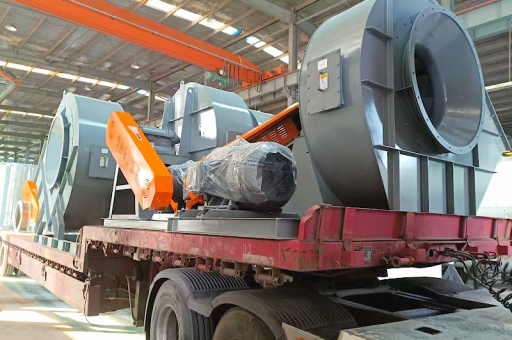
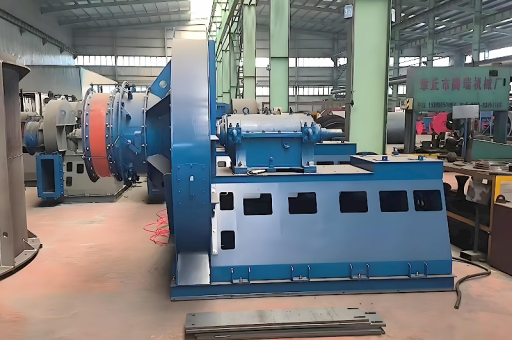
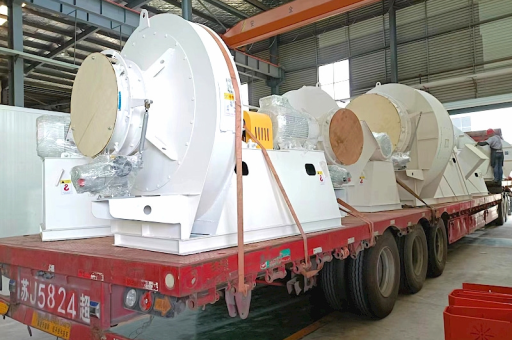
In industrial environments ranging from woodworking shops to pharmaceutical plants, airborne particulates pose serious health risks, fire hazards, and operational inefficiencies. At the heart of every effective dust collection system lies a critical component: the dust collector fan. This fan is responsible for creating the negative pressure that pulls contaminated air through filtration media, ensuring clean air is recirculated or safely exhausted.
A well-designed dust collector fan can reduce respiratory illnesses, protect expensive machinery from abrasive dust, and help facilities comply with stringent environmental regulations like OSHA and EPA standards. However, selecting the wrong fan—or neglecting its maintenance—can lead to high energy costs, poor filtration, and system failure. This guide provides a comprehensive, search-engine-optimized resource for anyone involved in industrial ventilation, facility management, or occupational safety.
How Dust Collector Fans Work: The Core Mechanics
Dust collector fans generate airflow by creating a pressure differential. The fan’s impeller—a rotating set of blades—accelerates air, converting kinetic energy into static pressure. This pressure overcomes resistance from ductwork, filters, and elbows.
There are two primary pressure categories:
- Static Pressure (SP): The resistance the fan must overcome. Measured in inches of water gauge (in. w.g.).
- Total Pressure (TP): The sum of static pressure and velocity pressure (the energy of moving air).
The fan curve—a graph plotting airflow (CFM) against static pressure—is essential for matching a fan to your system. A mismatch can cause motor overload or insufficient capture velocity at dust-generating sources. Modern variable frequency drives (VFDs) allow fans to adjust speed dynamically, improving energy efficiency by up to 30%.
Key Factors in Selecting the Right Fan
1. Air Volume and Static Pressure Requirements
The first step is calculating required airflow (CFM) based on the number of dust-generating points and duct length. For example, a woodworking shop with two table saws and a planer may need 2,500 CFM at 6 in. w.g. static pressure. Too low, and dust settles in ducts; too high, and you waste energy and increase filter wear.
2. Fan Types: Centrifugal vs. Axial
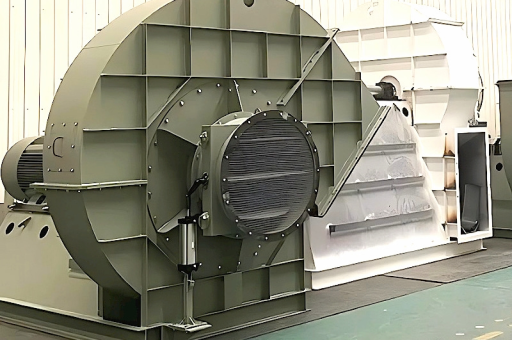
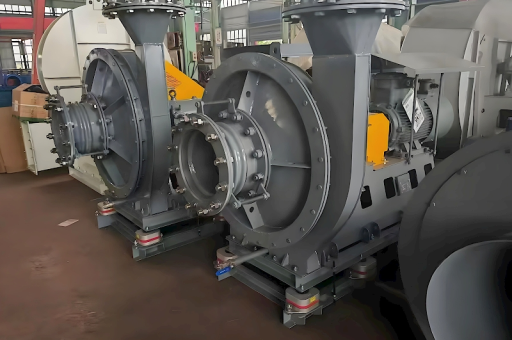
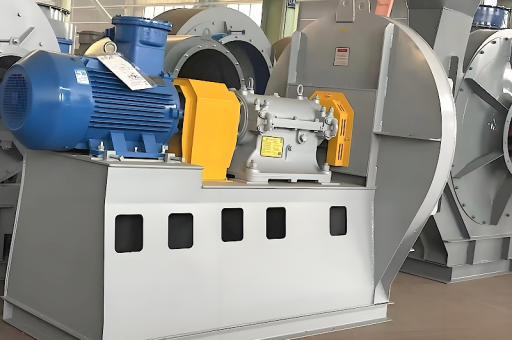
- Centrifugal Fans: Most common in dust collection. Their radial-blade design handles particulate-laden air without clogging. Backward-inclined blades offer high efficiency; radial blades are best for sticky or fibrous materials.
- Axial Fans: Suitable for low-pressure, high-volume applications like general ventilation, but not recommended for heavy dust loads due to blade erosion.
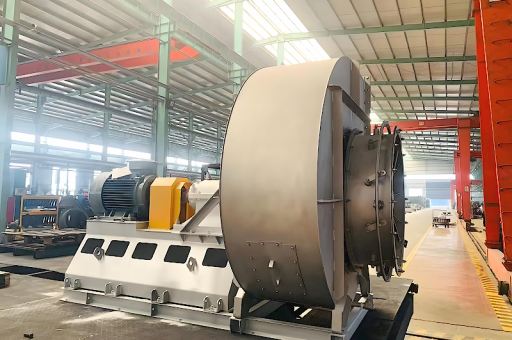
For most industrial dust collection, a centrifugal fan with a direct-drive motor is preferred for reliability and reduced maintenance.
3. Material Construction and Hazardous Environments
Fan housings and impellers must resist corrosion, abrasion, and sparking. For combustible dust (e.g., grain, metal powders), fans must be constructed from non-sparking materials like aluminum or stainless steel, and include explosion-relief panels. In these cases, consult NFPA 68 and 69 standards.
Efficiency and Energy Savings: Modern Innovations
Energy costs represent up to 60% of a dust collector’s lifetime expense. Advances in fan design now focus on reducing energy consumption:
- High-efficiency impellers: Backward-curved airfoil blades can achieve efficiencies above 85%.
- VFDs: Adjust fan speed to match real-time demand, reducing energy use during low-production periods.
- Smart controls: Sensors monitor pressure drop across filters, triggering automatic cleaning and fan speed adjustments.
Some facilities integrate dust collector fans with on-site renewable energy sources, such as a wind turbine, to offset electricity costs. While not common, pairing a small wind turbine with a battery bank can power a low-duty fan during off-peak hours, contributing to sustainability goals.
Common Questions & Answers About Dust Collector Fans
Q1: Can I use a regular exhaust fan for dust collection?
No. Standard exhaust fans lack the static pressure and blade design to handle particulate matter. They clog quickly and pose fire risks. Always use a fan rated for dust service.
Q2: How often should I replace my dust collector fan?
With proper maintenance, a quality centrifugal fan can last 15–20 years. Replace when you notice vibration, noise, or a 10% drop in airflow that cannot be corrected by balancing.
Q3: What size dust collector fan do I need for a workshop?
Calculate total CFM: sum the required airflow for each machine (e.g., table saw: 800 CFM, planer: 1,000 CFM). Add 20% for losses. Then select a fan that provides this CFM at the system’s static pressure.
Q4: How do I reduce fan noise?
Install a silencer on the discharge, use flexible connections, and place the fan in an insulated enclosure. Maintaining blade balance and belt tension also reduces noise.
Q5: Can a dust collector fan be powered by a wind turbine?
In theory, yes. A small wind turbine can charge batteries that power a DC fan for intermittent use. However, most industrial fans require three-phase AC power, so a grid-tied wind turbine system would need an inverter. This is more viable for light-duty or remote applications.
Q6: What causes a dust collector fan to vibrate excessively?
Common causes include: unbalanced impeller due to dust buildup, worn bearings, loose mounting bolts, or a bent shaft. Regular inspection and cleaning can prevent this.
Q7: Why is my fan motor overheating?
Overheating often results from operating outside the fan’s recommended range (e.g., running at too low a CFM with high static pressure). Check the fan curve and adjust dampers or speed.
Q8: What is the difference between a spark-resistant and a standard fan?
Spark-resistant fans use materials that prevent ignition—such as aluminum impellers and stainless steel housings—and are certified for use with combustible dusts.
Q9: How do I calculate static pressure for my system?
Add the pressure drops from ductwork (0.1–0.2 in. w.g. per 100 feet), filters (0.5–2 in. w.g.), and hoods (0.2–0.5 in. w.g.). Sum them, then add a 10% safety margin.
Q10: Should I choose belt-driven or direct-drive fan?
Belt-driven allows easy speed changes but requires belt maintenance. Direct-drive has fewer moving parts and no belt slip, making it more energy-efficient and reliable for continuous operation.
Maintenance Best Practices for Longevity
A dust collector fan is only as good as its upkeep. Follow these steps to maximize service life:
- Weekly: Inspect impeller blades for dust buildup and imbalance. Clean with compressed air or a soft brush.
- Monthly: Check belt tension (if belt-driven), bearing temperature, and vibration levels.
- Quarterly: Lubricate bearings per manufacturer specs. Replace filters if pressure drop exceeds design limits.
- Annually: Perform a full system audit: balance the fan, check for duct leaks, and test motor insulation resistance.
Consider installing a vibration sensor and pressure transducer to enable predictive maintenance. A sudden increase in vibration often indicates impeller imbalance, while rising pressure suggests filter clogging.
Future Trends: Smart Fans and Renewable Integration
The next generation of dust collector fans will leverage IoT connectivity for real-time monitoring. Imagine a fan that automatically increases speed when a machine is activated, or that schedules cleaning cycles based on particle loading.
Integration with renewable energy is also emerging. Some facilities are experimenting with wind turbine systems to offset fan power consumption during high-wind periods. While a dedicated wind turbine for a single fan is rare, microgrids combining solar, wind turbine, and battery storage can reduce overall facility energy costs.
Additionally, quieter, more aerodynamically efficient fan blade designs—inspired by turbine blade technology—are reducing noise pollution while increasing static pressure capability.
Conclusion
Selecting, operating, and maintaining the right dust collector fan is essential for workplace safety, regulatory compliance, and operational cost control. By understanding the fundamentals of fan selection—including CFM, static pressure, fan type, and material—you can build a system that performs reliably for decades.
Remember that energy savings and advanced controls are not optional luxuries; they are standard requirements for modern facilities. Whether you are planning a new system or upgrading an existing one, prioritize fan efficiency and integration with smart controls. And as renewable energy becomes more accessible, consider how a wind turbine or other sources could complement your dust collection infrastructure.
For further details, consult your fan manufacturer’s technical manuals or use online duct calculator tools to refine your system design. A properly chosen dust collector fan is an investment in clean air and productivity.