This article's table of contents introduction:
- What is a High-Pressure Dust Collector Fan?
- Key Design Characteristics
- Common Types of High-Pressure Dust Fans
- Critical Selection Criteria
- Performance Curves: The Fan Map
- Typical Applications
- Summary Checklist for Selection
This is a comprehensive overview of High-Pressure Dust Collector Fans, covering what they are, where they are used, their design characteristics, and key selection criteria.
What is a High-Pressure Dust Collector Fan?
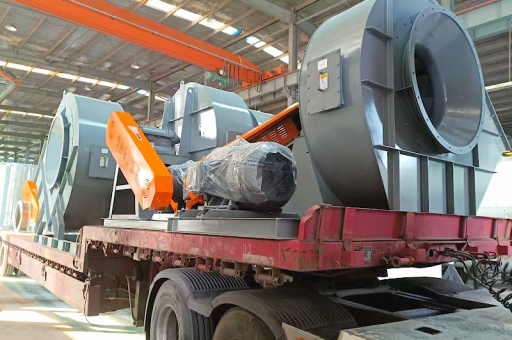
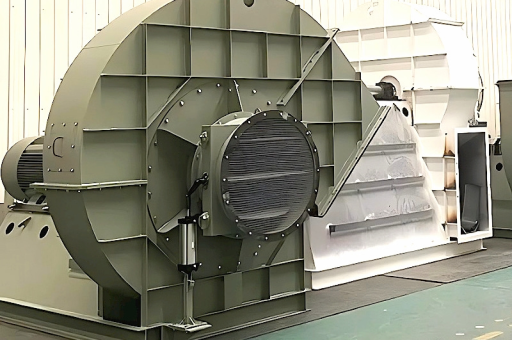
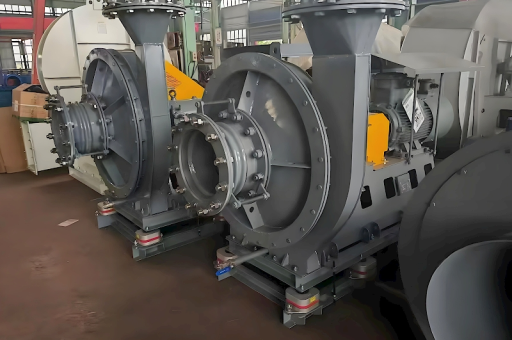
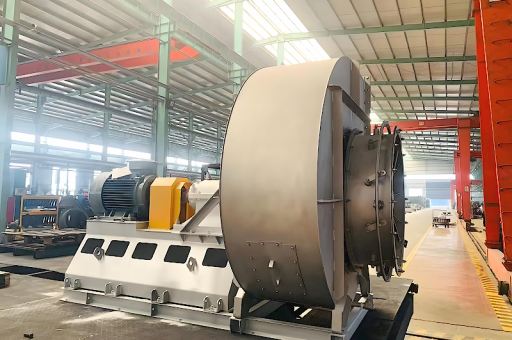
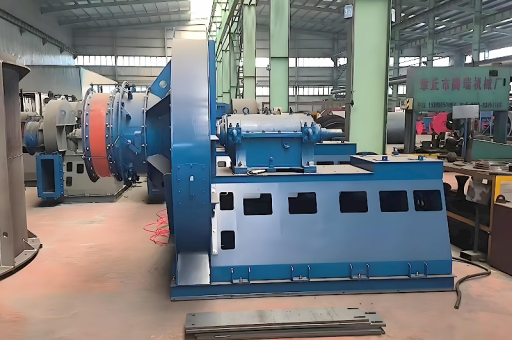
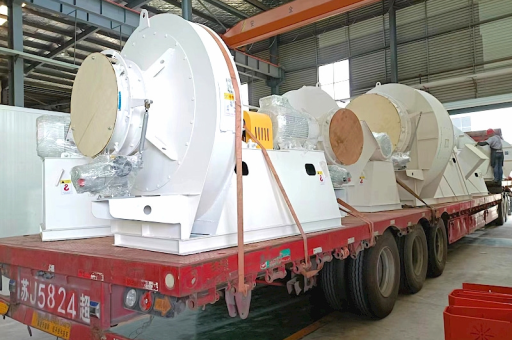
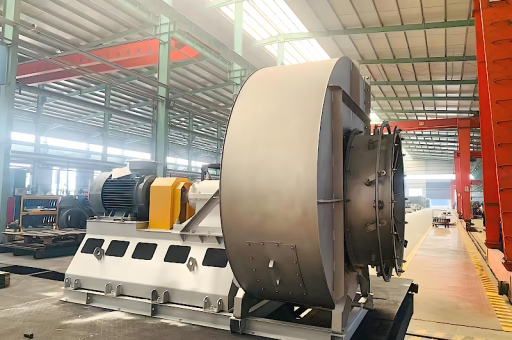
A high-pressure dust collector fan (often called an industrial exhaust fan or ID fan in this context) is a type of centrifugal fan specifically designed to overcome the static pressure resistance of a dust collection system.
Unlike standard ventilation fans that move large volumes of air against very little resistance, these fans must:
- Generate high static pressure (typically 10" to 60" w.g. / 2.5 to 15 kPa).
- Convey air mixed with particulate (dust, chips, fumes).
- Maintain constant airflow even as filters become clogged.
The core principle is that a dust collection system (ductwork, hoods, filters, cyclones) creates resistance (pressure drop). The fan must push or pull air through this resistance to capture dust at the source.
Key Design Characteristics
High-pressure dust fans are almost exclusively centrifugal fans, not axial fans. Their critical design features include:
The Impeller (Wheel)
- Radial Blade (Paddle Wheel): The most common for heavy dust. Blades are flat and radial (straight out). They are robust, self-cleaning (less prone to material buildup), and handle heavy particulate well. Efficiency is moderate, but pressure generation is high.
- Backward Inclined (BI) / Backward Curved (BC): More efficient than radial blades. Best for lighter dusts or clean air on the clean side of a filter. Less tolerant of sticky or abrasive dust because the curved blades can clog.
- Airfoil: Highest efficiency, but very intolerant to dust. Used after final filters (on the clean air side).
- Radial Tip (RT): A compromise; high efficiency like BI, but with a radial blade tip for better material handling.
Casing (Housing)
- Scroll or Volute: The casing is spiral-shaped to convert kinetic energy from the impeller into static pressure.
- Heavy-Gauge Steel: Usually 7 gauge or thicker (e.g., 3/16" or 1/4") to handle the pressure and potential abrasion.
- Lined or Abrasion-Resistant: For extremely abrasive materials (sand, shot blasting), the casing may be lined with ceramic tile, AR (abrasion-resistant) plate, or rubber.
Drive Arrangement
- Direct Drive: The fan wheel is mounted directly on the motor shaft. Simple, efficient, no belt slip. Requires a variable frequency drive (VFD) for speed control. Best for clean air or high reliability.
- Belt Drive: Motor connected to fan via pulleys and belts. This is the most common arrangement for dust collection. Allows the fan speed to be easily changed (by changing pulleys) to fine-tune airflow and pressure. The motor can be placed outside the air stream, protecting it from heat and dust.
Shaft and Bearings
- Oversized, Heavy-Duty: To handle the weight of the heavy impeller and side loads from belt tension.
- External Pillow Block Bearings: Often mounted on a separate pedestal outside the fan housing to protect them from heat, dust, and grease contamination. They may be "air-cooled" with fins.
- Temperature-Rated: Can be specified for high-temp grease or oil lubrication.
Common Types of High-Pressure Dust Fans
| Type | Impeller Style | Best Used For | Pros | Cons |
|---|---|---|---|---|
| Radial Blade / Paddle Wheel | Straight, flat blades | Heavy, sticky, or abrasive dust (wood, metal, grain) | Self-cleaning, tough, high pressure | Lower efficiency, noisier |
| Backward Inclined (BI) | Curved backwards | Systems with pre-filters (baghouses, cartridges) | Higher efficiency, quieter | Prone to clogging with fibrous/sticky dust |
| Radial Tip (RT) | Curved blade, flat tip | General industrial dust, woodworking | Good efficiency & material handling | More expensive than standard radial |
| High-Temp / Induced Draft | Radial or specially alloyed | Boilers, ovens, thermal oxidizers | Handles up to 1000°F+; water-cooled shafts | Very expensive, specialized materials |
Critical Selection Criteria
When specifying a high-pressure dust fan, you cannot just guess. You need data:
Required Airflow (CFM / m³/hr)
- Determined by calculating capture velocities and duct velocities needed for your process.
System Static Pressure (SP)
- The most critical number. This is the total resistance of the entire system (duct friction loss, hood losses, filter pressure drop, cyclone losses).
- Crucial: You must select a fan that can deliver the required CFM at the total SP (including filter resistance when dirty). Oversizing a fan causes excessive velocity, noise, and energy waste. Undersizing means zero capture.
Particulate Characteristics
- Type: Wood, metal, paper, chemical, explosive/combustible (e.g., aluminum, flour, coal).
- Size & Density: Fine dust vs. heavy chips.
- Abrasiveness: Is it sand or rubber? (Requires liner).
- Stickiness: Is it oily or hygroscopic? (Requires radial blade).
- Moisture Content: (Can cause buildup or corrosion).
Temperature
- Standard fans are good to ~180°F (80°C).
- High-temperature fans are needed for ovens, dryers, or thermal oxidizers (up to 800-1200°F / 425-650°C).
Environmental Conditions
- Hazardous Location: Is the dust combustible (Class II, Division 1 or 2 per NEC)? If yes, the fan must be spark-resistant (non-ferrous impeller, spark-proof housing, conductive coating, explosion-proof motor).
- Corrosive: Need stainless steel or special coating.
Motor & Drive
- Motor HP: Use fan curves to calculate horsepower at the operating point. Never oversize a motor excessively without a VFD, as the fan may overload the motor if the system is less restrictive than expected.
- Drive Type: Belt (easy to change RPM) vs. Direct (VFD required).
Performance Curves: The Fan Map
A fan is defined by its performance curve. You must match your System Curve (System Static Pressure vs. CFM) to the Fan Curve (Fan SP vs. CFM).
- System Curve: Starts at zero SP at zero CFM, and rises as a parabola (SP ≈ CFM²).
- Fan Curve: Shows the fan's capability. It has a peak pressure point.
- Operating Point: Where the system curve crosses the fan curve. This is where the fan will operate.
- Fan Laws: If you change fan speed (RPM), CFM changes linearly, SP changes with the square of RPM, and HP changes with the cube of RPM.
Typical Applications
- Woodworking: Collecting sawdust, chips, shavings.
- Metalworking: Grinding dust, welding fumes, plasma cutting smoke.
- Pharmaceutical & Food: Explosion-proof containment.
- Chemical Processing: Corrosive fumes, dusty powders.
- Grain & Agriculture: Handling grain dust (explosion hazard).
- Cement & Mining: Extremely abrasive dust.
- Industrial Vacuum Systems: Central vacuum cleaning.
Summary Checklist for Selection
- Define: CFM needed, Total Static Pressure (clean & dirty filter), Dust Type (size, abrasiveness, combustibility), Temperature.
- Choose: Impeller type (Radial for heavy/sticky; BI for clean side; RT for general).
- Specify: Casing (gauge, abrasion liner), Drive (belt/direct), Motor (HP, TEFC, explosion-proof if needed).
- Check: Fan curve – Does it deliver the right CFM at the right SP? Does the motor HP match?
- Safety: Spark-resistant construction? Class II division listing? Non-sparking wheel?
- Housing: Outlet position (horizontal/vertical/up/down), inlet box orientation.
Need a specific fan type or a calculation? Tell me more about your application:
- Dust type?
- Approximate CFM and target static pressure?
- Any temperature or explosion requirements?