This article's table of contents introduction:
- Table of Contents
- Introduction: The Invisible Hazard in Dust Workshops
- Core Technology: How Dust Collector Fans Function
- Selection Criteria: Matching Fan Types to Workshop Needs
- System Integration: Ductwork, Filters, and Fan Synergy
- Operational Best Practices for Maximum Efficiency
- Comparative Analysis: Dust Collector Fan vs. Standard Ventilation Fan
- FAQ: Common Questions About Dust Workshop Fans
- Conclusion: Beyond Compliance—A Healthier, More Productive Workspace
Optimizing Industrial Air Quality: The Critical Role of Dust Workshop Dust Collector Fans
Table of Contents
- Introduction: The Invisible Hazard in Dust Workshops
- Core Technology: How Dust Collector Fans Function
- Selection Criteria: Matching Fan Types to Workshop Needs
- Centrifugal vs. Axial Fans
- Key Performance Metrics (CFM, Static Pressure, SP)
- System Integration: Ductwork, Filters, and Fan Synergy
- Operational Best Practices for Maximum Efficiency
- Comparative Analysis: Dust Collector Fan vs. Standard Ventilation Fan
- FAQ: Common Questions About Dust Workshop Fans
- Conclusion: Beyond Compliance—A Healthier, More Productive Workspace
Introduction: The Invisible Hazard in Dust Workshops
In any industrial environment where woodworking, metal grinding, concrete cutting, or chemical powder handling occurs, the air quality is the silent determinant of worker health and equipment longevity. A Dust Workshop is not defined by the presence of dust; it is defined by the management of that dust. The unsung hero in this battle is the Dust Collector Fan. This article provides a deep, SEO-optimized dive into the mechanics, selection, and maintenance of these critical systems, ensuring you understand how to create a compliant, safe, and efficient workspace. We will explore why a standard household fan is a dangerous substitute and how a dedicated industrial dust collector fan system can reduce respirable particulate matter by up to 99%.
Core Technology: How Dust Collector Fans Function
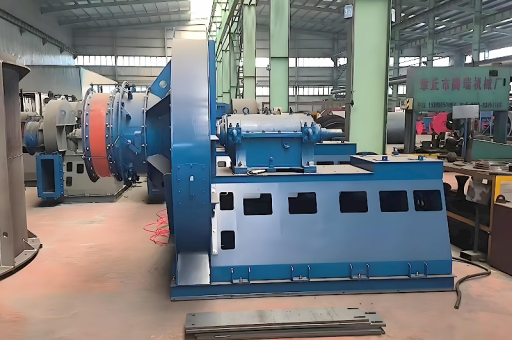
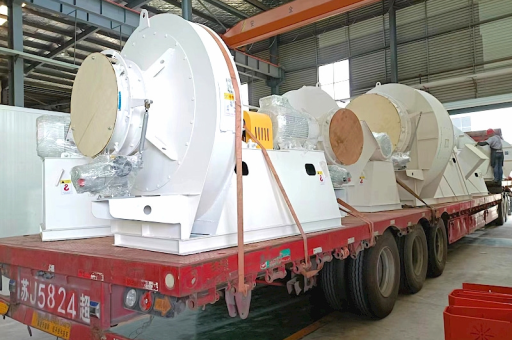
To understand the fan, you must first understand the system. A dust collection system relies on negative pressure. The Dust Collector Fan (often a high-static-pressure centrifugal fan) is mounted downstream of the filter or upstream, depending on the design.
The fan creates a vacuum at the collection points (grinding wheels, saw blades, sanding stations). This vacuum pulls air laden with dust, chips, and fumes through a network of ducts. The air, now moving at a calculated transport velocity (typically 4,000–5,000 feet per minute for fine dust), enters the collection unit. The fan must generate enough Static Pressure (SP) to overcome the resistance of the filter media (e.g., fabric bags, cartridge filters) and the friction loss in the ductwork.
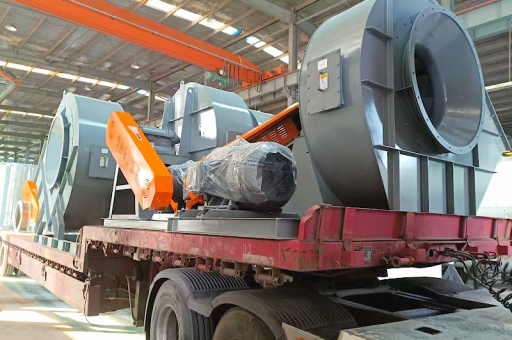
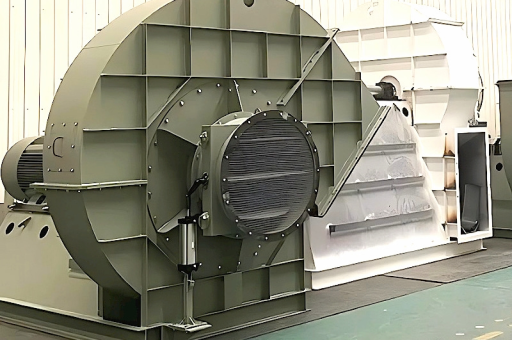
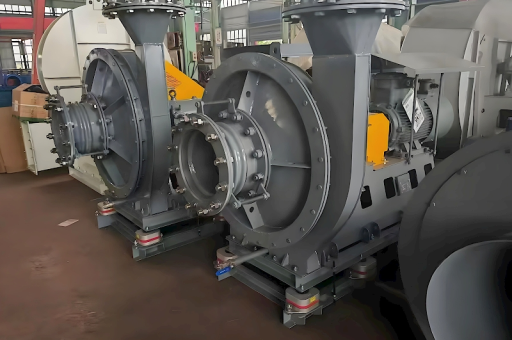
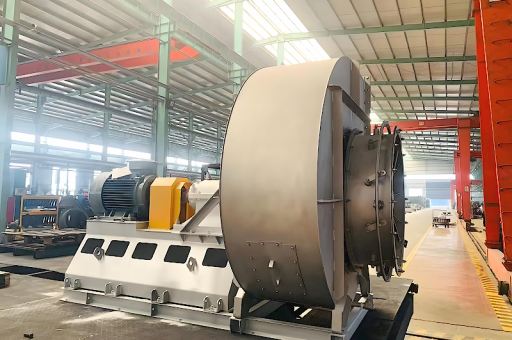
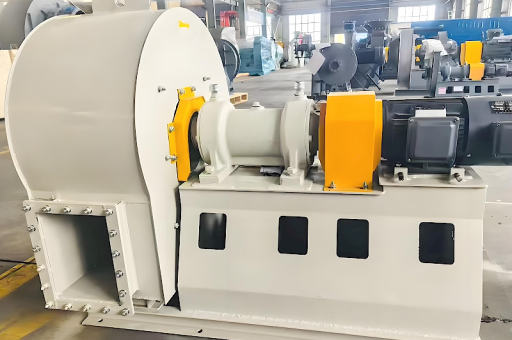
Key components of the fan include the impeller (wheel), housing, and drive mechanism. For abrasive dust, impellers are often constructed from steel or coated with wear-resistant materials. The motor horsepower directly correlates to the system's CFM (Cubic Feet per Minute) requirement.
Selection Criteria: Matching Fan Types to Workshop Needs
Not all fans are created equal. Selecting the wrong fan leads to poor dust capture, clogged ducts, or excessive noise.
Centrifugal vs. Axial Fans
The most common debate is between Centrifugal Fans and Axial Fans (like wall-mounted exhaust fans).
- Centrifugal Fans: These are the standard for dust collection. They use a rotating impeller to increase air pressure radially. They excel at generating the high static pressure needed to push air through long ducts and restrictive filters. They are more tolerant of minor dust loading on the wheel.
- Axial Fans: These move air parallel to the shaft (like a propeller). They are cheaper and quieter at low pressure but are unsuitable for dust collection. They cannot overcome the resistance of filter media or long duct runs. Using an axial fan in a dust system results in reduced airflow, fire risk due to dust accumulation on blades, and filter failure.
Key Performance Metrics (CFM, Static Pressure, SP)
The selection hinges on two numbers:
- CFM (Cubic Feet per Minute): The volume of air moved. Typically calculated by multiplying the cross-sectional area of the duct by the desired velocity.
- Static Pressure (SP): The resistance the fan must overcome. This is calculated by summing the pressure drops of the ductwork, hoods, and filters.
Buyer Beware: Many online retailers list "Free Air CFM" (no resistance). A fan moving 4,000 CFM at open inlet might only move 500 CFM when connected to a bag filter. Always demand the Fan Performance Curve to see CFM at your calculated SP.
System Integration: Ductwork, Filters, and Fan Synergy
A fan is only as good as the system it powers. A common mistake is buying a large fan but using undersized, flexible ductwork. Flexible ducts cause high friction loss, which starves the fan of air and allows dust to settle.
Critical Integration Rules:
- Transport Velocity: The duct system must maintain a minimum velocity (e.g., 4,500 FPM for wood dust) to keep particulate airborne.
- Filter Load: The fan must be selected for the dirty filter condition. As filters load with dust, SP increases. If the fan cannot handle the increased SP, airflow drops significantly.
- Wind Turbine Analogy: Think of the Dust Collector Fan like a wind turbine in reverse. A wind turbine extracts energy from moving air to generate power. Your dust collection fan adds energy to the air to move it. A poorly designed duct system is like a wind turbine with bad blades; it wastes energy. The fan must match the system impedance perfectly.
Operational Best Practices for Maximum Efficiency
To ensure your Dust Workshop Dust Collector Fans operate at peak performance:
- Clean or Replace Filters Regularly: Dirty filters are the #1 cause of airflow loss. Use a manometer to check the pressure drop across the filter.
- Check for Leaks: Leaks in the ductwork or at the collector housing reduce the vacuum at the tool. Use a smoke pencil or anemometer to find leaks.
- Verify Pulley Alignment: Belt-driven fans must have properly tensioned and aligned belts. Slipping belts reduce RPM and CFM.
- Never Use a Dimmer Switch: Fans are inductive loads. Using a standard dimmer will burn the motor. Use a Variable Frequency Drive (VFD) for speed control.
- Plan for Expansion: When designing the system, oversize the main trunk line by 20% to allow for future machine additions.
Comparative Analysis: Dust Collector Fan vs. Standard Ventilation Fan
| Feature | Dust Collector Fan | Standard Ventilation Fan |
|---|---|---|
| Primary Purpose | Capture & transport heavy particulate | General air exchange (heat, odors) |
| Static Pressure | High (6” – 15” W.G. or more) | Very Low (0.1” – 0.5” W.G.) |
| Airflow Pattern | High pressure, moderate volume | High volume, low pressure |
| Ductwork Ability | Long runs, multiple branches | Short runs, no restrictions |
| Filter Handling | Designed to push air through dense media | Will stall or fail with any filter |
| Impeller Design | Radial blades (paddle wheel, backward incline) | Propeller or axial blades |
| Dust Tolerance | Moderate (self-cleasing models exist) | Very low (dust causes imbalance) |
| Application | Woodshops, foundries, food processing | Bathrooms, kitchens, warehouses |
Verdict: You cannot substitute a standard fan for a dust collector fan. It will fail mechanically and fail to capture contaminants, creating an unsafe Dust Workshop.
FAQ: Common Questions About Dust Workshop Fans
Q: Can I use a used or reconditioned wind turbine fan for dust collection? A: No. While wind turbines and dust collector fans both move air, their design parameters are opposite. A wind turbine fan is optimized for low resistance and high efficiency at open flow. A dust collector fan is optimized for high resistance. Using a reconfigured wind turbine blade assembly will result in severe underperformance and potential motor burnout.
Q: How loud will my dust collector fan be? A: Noise is a function of speed and impeller design. Backward-curved centrifugal fans are quieter than radial paddle wheels. Expect an industrial centrifugal fan to produce 70-85 dB(A) at 3 feet. Ear protection is mandatory.
Q: Should I place the fan before or after the filter? A: This depends on the system type.
- Pull-Through (Fan after filter): The fan sees clean air, extending its life. Standard for fine dust collection.
- Push-Through (Fan before filter): The fan pushes dirty air into the filter. Used for high-temperature applications or when explosion vents are required. The fan is exposed to wear.
Q: My fan sounds like it’s rattling. What’s wrong? A: Common causes: (1) Impeller imbalance (dirt build-up or damaged blade). (2) Loose mounting bolts. (3) Bearing failure. (4) Surge/stall due to high static pressure. Shut down immediately and inspect.
Conclusion: Beyond Compliance—A Healthier, More Productive Workspace
The Dust Workshop Dust Collector Fan is more than an appliance; it is a core component of industrial hygiene and operational efficiency. By understanding the difference between centrifugal and axial fans, correctly sizing for static pressure, and maintaining the entire system, you transform a dusty hazard into a clean, productive environment. Whether you are building a new facility or retrofitting an existing shop, prioritize the fan curve over the price tag. A properly balanced system, matched to your filters and ductwork, pays for itself through reduced respiratory disease claims, longer tool life, and higher worker morale. Remember: if you can see the dust, your fan is either undersized, underperforming, or under-maintained. Act accordingly.