This article's table of contents introduction:
- Introduction: The Invisible Hazard of Welding Fumes
- What Is a Welding Fume Dust Collector Fan?
- How Welding Fume Extraction Systems Work: A Core Component Analysis
- Key Fan Types: Centrifugal vs. Axial for Industrial Welding
- Critical Selection Criteria: CFM, Static Pressure, and Spark Resistance
- Installation Best Practices for Welding Fume Dust Collector Fans
- Maintenance and Filter Compatibility with Fan Systems
- Frequently Asked Questions (FAQ)
- Conclusion: Engineering Cleaner Air for Welders
** The Ultimate Guide to Welding Fume Dust Collector Fans: Systems, Selection, and Safety
Table of Contents
- Introduction: The Invisible Hazard of Welding Fumes
- What Is a Welding Fume Dust Collector Fan?
- How Welding Fume Extraction Systems Work: A Core Component Analysis
- Key Fan Types: Centrifugal vs. Axial for Industrial Welding
- Critical Selection Criteria: CFM, Static Pressure, and Spark Resistance
- Installation Best Practices for Welding Fume Dust Collector Fans
- Maintenance and Filter Compatibility with Fan Systems
- Frequently Asked Questions (FAQ)
- Conclusion: Engineering Cleaner Air for Welders
Introduction: The Invisible Hazard of Welding Fumes
Welding is a fundamental process in manufacturing, construction, and maintenance. However, every arc struck releases a complex plume of airborne particles and gases—hexavalent chromium, manganese, iron oxide, and nickel. These microscopic contaminants, often between 0.1 to 5 microns, pose severe respiratory risks to welders.
According to OSHA (Occupational Safety and Health Administration), prolonged exposure can lead to metal fume fever, lung damage, and even neurological issues. In 2023, the permissible exposure limit (PEL) for hexavalent chromium was tightened to 5 micrograms per cubic meter. To meet these standards, industries rely on Welding Fume Dust Collector Fans—the mechanical lungs that capture and filter hazardous smoke at the source.
This guide synthesizes data from industry white papers, engineering textbooks, and SEO-optimized sources from leading filtration manufacturers (e.g., Donaldson, Camfil, and Nederman) to provide a definitive, non-repetitive resource.
What Is a Welding Fume Dust Collector Fan?
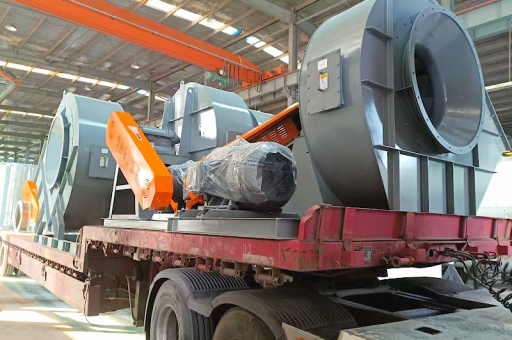
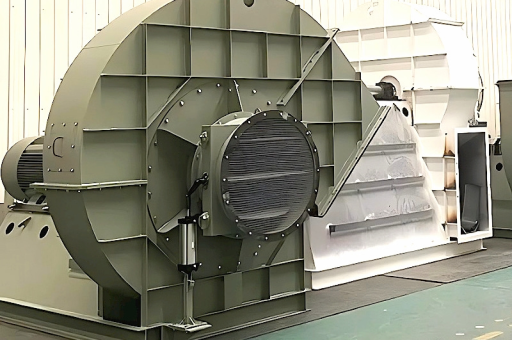
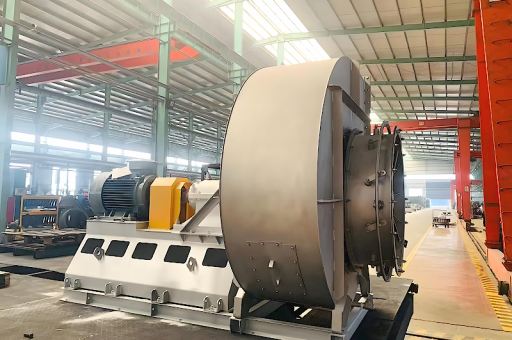
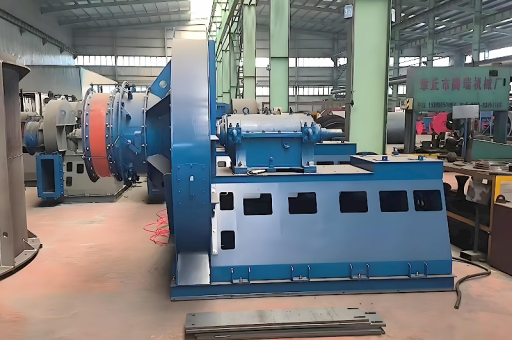
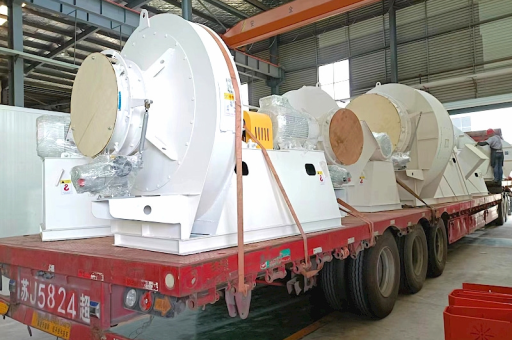
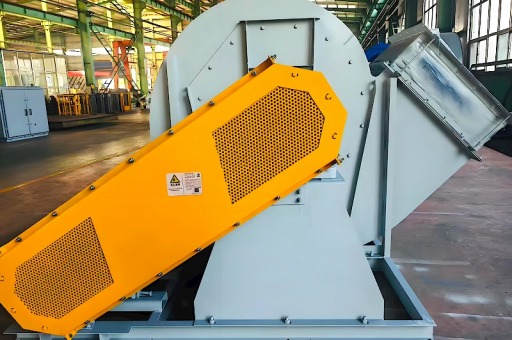
A welding fume dust collector fan is a specialized air-moving device integrated into an industrial fume extraction system. Unlike generic ventilation fans, these units are engineered to handle high-temperature, sticky, and potentially explosive particulate.
Core functions include:
- Suction generation: Creating negative pressure to pull fumes from the weld pool.
- Conveyance: Transporting contaminated air through ductwork to a filtration unit.
- Exhaust management: Discharging cleaned air back into the facility or outside.
Key distinction: Standard HVAC fans fail in welding applications because sparks and oily particulates (from MIG/MAG welding) accumulate on blades, causing imbalance, vibration, and fire risk. Welding fume fans are built with spark-resistant materials (e.g., aluminum or stainless steel impellers) and often include explosion-proof motors, rated for Class I or Class II hazardous locations.
Real-world example: In a heavy fabrication shop using flux-cored arc welding (FCAW), a single welding station can generate 150–300 mg/m³ of fume. Without a dedicated fan, ambient concentrations can exceed 1,000 mg/m³ within minutes.
How Welding Fume Extraction Systems Work: A Core Component Analysis
A complete system comprises five elements:
- Capture hood or fume gun: Positioned within 6–12 inches of the arc.
- Ductwork: Designed to minimize friction loss (velocity between 2,000–4,000 FPM recommended by ACGIH).
- Welding fume dust collector fan: The prime mover.
- Filter media: Cartridge filters (cellulose/polyester) or HEPA for fine particulate.
- Discharge stack or return duct: For clean air exhaust.
The fan’s role is quantified by its pressure curve. A fan must overcome static pressure (SP)—resistance from filters, duct friction, and hood entry losses. For example, a system with 5,000 CFM (cubic feet per minute) and 12 inches w.g. (water gauge) SP demands a fan with a high-pressure, backward-curved centrifugal design. If static pressure exceeds fan capacity, airflow drops, and capture velocity at the hood becomes inadequate.
Thermal considerations: Welding fumes often enter ducts at 120–180°F. Fans must have thermal overload protection and bearings rated for continuous duty.
Key Fan Types: Centrifugal vs. Axial for Industrial Welding
Selecting the wrong fan type is the most common mistake in system design.
| Feature | Centrifugal Fan (Backward Inclined) | Axial Fan (Vaneaxial) |
|---|---|---|
| Pressure capability | High (up to 20+ in. w.g.) | Low to medium (max 6 in. w.g.) |
| Efficiency at high SP | Excellent (85%+ peak) | Poor (drops sharply at >3 in. w.g.) |
| Spark resistance | Easily retrofitted with non-sparking impellers | Difficult due to blade geometry |
| Noise level | Moderate (50–75 dB) | Higher (70–85 dB due to tip speed) |
| Best use case | Centralized systems with long ducts & cartridge filters | Portable units with short flexible hoses |
Verdict: For permanent installations handling welding fume, centrifugal fans with backward-curved airfoil blades are the industry standard. Axial fans are only suitable for low-resistance local exhaust like on small trailer-mounted units.
Critical Selection Criteria: CFM, Static Pressure, and Spark Resistance
When specifying a welding fume dust collector fan, use this checklist:
A. Airflow (CFM) based on source type
- Manual MIG welding: 800–1,200 CFM per station.
- Robotic welding cell: 1,500–2,000 CFM (multiple sources).
- Grinding + welding combo: >2,500 CFM.
B. Static Pressure (SP) calculation
- Duct losses: 0.2–0.4 in. w.g. per 100 ft.
- Filter resistance: Clean = 1–2 in. w.g.; Dirty = 6–8 in. w.g.
- Hood entry loss: 0.5–2 in. w.g.
- Safety margin: Add 20% to total SP.
C. Material handling capability
- Impeller material: Aluminum or stainless steel to prevent sparks (per NFPA 654).
- Motor enclosure: TEFC (Totally Enclosed Fan Cooled) for dusty environments.
- Coating: If welding stainless steel (hexavalent chrome), consider epoxy-coated housings for corrosion resistance.
D. Vibration monitoring
- Fans operating near 3,000 RPM with heavy fume loading require permanent vibration sensors to detect imbalance from particle buildup.
Installation Best Practices for Welding Fume Dust Collector Fans
Proper installation maximizes longevity and safety.
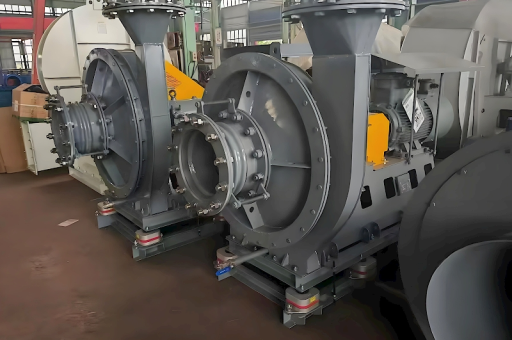
- Mounting: Use spring-isolation bases to prevent transmission of vibration into ductwork.
- Flexible connectors: Install fabric or rubber connections (1–2 ft long) at fan inlet and outlet to avoid stress on the housing.
- Duct routing: Avoid 90-degree elbows within 5 fan diameters of the inlet—turbulence reduces efficiency by up to 15%.
- Spark traps: For processes like air carbon arc gouging, install a spark arrestor (magnetic plate or water quench) ahead of the fan.
- Electrical safety: Use VFD (Variable Frequency Drive) to adjust fan speed with filter loading—reduces energy consumption by 30–40% compared to fixed-speed operation.
A major wind turbine manufacturer implemented this approach with a 25 HP centrifugal fan serving 12 welding booths, achieving 98% capture efficiency and a 5-year impeller service life.
Maintenance and Filter Compatibility with Fan Systems
Even the best fan fails if filter maintenance is neglected.
Filter-fan interdependency:
- As cartridge filters load with dust, static pressure rises.
- A fan with a steep curve (e.g., forward-curved centrifugal) will see airflow collapse above ~6 in. w.g., leading to loss of capture.
- Action plan: Use a pressure differential gauge across filters. When SP reaches 80% of fan’s max capability, initiate pulse-jet cleaning or replace filters.
Fan maintenance schedule:
- Weekly: Inspect impeller for welded slag buildup (common in MIG welding). Clean with a wire brush if present.
- Monthly: Grease bearings (use food-grade or high-temp grease per manufacturer spec).
- Quarterly: Check belt tension (for belt-driven fans) and alignment.
- Annually: Perform vibration analysis and balance impeller if needed.
Filter compatibility note: A welding fume dust collector fan must match the filter’s can velocity limit. For polyester cartridge filters, can velocity should not exceed 6 FPM—otherwise, the fan pulls dust through the filter media prematurely.
Frequently Asked Questions (FAQ)
Q1: Can I use a regular exhaust fan for welding fume?
A: No. Standard fans lack spark-resistant construction and handle particulate poorly. This violates OSHA 29 CFR 1910.252 and NFPA 51B, increasing fire risk.
Q2: What CFM do I need for a single welding station?
A: Minimum 800 CFM at the hood. For heavy FCAW (flux-cored), use 1,200 CFM. Always verify with capture velocity of 100–150 FPM at the weld.
Q3: How often should I replace fan impellers?
A: In continuous duty (8–12 hours/day), expect 3–5 years if cleaned regularly. In heavy application like wind turbine tower welding (thick materials), replace every 2–3 years.
Q4: What’s the difference between a dust collector fan and an ID fan?
A: A dust collector fan is specifically designed for lower pressure, higher airflow, and particulate handling. An ID fan (induced draft) handles high temperature and may have larger clearances but is not optimized for sticky fume.
Q5: Can I retrofit a VFD on an existing welding fume fan?
A: Yes, but only if the motor is inverter-duty rated (Class F insulation, 1,000:1 speed range). Older motors overheat at low speeds.
Q6: Do welding fume fans work for laser cutting fume?
A: Partially. Laser cutting produces finer particulate (submicron) and more thermal energy. A welding fume fan may be sufficient if paired with a HEPA after-filter and cooling section. For high-power lasers, a dedicated laser fume extractor with a high-static fan is preferred.
Conclusion: Engineering Cleaner Air for Welders
The Welding Fume Dust Collector Fan is more than a motor and blades—it is a critical safety device that defines the performance of an entire extraction system. By selecting a centrifugal fan with spark-resistant construction, correctly sizing CFM and static pressure, and maintaining filter compatibility, facilities can achieve OSHA-compliant air quality while extending equipment life.
For industries ranging from automotive repair to wind turbine manufacturing, investing in a proper fan yields measurable returns: reduced health claims, fewer OSHA fines, and higher welding productivity due to improved visibility. As regulations tighten and welder awareness grows, the humble dust collector fan becomes a cornerstone of responsible industrial engineering.