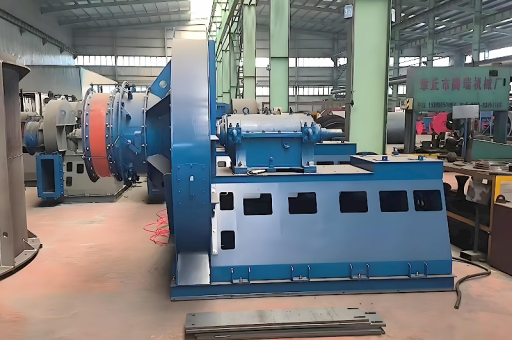
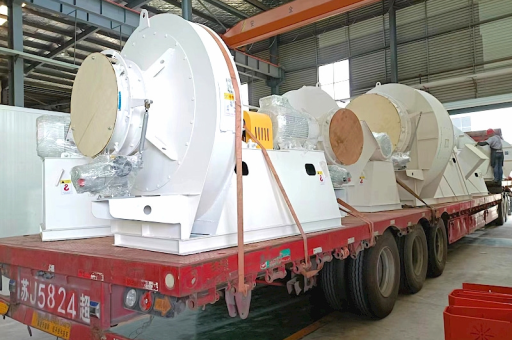
This article's table of contents introduction:
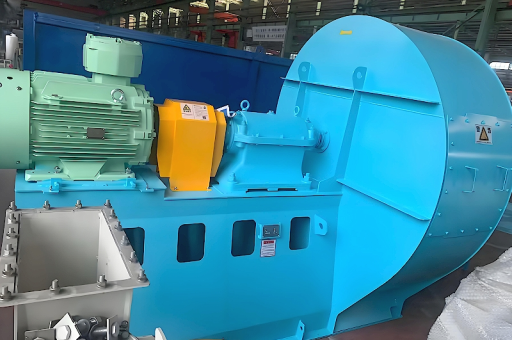
- What is an Explosion-Proof Induced Draft Fan?
- Where are They Used? (Key Applications)
- Key Design & Construction Features (The "Explosion-Proof" Difference)
- Comparison: Explosion-Proof ID Fan vs. Standard ID Fan
- Critical Safety & Regulatory Standards
- Selection Considerations
- Summary
Here is a comprehensive explanation of Explosion-Proof Induced Draft Fans, covering what they are, where they are used, key design features, and how they differ from standard fans.
What is an Explosion-Proof Induced Draft Fan?
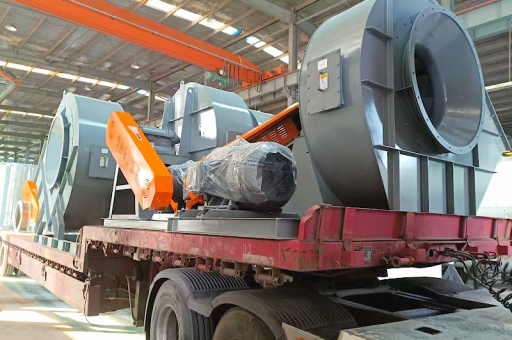
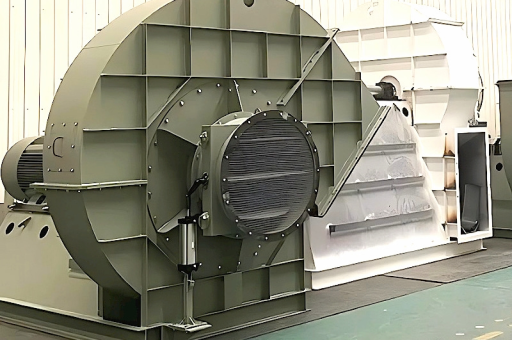
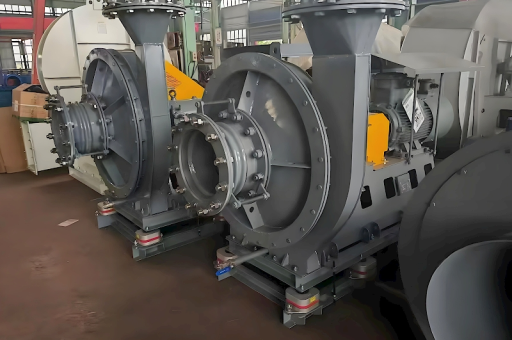
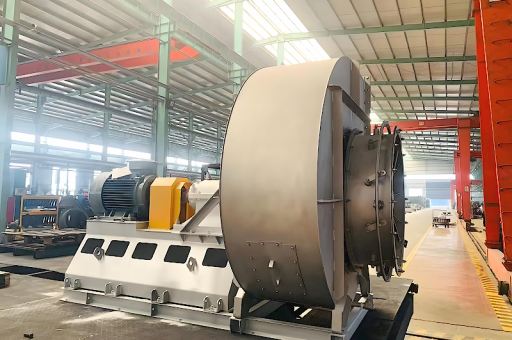
An Explosion-Proof Induced Draft Fan is a specialized industrial fan designed to safely handle and move potentially explosive or flammable gases, vapors, or dust-laden air from a process or space.
- Induced Draft (ID): The fan is placed after the process (e.g., boiler, furnace, or reactor). It creates a negative pressure (vacuum) to pull or "induce" the exhaust gases out of the system and into the exhaust stack or pollution control equipment.
- Explosion-Proof: The fan is constructed and certified to prevent the ignition of a surrounding explosive atmosphere. This means any internal spark, flame, or hot surface is contained within the fan housing and cannot escape to ignite the external environment.
Where are They Used? (Key Applications)
These fans are critical for safety in industries where explosive atmospheres are present:
- Chemical & Petrochemical Plants: Moving volatile organic compounds (VOCs), solvent vapors, or flammable gases from reactors, distillation columns, and storage tanks.
- Oil & Gas Industry: Exhaust from flare stacks, hydrogen sulfide (H₂S) removal units, and hydrocarbon processing.
- Pharmaceutical Manufacturing: Removing flammable solvent vapors from dryers, coaters, and reactors.
- Wastewater Treatment: Exhaust from confined spaces like digesters or lift stations, where methane or hydrogen sulfide can accumulate.
- Mining & Tunnels: Ventilating areas with potential for methane or explosive coal dust.
- Paint & Coating Booths: Exhaust systems in spray booths using flammable solvents.
- Power Plants: Handling coal dust or syngas in specialized applications.
Key Design & Construction Features (The "Explosion-Proof" Difference)
This is the most critical section. Standard fans are NEVER acceptable in these environments.
-
Non-Sparking Materials (The Most Important Feature):
- Impeller: Made from aluminum, bronze, copper-beryllium alloy, or 316L stainless steel (highly corrosion resistant but can spark if struck). Aluminum is most common.
- Housing (Scroll/Casing): Usually cast iron or carbon steel. The inside of the housing may be treated or lined.
- The Spark Gap: The critical design feature is that the impeller is made of a non-sparking material, while the housing is a different metal (e.g., steel). If the impeller rubs or strikes the housing, the impact is between two dissimilar metals, which is far less likely to produce a spark than metal-on-metal (like steel-on-steel).
-
Spark-Tight Construction:
- The fan housing is designed to prevent any flame or hot gas from escaping if an internal explosion occurs.
- Minimum Clearance: A very tight (but safe) gap between the rotating impeller and the inlet ring (cone) prevents sparks from traveling out.
- Shaft Seal: A mechanical seal or packing gland prevents leakage of flammable gas along the rotating shaft.
- Drain Plugs: Often include spark-proof drain plugs to remove condensate.
-
Motor & Drive Components:
- The Motor is NOT the fan. The explosion-proof rating applies to the entire assembly.
- Certified Motor: The electric motor must be a certified explosion-proof motor (e.g., Class I, Division 1, Groups C & D for gases; or Class II, Division 1, Groups E, F, G for dusts).
- Belt Drives (if used): Explosion-proof belt drives use static-conductive belts and grounded sheaves (pulleys) to prevent static electricity buildup.
- Direct Drive: Often preferred to eliminate belt sparking and misalignment issues.
-
Grounding:
- The entire fan assembly, including the housing, motor, and ductwork, must be electrically bonded and grounded to a certified earth ground to dissipate static charges.
-
Temperature Classification:
- The fan's maximum surface temperature (including the impeller and housing) must be lower than the auto-ignition temperature of the gas or dust in the environment. This is marked with a T-Code (e.g., T3 < 200°C, T4 < 135°C).
Comparison: Explosion-Proof ID Fan vs. Standard ID Fan
| Feature | Standard Induced Draft Fan | Explosion-Proof Induced Draft Fan |
|---|---|---|
| Primary Purpose | Move exhaust gases (air, steam, CO2) | Move flammable gases, vapors, or dust |
| Impeller Material | Carbon Steel, Stainless Steel | Non-sparking (Aluminum, Bronze, Beryllium Copper) |
| Housing Construction | Welded Steel | Cast Iron, thick steel, with flame-arresting gaps |
| Spark Risk | High (steel-on-steel contact) | Very Low (dissimilar metals, tight clearances) |
| Motor | Standard TEFC or ODP | Explosion-Proof Certified (e.g., UL, ATEX, IECEx) |
| Certification | None required | Mandatory (Class I/Div 1/Group D; Class I/Zone 1/IIB) |
| Cost | Low to Moderate | Very High (2-5x the cost of a standard fan) |
| Maintenance | Standard | Critical; must maintain spark gaps and grounding |
Critical Safety & Regulatory Standards
- NFPA 68: Explosion Venting (if the fan is not strong enough to contain a deflagration).
- NFPA 496: Purged and Pressurized Enclosures for Electrical Equipment.
- ATEX (EU): Directive 2014/34/EU (Equipment for potentially explosive atmospheres).
- IECEx (International): International System for Certification to Standards relating to equipment for use in Explosive Atmospheres.
- NEC / CEC (North America): Article 500/505 (Hazardous Locations).
Selection Considerations
When choosing an explosion-proof ID fan, you must know:
- Gas/Dust Group (Class I, II, III): What specific substance is being handled?
- Temperature Class (T-Code): What is the auto-ignition temperature?
- Air Volume (CFM) & Static Pressure (inches w.g.): Standard fan performance data.
- Gas Temperature: The fan must handle the process temperature (e.g., 250°F flue gas vs. 80°F solvent vapor).
- Corrosion: The gas may be acidic (e.g., H₂S, HCl). Choose compatible materials (e.g., FRP, Hastelloy, coated steel) even if it's explosion-proof.
Summary
An Explosion-Proof Induced Draft Fan is a high-integrity, safety-critical component used downstream of a process to pull flammable gases through a system. Its core safety feature is non-sparking construction (dissimilar metals), a certified explosion-proof motor, and full grounding to prevent ignition. It is required by law (NEC/ATEX/IECEx) in any environment where a flammable atmosphere exists. Never substitute a standard fan—the consequences can be catastrophic.