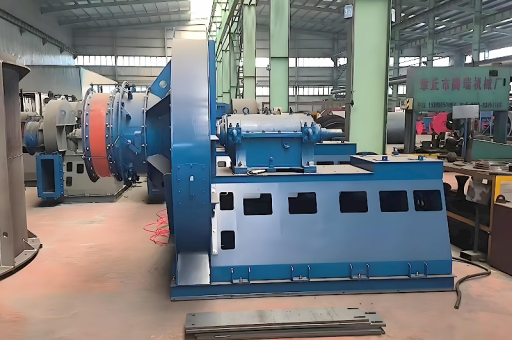
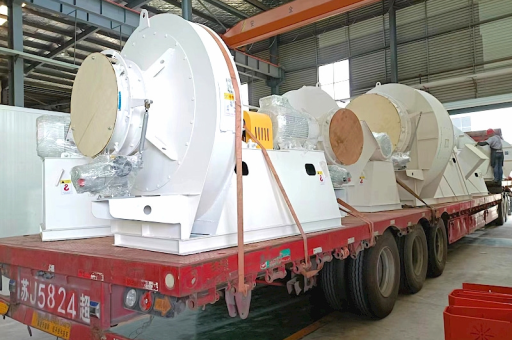
This article's table of contents introduction:
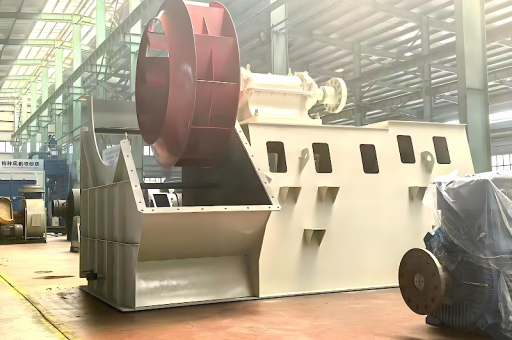
- What is it?
- How it Works
- Key Characteristics & Design [Crucial for Reliability]
- Types of Dust Removal ID Fans
- Common Applications
- Common Problems & Maintenance
- Summary
This is a specific piece of industrial equipment. Here is a comprehensive breakdown of what a Dust Removal Induced Draft Fan is, how it works, and its key characteristics.
What is it?
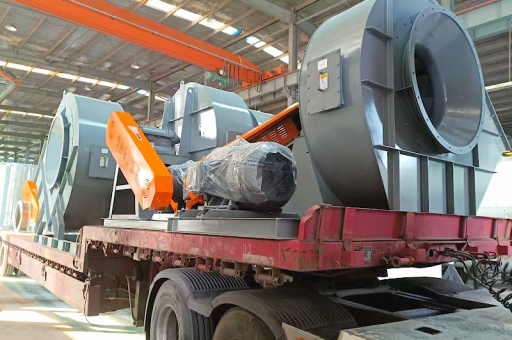
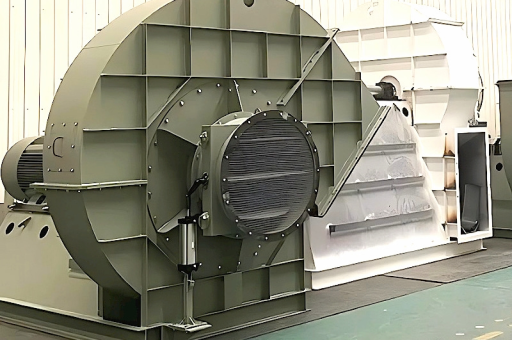
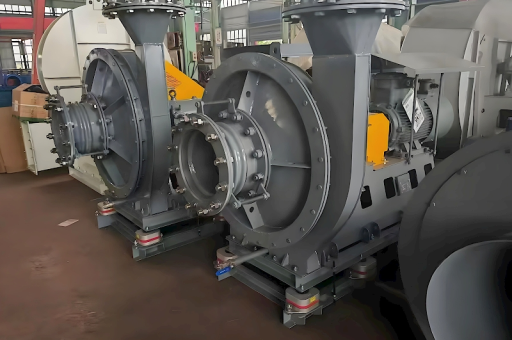
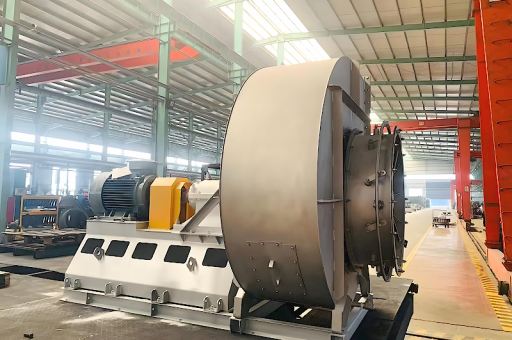
A Dust Removal Induced Draft (ID) Fan is a high-powered fan located at the "dirty" side of an air pollution control system (like a baghouse, cyclone, or scrubber). Its primary function is to pull (induce) air, gas, and dust particles through the collection system and exhaust them safely into the atmosphere or a further treatment stage.
It is the "engine" of the entire dust collection system, creating the necessary negative pressure (vacuum) to capture fugitive dust at its source.
How it Works
- Negative Pressure: The fan's rotation pulls air out of the ductwork and collection hoppers, creating a vacuum.
- Airflow: This vacuum draws dust-laden air from process equipment (grinders, conveyors, furnaces, woodworking machines) through hoods and ducts.
- Filtration: The air passes through a dust collector (e.g., baghouse filters, cartridge filters).
- Exhaust: The cleaned air is then pulled through the ID fan and discharged through a stack.
Key Characteristics & Design [Crucial for Reliability]
Unlike standard HVAC fans, dust removal fans are built to survive harsh, abrasive, and sometimes corrosive conditions.
-
Heavy-Duty Construction:
- Housing: Thicker steel plate to withstand wear from particle impact and potential pressure fluctuations.
- Impeller: Made of wear-resistant steel (e.g., abrasion-resistant steel, or with sacrificial liners).
-
Sturdy Impeller Design:
- Radial or Paddlewheel Blades: Most common for high dust loads. These blades are simple, strong, and resist material buildup.
- Backward-Inclined Blades: More efficient for cleaner air or lower dust concentrations (less prone to dust sticking).
- Airfoil Blades: Most efficient but only used on the clean air side (after the filter) because they are delicate.
-
Abrasion Resistance:
- Wear Liners: The fan housing (volute) often has replaceable wear plates or liners (often made of ceramic or hardened steel) at the "cutoff" and impeller tip area.
- Impeller Hardening: The leading edges of the impeller blades may be hard-faced with weld-on carbide or Stellite.
-
Self-Cleaning Features:
- Dust buildup on the impeller can cause catastrophic vibration (imbalance) and structural failure.
- Some designs have fan cleaner ports (compressed air nozzles) or scraper plates to prevent material from sticking.
-
Shaft Seal & Bearing Protection:
- Dust must be prevented from reaching bearings. This is achieved with shaft seals (labyrinth seals, purge air seals) and bearing isolators.
- Bearings are often located outside the fan housing or in a sealed, purged chamber.
-
Variable Speed Drive (VSD):
Most modern systems use a VFD (Variable Frequency Drive) to control the fan speed. This allows for precise airflow control, energy savings, and soft-starting (reducing mechanical stress).
Types of Dust Removal ID Fans
| Type | Best For | Key Feature |
|---|---|---|
| Radial / Paddlewheel | Heavy dust loads (wood, metal, cement) | Simple, strong, handles large particles. Lower efficiency. |
| Backward Inclined (BI) | Medium dust loads (general industrial, after a pre-separator) | Higher efficiency, self-cleaning blade profile. |
| Airfoil | Clean air (after a high-efficiency filter) | Highest efficiency, quietest, but fragile. |
Common Applications
- Cement Plants: Exhaust from kilns, clinker coolers, and grinding mills.
- Woodworking: Dust collection for sawdust, chips, and sanding dust.
- Metalworking: Fume extraction from welding, plasma cutting, and grinding.
- Chemical Processing: Removing corrosive or abrasive dusts (often with special coatings).
- Power Plants: For coal mills and ash handling systems.
- Mining: Ventilation and dust control in processing plants.
Common Problems & Maintenance
- Imbalance: The #1 killer of dust fans. Caused by:
- Material buildup (e.g., wet dust, resinous wood dust).
- Erosion (uneven wear of blades).
- Foreign object damage (a tool or rock getting into the fan).
- Bearing Failure: Due to contamination (dust ingress) or overheating.
- Vibration: Usually linked to imbalance or bearing wear. Requires routine vibration monitoring.
- Erosion/Cutting: The housing and impeller wear thin over time. Solution: Maintain a wear log and replace liners preemptively.
- Motor Overheating: Often caused by operating outside the fan's design curve (e.g., a filter is clogged, changing the system resistance).
Summary
A Dust Removal Induced Draft Fan is not just a fancy blower. It is a rugged, specialized piece of machinery engineered to handle the worst-case scenario: high temperatures, abrasive particles, and corrosive gases. Its reliability is critical because if the fan fails, the entire dust collection system stops, and production usually has to shut down immediately to avoid environmental or safety violations.
In short: It is the "engine" that pulls the dirt from your process and throws it into the filter, all while surviving the assault.