This article's table of contents introduction:
- What is a Boiler Induced Draft Fan?
- Key Function
- How It Works (The Path of Flue Gas)
- Types of Induced Draft Fans
- Key Differences: ID Fan vs. FD Fan
- Common Problems & Challenges
- Control & Operation
- Summary
Here is a comprehensive explanation of a Boiler Induced Draft (ID) Fan.
What is a Boiler Induced Draft Fan?
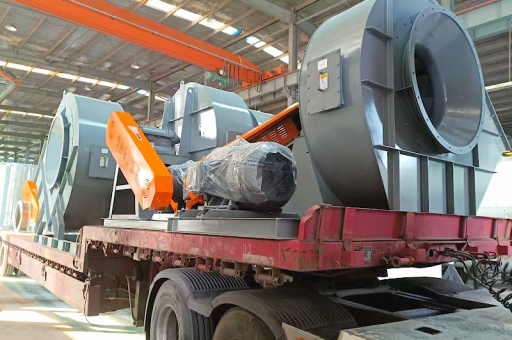
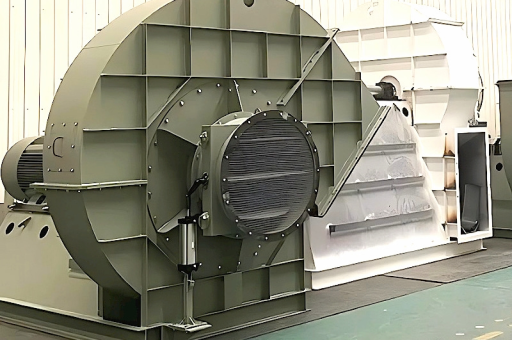
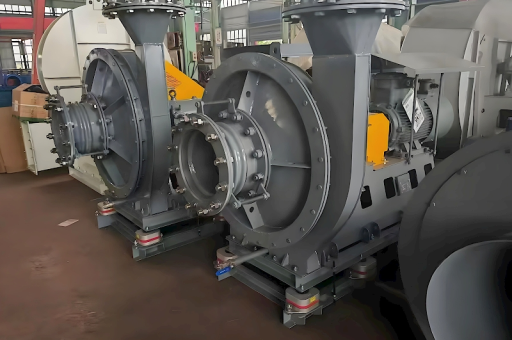
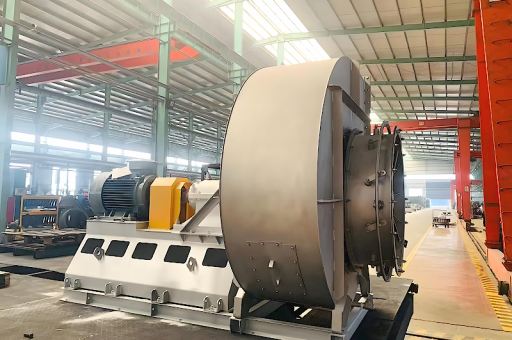
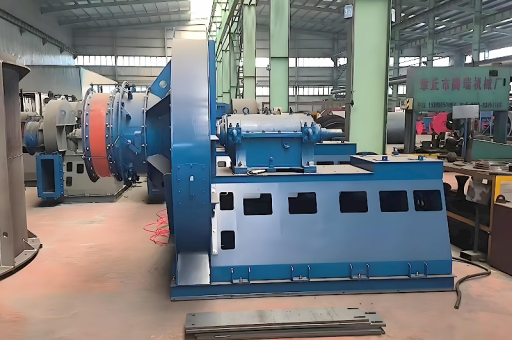
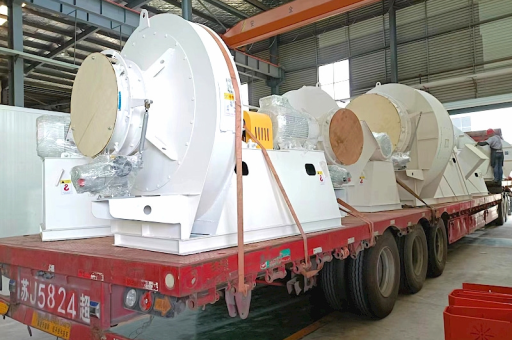
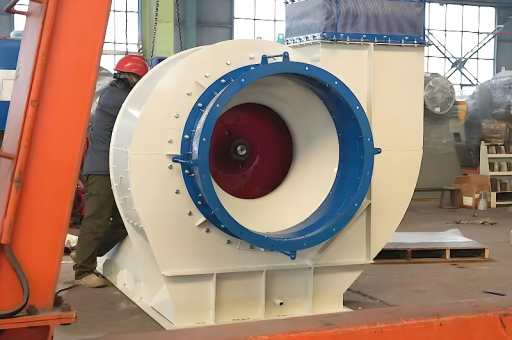
An Induced Draft (ID) Fan is a large, heavy-duty fan located at the exit of a boiler system (usually after the electrostatic precipitator, baghouse, or scrubber). Its primary function is to pull or suck the flue gas (exhaust gases) from the boiler furnace, through the air pollution control equipment, and discharge it up the chimney (stack).
Think of it as the "tail end" of the boiler's air system. While the Forced Draft (FD) fan pushes fresh air into the boiler, the ID fan pulls the spent gases out.
Key Function
The main job of the ID fan is to maintain a slightly negative pressure (vacuum) inside the boiler furnace.
- Why Negative Pressure? This is a critical safety feature. Negative pressure prevents hot, toxic flue gases and flames from leaking out of the boiler casing and into the boiler room. It ensures that any leaks are inward (air leaking in) rather than outward (dangerous gases leaking out).
How It Works (The Path of Flue Gas)
- Combustion: Fuel burns in the furnace, creating hot flue gas.
- Heat Transfer: The gas travels through the boiler's heat exchangers (superheater, reheater, economizer, air heater), transferring its heat to water/steam.
- Cleaning: The gas then passes through pollution control equipment (ESP, baghouse, FGD scrubber). These components create significant resistance (draft loss).
- ID Fan: The ID fan provides the powerful suction needed to overcome this resistance and pull the gas through the entire system.
- Stack: The fan pushes the cleaned gas up the stack and into the atmosphere.
Types of Induced Draft Fans
-
Centrifugal Fan (Radial):
- How it works: Air enters the center (eye) of a rotating impeller and is flung outward by centrifugal force.
- Pros: Handles high temperatures (up to 400°C / 750°F), handles abrasive or particulate-laden gas well, durable, high pressure capability.
- Cons: Less efficient than axial fans, larger.
- Best for: Older plants, coal-fired boilers, applications with dirty gas (before particulate control).
-
Axial Fan (Vaneaxial - often Variable Pitch):
- How it works: Air flows along the axis of the rotating blades, like a jet engine or a household fan.
- Pros: Very high efficiency, compact design, excellent for variable flow control (by changing blade pitch while the motor runs at constant speed).
- Cons: More expensive, less tolerant of high temperatures or very dirty/abrasive gas.
- Best for: Modern high-efficiency plants, gas-fired boilers, installations downstream of effective particulate control (clean gas side).
Key Differences: ID Fan vs. FD Fan
| Feature | Induced Draft (ID) Fan | Forced Draft (FD) Fan |
|---|---|---|
| Location | End of the boiler (after pollution controls) | Beginning of the boiler (before the furnace) |
| Function | Pulls flue gas out of the furnace | Pushes air into the furnace |
| Gas Handled | Hot, dirty, corrosive flue gas | Clean, cold, fresh ambient air |
| Pressure | Creates negative pressure (vacuum) in furnace | Creates positive pressure in air ductwork |
| Material | Heavier duty, erosion/corrosion resistant | Lighter duty, standard materials |
| Temperature | High (100°C - 200°C+, depending on gas path) | Ambient (15°C - 40°C) |
Common Problems & Challenges
- Erosion: Abrasive fly ash particles in the flue gas can wear down the fan blades and housing over time. This is a major issue for coal-fired boilers. Solution: Hard-facing the blades with weld overlay or using ceramic tiles.
- Corrosion: If the flue gas temperature drops below the acid dew point (the temperature at which sulfuric acid condenses from the gas), it can severely corrode the fan. This is common when burning high-sulfur coal or during low-load operation. Solution: Maintaining gas temperature above the dew point, using corrosion-resistant alloys (e.g., Corten steel, stainless steel).
- Vibration: Imbalance due to uneven erosion, wear, or fly ash buildup on the blades. This can lead to bearing failure and structural damage. Solution: Regular cleaning, balancing, and vibration monitoring.
- High Power Consumption: ID fans are often the single largest electrical load in a power plant. Inefficient operation or excessive draft loss in the system can waste significant energy.
Control & Operation
ID fans are not simply turned on/off. Their speed or blade pitch is modulated to match the boiler's load.
- Dampers: Louvers or vanes in the ductwork that open/close to control gas flow. Simple but inefficient.
- Variable Inlet Vanes: Guide vanes at the fan's inlet that spin the incoming air to reduce load. More efficient than simple dampers.
- Variable Speed Drive (VSD): Uses an electronic drive to change the fan motor's speed. This is the most energy-efficient method, as fan power is proportional to the cube of the speed (e.g., running at 80% speed uses only 51% power).
- Variable Pitch Blades (Axial Fans): The angle of the fan blades is hydraulically or pneumatically adjusted to change gas flow while the motor runs at a constant speed. Very efficient and responsive.
Summary
The Boiler Induced Draft Fan is the unsung hero of the power plant or industrial boiler house. It is the crucial component that:
- ✅ Pulls harmful flue gases safely out of the boiler.
- ✅ Maintains a safe negative pressure in the furnace.
- ✅ Overcomes the resistance of the entire gas path, including pollution control equipment.
- ✅ Discharges gases to the stack for dispersion.
Without a properly working ID fan, the boiler cannot operate safely or efficiently. It is a critical piece of machinery that requires careful design, robust construction, and diligent maintenance.