This article's table of contents introduction:
- The Core Challenge: The "Electroplating Trio"
- Type of Fans Required
- Critical Design Features
- Key Applications in an Electroplating Line
- Sizing & Selection (Quick Rules of Thumb)
- Common Mistakes & Dangers
- Best Practice for System Design
- Recommended Suppliers (for USA/Global)
This is a critical topic. Electroplating workshops require specialized fans because the environment is highly corrosive, explosive, and toxic. Standard HVAC fans will fail within weeks (or days) and pose a serious safety risk.
Here is a breakdown of the requirements, types, and key considerations for electroplating workshop fans.
The Core Challenge: The "Electroplating Trio"
- Corrosive Fumes: Acid mists (Hydrochloric, Sulfuric, Nitric), alkaline fumes (Cyanide), and chromic acid.
- Explosive Risk: Hydrogen gas is released during the plating process.
- Toxicity: Cyanide salts, heavy metals (Chromium VI), and solvent vapors.
Type of Fans Required
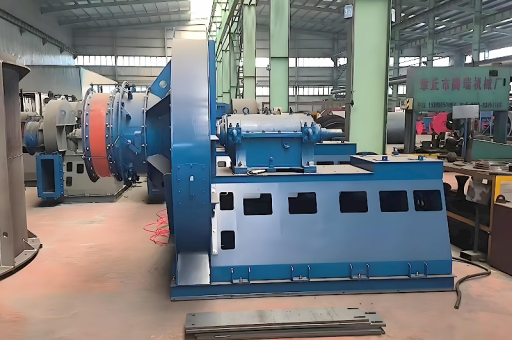
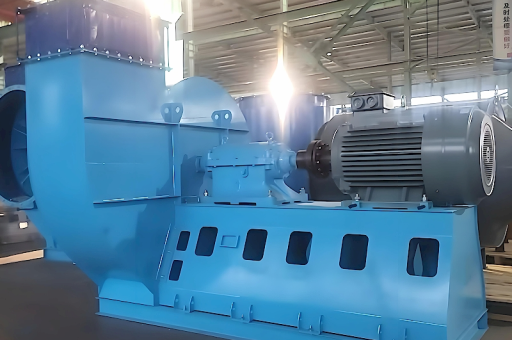
You generally need Centrifugal Fans (not axial), specifically designed for chemical service. The two main types are:
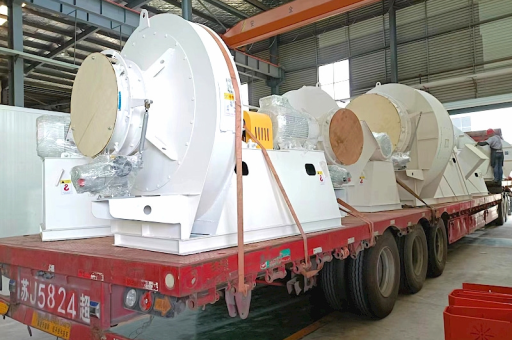
FRP (Fiberglass Reinforced Plastic) Fans (PREFERRED)
- Material: Fiberglass casing, PVC/Polypropylene impeller.
- Why: Highly resistant to almost all acids and alkalis. Non-sparking (important for Hydrogen). Lighter than metal.
- Pros: Highest corrosion resistance. Longest lifespan in electroplating.
- Cons: Higher initial cost. Lower temperature limit (~80-90°C / 175-195°F).
PVC / PP (Polyvinyl Chloride / Polypropylene) Fans
- Material: Solid plastic construction. Options: PVC (common, weaker), PP (stronger, better chemical resistance), or PVDF (for high temp + high chemical resistance).
- Why: Very good chemical resistance. Lower cost than FRP.
- Pros: Inherently non-corrosive. Good for fume extraction.
- Cons: Lower structural strength (can warp in high heat). Require proper support.
*Absolute No-No:* Standard Carbon Steel or Galvanized Fans.** Even "coated" ones will fail quickly. Stainless Steel (304/316) is sometimes used but is expensive and can still be attacked by chlorides and strong acids.
Critical Design Features
- Spark-Free Construction: The impeller (wheel) must be non-metallic (FRP, Polypropylene, PVC) or made of Monel/Aluminum if metal must be used. FRP/Plastic impellers create no sparks.
- Explosion-Proof Motor: The motor must be TEFC (Totally Enclosed Fan Cooled) or Explosion-Proof (XP) , specifically rated for Class 1, Division 1 or 2, Group D (for Hydrogen). The motor should be mounted outside the airstream (belt-driven) or with a shaft seal to prevent fumes reaching the motor.
- Motor Isolation (Belt Drive): The motor is mounted outside the duct, connected by a belt and shaft. This keeps the motor out of the corrosive airstream and prevents spark generation from a motor failure. This is the gold standard.
- Drain Provision: The fan casing must have a drain plug to remove condensation and acid residue buildup.
- Sealed Bearings: Bearings must be sealed and rated for the environment.
- Gaskets: All joints must have chemical-resistant gaskets (EPDM, Viton, Teflon).
Key Applications in an Electroplating Line
| Application | Fan Type & Material | Critical Requirement |
|---|---|---|
| Tank Side Exhaust (Lip/Vent) | Centrifugal, FRP or PVC | High static pressure to pull air across the tank surface. |
| General Room Ventilation | Centrifugal, FRP or PVC | Lower static pressure. Must handle humidity. |
| Scrubber Exhaust (Fume Scrubber) | Centrifugal, FRP | Designed for high static pressure to push through the scrubber media. |
| Cyanide Line | FRP or PVC, Spark-Free | Separate ventilation from acid lines to prevent mixing fumes (Hydrogen Cyanide formation). |
| Chrome Line | FRP (for corrosion) + Mist Eliminator | Must handle Chromic Acid mist (HEPA filter recommended). |
Sizing & Selection (Quick Rules of Thumb)
- Airflow (CFM): Calculate based on tank surface area. Standard is 50-100 CFM per square foot of tank surface (for open tanks) or 100-150 CFM per sq ft for chrome plating due to higher mist generation.
- Static Pressure (SP): Account for:
- Fan itself: ~1-3" w.g.
- Ductwork: ~1-5" w.g. (PVC/FRP duct is smooth, reduces friction).
- Scrubber: ~4-6" w.g.
- Total: Expect 6-10" w.g. (stationary water gauge) .
- Temperature: Check the temperature of the plating bath. For high-temp operations (e.g., hard chrome > 140°F), you need PP (Polypropylene) or PVDF (Kynar) fans. PVC can warp.
Common Mistakes & Dangers
- Using a standard fan: It will rust, corrode, fall apart, and potentially cause an explosion (from sparking in a hydrogen atmosphere).
- Mixing Ducts: Never combine exhaust from Cyanide and Acid tanks into the same duct or fan. They produce deadly Hydrogen Cyanide (HCN) gas.
- No Scrubber: Exhausting corrosive and toxic fumes directly to the atmosphere (roof discharge) without a fume scrubber is illegal in most jurisdictions and causes local environmental damage (acid rain, chrome dust).
- Ignoring Hydrogen: Hydrogen gas is lighter than air. The fan must be placed high in the room (or roof) to effectively remove it. The system must be designed to prevent gas pockets.
Best Practice for System Design
- Source Capture (Tank Sides): Use lip exhaust or slotted hoods directly on the tank edges. This is far more effective than a single large fan in the corner.
- Ductwork: Use Homopolymer Polypropylene or PVC for ducting. Rigid. Welded joints. Smooth interior.
- Fan Motor: Belt-driven external motor mounted outside the duct system. Motor mounted on a frame, isolated from the corrosive air path.
- Scrubber: Usually a Packed Bed Scrubber (with PP packing and a recirculating neutralization solution) located immediately before the fan (pulling through the scrubber). This protects the fan from the worst of the corrosive fumes.
- Lighting: All lighting in the fan room must be Explosion-Proof.
- Alarms: Link the fan system to a VAV (Variable Air Volume) or On/Off alarm tied to the building's fire/alarm system. If the fan fails, the line must shut down.
Recommended Suppliers (for USA/Global)
- Greenheck (CSP Series)
- New York Blower (FRP Fans)
- Cincinnati Fan (PVC Fans)
- Plastic Flamehead (Specialized)
- Tri-Mer (Complete Systems)
Summary Verdict: Always use a belt-driven, explosion-proof centrifugal fan made of FRP (preferred) or thick Polypropylene/PVC. It should be located after a fume scrubber (or at least equipped with a mist eliminator). The system must be separate for Cyanide vs. Acid lines. Never, ever use a standard steel fan.
If you need a specific CFM-to-tank-size calculation or duct routing schematic, I can help with that.