This article's table of contents introduction:
- Core Definition
- How It Works (Key Design Features)
- Why "Positive Pressure" Matters for Zero Leakage
- Where Are They Used?
- Common Misconceptions & Key Differences
- Summary:
This is a specific technical term, often found in industrial hygiene, cleanrooms, hazardous environments, and HVAC for critical applications.
Let's break down what a Positive Pressure Zero-Leakage Fan is, how it works, and where it is used.
Core Definition
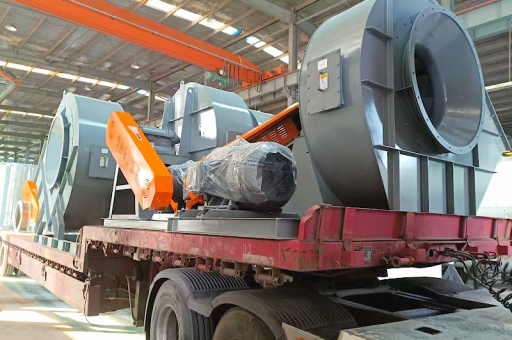
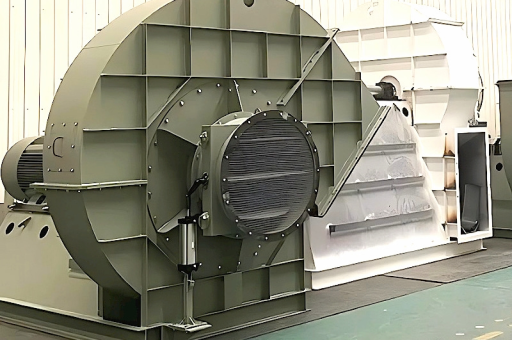
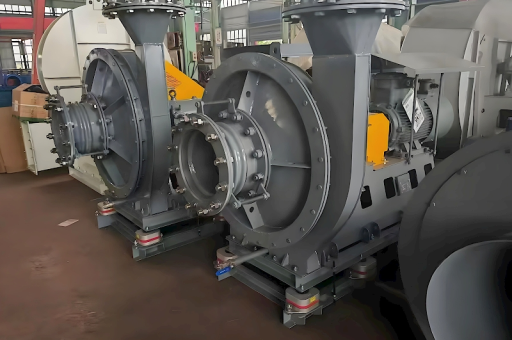
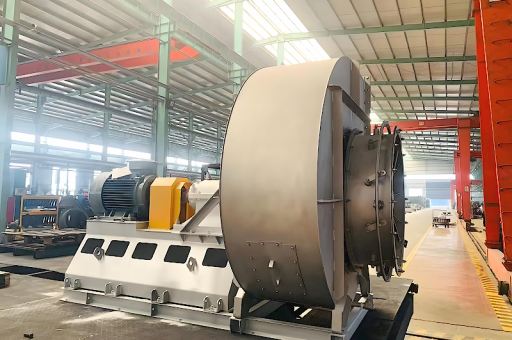
A Positive Pressure Zero-Leakage Fan is a specialized air-moving device designed to:
- Create Positive Pressure: Exhaust air or supply air at a pressure higher than the surrounding atmosphere.
- Zero Leakage: Completely prevent the contaminated air (or process gas) inside the fan casing from leaking out into the surrounding environment, and prevent external ambient air from leaking into the airstream.
This is fundamentally different from standard industrial fans, which inevitably leak some air through shaft openings, casing joints, and seals.
How It Works (Key Design Features)
To achieve "zero leakage," standard belt-driven or direct-drive fans are insufficient. The fan must be hermetically sealed. The most common design is the bi-planar or tri-planar seal arrangement on the shaft.
-
The Shaft Seal (The Critical Component):
- No Standard Packing Glands: These are not used because they leak by design (a small amount of air must escape to lubricate the packing).
- Magnetic Drive (Sealless Design): The motor is completely isolated from the fan impeller. A magnetic coupling transmits torque through a solid, non-porous containment shell (often Hastelloy or stainless steel). This is the only true "zero-leakage" method for hazardous gases.
- Double Mechanical Seals (with Barrier Fluid): A more robust version of a mechanical seal. Two seals face each other, and a pressurized barrier fluid (like nitrogen, water, or oil) sits between them. This fluid is at a pressure higher than the fan's internal pressure, ensuring that if a seal fails, the barrier fluid leaks in rather than contaminated air leaking out.
-
Hermetically Sealed Casing:
- All casing joints (flanges, access doors) are welded or sealed with high-temperature, chemically resistant gaskets.
- There are no bolted seams that can leak.
- The fan is often built to a pressure vessel code (e.g., ASME Section VIII) to withstand the internal pressure.
-
Positive Pressure Operation:
- The fan handles the gas after the scrubber, filter, or reactor, meaning the gas is at a pressure above atmospheric.
- The seal system (barrier fluid) is maintained at a pressure higher than the fan's internal pressure. This creates a net flow of clean barrier fluid into the process, not the other way around.
Why "Positive Pressure" Matters for Zero Leakage
- Standard fans (negative pressure): In a typical exhaust system, the fan creates a vacuum (negative pressure) at the inlet. If there's a leak in the fan casing, ambient air gets sucked in. This dilutes the exhaust stream but doesn't release contaminants.
- Positive Pressure Fans: The fan pushes gas at a pressure above ambient. Any leak in the casing or seal will cause the contaminated gas to blow out into the room. Therefore, "zero leakage" is not just a desire—it's a safety requirement for positive pressure systems.
Where Are They Used?
These fans are expensive and specialized. They are required by regulation or best practice in:
-
Hazardous Chemical & Pharmaceutical Manufacturing:
Exhausting toxic, flammable, or pyrophoric gases (e.g., silane, phosphine, hydrogen chloride, phosgene) from reactors, glove boxes, and fume hoods where the system operates under positive pressure.
-
Nuclear Industry:
Handling radioactive gases where any leakage would be a radiation hazard. The fan must be a "zero-leakage" type per nuclear safety standards.
-
Cleanrooms (ISO 14644):
In the return air duct system of high-grade cleanrooms (ISO Class 1-3), the fan must not leak contaminated air from the dirty side back into the cleanroom ceiling plenum.
-
High-Purity Gas Handling:
Compressing or moving high-value gases (e.g., specialty semiconductor gases) where even a tiny leak (cross-contamination from ambient air) would ruin the purity.
-
Wastewater Treatment (Biogas):
Moving methane-rich biogas from digesters to boilers or flares. Leaks are explosive and toxic (H2S).
Common Misconceptions & Key Differences
| Feature | Standard Industrial Fan | Positive Pressure Zero-Leakage Fan |
|---|---|---|
| Shaft Seal | Standard packing gland, labyrinth seal | Magnetic drive or double mechanical seal with barrier fluid |
| Casing | Bolted, flanged, may leak | Welded, gasketed, pressure vessel construction |
| Leak Path | Inevitable leakage (small) | < 0.1% of flow (near-zero vs. zero) |
| Operation | Can be negative or positive | Typically operates at a positive pressure |
| Cost | Low to moderate | Very high (5-10x standard fan) |
| Maintenance | Routine packing or seal replacement | Highly specialized, requires seal integrity monitoring |
Summary:
A Positive Pressure Zero-Leakage Fan is a hermetically sealed, high-integrity fan designed for applications where any leak of the process gas is unacceptable. It achieves this through a sealless magnetic drive or a double mechanical seal with a pressurized barrier fluid, all housed in a welded, pressure-vessel-rated casing. It is mission-critical equipment found in the pharmaceutical, nuclear, chemical, and semiconductor industries.