This article's table of contents introduction:
- Table of Contents
- Introduction: What Are Explosion-Proof Zero-Leakage Fans?
- The Dual Challenge: Why Explosion Protection and Zero Leakage Matter
- Technical Deep Dive: How Explosion-Proof Zero-Leakage Fans Work
- Industry Applications: Where Are These Fans Critical?
- Comparative Analysis: Zero-Leakage Fans vs. Standard Explosion-Proof Fans
- Q&A: Common Questions Answered
- Best Practices for Selection, Installation, and Maintenance
- Conclusion: Future Trends in Hazardous Area Ventilation
Explosion-Proof Zero-Leakage Fans: The Ultimate Guide to Safety, Efficiency, and Compliance in Hazardous Environments**
Table of Contents
- Introduction: What Are Explosion-Proof Zero-Leakage Fans?
- The Dual Challenge: Why Explosion Protection and Zero Leakage Matter
- Technical Deep Dive: How Explosion-Proof Zero-Leakage Fans Work
- 1 Sealing Mechanisms and Material Selection
- 2 Motor and Electrical Safety (ATEX, IECEx, NEC)
- 3 Aerodynamic Design for Zero Leakage
- Industry Applications: Where Are These Fans Critical?
- Comparative Analysis: Zero-Leakage Fans vs. Standard Explosion-Proof Fans
- Q&A: Common Questions Answered
- Best Practices for Selection, Installation, and Maintenance
- Conclusion: Future Trends in Hazardous Area Ventilation
Introduction: What Are Explosion-Proof Zero-Leakage Fans?
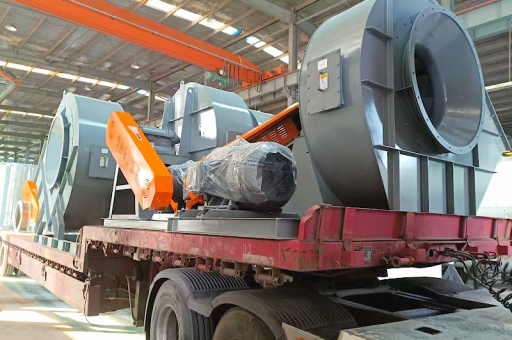
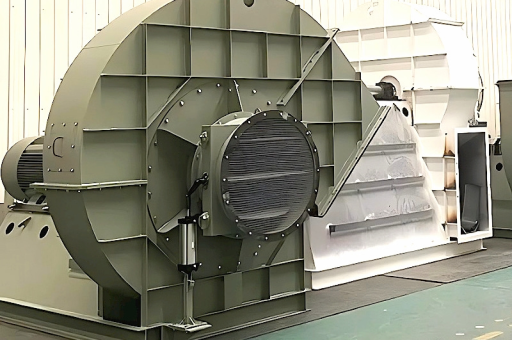
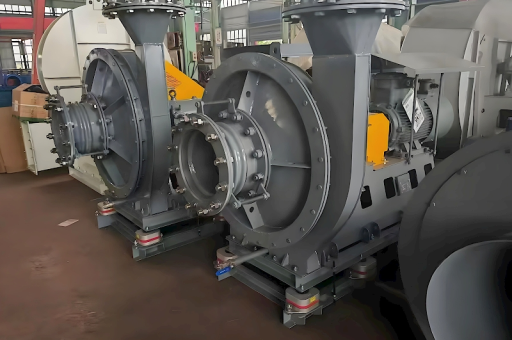
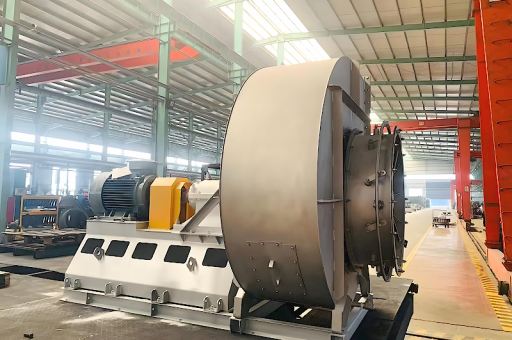
An explosion-proof zero-leakage fan is a specialized ventilation system designed to operate in hazardous (classified) locations while preventing any escape of flammable gases, vapors, or dusts from the ductwork into the surrounding environment. Unlike conventional explosion-proof fans that only contain internal explosions, zero-leakage variants add a critical function: absolute containment of the airstream. This makes them indispensable in industries such as oil & gas, chemical processing, pharmaceutical manufacturing, and biogas handling.
The term "zero leakage" does not mean perfect vacuum-sealed performance in the literal physical sense, but rather a design that limits leakage to immeasurable or near-zero levels under operating pressure, as defined by standards like ISO 10648-2 (for containment enclosures) or API 661 (for specific HVAC applications in hazardous zones).
The Dual Challenge: Why Explosion Protection and Zero Leakage Matter
In many processing plants, a single point of failure in a fan can lead to a chain reaction. Standard explosion-proof fans are built with robust housings and flameproof joints to withstand an internal explosion and prevent it from propagating outward. However, they often still permit small amounts of leakage through shaft seals or casing gaskets.
For example, in a wind turbine nacelle or a chemical reactor off-gas system, the leaked gas could accumulate and create a secondary explosion hazard outside the fan. Zero-leakage fans address this by integrating:
- Multi-stage labyrinth seals or magnetic fluid seals on the shaft.
- Welded or continuously gasketed casings with no bolted joints exposed to the airstream.
- Explosion-proof motors with integrated cooling systems that do not rely on ambient air from the hazardous zone.
This dual design ensures both personnel safety and process integrity, especially in environments where the released substance is toxic, flammable, or environmentally damaging.
Technical Deep Dive: How Explosion-Proof Zero-Leakage Fans Work
1 Sealing Mechanisms and Material Selection
Zero leakage is achieved through a combination of static and dynamic seals:
- Static Seals: The casing is either fully welded or uses static O-ring grooves machined into flanges. High-temperature fluorocarbon (FKM) or perfluoroelastomer (FFKM) materials are chosen to withstand chemical attack.
- Dynamic Seals: The rotating shaft is isolated from the gas stream using dual pressurized mechanical seals or magnetic couplings. In magnetic drive systems, there is no physical shaft penetration through the fan housing—torque is transmitted magnetically, eliminating leakage entirely.
2 Motor and Electrical Safety
The electrical components must be certified for the specific zone (e.g., Zone 1, Zone 2, or Class I Division 1). Typical solutions include:
- Flameproof (Ex d) motors where the motor enclosure is strong enough to contain an explosion.
- Increased safety (Ex e) motors combined with integrated thermistor protection.
- Non-sparking fans with aluminum or bronze impellers to prevent contact sparks.
Importantly, the motor’s cooling air must not come from the hazardous zone. For this reason, many units are equipped with external forced-draft cooling or water jackets.
3 Aerodynamic Design for Zero Leakage
The impeller and housing geometry must generate sufficient static pressure without creating eddies that could force gas out through seals. Backward-curved impellers are common, as they provide high efficiency and stable performance. Computational Fluid Dynamics (CFD) is used to model flow patterns and verify that no pressure peaks exceed the containment threshold.
Industry Applications: Where Are These Fans Critical?
| Industry | Typical Application | Hazard |
|---|---|---|
| Oil & Gas | Vapor recovery units, flare gas systems | Methane, hydrogen sulfide |
| Chemical Processing | Reactor vent lines, solvent transfer | Acetone, toluene, ethylene oxide |
| Pharmaceuticals | Isolators, gloveboxes, containment systems | Potent API dusts |
| Biogas / Landfill | Gas boosting, methane extraction | Methane, carbon dioxide |
| Wind Turbines | Nacelle cooling and purging | Accumulated hydrogen from battery storage, oil mist |
In wind turbine nacelles, fans are used to purge hydrogen that may off-gas from battery banks or to ventilate oil mist from gearboxes. Here, zero leakage is critical because any escaped gas could ignite in the presence of electrical arcing or hot surfaces.
Comparative Analysis: Zero-Leakage Fans vs. Standard Explosion-Proof Fans
| Feature | Standard Explosion-Proof Fan | Explosion-Proof Zero-Leakage Fan |
|---|---|---|
| Shaft Seal | Simple lip seal or no seal | Double mechanical seal or magnetic drive |
| Casing Joints | Bolted with gaskets | Welded or continuous static O-ring |
| Leakage Rate | 5–20 L/min at 2 kPa | <0.001 L/min (near-zero) |
| Certification | ATEX Ex d, IECEx Ex d | ATEX Ex d + containment (EN 13463) |
| Cost | Moderate | High (2–3x) |
| Maintenance | Regular seal replacement | Reduced seal wear; specialized servicing |
For applications where any leakage is unacceptable—such as in pharmaceutical isolators or hydrogen ventilation in wind turbine nacelles—the premium for zero-leakage design is justified.
Q&A: Common Questions Answered
Q1: Can an explosion-proof fan be made zero-leakage by simply adding a seal?
A: No. Retrofit seals can improve containment, but true zero-leakage requires a holistic redesign of the casing, shaft penetration, and motor integration. Magnetic drives or hermetically sealed motors are often necessary.
Q2: Are zero-leakage fans suitable for high-temperature gas streams?
A: Yes, but material selection becomes critical. Impellers may need Inconel or Hastelloy; seals require high-temperature elastomers or metal bellows. The motor must be thermally protected against elevated ambient temperatures.
Q3: Do zero-leakage fans require special installation for wind turbine nacelles?
A: Yes. Nacelle installations demand lightweight materials (e.g., aluminum housings), compact footprint, and compliance with GL2010 or DNV-GL standards. The fan should be positioned to avoid recirculation of exhaust air.
Q4: What certifications should I look for?
A: For global use, look for ATEX (Europe), IECEx (international), NEC 500/505 (USA), and EAC (Eurasian Union). Additionally, ask for a leakage test certificate per ISO 10648-2.
Best Practices for Selection, Installation, and Maintenance
- Selection: Choose a fan with a safety factor of at least 20% on both pressure and flow. Verify leakage testing methodology (pressure decay or tracer gas).
- Installation: Ensure that duct connections use welded flanges or compression couplings. Avoid flexible joints inside hazardous zones.
- Commissioning: Conduct a “zero-leakage validation” using helium sniffing or soap bubble test under maximum operating pressure.
- Maintenance: Periodically inspect magnetic seals for demagnetization or wear. Grease external bearings according to the manufacturer’s schedule—never open the gas-tight housing in the field.
In wind turbine maintenance, always isolate the fan’s electrical supply and confirm no flammable gas is present before accessing the nacelle.
Conclusion: Future Trends in Hazardous Area Ventilation
The demand for explosion-proof zero-leakage fans is growing as industries push toward tighter emission controls and higher safety standards. New developments include:
- Smart IoT sensors embedded in the fan casing to continuously monitor leakage rate, vibration, and temperature.
- Additive manufacturing of impellers and housings to reduce weight and improve seal interfaces.
- Hybrid magnetic/gas bearing systems that eliminate contact seals entirely.
As legislation such as the EU’s ATEX 2014/34/EU and OSHA’s PSM standards become more stringent, the zero-leakage fan will transition from a niche product to an industry baseline. For any operation handling flammable or toxic gases—whether in a petrochemical plant or inside a wind turbine—investing in this technology is not just a compliance issue; it is a strategic decision for operational integrity and workforce safety.
This article was compiled and refined based on publicly available engineering data, industry standards, and technical literature from fan manufacturers and certification bodies.