This article's table of contents introduction:
- What is a "Negative Pressure Zero-Leakage Fan"?
- How is "Zero-Leakage" Achieved?
- Why "Negative Pressure" + "Zero-Leakage"?
- Real-World Applications
- Key Distinctions & Misconceptions
- Conclusion
This is a specific and high-stakes engineering term. It combines Negative Pressure (controlled airflow direction) with Zero-Leakage (hermetic containment).
Let's break down what this means, why it is difficult, and where you find these systems.
What is a "Negative Pressure Zero-Leakage Fan"?
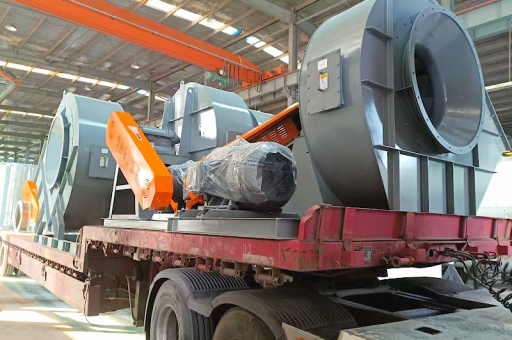
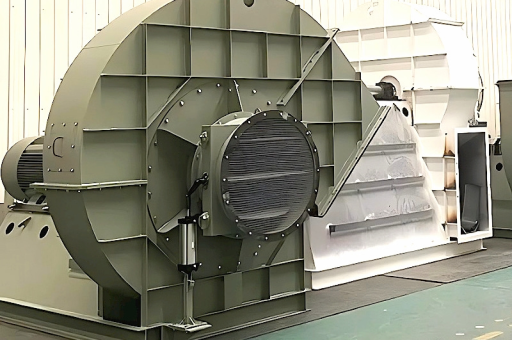
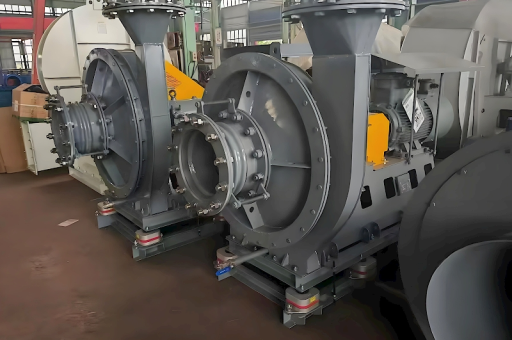
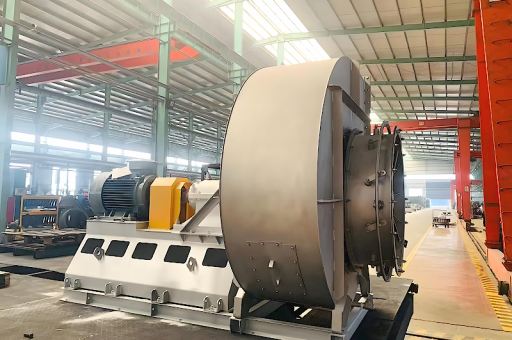
It is not a standard "box fan" you buy at a store. It is a custom-engineered air moving system (usually a centrifugal or axial fan within a specialized housing) designed to achieve two contradictory goals:
- Negative Pressure: The system intentionally creates a vacuum (lower pressure) inside a controlled zone (e.g., a room, duct, or containment vessel) relative to the surrounding atmosphere. Air must flow only inward.
- Zero-Leakage: The fan and its ductwork/housing must have zero fugitive emissions. No air (or gas) can leak out of the fan itself, the seals, or the shaft penetration.
The Core Challenge: A standard fan has a rotating shaft that passes through the fan housing. This shaft penetration is an inherent leak path (gas can travel along the shaft). "Zero-leakage" means eliminating this path.
How is "Zero-Leakage" Achieved?
There is no single "zero-leakage fan." It requires specific design features, typically one or more of the following:
Magnetic Drive (The "Gold Standard")
- The electric motor is completely isolated outside the gas stream.
- A magnetic coupling transmits torque through a solid shroud (canned wall) to the impeller inside the housing.
- Leakage Path: None. The shaft does not penetrate the housing.
- Best for: Toxic, radioactive, or explosive gases (e.g., nuclear waste processing, pharmaceutical fume handling).
Double Mechanical Seals with Buffer Gas
- The shaft passes through the housing, but it is sealed by two mechanical seals in series.
- A "buffer gas" (e.g., nitrogen, clean air) is injected into the space between the two seals at a pressure higher than the process gas inside the fan.
- Effect: Even if the inner seal leaks, the buffer gas leaks into the fan, not the process gas out of the fan.
- Leakage Path: Zero net leakage of the process gas to the atmosphere.
Canned Motor Design
- The motor rotor is enclosed in a thin metal "can" (a liner) that separates the motor from the process gas.
- The entire motor is sealed within the fan housing.
- Leakage Path: Only static seals (O-rings/gaskets) exist, no dynamic shaft seal. Very low risk.
Bellows Sealed Valves & Static Housings
- For applications where the fan is used in a closed loop (e.g., glove boxes or isotope separators), the fan housing may be welded shut with no field-serviceable parts.
- The fan itself is a sealed unit with welded seams.
Why "Negative Pressure" + "Zero-Leakage"?
This combination is critical for Containment. If you are handling a hazardous substance:
- Negative Pressure: Ensures that if a different part of the system leaks (e.g., a pipe joint in the room), air from the clean surrounding area flows into the contaminated zone, preventing contamination from escaping.
- Zero-Leakage Fan: Ensures that the fan itself, which is the heart of the air movement, is not the point of failure. A leaking fan would blow contaminated air out.
Real-World Applications
You will find these fans in:
| Application | Why? |
|---|---|
| Nuclear Facilities | To handle radioactive off-gases and maintain containment in hot cells or glove boxes. |
| Pharmaceutical Manufacturing | To move toxic active pharmaceutical ingredients (APIs) safely. |
| Chemical Plants | To ventilate areas with carcinogens, odorants, or highly reactive gases (e.g., chlorine, phosgene). |
| Biological Safety (BSL-3/BSL-4 Labs) | To exhaust air from high-containment labs. The fan is often in a sealed plenum. The fan itself must not leak. |
| Semiconductor Fabs | For handling corrosive and toxic process gases (e.g., silane, arsine) where any leak is catastrophic. |
| Anaerobic Digesters / Biogas | To move methane or hydrogen sulfide without leaking explosive or toxic gas into the building. |
Key Distinctions & Misconceptions
| Term | Often Confused With | Reality |
|---|---|---|
| Zero-Leakage Fan | Zero-leakage ductwork | The fan is the most difficult part because of the rotating shaft. |
| Negative Pressure Fan | Exhaust fan | All exhaust fans create negative pressure in the duct/room. "Zero-leakage" adds the containment requirement. |
| Hermetic Fan | "Sealed" fan | Hermetic means fully welded or sealed. Can be expensive and hard to maintain. |
Conclusion
A negative pressure zero-leakage fan is a containment-grade air mover, typically using magnetic drive or double gas-sealed shafts, designed to pull air into a hazardous zone without allowing any of that hazardous gas to escape through the fan itself. It is a critical safety component in nuclear, pharmaceutical, chemical, and biological high-containment environments.