This article's table of contents introduction:
- Introduction: The Challenge of High-Temperature and Leakage
- What Are High-Temperature Zero-Leakage Fans?
- Core Design Principles and Technical Components
- Applications Across Harsh Industries (Including Wind Turbine Systems)
- Performance Metrics and Safety Standards
- Frequently Asked Questions (FAQ)
- Conclusion: The Future of Zero-Leakage Fan Technology
** High-Temperature Zero-Leakage Fans: The Critical Technology for Extreme Industrial Environments
Article Content
Table of Contents
- Introduction: The Challenge of High-Temperature and Leakage
- What Are High-Temperature Zero-Leakage Fans?
- Core Design Principles and Technical Components
- Applications Across Harsh Industries (Including Wind Turbine Systems)
- Performance Metrics and Safety Standards
- Frequently Asked Questions (FAQ)
- Conclusion: The Future of Zero-Leakage Fan Technology
Introduction: The Challenge of High-Temperature and Leakage
In many heavy industries, the movement of hot, corrosive, or hazardous gases is unavoidable. Processes such as cement production, steel manufacturing, chemical processing, and power generation often involve gas streams exceeding 400°C (752°F), sometimes reaching 1000°C. Traditional industrial fans face two crippling limitations: material degradation due to heat and catastrophic leakage through seals and joints. A single point of leakage in a system handling toxic fumes or flammable gases can lead to severe safety hazards, environmental fines, and massive energy losses. This is where High-temperature zero-leakage fans have emerged as an indispensable engineering solution. These fans are not merely upgraded versions of standard blowers; they represent a distinct category of rotating machinery specifically designed to maintain absolute gas containment while operating in thermal environments that would warp conventional impellers and destroy standard bearings. Their relevance extends even to renewable energy infrastructure, such as cooling systems within wind turbine nacelles, where heat management and seal integrity are vital for long-term reliability.
What Are High-Temperature Zero-Leakage Fans?
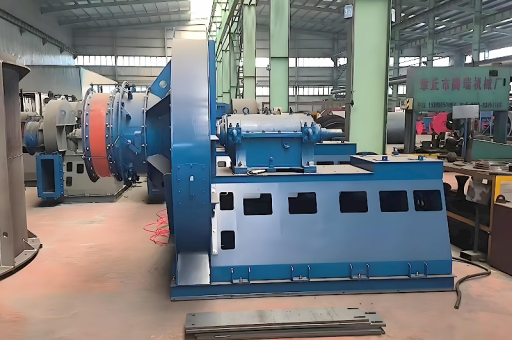
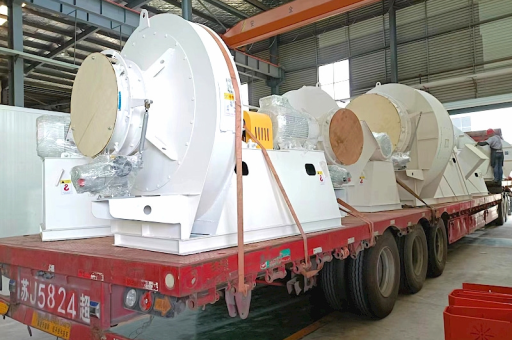
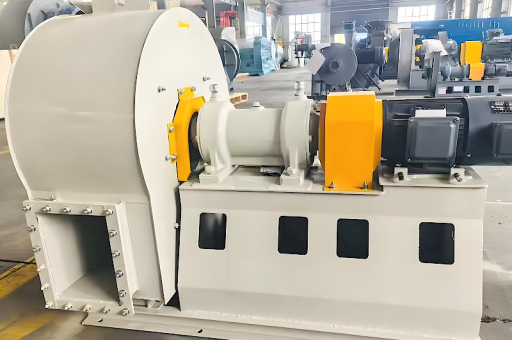
A high-temperature zero-leakage fan is a mechanical device designed to move gas at elevated temperatures while preventing any escape of the process gas to the surrounding atmosphere. "Zero-leakage" is defined rigorously, often meaning a leakage rate of less than 1% of the total airflow, or in critical applications, less than 0.1%. This is achieved through specialized sealing mechanisms, thermal expansion management, and material selection. Unlike conventional fans that use mechanical shaft seals or packing glands (which inevitably wear and leak over time), these fans employ advanced technologies such as magnetic drive couplings, double mechanical seals with pressurized barrier fluids, or diaphragm-based containment. The "high-temperature" aspect requires the fan housing, impeller, and shaft to be constructed from superalloys (e.g., Hastelloy, Inconel) or high-grade stainless steels that maintain their tensile strength and creep resistance under prolonged thermal stress. In the context of wind turbine systems, such a fan might be used to extract heated air from gearbox compartments or brake resistors, ensuring no hot oil vapor or salt-laden air escapes into sensitive electrical cabinets.
Core Design Principles and Technical Components
The engineering behind these fans is multi-faceted:
a) Thermal Management of the Shaft and Bearings: Standard bearings fail above 120°C. To protect them, a cooling barrier must be introduced between the hot gas stream and the bearing housing. Common methods include a cooling jacket (water or air circulation), an isolated shaft extension, or a heat slinger. Some designs use a thermal insulation sleeve packed with ceramic fiber.
b) Zero-Leakage Sealing Systems: This is the heart of the technology.
- Magnetic Drive (Mag-Drive): The motor drives an external magnet assembly, which rotates a magnetic rotor inside a sealed containment shell (can). There is no physical shaft penetration. This offers static zero leakage because the only static seal is at the can joints. However, the containment shell adds eddy current losses, which must be dissipated.
- Double Mechanical Seal with Buffer Gas: Two mechanical seals face each other, creating a cavity filled with an inert buffer gas (e.g., nitrogen) at a pressure higher than the process gas. If the inner seal leaks, the buffer gas leaks into the process, not outward.
- Labyrinth + Purge Seal: Common for less critical applications, combining staggered fins with a constant low-pressure purge of clean air.
c) Impeller and Housing Materials: The impeller must be robust enough to withstand high centrifugal forces at elevated temperatures. Welded impellers are preferred over riveted ones to avoid thermal fatigue at joints. Housing expansion joints or bellows-type connectors accommodate axial and radial thermal growth without creating gaps.
d) Drive System Integration: These fans are typically driven by variable frequency drives (VFDs) to precisely control airflow without mechanical throttling, which can cause preheating or imbalance. In wind turbine installations, VFD-controlled fans can dynamically adjust cooling based on real-time nacelle temperature data, significantly reducing parasitic electrical losses.
Applications Across Harsh Industries (Including Wind Turbine Systems)
While commonly associated with petrochemical furnaces and waste incineration, high-temperature zero-leakage fans are also crucial for modern renewable energy infrastructure.
| Industry | Typical Application | Temperature Range | Leakage Requirement |
|---|---|---|---|
| Chemical / Petrochemical | Hot gas recirculation in reformers or crackers | 600°C – 950°C | < 0.5% (toxic gas) |
| Cement & Lime | Kiln exhaust extraction containing corrosive dust | 350°C – 450°C | < 1% (high dust erosion) |
| Steel | Flue gas handling from electric arc furnaces | 500°C – 800°C | < 0.1% (CO & H₂ risk) |
| Wind Turbine | Cooling of gearbox oil coolers or brake resistor grids | Up to 150°C (peak 250°C) | Zero-leak for moisture / salt intrusion |
| Solar Thermal Plants | Heat transfer fluid vapor management | 400°C | Zero-leak (HTF is flammable) |
In wind turbine systems specifically, a high-temperature, zero-leakage fan is often deployed in the nacelle cooling circuit. As gearboxes can generate heat spikes of 100°C+, these fans must extract hot air without allowing moisture, salt spray, or insects to enter the nacelle. Any leakage would corrode sensitive electronics or reduce insulation resistance. The "zero-leakage" feature here is bi-directional: it prevents both hot air escape (energy loss) and external contaminants ingress.
Performance Metrics and Safety Standards
Evaluating a high-temperature zero-leakage fan requires more than just airflow (CFM) and static pressure (Pa). Key metrics include:
- Thermal Gradient Tolerance: The ability to withstand rapid temperature changes without cracking seals or distorting the impeller. Look for a rate of change specification (e.g., 20°C/min maximum).
- Leakage Rate: Measured in scfm (standard cubic feet per minute) or as a percentage of total flow. For true zero leakage, API 310 and ISO 1940 are reference standards. Magnetic drive units typically achieve < 0.01% leakage.
- Mean Time Between Failures (MTBF): High-quality units in wind turbine applications should exceed 80,000 hours for the sealing system.
- Compliance:
- ATEX (for explosive atmospheres, common in wind turbine compartments containing hydrogen from battery banks).
- CE marking and UL listing.
- ISO 8573-1 (if used for clean compressed air or gas systems).
Frequently Asked Questions (FAQ)
Q1: What is the practical temperature limit for a zero-leakage fan? A: With standard materials, continuous operation up to 540°C (1000°F) is common. Using specialized ceramic coatings and nickel-based superalloys, custom designs can handle 950°C (1742°F) . For wind turbine applications (typically below 150°C), standard zero-leakage designs are more than sufficient.
Q2: How does a magnetic drive achieve zero leakage without motor contact? A: The motor turns an external "outer rotor" with strong permanent magnets. This magnetic field passes through a thin, non-magnetic containment shell (usually Hastelloy) to drive an "inner rotor" attached to the fan impeller. Since there is no shaft penetration, the only potential leak points are the static gaskets on the housing, which are easily sealed. This is common in wind turbine oil cooling loops.
Q3: Can zero-leakage fans handle particulate-laden flue gas from a turbine? A: Yes, but with careful design. The impeller must have a wear-resistant coating (tungsten carbide or thermal spray). A purge air system may be introduced to keep particulates away from the seal faces. For wind turbine applications, the air is typically filtered, so particulate erosion is minimal.
Q4: Are these fans more expensive to maintain than standard fans? A: The initial purchase cost is higher (often 2-3x), but the total cost of ownership (TCO) is lower in safety-critical environments. Maintenance is focused on the heat barrier (cooling system) and the static seals, not the dynamic seals. In wind turbine installations, reduced downtime from seal failures can justify the premium.
Q5: At what speed should a high-temperature fan be operated? A: Most are designed for speeds up to 3600 RPM. Above that, dynamic balancing and bearing cooling become critical. With VFD control, operation at lower speeds (e.g., 900 RPM) prolongs bearing life and reduces noise, which is a key benefit for wind turbine noise regulation.
Conclusion: The Future of Zero-Leakage Fan Technology
As industries tighten environmental regulations and pursue greater operational safety, the demand for high-temperature zero-leakage fans will only accelerate. In the renewable energy sector, wind turbine systems are already beginning to adopt these fans for battery thermal management, hydrogen venting, and nacelle ventilation. Emerging trends include the integration of real-time remote monitoring via IoT sensors that track seal pressure, bearing temperature, and vibration, enabling predictive maintenance. Moreover, advancements in ceramic matrix composites (CMCs) promise to push the upper temperature limit of these fans beyond 1200°C, opening the door for direct use in hydrogen combustion turbines. For any engineer tasked with specifying a fan for a hot, hazardous, or high-value environment, the choice is clear: a high-temperature zero-leakage fan is not a luxury, but a critical component for safe, efficient, and compliant operations. Its role in the reliability chain of critical infrastructure—from petrochemical plants to wind turbine farms—is now undeniable.