This article's table of contents introduction:
- What is an Explosion-Proof Centrifugal Fan?
- How It Works: The "Explosion-Proof" Principle (Preventing Ignition)
- Key Components & Construction (In Detail)
- Types of Explosion-Proof Centrifugal Fans
- Applications & Industries
- Standards & Certifications (Crucial!)
- Selection Checklist
- Common Manufacturers (Examples)
- Important Warning
Here is a comprehensive overview of Explosion-Proof Centrifugal Fans, covering what they are, how they work, where they are used, and key specifications to consider.
What is an Explosion-Proof Centrifugal Fan?
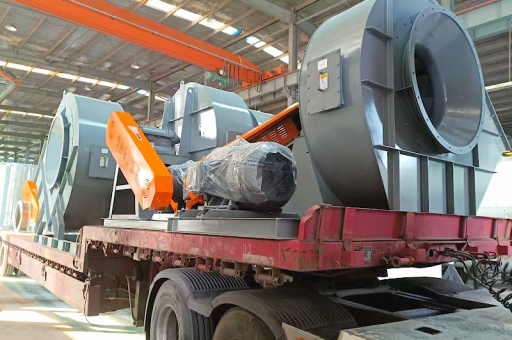
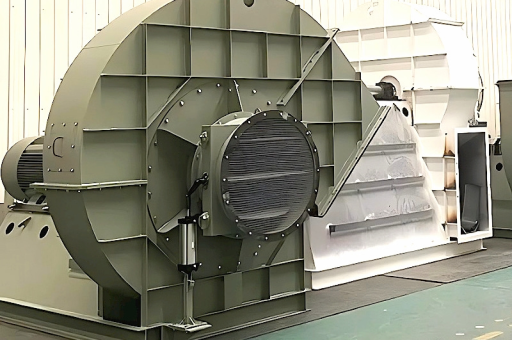
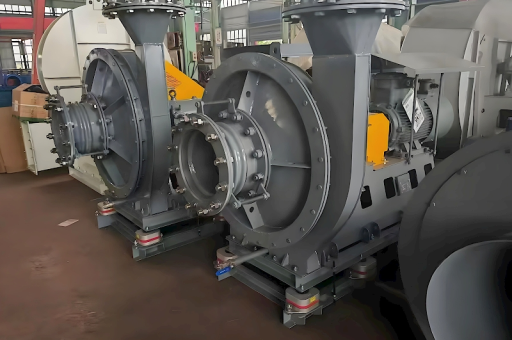
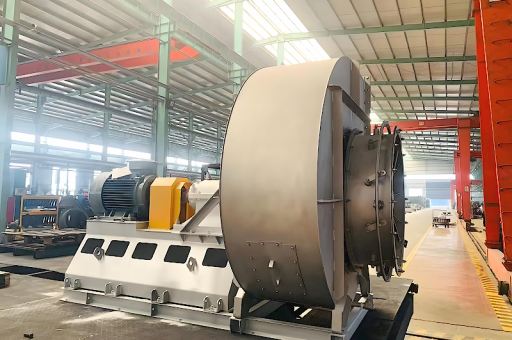
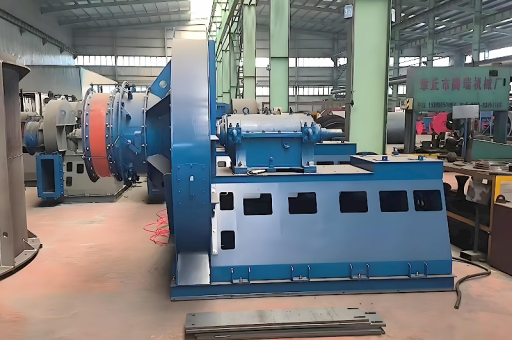
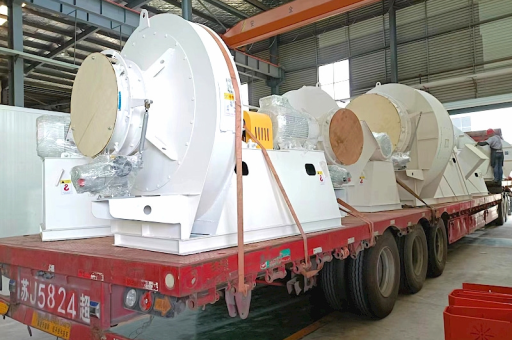
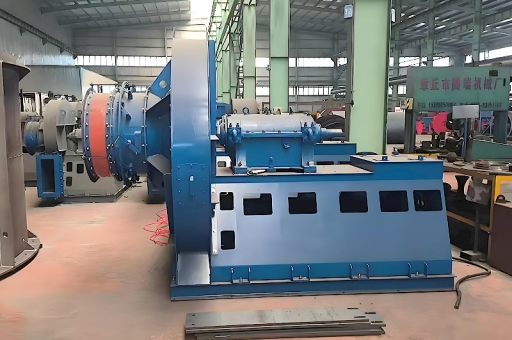
An explosion-proof centrifugal fan is a specialized air-moving device designed to operate safely in environments where flammable gases, vapors, dust, or fibers are present. The primary goal is not to contain an internal explosion (though some are built to do so), but rather to prevent the fan itself from being the ignition source that causes an explosion in the surrounding atmosphere.
They combine the fluid dynamics of a standard centrifugal fan with stringent safety engineering and compliance with hazardous location standards (like ATEX, IECEx, or NEC).
How It Works: The "Explosion-Proof" Principle (Preventing Ignition)
Standard fans can ignite an atmosphere through several mechanisms: electrical sparks from the motor, friction sparks from metal-on-metal contact, static electricity buildup, or overheating. An explosion-proof fan mitigates all these risks.
-
Spark-Proof Construction (The Most Critical Element):
- Non-Sparking Materials: The impeller (wheel) and the fan housing are made from materials that do not produce sparks upon impact. Common materials include:
- Aluminum or Aluminum Alloys: Very common due to their non-sparking nature and light weight.
- Stainless Steel: Used for corrosion resistance, but can be spark-prone. Fans often use a combination of a stainless steel impeller with a spark-proof coating or a non-sparking ring.
- Copper-Aluminum Alloys & Monel: Used in highly sensitive applications.
- Zinc Rich Paint: The interior of steel housings is often coated with zinc-rich paint to minimize spark risk if the impeller rubs against the housing.
- No Ferrous (Iron/Steel) Contact: The design ensures that no two ferrous (iron-based) components can come into contact, a condition known as "ruled out contact." The impeller (non-ferrous) can touch the housing (steel/coated) but not vice-versa.
- Non-Sparking Materials: The impeller (wheel) and the fan housing are made from materials that do not produce sparks upon impact. Common materials include:
-
Hazardous Location Motor:
- The motor is not a standard motor. It is certified for use in specific hazardous zones.
- Explosion-Proof (Ex d): The motor is enclosed in a heavy-duty enclosure that can contain an internal gas or vapor explosion and prevent it from igniting the surrounding atmosphere. The flame paths (joints) are precisely machined to cool escaping gases.
- Increased Safety (Ex e): The motor is designed with higher safety margins (e.g., higher insulation, lower temperature rise) to prevent sparks, arcs, or excessive heat during normal operation.
-
Temperature Control:
- The entire fan assembly is tested to ensure its maximum surface temperature (under normal and fault conditions) stays below the Auto-Ignition Temperature (AIT) of the specific gas or dust in the environment.
- This is defined by a Temperature Class (T-Class) , e.g., T1 (450°C max) to T6 (85°C max). A fan for a hydrogen environment (AIT ~560°C) might be T1, while one for a gas with AIT of 90°C must be T6.
-
Static Dissipation:
- Conductive Belts: If the fan uses a belt drive, the belts are static-conductive.
- Grounding: The fan casing and motor are fitted with clearly marked external grounding (earthing) lugs to safely dissipate any static charge.
Key Components & Construction (In Detail)
| Component | Explosion-Proof Feature |
|---|---|
| Impeller | Typically aluminum, stainless steel (with spark-proof ring), or Monel. Machined from a single piece to prevent imbalance. |
| Housing (Scroll) | Heavy-gauge steel or cast iron, often with a zinc-rich internal coating to prevent sparking. Designed for high pressure and structural integrity. |
| Shaft | Stainless steel (e.g., 304, 316) to prevent corrosion and reduce friction. Runs inside a spark-proof bearing housing. |
| Bearings | Sealed, heavy-duty bearings (often ball bearings) with a high temperature rating. The bearing housing is designed to prevent contamination. |
| Motor | ATEX / IECEx / UL / CSA certified for the specific zone (e.g., Ex d IIC T4 Gb). The terminal box is a sealed explosion-proof unit. |
| Drive (Belt) | Static conductive belts are mandatory. Belt guards are made of non-sparking mesh or perforated metal. |
| Seals | Shaft seals are used to prevent gas leakage from the fan housing along the shaft. |
| Drainage | Threaded drain plugs to prevent liquid buildup, which could lead to corrosion and imbalance. |
Types of Explosion-Proof Centrifugal Fans
All types are based on impeller design:
- Backward Inclined (BI):
- Best for: Clean air, high static pressure, and energy efficiency. Non-overloading power curve (motor cannot be overloaded in open duct). Most common type.
- Forward Curved (FC):
- Best for: Low to medium pressure, high volume, and compact applications (e.g., HVAC). Prone to overloading if inlet or outlet is blocked.
- Radial Blade (Paddle Wheel):
- Best for: Dirty or particulate-laden air (e.g., material handling). Very rugged and simple but inefficient. Self-cleaning.
- Airfoil (AF):
- Best for: Highest efficiency and quietest operation. Often used in large industrial HVAC systems.
Applications & Industries
- Chemical & Petrochemical: Fume extraction for volatile solvents, pumping flammable gases.
- Oil & Gas: Ventilation of storage tanks, processing plants, and offshore platforms.
- Pharmaceutical: Handling solvents and flammable dusts (e.g., API manufacturing).
- Mining & Tunneling: Ventilation in potentially explosive methane atmospheres.
- Paint & Coating Booths: Exhausting flammable solvent vapors.
- Grain & Wood Processing: Dust collection where combustible dust (grain dust, wood dust) is present.
- Wastewater Treatment: Ventilation of digesters and sludge tanks (methane gas).
- Battery Manufacturing/R&D: Exhaust from lithium-ion battery testing (HEPA filtration often required upstream).
Standards & Certifications (Crucial!)
Never assume a fan is "explosion-proof." Always look for the certification label from a recognized body.
- Global Standards (IECEx): International Electrotechnical Commission System for Certification to Standards Relating to Equipment for Use in Explosive Atmospheres.
- European Standards (ATEX): Directive 2014/34/EU.
- Equipment Group: I (Mining) or II (Surface Industries).
- Category: 1G/2G (Gas) or 1D/2D (Dust).
- Gas Group:
- IIA: Propane, Methane.
- IIB: Ethylene, Town Gas.
- IIC: Hydrogen, Acetylene (Most hazardous).
- Temperature Class: T1, T2, T3, T4, T5, T6.
- Example: ATEX II 2G Ex d IIC T4 Gb
- North American Standards (NEC/CEC):
- Class: Class I (Gas/Vapors), Class II (Dust), Class III (Fibers).
- Division: Division 1 (Hazard normally present) or Division 2 (Hazard present only during abnormal conditions). Zone classification (Zone 0,1,2) is becoming more common.
- Groups: A (Acetylene), B (Hydrogen), C (Ethylene), D (Methane/Propane), E (Metal Dust), F (Coal Dust), G (Wood/Grain Dust).
- Example: Class I, Division 1, Group C, D T4
Selection Checklist
When specifying an explosion-proof centrifugal fan, you must provide:
- Airflow (CFM or m³/hr)
- Static Pressure (inches w.g. or Pa)
- Type of Gas, Vapor, or Dust (e.g., Hydrogen, Methane, Wood Dust)
- Zone/Class/Division & Group (e.g., Zone 1, IIC, T4)
- Temperature Requirements/Auto-Ignition Temperature
- Ambient Temperature (e.g., 40°C, 60°C)
- Material Compatibility (e.g., Corrosion resistance)
- Location (Indoor/Outdoor)
Common Manufacturers (Examples)
- New York Blower (NYB)
- Greenheck
- Cincinnati Fan
- Aerovent
- Robinson Fans
- Systemair
- Sodeca
- Elektror
Important Warning
Maintenance is non-negotiable. Even an "explosion-proof" fan can become dangerous if:
- Bearings fail, causing overheating.
- Impeller becomes unbalanced or corroded, causing friction with the housing.
- Grounding wire breaks.
- Belt becomes non-conductive (worn or wrong replacement).
Always follow the manufacturer's maintenance schedule and use identical certified spare parts (e.g., a non-sparking impeller must be replaced with an exact certified non-sparking impeller).