This article's table of contents introduction:
- What is a Chemical Explosion-Proof Fan?
- Why are They Necessary? (The Hazard)
- Key Design Features and Construction
- Key Classifications & Standards (USA & International)
- Applications (Where are they used?)
- Important Considerations for Selection
- Maintenance is Critical
- Summary
Here is a comprehensive explanation of chemical explosion-proof fans, covering their purpose, design, key features, applications, and standards.
What is a Chemical Explosion-Proof Fan?
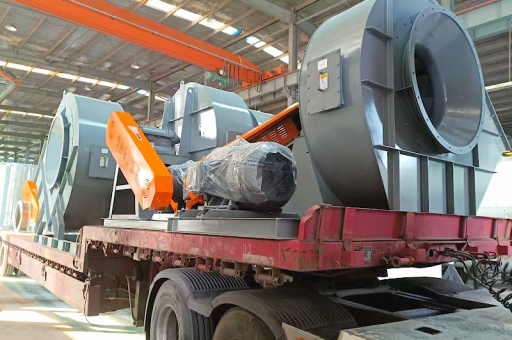
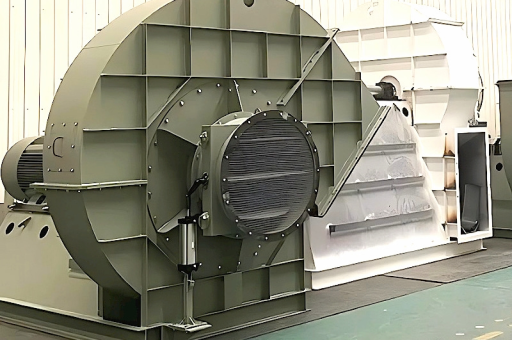
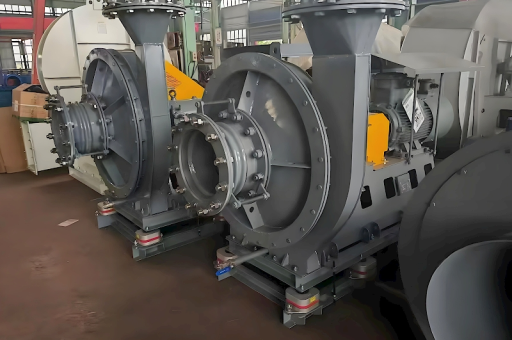
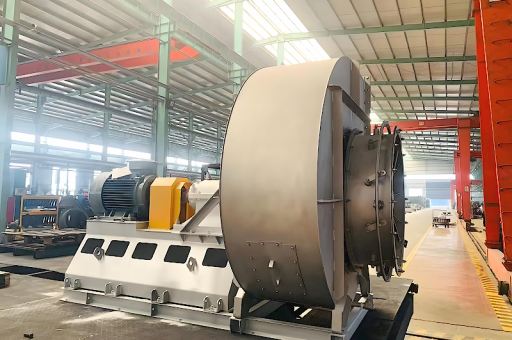
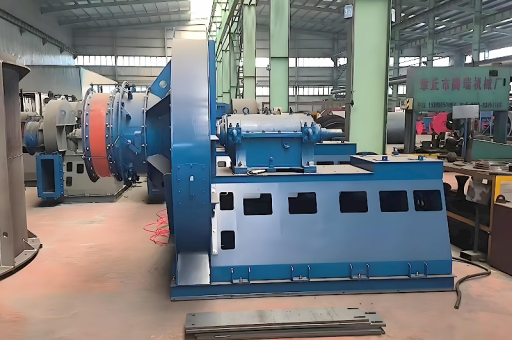
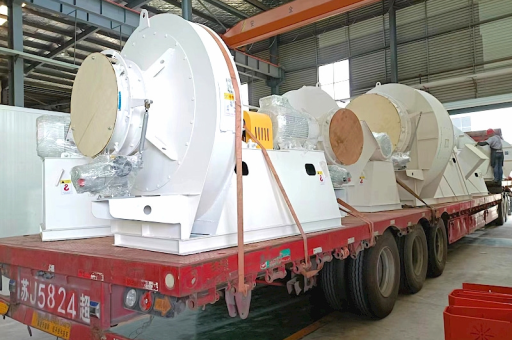
A chemical explosion-proof fan is a specialized ventilation device designed to safely move air or gas mixtures in environments where flammable gases, vapors, dust, or fibers are present. Its primary purpose is to prevent the fan itself from becoming an ignition source that could trigger a fire or explosion.
These fans are not just "heavy-duty" fans; they are carefully engineered systems built to rigorous international safety standards to contain any internal sparks, flames, or hot surfaces and prevent them from igniting the surrounding atmosphere.
Why are They Necessary? (The Hazard)
In many industrial processes, especially in chemical plants, the air can contain combustible substances:
- Gases/Vapors: Hydrogen, methane, acetylene, solvent vapors (e.g., from acetone, ethanol, toluene).
- Dusts: Coal dust, grain dust, metal powders (e.g., aluminum, magnesium), chemical powders.
A standard electric fan creates numerous potential ignition sources:
- Electrical Sparks: From the motor, wiring, switches, or capacitor failures.
- Mechanical Sparks: From impeller blades striking the housing, or from bearing failure.
- Hot Surfaces: A motor running too hot, or friction from a seized bearing.
- Static Electricity: Build-up and discharge from air moving over non-conductive components (like plastic impellers).
An explosion-proof fan is designed to eliminate or contain these risks.
Key Design Features and Construction
Chemical explosion-proof fans are built with specific features that differentiate them from standard fans:
Motor Construction (The Most Critical Feature)
- Explosion-Proof Housing: The motor is contained within a rugged, thick-walled cast-iron or steel housing. The housing is designed to withstand an internal explosion of any flammable gas or vapor that might enter it.
- Flame-Path Joints: All mating surfaces (e.g., between the motor housing and its end caps, between the motor and fan housing) are machined to have very long, narrow, and precise gaps. If an internal explosion occurs, hot gases escaping through these gaps are cooled and extinguished before they can ignite the atmosphere outside.
- Sealed Components: Wiring connections are sealed to prevent gas ingress. Internal components are often encapsulated or sealed.
Materials of Construction
- Non-Sparking Materials: Impellers (blades) are often made from non-ferrous materials like aluminum or bronze specifically to prevent mechanical sparks if the blade hits the housing. For highly volatile chemicals (like acetylene), even aluminum is prohibited (due to the risk of a violent chemical reaction), and stainless steel or Monel is used.
- Corrosion Resistance: Given the chemical environment, the housing is often made from fiberglass-reinforced plastic (FRP) , stainless steel, or heavy-gauge coated steel. FRP is excellent for corrosive fumes but must be treated with an anti-static additive for explosion-proof use.
- Anti-Static Coatings: Conductive coatings or materials are used to prevent the build-up and discharge of static electricity.
Mechanical Construction
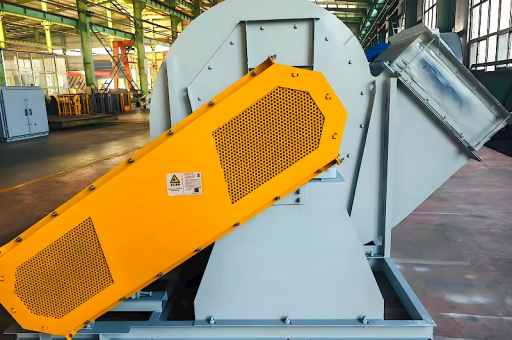
- Reinforced Housings: The fan scroll (volute) is typically heavier and stronger than standard fans.
- Tight Tolerances: The gap between the impeller and the inlet (the "eye") is extremely tight to prevent mechanical contact.
- Bearing Design: Bearings are specially selected and sealed to prevent overheating and contamination. They are often rated for higher temperatures.
- Shaft Seal: A seal where the motor shaft passes through the fan housing prevents gas from leaking from the fan into the motor area.
Electrical Components
- No Exposed Wires: All wiring is in rigid conduit or sealed in a junction box.
- UL/ATEX Listed Motors: The entire fan assembly is certified under specific standards (e.g., UL 673 for Oil Well Ventilators, or IECEx/ATEX in Europe). The motor alone must have a specific temperature classification and gas group rating.
Key Classifications & Standards (USA & International)
To choose the right fan, you must understand these ratings. The most common standards are from the National Electrical Code (NEC) in the USA and the ATEX/IECEx systems in Europe/International.
For the USA (NEC / NFPA 70 & UL)
- Class: Defines the nature of the hazardous material.
- Class I: Flammable gases, vapors, liquids.
- Class II: Combustible dusts.
- Class III: Ignitable fibers/flyings.
- Division: Defines the likelihood of the hazard being present.
- Division 1: Hazard is present under normal operating conditions (e.g., inside a reactor vessel, near a leaking pipe). Most chemical fans are Div 1.
- Division 2: Hazard is present only under abnormal conditions (e.g., a pipe rupture).
- Group: Defines the specific type of gas or dust (e.g., Group A = Acetylene, Group B = Hydrogen, Group C = Ethylene, Group D = Propane/Methane). This dictates the fan's design.
- Temperature Code (T-Code): The maximum surface temperature the fan can reach and still be safe. (e.g., T3 = 200°C, T4 = 135°C, T6 = 85°C). For many chemical solvents, a low T-code like T4 or lower is required.
For Europe/International (ATEX & IECEx)
- Explosion Group: I (Mines) or II (Surface industries). For chemical, it's Group II.
- Category: For Fans, this is usually 2G (for Gas, high protection) or 3G (for Gas, normal protection).
- Equipment Protection Level (EPL): Gb (High protection for gas) or Gc (Enhanced protection).
- Gas Groups: IIA (Propane-like), IIB (Ethylene-like), IIC (Hydrogen/Acetylene-like - the most stringent).
- Temperature Class: Same T1-T6 system as the US.
Certification Marking Example: A typical chemical fan might be marked: Class I, Group C & D, Div 1, T4 or ATEX II 2G Ex d IIB T4.
- Ex d means Explosion-Proof enclosure.
- IIB means it's safe for Ethylene-like gases (but not Hydrogen).
Applications (Where are they used?)
- Chemical Processing Plants: Ventilating reactors, storage tanks, mixing rooms, and distillation columns.
- Pharmaceutical Manufacturing: Handling volatile solvents like ethanol, acetone, and isopropanol.
- Paint & Coating Facilities: Removing flammable solvent vapors from spray booths, mixing rooms, and curing ovens.
- Oil & Gas: Ventilating pump rooms, offshore platforms, and refineries.
- Wastewater Treatment: Removing methane and hydrogen sulfide from sludge processing areas.
- Laboratories: (Fume hoods that handle flammable chemicals require explosion-proof fans).
- Battery Manufacturing & Storage: Ventilating hydrogen gas from charging areas.
- Grain Handling & Processing: (Class II dust applications).
Important Considerations for Selection
- Identify the Hazard: What specific chemicals or gases are present? (This defines the Gas Group).
- Define the Zone/Division: Is the hazard likely to be present normally (Div 1/Zone 1) or only in a fault (Div 2/Zone 2)?
- Determine the Temperature Class: What is the auto-ignition temperature of the flammable gas? The fan's T-code must be lower (e.g., a T4 fan (135°C) is safe for a gas with an auto-ignition temp of 200°C).
- Airflow & Static Pressure: How much air needs to be moved, and against what resistance (ductwork, scrubber, etc.)?
- Duct Material: The entire duct system may also need to be non-sparking and bonded/grounded.
- Mounting: Is it in-line (duct-mounted), roof-mounted, or a wall-exhaust fan?
Maintenance is Critical
Even the best explosion-proof fan is useless if it's not maintained. A failed seal, a worn bearing, or a corroded housing can create an ignition source.
- Regular Inspection: Check for corrosion, wear on the impeller, and integrity of seals.
- Bearing Maintenance: Follow manufacturer's schedule for lubrication and replacement. A hot bearing is a major ignition risk.
- Grounding: Ensure the entire assembly (fan, motor, ductwork) is properly grounded to prevent static build-up.
- Certification Integrity: Never replace a part (motor, impeller, seal) with a non-certified part. This immediately voids the fan's safety certification.
Summary
| Feature | Standard Industrial Fan | Chemical Explosion-Proof Fan |
|---|---|---|
| Primary Goal | Move air efficiently | Prevent ignition of flammable atmosphere |
| Motor | Open, TEFC (Totally Enclosed Fan Cooled) | Explosion-proof enclosure (Ex d) , sealed |
| Impeller | Steel, aluminum | Non-sparking (bronze, aluminum, SS) , anti-static |
| Housing | Light-gauge steel | Heavy-gauge, reinforced, corrosion-resistant |
| Certification | None (or basic UL) | UL/ATEX/IECEx Class, Group, Div, T-Code |
| Cost | Low | 3x-10x higher |
| Safety | Low (in hazardous area) | High (designed for the hazard) |
Bottom line: Never use a standard fan in a chemical environment. Only use a fan that is explicitly certified for the specific Class, Group, Division, and Temperature Class of the hazard present. Your safety and your facility depend on it.